
Container haulage article
Logistics Teams: 4 KPIs and 7 Booking Checks for Drop and Collect
Playbook for logistics teams: 7 booking checks, 4 KPIs and a 48–72 hour benchmark to cut missed collections on drop and collect containers.
Drop-and-collect (also called drop-and-hook or the drop trailer method) means a haulier leaves an ISO container on your site for loading or unloading and returns later to collect it, rather than waiting with the vehicle. It suits floor-loaded goods, slow manual unloads, or sites moving regular weekly volumes, because it removes the driver from the detention clock entirely. The immediate action once you’ve chosen it: agree a firm collection window and a readiness notification method before the drop even happens.
HaulierMake Container Transport More VisibleHaulier.AI connects you with UK hauliers through an AI-assisted, human-backed transport desk, helping reduce admin and missed updates.Visit Haulier.AITL;DR:
- Drop-and-collect reduces driver detention costs by leaving containers on-site, but it requires reliable site access, proper equipment, and confirmed readiness protocols.
- Booking success hinges on pre-agreements about access, equipment, paperwork, scheduling, handover, and liability, with photo proof helping settle disputes quickly.
- Maintaining KPIs such as cycle time, trailer utilization, detention incidents, and on-time collections helps identify when to scale or rebalance the drop programme.
- Common collection failures originate from site access issues, incorrect equipment, lack of communication, or unclear readiness signals, which can be mitigated through standardized procedures.
- Using a managed platform with AI assistance can improve visibility, capacity control, and paperwork handling, especially for high-volume drop-and-collect operations.
Table of Contents
- When to choose drop and collect vs live unload
- How do you book a drop-and-collect container move?
- Planning fleet ratios and KPIs for a drop programme
- Why do collection failures happen, and how do you stop them?
- Why visibility and haulier control cut collection failures
- Managed drop-and-collect support from Haulier.AI
- Sources
- FAQ
When to choose drop and collect vs live unload
The decision comes down to one trade-off: driver detention cost against yard staging cost. Live unload keeps the vehicle and the driver on site until the container is empty, which works fine for a fast forklift job but becomes expensive fast once unloading stretches past the free time allowed. Drop-and-hook removes that clock by leaving the container behind, but it demands somewhere to put it and, often, a second chassis.
Drop-and-hook programmes reduce driver detention exposure and tend to improve overall trucking productivity, because the same tractor unit can move on to another job instead of idling at a loading bay.
Drop programmes tend to work best for:
- Floor-loaded or palletised cargo that takes hours rather than minutes to unload manually
- Warehouses running consistent weekly container volumes rather than one-off shipments
- Peak weeks where yard congestion makes live-unload scheduling unpredictable
- Sites with existing chassis stock or the budget to lease additional trailers
Live unload usually remains the better call for urgent single loads, sites with genuinely no staging space, or shippers who move containers too infrequently to justify holding a spare chassis. Where your own yard can’t accommodate a drop, a third-party secure container yard can bridge the gap, letting you run a drop model without committing to permanent on-site storage.
How do you book a drop-and-collect container move?
Getting this wrong usually isn’t about the haulage itself. It’s about a booking that left out one detail that stalls the whole cycle. Before you confirm anything, work through this checklist with your booking or operations desk.
- Check site access and turning space. Confirm gate width, ground surface, and turning circle can take an articulated unit with a laden trailer, not just an empty one.
- Get landlord or site-owner permission in writing. Many industrial estates restrict HGV movements or require pre-notification, and a missed permission slip is one of the most common causes of a failed collection.
- Specify the equipment. A sidelifter and a hiab are not interchangeable. Hiab drops are often the cheaper option for delivering empty containers, but a laden or heavy container usually needs a sidelifter for safe collection later.
- Attach the paperwork upfront. Journey order, container release reference, customs or consignment notes, and a named site contact should all travel with the booking, not arrive separately by email.
- Set the scheduling rules. Agree the drop time, the maximum dwell period allowed, and how readiness will be signalled, whether that’s a photo, an EDI message, or a simple SMS confirmation.
- Define the handover protocol. Decide who on site is authorised to sign the consignment note and how the driver confirms collection is cleared to proceed.
- Lock down commercial terms. Detention windows, liability for any damage while the container sits on site, and the recovery procedure if collection is delayed all need to be written down, not assumed.
Pro Tip: Ask for a timestamped photo of the container the moment it’s dropped, and another just before collection. It takes the driver thirty seconds and settles most disputes about condition or dwell time before they start.
Planning fleet ratios and KPIs for a drop programme
Running a drop programme well starts with the same inputs used in formal drop trailer method (DTM) planning: expected daily container volume, the number of available drivers, and how many prime movers and trailers you can actually put against the job — which often means investing in Transport Manager Refresher & OLAT Training to keep your team skilled and compliant. Academic DTM research recommends treating trailer detention monitoring as a formal discipline, not an afterthought, because idle trailers are the single biggest drag on utilisation.
A common planning lever is the prime mover to trailer ratio. If you run one tractor unit for every two or three trailers, that tractor can keep working while trailers sit loading or waiting for collection, rather than one tractor being tied to one trailer all day.
Statistic to watch: operational pilots for drop-and-pick models often target a cycle time (drop to pick) of 48 to 72 hours before scaling the programme further, which gives you a concrete benchmark rather than a vague sense of “quick enough.”
Four KPIs are worth tracking from day one:
- Cycle time — the gap between drop and collection, ideally trending down as the programme matures
- Utilisation rate — how much of the trailer fleet is actively working versus parked and idle
- Detention incidence — how often collections run past the agreed dwell period
- On-time collection rate — the percentage of collections completed within the promised window
If cycle time sits comfortably inside your target and detention incidents stay rare, that’s your signal to scale the drop programme. If detention keeps creeping up or utilisation drops, it usually means either the yard can’t cope with the volume or the fleet ratio needs rebalancing before you add more sites. GPS tracking, EDI messaging, and predictive scheduling are the usual technology enablers that shrink cycle time without adding headcount.
Why do collection failures happen, and how do you stop them?
Most collection failures trace back to one of four causes: a site the driver simply can’t get into, the wrong piece of equipment turning up, no clear signal that the container is actually ready, or dwell rules nobody wrote down. None of these are exotic problems. They’re the boring ones that get skipped when a booking is rushed.
The fixes are equally unglamorous but effective:
- Require photo proof at the point of drop, timestamped and attached to the job file
- Pre-authorise the collection window in the original booking so nobody has to chase confirmation later
- Standardise who signs the consignment note on site, by name and role, not just “whoever’s around”
- Keep an emergency recovery plan on file for when a site becomes inaccessible at short notice
A named authorised contact who signs the consignment note, paired with photo evidence at drop, is a low-cost control that catches most disputes before they escalate.
Pro Tip: Write your detention and damage terms into the booking confirmation itself, not a separate contract nobody reads on the day. If the driver and the site contact can both see the dwell limit on the same document, half your disputes disappear.
Why visibility and haulier control cut collection failures
Most collection failures are communication failures wearing an operational disguise. A container doesn’t fail to get picked up because nobody could do the job. It fails because the readiness signal never reached the right person, or the haulier who accepted the job couldn’t actually cover it and nobody found out until the truck didn’t show.
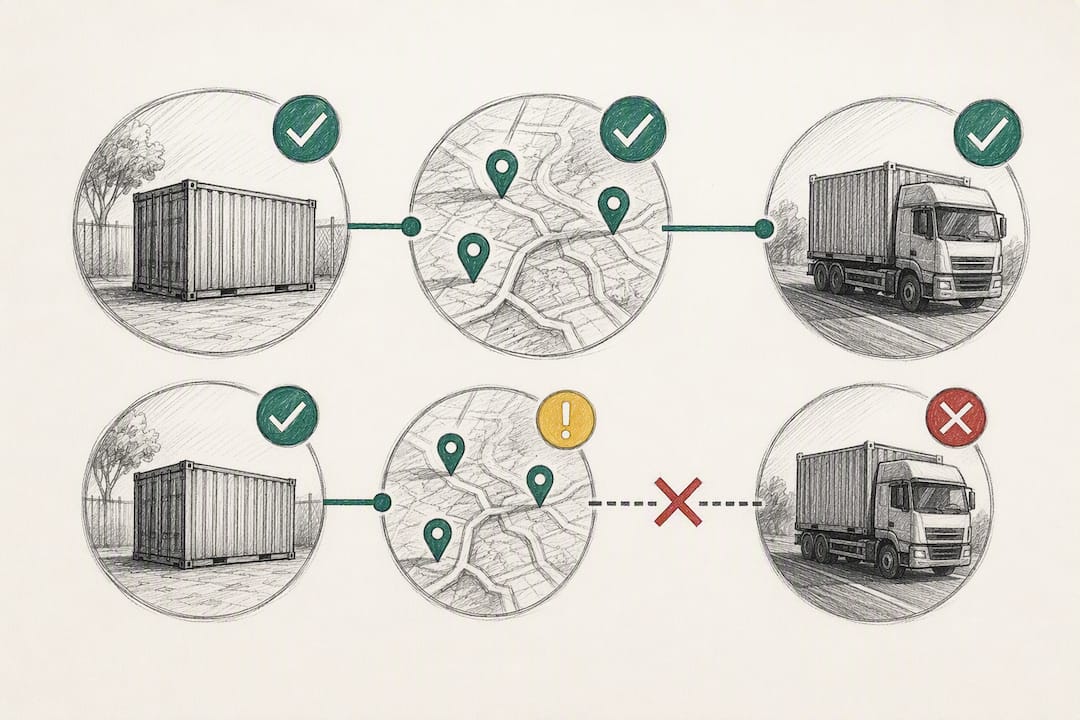
Structured visibility closes that gap by giving both sides the same information at the same time, rather than relying on a chain of phone calls and forwarded emails. And letting hauliers control which jobs they accept, rather than forcing acceptance through blind allocation, protects capacity where it actually matters: a haulier who takes a job because it genuinely suits their fleet is far less likely to cancel late.
If you’re seeing repeat collection failures, rising admin time chasing updates, or capacity gaps during peak weeks, that’s usually the point to consider a managed platform over running everything in-house.
— Vytautas
Managed drop-and-collect support from Haulier.AI
A managed platform can be a practical alternative when running your own drop programme starts costing more in admin hours than it saves in flexibility. Such a platform may provide an AI-assisted, human-backed transport desk that tracks paperwork, matches you with hauliers who cover relevant ports, and lets hauliers control the rates and jobs they accept, reducing the risk of capacity cancellations.
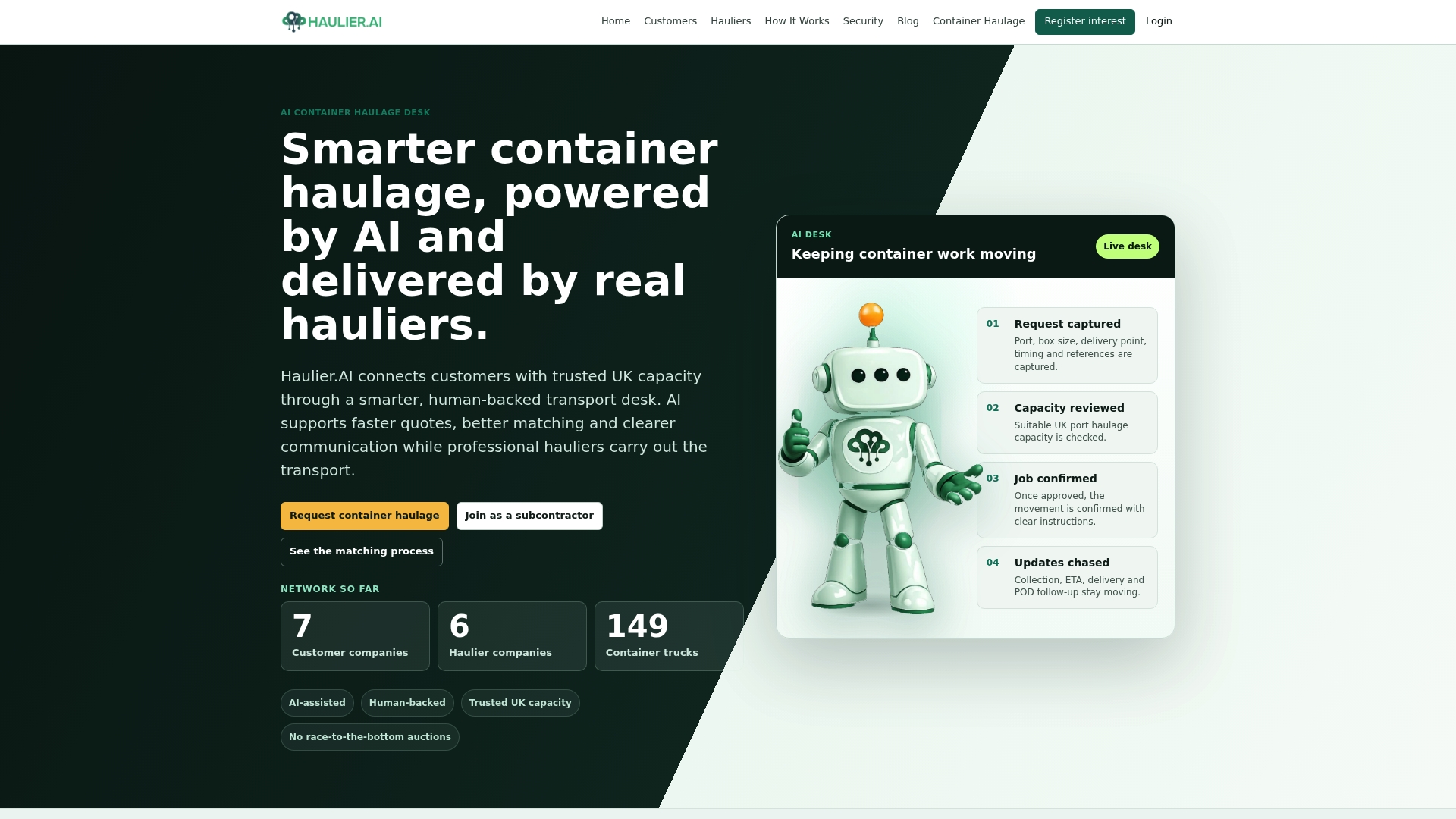
That structure matters most when you’re already juggling multiple drops a week and can’t afford another missed collection because a confirmation got buried in an email thread. If recurring collection failures, thin capacity, or paperwork delays are eating into your week, it’s worth looking at UK container haulage through Haulier, or heading straight to request a quote for your next drop-and-collect move.
Sources
- Drop-and-hook vs live unload in container drayage: Which is right for your freight?
- Shipping container haulage options
FAQ
What Is the Difference Between Drop and Collect and Live Unload?
Drop-and-collect leaves the container on site for later pickup, freeing the driver immediately, while live unload keeps the vehicle waiting until the container is fully emptied.
How Long Can a Container Sit Before Collection?
There’s no universal limit. It depends entirely on the dwell period you agree in the booking, which is why writing a maximum dwell into the journey order matters more than assuming a standard.
Should I Use a Sidelifter or a Hiab for a Drop?
Hiab drops are often cheaper for delivering empty containers, but a sidelifter is usually needed for safely collecting a laden or heavy container later.
What KPIs Should I Track for a Drop Programme?
Cycle time from drop to pick, trailer utilisation rate, detention incidence, and on-time collection rate are the four core metrics to watch as a programme scales.
Can Haulier.AI Manage My Drop-and-Collect Bookings?
Yes. Haulier’s AI-assisted, human-backed transport desk tracks paperwork, matches you to hauliers covering your ports, and gives hauliers control over job acceptance to reduce missed collections.