
Container haulage article
£47.58 no show fee: port ready checklist for UK container haulage
Book container haulage in the UK without gate rejections or no show fees. Use a port ready checklist: container number, VGM and booking ref.
To book container haulage in the UK, place a confirmed slot booking with a haulier or managed platform and supply the container reference, verified gross mass (VGM), port booking reference and collection or delivery postcodes. Terminals run electronic slot systems and will turn away drivers who arrive without a valid, matching booking. If you’re collecting from a major port, check your driver holds the right certification before the truck leaves the yard.
HaulierMake Container Transport SmootherHaulier connects freight forwarders and importers with trustworthy UK hauliers through an AI-assisted, human-backed transport desk.See how Haulier worksTL;DR:
- Accurate and complete paperwork, including container number, VGM, and port reference, is essential before booking to avoid gate rejections and delays.
- Booking slots early, especially within 24 to 48 hours of vessel departure, helps secure availability at busy ports like Felixstowe and reduces last-minute costs.
- Port systems enforce strict matching of containers, references, and driver certification, with charges applying for late notifications or changes during the notification period.
- A firm quote must include precise postcodes, container details, and special handling needs to accurately estimate costs, which range from £250 to over £800 per container.
- Using managed platforms with real-time verification reduces errors, gate rejections, and administrative time, simplifying the process for freight forwarders and importers.
Table of Contents
- How do you book container haulage step by step?
- What information do you need to book container haulage?
- How does the Container Booking System work at UK ports?
- When should you book, and what do late changes cost?
- What determines the cost of container haulage in the UK?
- What are the most common booking mistakes, and how do you fix them fast?
- What should you check before choosing a haulier?
- What insurance and liability cover do you need for container haulage?
- What actually reduces missed slots and admin time
- Book container haulage without chasing five phone calls
- Where to check the rules yourself
- Sources
- FAQ
How do you book container haulage step by step?
Booking container transport isn’t complicated once you know what order to do things in. Most delays happen because someone tries to book a slot before they have the paperwork to back it up, not because the process itself is hard.
- Gather the container basics. You need the container number, its ISO size (20ft, 40ft or high cube), the verified gross mass, and confirmation that the shipment has cleared customs or is ready for release.
- Confirm your postcodes and site access. Collection and delivery postcodes need to be exact, and flag anything unusual, a narrow yard entrance, restricted delivery hours, or the need for a tail lift.
- Request a quote and lock in the slot. Get written confirmation back with a booking reference attached. Don’t treat a verbal “yes” as a booking; terminals and hauliers both work off the reference number, not a phone call.
- Register your driver. If the job touches a major port, your driver needs the right certification (more on that below) before they turn up expecting to load or unload.
- Run a final check. Cross-reference the booking reference, container number and slot time against what the terminal system shows, then keep a copy. Disputes over missed slots are far easier to resolve with a paper trail.
Pro Tip: Book your slot the moment you have a firm release date rather than waiting for the “ideal” collection time. Terminal slots at busy UK ports fill up fastest in the 24 to 48 hours before a vessel’s last free day, and a flexible slot booked early beats a perfect one booked late.
What information do you need to book container haulage?
Ports and hauliers won’t process a booking with gaps in it. Before you pick up the phone or open a booking form, have this ready:
- Container number and ISO size code (20ft, 40ft, or high cube).
- Verified gross mass (VGM) and the name of the provider who issued the certificate.
- Port or liner booking reference, plus confirmation the import has actually been released for collection.
- Collection and delivery contact details, postcodes, and any access restrictions (narrow gates, timed deliveries, forklift-only sites).
- Special handling needs, such as a chassis, hi-ab, tail lift, or ADR classification for hazardous goods.
Hauliers and their container haulage desks will typically ask for all of this upfront rather than piecing it together after the slot is booked, which is exactly why gathering it first saves a second phone call later.
How does the Container Booking System work at UK ports?
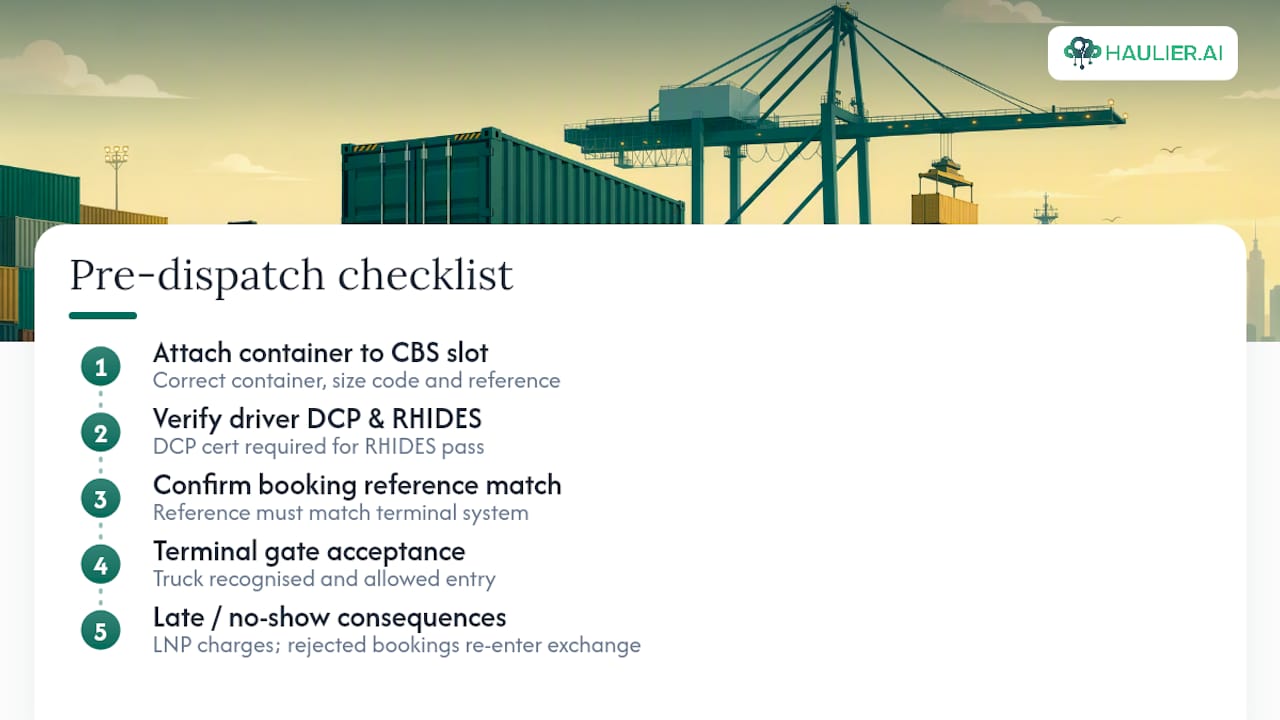
Felixstowe, the UK’s busiest container port, runs its slot system through the Container Booking System (CBS), a real-time appointment tool that assigns hour-long collection windows and requires the container to be correctly attached to that slot before arrival. Get the attachment wrong, wrong container number, wrong size code, mismatched reference, and the system won’t recognise your truck at the gate.
Driver access adds another layer. Before a driver can collect a container at Felixstowe, they need a Driver Certification Programme (DCP) certificate, which is a prerequisite for the RHIDES pass drivers must hold and present, along with a valid booking reference, at the pass office.
CBS also enforces a Late Notification Period (LNP) and applies charges for no-shows or last-minute changes, which the port’s own CBS guidance sets out in detail. Terminals routinely reject drivers who arrive without a matching booking reference, according to reporting on Felixstowe’s booking system, and rejected bookings often re-enter an exchange where another haulier can pick them up.
Before you dispatch a driver, check three things: the container is correctly attached to the slot, the driver’s DCP and RHIDES status is current, and your booking reference matches what the terminal system shows.
When should you book, and what do late changes cost?
Book as early as your release date allows. For routine cargo, allow ample notice; during peak shipping weeks, earlier is safer, since slots at high-volume ports disappear fast.
The Late Notification Period (LNP) is where most avoidable costs creep in. Felixstowe’s own CBS guidance lists specific charges: an LNP charge of £15, a £25 charge for changing a booking hour, and a no-show fee of £47.58. These aren’t hypothetical penalties, they’re the standard tariff applied once you’ve moved past the notification window.
Here’s the part hauliers sometimes overlook: if a returned booking is picked up by another haulier through the exchange after the LNP has already started, the original haulier still pays the LNP charge. Passing the job on doesn’t erase the fee.
- Keep a timestamped record of every booking confirmation and change request.
- If a charge looks wrong, escalate to the terminal’s haulier support desk with your reference number and timeline before disputing it further.
What determines the cost of container haulage in the UK?
Distance is the obvious driver, but it’s rarely the only one. A short run with a full backload can cost less per mile than a long run with an empty return leg, because dead mileage gets priced into the quote whether you ask for it or not.
- Distance and backload availability, since return loads reduce dead mileage and often bring the rate down.
- Container size and weight, plus any special equipment like a chassis or hi-ab.
- Terminal handling charges, detention fees, and chassis hire where applicable.
- Site restrictions, which can add time (and cost) if a driver needs a tail lift or faces a narrow access route.
UK container haulage typically runs from around £250 to £800 or more per container, and that range is wide precisely because postcodes, weight and equipment needs shift the number so much. A firm quote always needs your exact postcodes and VGM, not a rough estimate of “somewhere near London”. For a fuller breakdown of what pushes rates up or down, see this UK pricing guide.
What are the most common booking mistakes, and how do you fix them fast?
Most gate rejections trace back to one of four things, and all four are fixable quickly if you catch them early.
- Missing or incorrect booking reference. Verify it against the terminal’s system as soon as you receive it, and query mismatches with the haulier or port immediately rather than waiting until collection day.
- Incorrect VGM or missing customs release. Contact your VGM provider or customs broker to issue a correction, and keep written proof of the fix, since terminals won’t take a verbal assurance.
- Driver not certified for terminal access. If a DCP certificate or RHIDES pass isn’t in place, reassign the job to a certified driver rather than risk a gate refusal, and build certification checks into your onboarding for the next job.
- Late changes during the LNP. Use the booking exchange or reassign the slot to another haulier straight away, since waiting only increases the chance you’ll absorb the no-show fee.
Pro Tip: Keep a simple spreadsheet logging container number, booking reference, driver certification status, and confirmation timestamp for every job. It takes two minutes and it’s the single fastest way to resolve a disputed charge.
What should you check before choosing a haulier?
Not every haulier handles every port equally well, and the gap shows up exactly when you can least afford it, at the gate, with a slot about to expire.
- Terminal experience. Ask how often they run jobs through the specific port you’re using, Felixstowe, Southampton, or elsewhere, and whether their drivers already hold valid DCP and RHIDES credentials.
- Insurance and compliance evidence. Request proof of insurance and confirmation of their process for keeping driver passes current, rather than taking it on trust.
- Confirmation timelines. Find out how quickly they issue a written booking reference after you request a slot, since a same-day confirmation matters more than a cheaper rate that arrives too late to use.
- Exchange and dispute handling. Ask who manages LNP or no-show disputes if a booking gets returned, and whether they retain paperwork long enough to support a claim.
A single haulier can work well for predictable, repeat lanes. A managed platform tends to suit businesses juggling multiple ports or fluctuating volumes, since slot-matching and admin get handled centrally instead of chasing several separate haulage firms.
What insurance and liability cover do you need for container haulage?
Container haulage carries real liability exposure, and it sits in a different place depending on who’s contracted for what. Hauliers typically carry goods-in-transit insurance and public liability cover as standard, but the level of cover varies between operators, so it’s worth asking for evidence rather than assuming it matches your cargo’s value.
If you’re shipping high-value goods, check whether the haulier’s standard goods-in-transit policy actually covers the declared value of your container, some policies cap cover per vehicle or per incident well below what a full container of finished goods is worth. Where that’s the case, arranging supplementary marine or cargo insurance through your freight forwarder or a specialist broker closes the gap.
Liability also shifts depending on contract terms. Standard haulage contracts (often based on RHA conditions of carriage in the UK) set out who’s responsible for damage, delay, or loss, and those terms differ from what applies while the container is still under the shipping line’s control at the terminal. Read the liability clause before you sign, not after something goes wrong.
Documentation matters here too. Keep delivery notes, condition reports at collection and delivery, and any photos of damage or seal numbers. If a dispute arises over who’s liable, the driver who checked and photographed a seal before departure gives you a far stronger position than a verbal assurance that “it looked fine.”

What actually reduces missed slots and admin time
Most booking failures come from incomplete data, not bad luck. Supplying the container number, VGM and postcodes in full at the first request, rather than in stages, prevents the majority of gate issues before they start.
Digital slot attachments and platform-managed confirmations cut turnaround because nobody’s waiting on an email reply to confirm a reference number. My honest recommendation: keep a simple audit trail of every booking. It’s the cheapest insurance against a disputed charge you’ll ever buy.
— Vytautas
Book container haulage without chasing five phone calls
Most of the friction in container haulage isn’t the driving, it’s the admin: chasing quotes, re-sending container details, and hoping a haulier’s driver actually holds a current RHIDES pass. A modern haulage platform is designed to close that gap. Some platforms use AI-assisted, human-backed transport desks to match jobs to hauliers, check booking data against terminal requirements, and keep confirmations and paperwork in one place instead of scattered across emails.
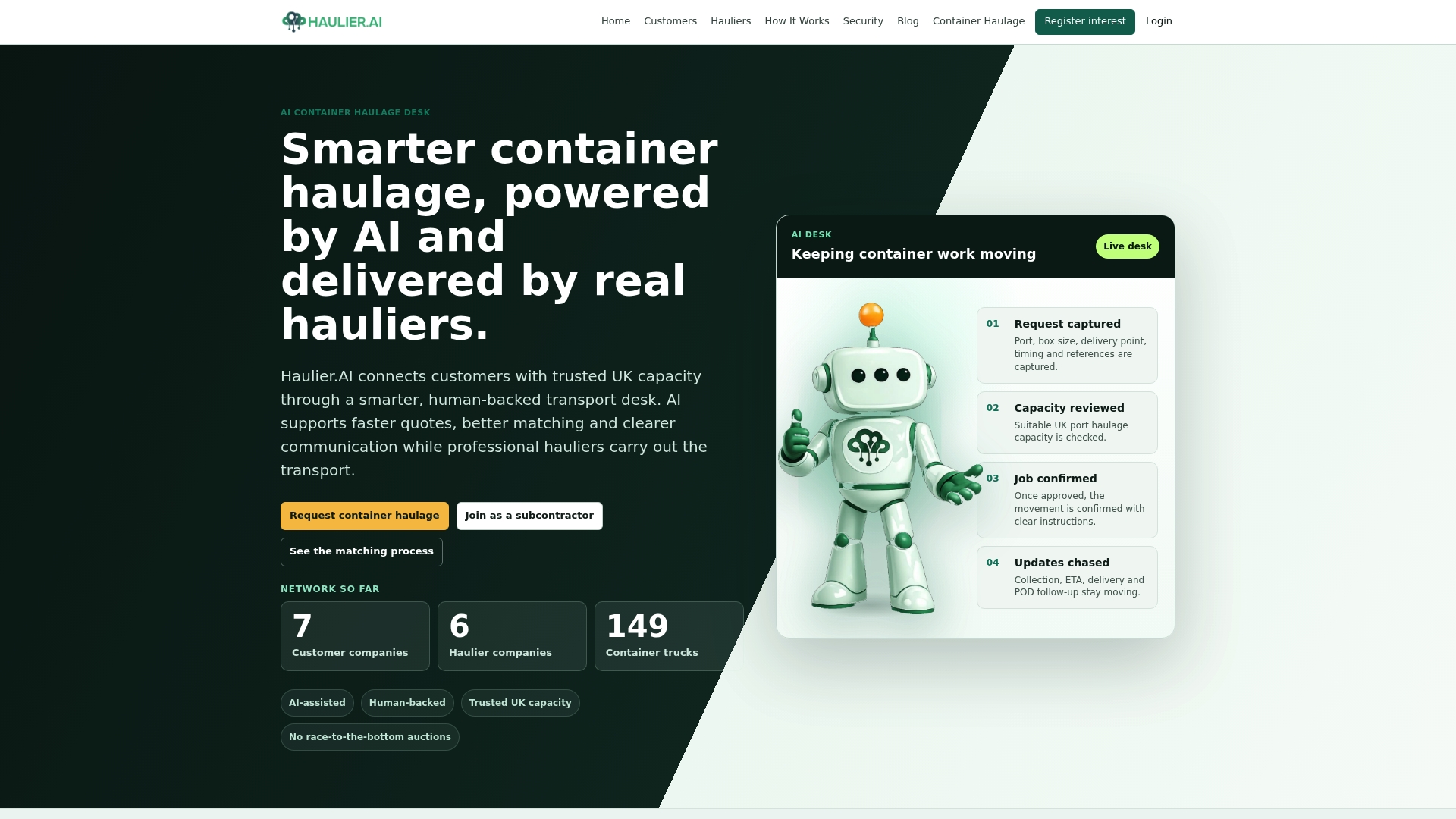
For freight forwarders and importers, that means faster quotes, fewer gate rejections because the booking data was wrong, and live visibility on where your container actually stands. Hauliers may keep control over which jobs they accept and what they charge to help maintain fair pricing. If you’ve got a container that needs moving, request a booking through Haulier and let the desk handle the compliance checks while you focus on the rest of the shipment.
Where to check the rules yourself
For the detail behind this guide, go straight to the source: the Port of Felixstowe’s CBS guidance covers slot rules and charges, its haulier information page covers driver access, and Haulier’s how it works page explains the platform itself.
Sources
- Port of Felixstowe — Container terminal general information
- IFE Global — Felixstowe port container booking system update
- KCharles Haulage — How much does container haulage cost?
FAQ
How much does it cost to transport a container within the UK?
UK container haulage typically ranges from around £250 to £800 or more per container, depending on distance, container size, and any special handling needs. A firm quote always needs exact postcodes and VGM figures rather than a rough estimate.
How do you book a container for shipping?
Supply the container number, size, VGM, and port booking reference to a haulier or managed platform like Haulier, confirm collection and delivery postcodes, and get written confirmation with a booking reference before your driver is dispatched.
How much does it cost to transport a 40 foot container?
A 40ft container generally sits towards the higher end of the £250 to £800+ UK price range, since size and weight both push costs up, though distance and backload availability still have the biggest effect on the final price.
How much does it cost to transport a 20-foot container?
A 20ft container usually falls towards the lower end of the same £250 to £800+ range, but the exact figure still depends on collection and delivery postcodes, weight, and any equipment needed.
What happens if you miss your booked collection slot?
Missing a slot at a port like Felixstowe typically triggers a no-show charge, cited at £47.58 in Felixstowe’s CBS guidance, and the booking usually needs to be reissued or picked up through the exchange by another haulier.