
Container haulage article
Sea freight logistics for UK importers under pressure
A practical guide to sea freight logistics for UK importers, covering ports, documents, timings, container haulage and common operational risks.
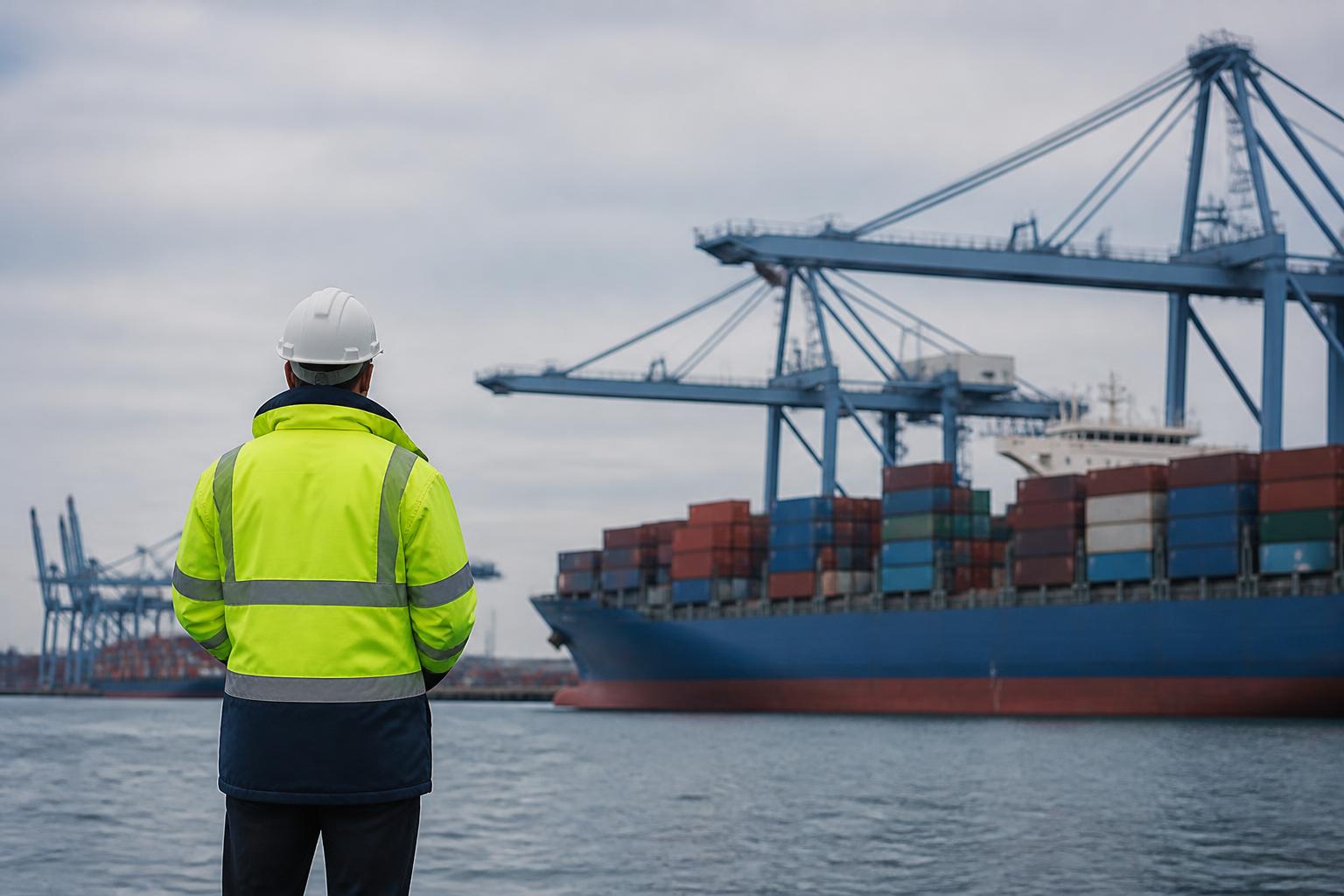
For UK importers, sea freight is rarely the hard part on its own. The pressure usually comes from the joins between stages, origin booking, sailing schedules, customs entries, port release, and the handover into UK haulage. When those joins are weak, teams end up chasing ETAs, correcting documents, paying storage, and trying to find last minute container haulage when the box is already on the quay.
That is why sea freight logistics needs to be managed as one operational chain, not as separate purchases. The ocean leg, customs position, port status, and inland delivery plan all affect each other. For UK importers, especially since Brexit, the difference between a smooth movement and a costly one is often not the vessel itself. It is whether the paperwork, release steps, and UK delivery plan were lined up early enough.
What sea freight logistics actually covers
When we talk about sea freight logistics, we mean the full movement from origin to final delivery, not just the booking on a vessel. In practice, that covers space booking with the shipping line or freight forwarder, container loading at origin, export customs where required, vessel departure, transhipment if the route is indirect, arrival at the UK port, discharge from the vessel, import customs clearance, release of the container, and inland delivery to the consignee or warehouse.
For importers, responsibilities are often split across several parties. A supplier may handle origin packing and export formalities. A freight forwarder may control the ocean booking and issue the shipping documents. A customs broker may submit the UK import declaration. A shipping line or its agent controls release conditions, free time, and equipment return rules. A haulier handles the UK port collection and final delivery slot. If no one is actively managing the handovers, gaps appear quickly.
The exact split depends on the shipping term agreed with the supplier. Under EXW or FCA, the buyer usually has more control from origin onwards. Under FOB, the supplier gets the goods to the port and on board, while the buyer takes over the main carriage and import side. Under CIF, the supplier may arrange the ocean leg, but the UK importer still has to deal with customs, port release, VAT accounting, and inland delivery. Many importers assume CIF means the movement is fully handled. It does not. It often means the least visible part of the movement is arranged elsewhere, while the UK side still lands on the importer’s desk.
The document set matters as much as the route. Commercial invoice, packing list, bill of lading or sea waybill, arrival notice, customs entry data, and any commodity specific certificates all need to align. If weights, package counts, consignee details, or commodity descriptions differ across documents, customs clearance and release can stall.
On the UK side, sea freight logistics usually becomes most urgent at the point where the container is available but not yet moving. That is where storage clocks start, vehicle slots need to be secured, and the importer needs a realistic plan for container haulage into the final delivery point.
How the UK sea freight process works in practice
In practice, the process starts well before the vessel sails. The booking party confirms the origin, destination port, container type, cargo details, and required sailing. For a standard FCL movement, that means confirming whether the load is 20ft, 40ft, 40HC, weight, commodity, and any special requirements such as food grade handling or out of gauge restrictions. For LCL, the consolidator’s cut off dates matter just as much as the vessel schedule.
Once space is booked, the origin side arranges container collection, loading, and export documentation. At this point, the buyer needs more than a sailing date. They need the booking reference, vessel and voyage, cut off compliance, and visibility on whether the goods actually made the intended sailing. A booked container and a loaded container are not always the same thing.
During transit, the useful information is not just the original ETA. It is whether that ETA is still credible. Transhipment ports, blank sailings, rolled containers, weather disruption, and berth congestion can all move the arrival date. If the inland delivery plan is built on a stale ETA, the UK side starts chasing the wrong date.
Before arrival in the UK, import customs data should already be prepared. Since Brexit, UK import formalities are distinct from EU procedures, even where the vessel has called at EU ports first. The importer of record needs the correct commodity code, customs value, origin information, and any preference evidence if a duty claim depends on it. VAT treatment also needs to be clear, whether that means paying import VAT at the border or using postponed VAT accounting where applicable.
When the vessel arrives, discharge does not automatically mean the container is ready for collection. The box must be unloaded, manifested correctly, customs status must allow release, and the shipping line’s release conditions must be met. That can include freight payment confirmation, original bill of lading surrender if one is in use, and line specific release steps.
Only after that does port collection become realistic. At that point, UK haulage planning becomes critical. The haulier needs the container number, release status, collection reference, VBS or port booking requirements where applicable, delivery address, delivery constraints, and whether the site can accept the unit type and weight. If the destination has strict booking windows, limited unloading time, or no ability to tip promptly, that needs to be known before the driver is dispatched.
After delivery, the job is not finished until the empty is returned within the allowed detention period. Importers often focus on getting the loaded container delivered and forget that the equipment clock continues. A delayed devanning slot, warehouse backlog, or missed empty return booking can turn a routine import into a detention bill.
For businesses handling mixed flows, the inland side may also involve onward distribution from the devanning point as part-load or full-load road movements. Where that handover needs to happen quickly, it helps to keep the port collection and the domestic planning in one organised workflow. We cover that in more detail in how UK haulage logistics works when plans keep changing.
Which UK ports and inland links matter most
Port choice affects more than the sea transit. It changes haulage availability, delivery lead times, drayage cost, empty return options, and the resilience of the final plan.
Felixstowe remains one of the main gateways for deep sea containers into the UK, particularly for flows from Asia. For importers delivering into the Midlands, East Anglia, London, and the South East, it is often a natural routing. But that also means heavy demand for container haulage, pressure on collection slots, and sensitivity to vessel bunching. If your deliveries depend on tight turnarounds, planning around free time and local haulage capacity matters as much as the vessel ETA. For businesses moving regularly through this port, our page on container haulage through Felixstowe sets out the practical UK side.
London Gateway is important for importers serving London, the South East, and nearby distribution parks. Its road connections can work well for regional delivery planning, but the real benefit depends on where the final warehouse sits and whether the consignee can receive containers efficiently. A port that looks closer on a map does not always produce the best result if delivery booking lead times or empty return arrangements are poor.
Southampton is a key option for South Coast access and wider inland distribution. Depending on the shipping line and the final delivery postcode, it can be a useful alternative to East Coast routings. Tilbury also matters for London and South East supply chains, especially where specific line services or customer delivery patterns make it operationally sensible.
Liverpool, Teesport, and Immingham become especially relevant when the final delivery points are in the North, North West, Yorkshire, Humber, or the North East. Using a northern port can remove a large amount of unnecessary road mileage from the inland leg. That can improve delivery timing and reduce exposure to driver availability issues on long one way port runs. Immingham in particular is often significant for short sea and certain industrial flows, and for some importers it is the most practical link between port discharge and regional delivery. We have also set out the UK side of container haulage via Immingham.
The inland links matter just as much as the quay. A port collection into a nearby devanning warehouse behaves very differently from a direct delivery into a retail RDC, a factory with limited unloading space, or a site that only accepts arrivals in fixed booking windows. Importers should choose ports with the final road plan in mind, not just the ocean rate.
Where delays and extra costs usually come from
Most delays do not begin with a dramatic port event. They begin with small gaps that no one closed early enough.
Document errors are one of the most common causes. A mismatch between invoice and packing list, an incorrect consignee, missing commodity detail, or inconsistent weights can delay customs clearance or trigger extra checks. If the customs entry cannot be completed cleanly before arrival, the container may sit while storage time starts to run.
Another regular problem is poor release visibility. Teams may know the vessel has arrived, but not whether the box is customs cleared, line released, available for collection, or blocked by a document issue. That creates wasted calls and failed planning. A haulier cannot collect a container that is not actually released, even if the ETA looked fine the day before.
Missed slots also create avoidable cost. Ports and terminals operate on booking systems, and delivery sites do the same. If the collection window is missed because the release was late, or if the delivery slot is missed because the port queue was longer than expected, the whole move can roll into the next day. That can trigger storage, waiting time, or rebooking charges.
Demurrage and detention are often misunderstood. Demurrage usually relates to the container remaining in the port or terminal beyond the allowed free time. Detention usually relates to keeping the line’s equipment outside the terminal beyond the allowed period before empty return. The exact definitions and charging structure vary by line and terminal, so the important operational point is simple. Know the free time, know when the clock starts, and have a realistic plan for collection, devanning, and empty return.
Port congestion is another obvious pressure point, but it is not always visible early enough in standard updates. A published ETA may not reflect berth delay, discharge backlog, or terminal pressure on the day. Weak ETA visibility is therefore a real cost driver. If inland plans are not adjusted quickly, importers either book too early and waste resources, or book too late and lose the best collection options.
Finally, there is the issue of fragmented communication. Ocean teams, customs teams, warehouses, and hauliers often work from different inboxes and spreadsheets. That is how routine imports turn into long email chains with no clear ownership. We see the same pattern in domestic planning, which is why we built Haulier.AI around freight moves without the usual phone and email chase.
How to organise sea freight logistics without more chasing
The cleanest way to organise these movements is to treat the UK side as a controlled handover, not a last minute transport request.
First, request quality matters. The inland move should not be released for pricing or planning until the core facts are in one place, port, container number, unit type, gross weight, release status, delivery postcode, delivery constraints, target date, and any empty return requirements already known. That sounds basic, but much of the chasing in container haulage comes from incomplete requests being circulated too early.
Second, quote comparison needs structure. For port work, the cheapest line on a spreadsheet is not always the best option if it hides waiting assumptions, low confidence on collection timing, or weak coverage at the relevant port. Buyers need comparable terms, what is included, what waiting time is allowed, whether quay rent exposure is understood, whether empty return planning is included, and whether the operator genuinely covers that port with the right equipment and local knowledge.
Third, exception management should be active, not reactive. There should be a clear point at which someone flags that the ETA has moved, the release is not complete, the delivery site cannot take the box, or the empty return location has changed. Without that discipline, everyone keeps working from yesterday’s plan.
Fourth, handover into UK haulage needs to preserve commercial control. Buyers need suitable operators, not a race to the bottom auction that encourages unrealistic pricing and weak follow through. Hauliers also need enough job quality and context to decide properly whether the work fits their fleet, drivers, and network. That is why Haulier.AI is AI-assisted and human-backed. We organise the request and quote handling, keep human oversight where transport decisions need judgement, and help connect businesses with suitable operators for UK haulage without stripping out the commercial realities of the move.
This matters for both regular and awkward work. Some importers need steady port collections every week. Others need help when volumes spike, suppliers change, or a box lands at the wrong time with no usual carrier available. Some need direct container delivery. Others need the port leg plus onward full-load or part-load distribution once the goods are devanned. In each case, the work improves when the request is clean, the updates are visible, and the operator handover is managed rather than improvised.
Sea freight will always involve moving parts outside the importer’s direct control. Vessels slip. ports get busy. documents need correction. But the UK side does not have to become a daily chase. If the booking facts, release status, and inland requirements are organised properly, sea freight logistics becomes more predictable, and the pressure on operations teams drops with it.
What is included in sea freight logistics?
It usually includes booking, export handling, ocean movement, arrival processing, customs, release, container haulage and final delivery. The exact split depends on the shipping line, forwarder, importer and haulage operator.
How is sea freight different from container haulage?
Sea freight is the wider end-to-end movement by vessel and related port processes. container haulage is the inland road leg moving the container to or from the UK port and delivery point.
Why do sea freight shipments get delayed after the vessel arrives?
Arrival is only one step. Delays can still come from customs holds, missing release references, port congestion, unavailable collection slots, unpaid charges or lack of UK haulage capacity at the right time.
Which UK ports are most common for container imports?
Common gateways include Felixstowe, London Gateway, Southampton, Tilbury, Liverpool, Teesport and Immingham. The right choice depends on sailing options, destination, carrier coverage and inland transport practicality.
What documents matter most in sea freight logistics?
The key documents usually include the bill of lading, commercial invoice, packing list, customs entries and release details. Errors in names, quantities, references or VAT treatment can slow release and delivery.