
Container haulage article
Choosing a transport desk without losing rate control
A practical comparison of transport desk options for subcontract haulage work, covering rate control, coverage, response times and operational handling.
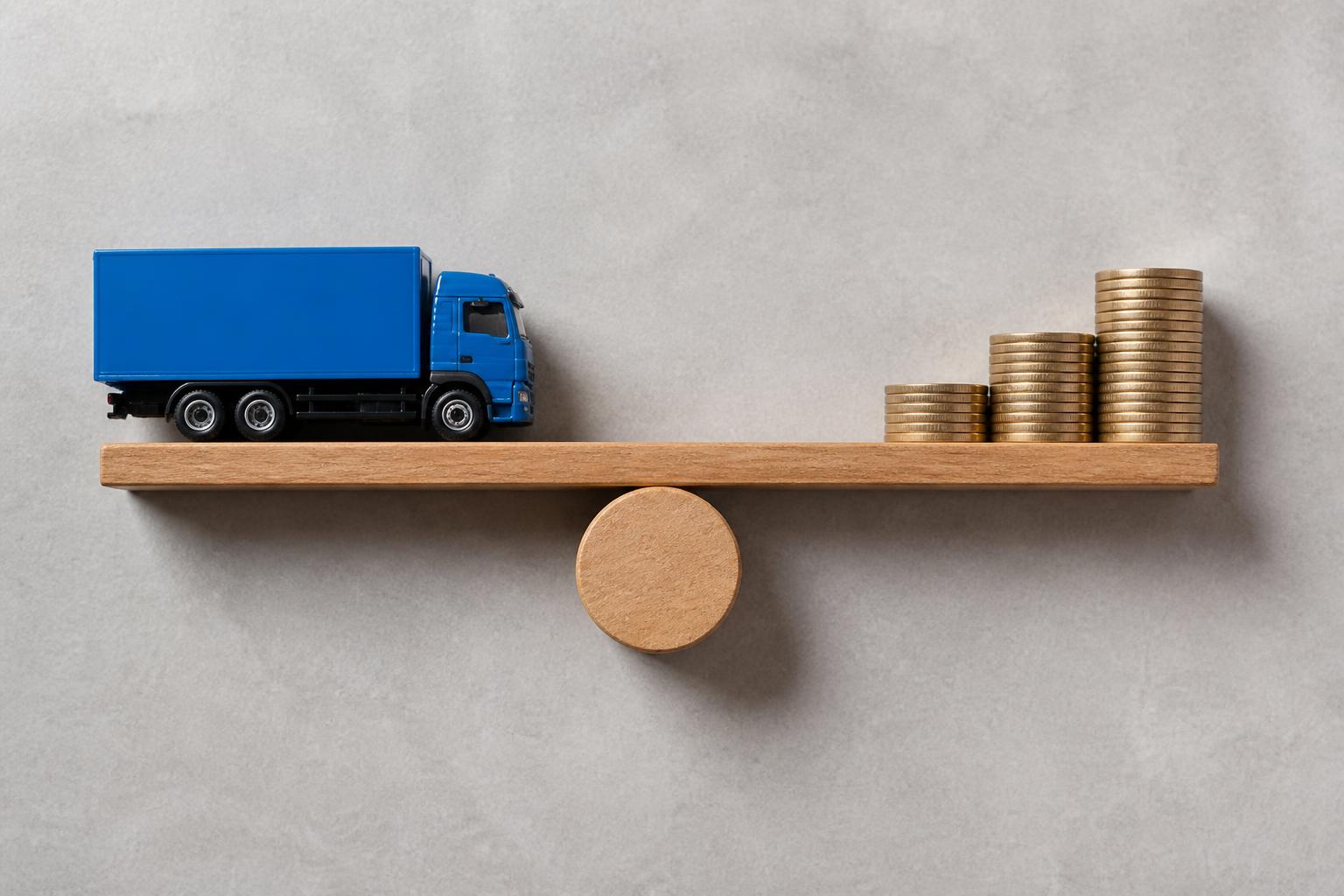
Choosing a transport desk is really a question about where you want control to sit. If you hand work out too loosely, rates drift, service becomes patchy, and your team spends half the day chasing quotes, ETA updates and missing PODs. If you lock everything down too hard, you can end up slow to react when volumes change, a regular carrier is full, or a last-minute movement needs covering.
For UK haulage, the best setup is usually not the one with the most noise or the biggest list of operators. It is the one that gives buyers and hauliers a clear process for requests, quotes, allocation, updates and proof of delivery, without turning every movement into an auction. That is especially true where subcontracting includes container haulage, port collections, awkward delivery windows, and changing demand across the week.
What buyers and hauliers usually mean by a transport desk
In practice, people use the term transport desk to mean several different things.
The first is a broker-style desk. A customer sends a job over by phone or email, someone on the desk rings around operators, collects rates, checks who can cover, and confirms the job. This model is common because it is simple to start with and works reasonably well for irregular traffic. The downside is that it often depends on who is on shift, who answers the phone, and how well notes are captured.
The second is an open load board model. Jobs are posted to a marketplace and hauliers express interest or quote. This can be useful for spot work, backloads and quiet-day fill-in. It can also create a race to the bottom if the process is built around visibility of competing rates rather than suitability, service and actual availability.
The third is an in-house traffic desk run by the shipper, forwarder or principal contractor. Here, internal planners manage a panel of subcontractors directly. That usually gives stronger rate governance, because approved operators, lane rates, surcharge rules and service expectations can be set in advance. The trade-off is internal labour. Someone still has to gather prices for non-standard work, chase updates, manage exceptions and store documents.
The fourth is an AI-assisted, human-backed desk. This is not just software and it is not just a broker with a new label. The point is to structure incoming requests, route them to relevant operators, organise quote handling, keep an audit trail, and support the human team doing the checking and communication. Done properly, it reduces manual calling and spreadsheet work without taking commercial control away from either side.
Those differences matter because day-to-day UK haulage is full of small operational decisions that affect margin. Is the collection time fixed or flexible? Is the load a straightforward curtain-sided full-load, or a part-load with awkward dimensions? Is there a timed booking? Is the site known for waiting time? Does the job involve container haulage, VBS slots, quay rent risk, or a port card requirement? A desk that captures those points consistently will protect rates better than one that treats every movement as a generic load from A to B.
How the main options compare in practice
On speed, manual broker handling can be quick when the right person knows the right hauliers and the job is straightforward. It slows down when the movement is unusual, when several operators need chasing, or when the desk is dealing with peaks. A load board can produce responses quickly, but not always the right responses. Fast interest is not the same as confirmed, compliant capacity. In-house traffic teams can be very fast on regular lanes, because the subcontractor list is already known. They are slower when the requirement falls outside the usual pattern. An AI-assisted, human-backed desk tends to be strongest where speed depends on organised matching and prompt outbound requests, rather than one planner remembering who might cover.
On control, in-house desks usually come out best if they are properly resourced. They can enforce approved supplier lists, agreed lane rates, fuel surcharge logic, waiting time policy and document standards. Manual broker desks vary a lot. Some are disciplined, some are not. Load boards generally give the least control unless they are tightly managed. An AI-assisted, human-backed desk sits between the two. It can apply structure to quote collection and operator selection while still using human judgement on service history, geography and awkward job fit.
On visibility, manual methods are often weak because information sits in inboxes, notebooks, WhatsApp messages and spreadsheets. Load boards can show who responded, but not always why a carrier was chosen, what was promised, or whether the delivery paperwork came back cleanly. In-house teams can have good visibility if they use a proper TMS, but many still rely on shared mailboxes and manual trackers. A structured desk is useful here because request details, quote history, allocation, ETA updates and POD capture can all be tied together in one process.
On admin effort, load boards appear light at first but can create downstream work. Someone still needs to check compliance, answer clarification questions, confirm the booking, chase updates and handle disputes. Manual broker handling is labour-heavy by nature. In-house teams carry all the admin themselves. An AI-assisted, human-backed desk reduces repeated handling, especially where many jobs are similar but not identical. That matters if your team is spending too much time copying job details between email, spreadsheets and phone notes instead of managing exceptions.
For buyers and hauliers trying to understand how organised subcontracting supports service, it is worth looking at how transport companies keep UK haulage moving, because the operational burden is usually in the handoffs, not just in the linehaul.
Where rate control is won or lost
Rate control is rarely lost in one dramatic mistake. It is usually lost in small gaps in process.
The first gap is poor quote collection. If the request going out is incomplete, the prices coming back will not be comparable. A haulier pricing a movement with no clear load details, no booking window, no pallet count, no weight, no site restrictions and no return conditions will either decline, overprice for safety, or quote on assumptions. Later, when the real job turns out to be more difficult, someone argues about extras. Good rate control starts with a complete brief.
The second gap is treating every quote as if cheapest is best. In subcontracting, commercial control is not the same as forcing the lowest number. If one operator knows the collection point, already has a vehicle in the area, has the right kit, and has a clean record on ETA updates and POD return, then a slightly higher rate may protect margin overall. The cheaper option can become expensive once missed slots, rebooking fees, waiting time and customer complaints are counted.
The third gap is weak operator selection rules. A sensible desk should distinguish between regular lane work, overflow work, urgent cover, and specialist or awkward movements. For regular traffic, a panel approach usually works best. For spot jobs, a broader request may be appropriate. For urgent work, speed and confidence of response matter more than broad circulation. For container haulage, the shortlist should reflect actual port capability, card holding, slot familiarity and local coverage, not just a generic claim to do containers.
The fourth gap is communication method. If quote requests are scattered across email chains, text messages and phone calls, the record becomes hard to audit. You then lose sight of who was asked, what was quoted, what assumptions were made, and whether a surcharge was accepted. That is where rates drift. A structured process does not need to be inflexible, but it does need to leave a clear trail.
This is also why a desk should avoid open reverse-auction behaviour for most work. Constantly exposing operators to undercut each other may produce a lower spot price today, but it damages service quality, discourages better hauliers from engaging, and trains everyone to hold something back. Buyers then lose genuine market feedback, because operators quote strategically rather than honestly. Better commercial control comes from consistent request quality, sensible comparison, and clear acceptance rules.
What operational teams should test before switching
Before changing desk model, test the process with real operational scenarios.
Start with ETA handling. Ask how updates are captured and passed on. Is the ETA only recorded at booking stage, or can it be updated during the movement? Who chases if the vehicle is running late? Can the desk distinguish between estimated collection, loaded away, and delivery ETA? For customer-facing operations, that distinction matters.
Next, test POD capture. In UK haulage, POD discipline is often what separates a tidy subcontract arrangement from an expensive one. How quickly is POD expected back? In what format? What happens if the receiver stamps but does not print a name, or if there is a discrepancy note? Can the desk handle image capture from a driver phone and match it to the right movement? If your accounts team cannot invoice because PODs are missing or unreadable, the transport desk has not really solved the problem.
Then test part-load and full-load handling separately. A full-load movement is usually simpler to brief and price. A part-load job often needs more detail, because compatibility, handling, dimensions and delivery sequence matter. If the desk treats both in the same basic way, you may get avoidable misquotes or service failures.
Urgent jobs need their own check. Ask what happens when a same-day movement lands after normal planning cut-off, or when a regular supplier drops out. Does the desk have a defined way to escalate? Is there human intervention, or does the request simply sit in a workflow waiting for responses? AI-assisted is useful, but urgent traffic still needs human-backed judgement.
Awkward movements are the real test. That includes sites with narrow access, timed retail deliveries, tail-lift requirements, handball risk, hazardous location rules, and crane offload coordination where relevant. It also includes container haulage. Port work brings extra variables such as slot timing, quay rent exposure, empty return rules, port system familiarity, and the practical reality that coverage at Felixstowe is not the same as coverage at Liverpool or Immingham.
If port work is part of your mix, look closely at whether the desk understands container movements through major UK ports. Generic road transport handling is not enough when the movement depends on terminal process as much as on road miles.
What matters most for UK coverage and subcontract fit
Coverage in UK haulage is not just a map with pins on it. It is a combination of geography, network shape, operator base, local knowledge and compliance readiness.
Geography matters because subcontracting works best when operators are matched to where they naturally run. A desk that understands directional flow can place work more sensibly than one that simply circulates everything nationally. That is particularly important for part-load, where density and route fit matter, and for container haulage, where port-adjacent positioning changes what is commercially workable.
Port work sharpens that issue. Felixstowe and London Gateway often require a different subcontract fit from Southampton, Tilbury, Liverpool, Teesport or Immingham. The road approach, driver familiarity, booking practices and regional operator pools vary. A desk that says it covers all UK ports should be able to show how it handles those practical differences, not just list the names.
For example, if your work regularly moves through the South East, a desk should know when container coverage around London Gateway is a better fit than trying to pull equipment in from further afield. The same principle applies to East Coast work through Felixstowe container movements, where local familiarity and positioning affect both service and rate realism.
Compliance is another filter, and understanding Operator Compliance is essential for subcontracting in the UK, where operator licence status, insurance, and the right vehicle capability are obvious basics. Port work may add site-specific expectations and documentation. Where customs-related handoffs still affect paperwork after Brexit, the desk needs to know what belongs with the movement and what remains outside haulage scope. That is not the same in every chain. Also, where invoicing or cross-border elements raise VAT questions, the desk should at least preserve the right records and references, even if the tax treatment is handled elsewhere in the business.
Demand volatility is the final piece. Many businesses seek a transport desk not because their current arrangement is always bad, but because it stops coping well during change. Seasonal peaks, customer wins, supplier failures, vessel disruption, and sudden urgent jobs all expose weak subcontract processes. A suitable desk for UK coverage is one that can scale requests up and down without losing control of rates, updates or paperwork.
When an AI-assisted, human-backed desk is the better fit
An AI-assisted, human-backed desk is usually the better fit when the problem is not a total lack of carriers, but too much manual friction between request and allocation.
That includes operations teams dealing with irregular overflow. They already have core hauliers, but need extra cover when volumes rise, regular suppliers are full, or a lane appears that sits outside the normal pattern. In that situation, manual calling and spreadsheets tend to create delay and inconsistent quote comparison.
It also fits businesses with frequent urgent jobs. If your team is repeatedly trying to fill last-minute gaps, a structured desk can shorten the path from request to shortlist to confirmation, while still leaving a human in the loop for judgement calls.
The model is particularly useful where the work mix includes both standard and awkward jobs. A basic load board may be acceptable for simple spot movements, but it is less helpful when the load details, timing, site conditions or port requirements need proper capture before asking hauliers to quote. Haulier.AI is designed around that middle ground, where process matters, but so does human oversight.
For hauliers, the attraction is different. Many operators want relevant subcontract work without being forced into a public undercutting exercise. A structured desk can preserve commercial control by presenting clear job details, collecting quotes in an organised way, and selecting on fit as well as rate. That tends to produce better working relationships than a pure auction model.
Haulier.AI is also a stronger fit where document flow and status updates matter. If buyers need reliable ETA communication and prompt POD return, and hauliers want a cleaner process for receiving and confirming work, a desk with organised handling can remove a lot of avoidable admin.
In short, if your current method depends on too many phone calls, too many inbox searches, and too many spreadsheet columns, it is probably time to look at a more structured transport desk for subcontracting haulage work. The right answer is not to automate judgement out of the process. It is to support judgement with better request handling, clearer quote comparison, stronger records, and enough human control to deal with the realities of UK haulage. That is where a service like Haulier.AI is most useful, especially when the work includes changing volumes, urgent cover, and container haulage through the main UK ports.
Is a transport desk the same as a load board?
No. A load board is mainly a posting and search tool. A transport desk usually adds request handling, quote collection, operator communication, updates and issue management.
Can a transport desk help with container haulage?
Yes, if it understands UK haulage and port-related work. That includes planning around Felixstowe, London Gateway, Southampton, Tilbury, Liverpool, Teesport and Immingham.
Will using a desk mean losing control of rates?
Not necessarily. It depends on the model. Some systems push open bidding, while others preserve hauliers' commercial control and let buyers compare suitable quotes in a managed way.
Is this only for large transport teams?
No. It is often most useful when smaller operations teams are stretched by volume swings, urgent jobs, supplier gaps or too much calling and email chasing.
What should buyers ask before moving work to a desk?
Ask about coverage, response times, quote handling, ETA updates, POD process, exception handling, part-load and full-load capability, and who actually oversees the work.
Does AI remove the need for human traffic judgement?
No. In this context, AI-assisted should support organisation and matching, while human-backed oversight remains important for operational judgement and exceptions.