
Container haulage article
Which haulage licence you need before taking UK work
A practical guide to UK haulage licence rules, who needs one, operator licence types, common exceptions and what to check before taking work.
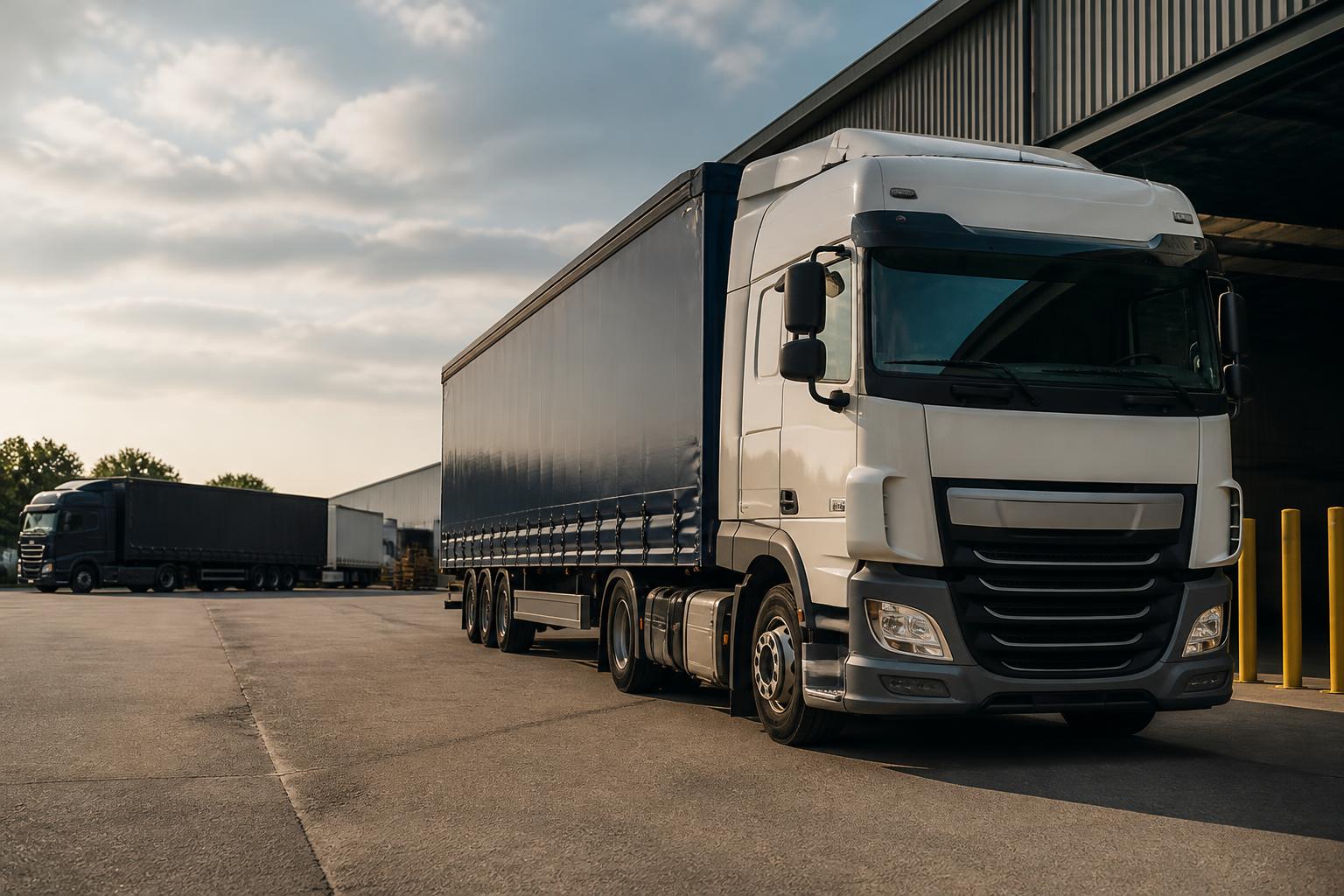
If you are taking UK work with goods vehicles, the permission people usually mean by a haulage licence is a goods vehicle operator licence, often shortened to an operator licence or O-licence. In many cases, that is the legal gateway before you can carry goods for hire or reward, or sometimes even move your own goods in the course of business, depending on the vehicle and how it is used.
That is only part of the picture. An operator licence does not replace the rest of road transport compliance. You may also need a qualified transport manager, proper maintenance systems, the right driver licensing and Driver CPC arrangements, tachograph compliance, insurance, and, for some international work, extra registrations or permits. For buyers arranging UK haulage, and for hauliers taking subcontract work at short notice, getting this right before the first movement avoids cancelled collections, refused port entries, and expensive last-minute cover.
What a haulage licence usually means in practice
In day-to-day transport conversations, people often say haulage licence when they mean a goods vehicle operator licence issued by the traffic commissioner through the Office of the Traffic Commissioner. That licence is about the operation of goods vehicles, not just the act of driving them.
It is separate from a driving licence. A driver may hold the correct category to drive an HGV, but the business operating that vehicle may still be acting unlawfully if it needs an operator licence and does not have one. It is also separate from motor insurance, Goods in Transit cover, public liability, and customs or port registrations.
For UK haulage, the operator licence question usually turns on three practical points:
- the maximum authorised mass of the vehicle or vehicle combination
- whether the vehicle is being used in connection with a trade or business
- whether the work is hire or reward, or own-account carriage
Readers also sometimes use haulage licence to mean authority for international road haulage. Since Brexit, that needs more care. A UK operator carrying goods internationally may need a standard international operator licence, and in some cases other documents depending on the route, the vehicle, and the work. Rules that apply across the EU are not automatically the same as UK domestic rules, and vice versa.
So when we help a customer place work, or help a haulier assess whether a subcontract job fits its authority, we do not stop at the label. We look at the actual movement, the vehicle, the collection and delivery pattern, and whether the operator’s licence scope matches the job.
Who needs an operator licence for UK haulage?
For most operators using goods vehicles over the relevant weight threshold in the course of business, an operator licence is required. The common UK threshold is when you use a goods vehicle above 3.5 tonnes gross plated weight, or above 3.5 tonnes design weight if unplated. That catches a large share of HGV work.
For lighter goods vehicles, the answer can differ. A van doing domestic UK work is not automatically outside regulation forever, but many ordinary van operations do not need the same operator licensing as HGV operations. International light goods vehicle rules changed after Brexit, and some operators using vans over 2.5 tonnes for hire or reward into the EU now need operator licensing that they did not previously need. That is one of the clearest examples where UK-only assumptions can mislead.
The most obvious case where an operator licence is needed is hire or reward haulage. If you are paid to carry someone else’s goods, whether as a regular carrier, a spot subcontractor, or a same-day emergency cover operator, you are usually in operator licensing territory if the vehicle weight brings you within scope.
Own-account work can also require a licence. If you are moving your own goods as part of your business using an in-scope goods vehicle, that still does not automatically exempt you. A manufacturer moving its own stock, a builder moving materials, or a retailer transferring goods between sites may need an operator licence even though it is not selling transport to third parties.
A few practical examples:
- A haulier taking a palletised full-load from Birmingham to Glasgow in an articulated vehicle for a customer will normally need an operator licence.
- A manufacturer delivering its own finished goods on a rigid HGV to a customer site will usually still need one.
- A courier using a small van for local deliveries may not need the same licence, but the detail depends on vehicle weight and whether any international leg is involved.
- A subcontractor covering container haulage from Felixstowe or Southampton with an articulated unit almost certainly needs the appropriate operator licence in place.
The exact legal position depends on the vehicle and the use. That matters when work changes shape. A business that normally runs vans can move into HGV work. A haulier that normally handles domestic full-load work can be asked to cover port collections. A firm carrying only its own goods can start helping a sister company or customer and drift into hire or reward without realising the compliance consequences.
The main licence types and how they differ
In Great Britain, the three main goods vehicle operator licence types are restricted, standard national, and standard international.
A restricted licence is generally for operators carrying only their own goods in the course of their own business. It does not authorise haulage for hire or reward. If a business holds a restricted licence and then starts taking paid transport work for another party, that is a serious mismatch between licence type and actual operation.
A standard national licence allows carriage of goods for hire or reward within the UK, and also own-account work. This is the usual route for domestic hauliers working within Great Britain, and for many subcontractors covering general UK haulage jobs.
A standard international licence covers both domestic and international carriage of goods for hire or reward, as well as own-account work. If you are carrying goods outside Great Britain, or planning to, this is usually the relevant category to review. Since Brexit, businesses should be especially careful not to assume that a licence setup that worked for domestic or pre-Brexit patterns automatically covers EU-related work now.
The practical differences are not just about geography. They also affect management requirements. Standard licences require professionally competent transport management, usually through a nominated transport manager who holds a recognised Certificate of Professional Competence and has genuine, continuous management of the transport operation. A restricted licence does not require the same formal transport manager arrangement.
For many operators, the real dividing line is this:
- restricted, for own goods only
- standard national, for UK hire or reward
- standard international, for international hire or reward and domestic work
That matters when accepting subcontract work. If a haulier tells us it can cover urgent UK haulage but holds only a restricted licence, we know immediately that ordinary paid haulage for third parties is not within scope. If the job includes an international leg, or an EU movement linked to post-Brexit rules, we check that the operator’s authority and supporting compliance are aligned before the work starts.
What operators must have in place before applying
Applying for an operator licence is not just form filling. The traffic commissioner expects the operator to have the business set up properly from the start.
First, there must be an operating centre. This is the place where authorised vehicles are normally kept when not in use. The site must be suitable in planning and practical terms, and the application process includes public notice requirements. Neighbours and local authorities can object, so this is not something to treat casually.
Second, the operator must show financial standing. The required amount depends on licence type and fleet size, and the figures are set formally rather than informally guessed. The business needs accessible funds at the required level, and that position must be maintained, not just shown for one day.
Third, standard licence holders need professional competence through a transport manager. That transport manager must be named, qualified, and genuinely involved. A paper-only arrangement is a common route into regulatory trouble. The traffic commissioner will expect evidence that the transport manager has real oversight of drivers, maintenance, tachographs, and compliance systems.
Fourth, maintenance arrangements must be in place. That means planned safety inspections, defect reporting, repair control, record keeping, and access to suitable maintenance support, whether in-house or outsourced. If maintenance is contracted out, the operator still remains responsible. A garage invoice alone is not a compliance system.
Fifth, good repute matters. The operator, directors, partners, and transport manager are assessed on good repute and fitness. Relevant convictions, previous regulatory findings, maintenance failings, tachograph offences, or false statements can all affect the application and future licence position.
In practice, before we are comfortable placing regular subcontract opportunities with a new operator, we expect the basics to be visibly under control:
- the right licence type and authorised vehicle numbers
- a credible operating centre
- clear maintenance arrangements
- named compliance responsibility
- insurance in place
- a working process for updates, ETA management, and POD return
That last point is commercial as well as legal. A compliant operator still needs operational discipline. If a customer has a timed booking at London Gateway, Tilbury, or Liverpool, licence status is only one part of whether the movement will actually run cleanly.
Common exceptions, edge cases and costly misunderstandings
The most expensive mistakes usually happen when businesses rely on assumptions.
One common misunderstanding is vans versus HGVs. People hear that vans are simpler and conclude that no operator licensing issue can arise. That is too broad. Domestic light van work may fall outside the HGV operator licensing regime, but once vehicle weights, combinations, or international movements change, the answer can change too.
Another is subcontracting. Some operators assume that if the principal contractor has the customer contract, the subcontractor can simply move under that umbrella. That is wrong. Each operator must have the authority required for the vehicles it operates and the work it actually does. The customer’s paperwork does not lend a licence to the carrier on the road.
The same applies to customer instructions. If a shipper says, “our compliance team has approved it”, that does not change the legal position. A customer cannot authorise a haulier to operate outside its licence scope.
Container work creates its own traps. In container haulage, operators sometimes focus on port booking, release references, VBS slots, and customs status, and forget that the underlying operator licensing position must still fit the movement. Whether the box is coming from Felixstowe, London Gateway, Southampton, Tilbury, Liverpool, Teesport, or Immingham, the road leg still has to be carried by an operator with the right authority. Our container haulage coverage across major UK ports is built around that practical reality.
Part-load and full-load work do not change the operator licence requirement by themselves. A part-load movement is not somehow lighter-touch legally because the trailer is shared. A full-load movement is not automatically more regulated because it fills the vehicle. What matters is the vehicle, the business use, and the nature of the operation.
Another edge case is own-account drift. A business starts by moving only its own goods, then agrees to “help out” a customer, supplier, or related company. If money changes hands, or if the carriage is really for another party’s commercial benefit, the operation may have crossed into hire or reward. That can mean a restricted licence is no longer enough.
Port and container operators also get caught by timing pressure. A late release, a rollover, or a missed slot at Southampton or Felixstowe can push traffic teams into calling whoever is available. But urgency does not suspend compliance. If the chosen carrier is not properly licensed, the job has a problem before the vehicle even leaves the yard.
What customers and subcontractors should check before work starts
Before any job is confirmed, both the buyer and the haulier should check that the licence position matches the actual movement.
For customers, start with the operator itself. Check that the business holds the right operator licence, that it is current, and that the licence type fits the work. A restricted licence is not enough for ordinary subcontracted hire or reward haulage. If the movement has an international element, or an EU leg after Brexit, confirm that the operator’s authority covers that too.
Next, check scope. Does the operator have enough authorised vehicles for the work it is taking on? Is the job standard UK haulage, or does it involve port collection, container handling, timed bookings, or specialist site rules? A haulier may be legally licensed but still not set up for the actual task.
For subcontractors, the same discipline applies in reverse. Before accepting a job, confirm:
- who the contracting party is
- whether the work is domestic or international
- vehicle type and weight
- collection and delivery restrictions
- whether it is part-load or full-load
- whether there are port booking, quay, or terminal requirements
- what documents are needed at collection and delivery
- how ETA updates and POD return will be handled
This is especially important for container movements. A carrier may be fully compliant for general haulage but not operationally ready for specific port processes. We see that most often on urgent jobs through port collections around Felixstowe and container movements via London Gateway, where timing, booking references, and handover discipline matter as much as basic vehicle availability.
Buyers should also align the paperwork early. If the job needs specific references, booking windows, seal checks, customs statuses, or site induction details, send them before dispatch, not while the driver is at the gate. If the movement needs live ETA updates and prompt POD return, make that part of the instruction, not an afterthought.
Commercial checks matter too. Confirm whether the quoted rate includes waiting time, demurrage-related delay risk, redelivery risk, extra mileage, or failed collection charges. A valid operator licence does not settle those points, and unclear assumptions create disputes fast.
At Haulier.AI, our AI-assisted, human-backed transport desk is built to reduce exactly this kind of friction. We organise the request properly, match it to suitable operators, keep human oversight on the movement, and avoid the race-to-the-bottom approach that often encourages bad decisions under pressure. That helps customers needing UK haulage and hauliers looking for relevant subcontract work keep commercial control without losing sight of compliance.
The short answer, then, is that before taking UK work you usually need the correct goods vehicle operator licence, not just a driver, a truck, and a rate. The exact type depends on whether you carry your own goods or other people’s, whether the work is domestic or international, and what vehicles you use. If that is checked properly at the start, urgent and awkward jobs are far easier to move without legal or operational surprises.
Is a haulage licence the same as an operator licence?
Usually, yes. In UK road freight, people often say haulage licence when they mean a goods vehicle operator licence. It is not the same as a driving licence, a transport manager qualification or general business registration.
Do I need a licence if I only carry my own goods?
Possibly. Own-account work can still require an operator licence depending on the vehicle and how it is used. The key point is that carrying your own goods does not automatically remove licensing duties.
Can I use a restricted licence for paid haulage work?
A restricted licence is generally for carrying your own goods in the course of your business, not for haulage for other customers for hire or reward. If you plan to carry for others, check whether a standard licence is required.
Does container haulage need anything different?
The core operator licensing rules still apply, but container haulage often adds operational checks around port access, timings, equipment, driver hours and documentation for places such as Felixstowe or Southampton.
Can I subcontract work if I do not hold the right licence?
No. Subcontracting does not remove the need for the party operating the vehicle to hold the correct authority. Buyers should confirm who is actually performing the movement and whether that operator is properly licensed.
Should a shipper check a haulier’s licence before booking?
Yes. It is a sensible control, especially for urgent cover, new lanes or unfamiliar subcontractors. Checking early helps avoid failed collections, insurance issues and disputes once the load is already planned.