
Container haulage article
How part-load moves cut cost without losing control
A practical guide to part-load removals in the UK, including when they work, how pricing is built, and what to check on service, timing and risk.
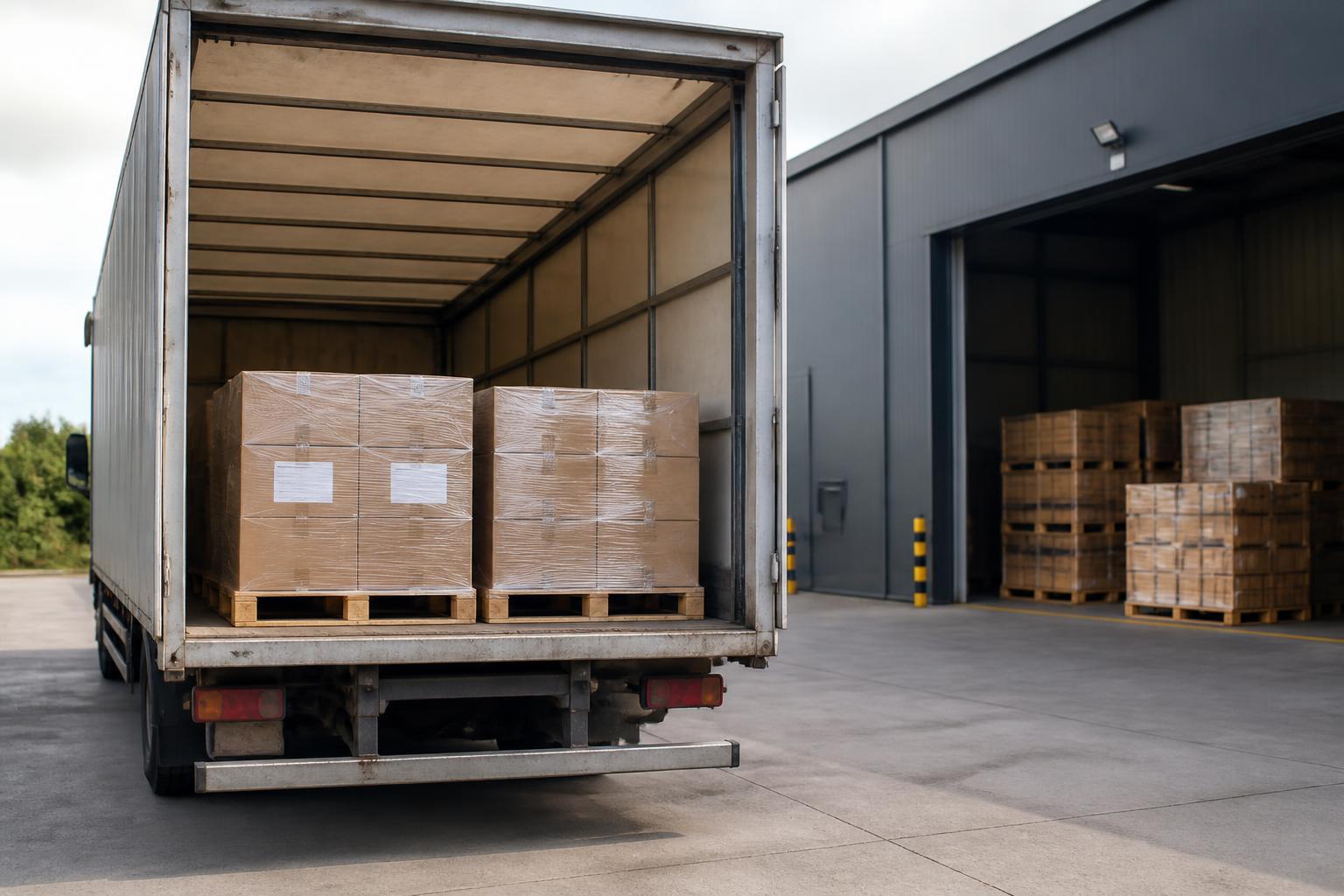
Part-load removals cut cost by sharing vehicle space, but they only work well when the movement is planned around real operating constraints. If your freight does not need an entire vehicle, a shared run can reduce transport spend without giving up visibility, delivery discipline or proper handling. The trade-off is that you are buying space and route capacity, not exclusive use of a truck.
In UK haulage, that matters because price is only one part of the decision. Collection windows, site restrictions, pallet count, weight distribution, waiting time and delivery urgency all affect whether a shared movement is sensible. The aim is not to force every shipment into a part-load model. It is to use it where it genuinely fits, and to know when a dedicated vehicle is the safer choice.
What part-load removals actually mean
Part-load removals mean moving goods that take up only part of a vehicle, with the remaining capacity used for other customers' freight. The operator plans a route that combines compatible collections and deliveries, usually within a defined traffic area, service level and delivery window.
That is different from a full-load movement, where one customer takes the whole vehicle for one job. With a full-load booking, the truck normally runs directly or near-directly between agreed points, with fewer handling points and less dependency on other freight. If you need to compare the two properly, our guide on when a dedicated vehicle is the right fit for UK freight sets out where full-load becomes the better operational choice.
In practice, part-load is often the practical choice when:
- you have a few pallets, not a trailer's worth
- your freight is stackable and stable
- delivery can sit within a managed window rather than an exact timed drop
- the goods do not require specialist isolation
- the cost of a dedicated vehicle would be disproportionate to the load size
For UK haulage, this model is common across palletised freight, boxed goods, retail replenishment, engineering parts and non-urgent commercial stock movements. It can also sit alongside container haulage where imported goods are devanned and then distributed inland in smaller consignments after arrival through Felixstowe, London Gateway, Southampton, Tilbury, Liverpool, Teesport or Immingham.
Shared loads are less suitable where the freight is fragile, high value, awkward to handle, time-critical or likely to create route inefficiency. They are also a poor fit where one failed delivery would create major downstream cost, such as site labour standing idle, a crane booking being missed, or a production line waiting for components.
When a shared load is the right commercial fit
The right test is not simply, "Can this fit on a truck with something else?" The better question is, "Can this move commercially and operationally as part of a shared plan without creating more cost somewhere else?"
Start with volume. If your shipment is one pallet, three pallets, or a modest run of boxed freight, part-load is often the obvious first option. As your volume grows, the saving narrows. Once your freight starts taking a substantial share of the deck, or creates loading constraints that block the rest of the vehicle, a dedicated truck may be more efficient.
Then look at urgency. If collection today and delivery tomorrow is acceptable, a shared run can work well, provided the route is already viable. If you need same-day delivery, a strict booking slot, or a guaranteed direct run, part-load becomes harder to plan without cost rising sharply. A shared vehicle still has multiple commitments, so every extra instruction reduces flexibility.
Delivery windows matter just as much. A site that accepts goods between 08:00 and 17:00 is easier to serve than one that insists on 10:15 to 10:45 only. Narrow windows can still be covered, but they reduce route options and may require dedicated resource or priced waiting time.
Handling needs are another dividing line. Standard palletised freight with forklift access at both ends is ideal. Freight that needs tail-lift delivery, pump truck movement, handball, side unload, straps removed in sequence, or special packaging checks needs more planning and may move out of standard part-load territory.
Budget is where many buyers focus first, but it should come after service fit. A lower rate is not a saving if the wrong vehicle turns up, the load is refused, or redelivery has to be arranged. Good part-load planning protects cost by matching the load to the right type of capacity in the first place.
A useful rule is this. Shared load works best when your freight is standard, your timing is realistic, your sites are straightforward and your cost objective is to avoid paying for empty space. It works less well when the shipment is operationally sensitive and the real requirement is control, not just transport capacity.
How pricing is usually built
Pricing for part-load removals is usually built from a mix of space, weight, route and service conditions. There is rarely one universal tariff that applies cleanly to every job, because two loads with the same pallet count can create very different operating costs.
The first driver is pallet space or occupied floor area. Many operators price by standard pallet position, oversized pallet position, or by dimensions where the freight does not fit standard footprints. Overhang matters. A load that physically sits on one pallet but overhangs into the next space will usually be priced accordingly.
Dimensions and weight come next. A light but bulky load can consume space without using much payload. A dense load can do the opposite. Operators need both figures because vehicle planning is about cube and weight together, not one or the other. If the weight is concentrated, axle loading can also become relevant.
Route is a major factor. A collection in one Midlands industrial estate and delivery to another may fit neatly into existing traffic. A remote collection, city centre delivery, or movement that crosses into low-bridge or restricted access areas may not. London work often carries its own complications around timed bookings, congestion, access controls and unloading delays.
Waiting time is often overlooked when a quote is requested. If the site regularly keeps drivers on bay for long periods, that cost has to sit somewhere. Some operators include a standard loading or unloading allowance, then apply waiting charges after that. The important thing is to state the site reality early, not after the vehicle has arrived.
Access limits also affect price. Examples include:
- no articulated access
- rigid only
- tail-lift required
- vehicle must be under a height limit
- limited turning circle
- residential restrictions
- booking-in requirement
- driver must report to gatehouse before loading
Extra handling changes price quickly. Handball, re-palletising, load securing beyond normal practice, fragile segregation, or double handling through a cross-dock all add labour and time. So do failed collections, refused deliveries and redelivery requests.
For port-related work, the pricing structure may include different factors again. Container haulage can bring quay restrictions, VBS or port booking requirements, detention exposure, and timing pressure linked to customs clearance. Since Brexit, document readiness has become more important on many cross-border and port-connected movements, even where the inland leg itself is straightforward UK haulage. VAT treatment also depends on the nature of the movement and the parties involved, so the commercial paperwork needs to match the service being bought.
What changes operationally compared with a dedicated vehicle
With a dedicated vehicle, the operating model is simple. One customer, one plan, one main route. With a shared movement, planning becomes a consolidation exercise. The transport operator has to fit multiple jobs together by geography, service level, freight type and timing.
That changes the collection and delivery process in several ways.
First, collection timing may be broader. Instead of a vehicle being sent solely for your job, your freight may be collected as part of a route build. That does not mean poor control. It means the control sits in route planning, traffic management and realistic communication rather than in exclusivity.
Second, ETA management is more dynamic. A dedicated truck's ETA is usually easier to hold because there are fewer moving parts. A part-load run may be affected by loading delays at an earlier stop, traffic on the trunk leg, or a problem at another delivery point. Good operators manage this by updating ETA as the route develops, not by pretending the original estimate is still valid when it plainly is not.
Third, POD flow can be less immediate unless the process is set up properly. On a dedicated urgent movement, POD is often chased as soon as delivery is made. On a shared route, POD collection still needs to be disciplined, but the admin process may follow the route's completion cycle or the operator's normal document workflow. That is not a problem if expectations are agreed in advance.
Fourth, communication needs to be more structured. Shared movements create more touchpoints, so vague instructions cause more damage. If the site needs a booking reference, if the goods must travel upright, or if the consignee closes for lunch, those details must be in the job record before planning starts.
The service trade-off is straightforward. You usually save money and use capacity more efficiently, but you give up some exclusivity and some route simplicity. That is why the best part-load operations are not the cheapest-looking ones. They are the ones with enough traffic discipline to consolidate freight without losing control of delivery standards.
What information to give before asking for a quote
Wrong pricing and failed collections usually start with missing basics. If we are organising a request for part-load removals, we need enough detail for an operator to price the actual job, not an imagined easier version of it.
At minimum, give:
- full collection postcode
- full delivery postcode
- collection date
- required delivery date or delivery window
- number of pallets or packages
- exact dimensions
- gross weight
- description of goods
- whether the freight is stackable
- whether it can travel with other freight
- whether forklift loading is available
- whether tail-lift is needed
- whether any handball is required
Then add the site details that often get missed:
- opening hours
- booking-in process
- contact name and phone number
- vehicle restrictions
- access issues
- whether the site is residential, construction, port-related or inside a managed estate
- any waiting time risk
- any requirement for PPE, induction or security clearance
If the freight is not on standard pallets, say so. If it overhangs, say so. If the weight is estimated, say so. If the goods are fragile, banded loosely, top-heavy or not suitable for double stacking, say so. These are not minor details. They change how the load can be carried.
For customs-linked or port-connected work, include the reference data the operator will need to align the movement properly. For container haulage, that may include container number, size, gross weight, port, release status and any relevant availability timing. If the movement touches port operations at Felixstowe, London Gateway, Southampton, Tilbury, Liverpool, Teesport or Immingham, missing references can turn a simple job into a wasted trip.
If you need a faster and cleaner request process, our guide on getting a next-day part-load quote without delays sets out the details that stop avoidable back-and-forth.
How Haulier.AI helps organise part-load requests
We built Haulier.AI to reduce the manual chasing that usually surrounds UK haulage requests, especially when volumes shift, coverage is patchy or the job is awkward enough that standard buying routines start to break down.
For part-load work, our role is to organise the request and quote flow so operators receive usable information and customers receive commercially real responses. We are AI-assisted and human-backed. That means we use structured intake, workflow support and automation where it helps, but we do not leave transport planning to a blind form submission or a race-to-the-bottom auction.
The process matters. A part-load request is only useful if the load details, site conditions and service requirements are clear enough for an operator to judge fit. We help capture the practical information that affects price and service, then route the request toward suitable haulage operators. That is particularly useful when your own team is overloaded, the work is irregular, or the requirement sits outside your normal carrier pattern. If that sounds familiar, our article on keeping UK haulage moving when your transport team is overloaded covers the wider operational problem.
For hauliers, we preserve commercial control. We do not force operators into a lowest-price contest that ignores service reality. Each haulier can decide what fits its network, equipment, traffic pattern and margin requirements. That matters in part-load because the right answer is often about compatibility, not just rate.
For customers, that means better quoting discipline. A realistic quote for a shared movement depends on knowing whether the freight is standard, whether the sites are workable, and whether the timing can be delivered within a consolidated route. We help surface those conditions early, before they become failed collections, re-cost discussions or redelivery charges.
The same approach supports broader road movements as well, including full-load and container haulage. Where a shipment should not move as part-load, we would rather that is clear at quote stage than discovered after allocation. The point is not to push every job into one model. It is to organise the request so the right model can be chosen with proper visibility.
Part-load removals work well when the service is matched to the freight, the route and the site reality. Cost comes down because vehicle space is shared. Control stays in place when the planning, communication and documentation are handled properly. That is the standard we work to at Haulier.AI, practical request handling, clear operator choice, and human oversight where transport decisions actually need it.
Is part-load the same as groupage?
They are closely related. In practice, part-load usually means your freight shares vehicle space with other consignments. Groupage often implies a more structured consolidation network with multiple drops and handling points.
When is full-load a better option?
full-load is usually better when timing is tight, the load fills most of the vehicle, the freight is fragile, or the delivery needs a direct run with fewer handling points.
Why can part-load take longer than a dedicated move?
Because the vehicle plan may include other collections, consolidation, route sequencing and more than one delivery point. That can affect ETA and make exact timing less fixed than a direct vehicle.
What details matter most when booking?
Accurate dimensions, weight, item count, collection and delivery postcodes, access restrictions, forklift availability, booking times, and whether the goods are stackable or need special handling.
Can part-load work for awkward or last-minute jobs?
Sometimes, yes. It depends on route fit, available capacity, handling requirements and timing. Last-minute work can be possible, but shared-load planning still needs realistic collection and delivery expectations.