
Container haulage article
How European haulage works for UK road freight buyers
A practical guide to european haulage for UK shippers and hauliers, covering routes, customs, ports, pricing, lead times and operational control.
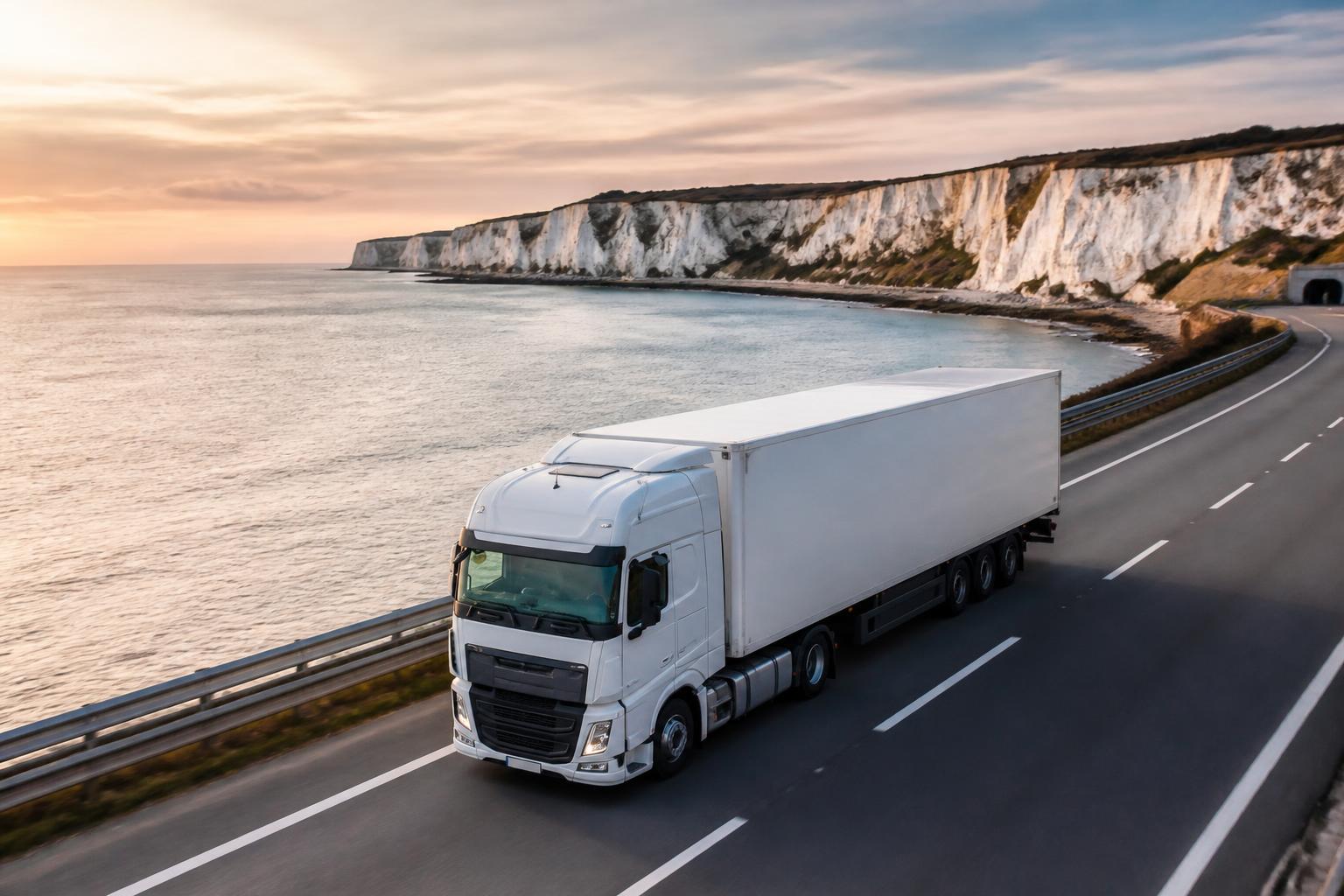
For a UK buyer, European haulage is not just “a truck to Europe”. It is the planning, documents, customs responsibility, port or terminal handover, and delivery control needed when a road movement crosses between Great Britain and the EU. That can mean a direct trailer to France, a groupage pallet into Germany, a container collection from a UK port after import clearance, or a UK leg that connects with an EU operator for the onward move.
The practical difference from domestic UK haulage is that cross border work has more parties, more checkpoints, and more ways for a small document error to become a missed slot or a storage bill. Since Brexit, buyers also need to be clearer about who is acting as exporter or importer, who is making customs declarations, what the Incoterms require, and when VAT is due or postponed. If you buy transport regularly, those points affect cost and service as much as mileage does.
What european haulage means for a UK transport team
In day to day operations, European haulage usually means any road freight movement where the UK leg is tied to an international move involving mainland Europe or Ireland. For a UK transport team, that can sit in several different workflows.
One is a door to door road job where goods are loaded in Great Britain and delivered into the EU, or collected in the EU and delivered into Great Britain. Another is a UK pre-carriage or on-carriage movement linked to a ferry, unaccompanied trailer, rail terminal, or short sea container. A third is a port-related import or export move where the international sea leg is arranged separately, but the road team still has to collect or deliver the unit at the right time with the right references.
That is why European haulage is broader than simply “international trucking”. From a buyer’s side, the transport plan often includes:
- a UK collection or delivery leg
- a border crossing or port handover
- customs data and reference checks
- a receiving depot, partner haulier, or shipping line handoff
- final delivery booking and POD flow
Domestic UK haulage is simpler in comparison. A standard UK job still needs the basics right, vehicle suitability, booking references, delivery constraints, waiting time control, and POD, but it does not normally involve export declarations, import entries, Goods Movement Reference checks, ferry bookings, or the same level of border risk.
There is also an important Great Britain versus Northern Ireland distinction. Movements between Great Britain and the EU are not handled in the same way as domestic UK work, and movements involving Northern Ireland can follow different customs and SPS arrangements again depending on the goods and route. If your traffic includes Belfast, Dublin, Rotterdam, Calais, or Antwerp in the same weekly plan, your transport desk needs to separate those rules properly rather than treating all “European” moves as one standard process.
Which movements, modes and handovers are usually involved
UK buyers usually come across five common setups.
The first is direct road freight. This is the clearest version. A trailer or rigid is loaded and moved under one road plan from origin to destination, often with a ferry or Channel Tunnel crossing in the middle. It suits urgent freight, higher value freight, or consignments where too many handovers create risk. Even here, “direct” does not always mean one physical tractor unit from start to finish. The trailer may still be relayed, transhipped, or handed to a partner network after arrival.
The second is trailer work, especially unaccompanied trailer movements. A UK haulier takes the trailer to port, the trailer crosses without the tractor unit, and a partner operator collects it on the other side. The reverse applies on imports. This can be efficient where network density is good, but it relies on clean handover procedure, port references, seal control, trailer condition checks, and clear responsibility for delays or missed sailings.
The third is port-linked work. Many buyers think of European haulage as a continental road move, but in practice a lot of it touches UK ports. On imports, that may mean collecting from Felixstowe, London Gateway, Southampton, Tilbury, Liverpool, Teesport, or Immingham once the container or trailer is released. On exports, it may mean delivering a loaded unit to the port within the booked window and cut-off. If your traffic includes port moves, our container haulage support for UK port collections and deliveries is often part of the same planning picture.
The fourth is container haulage. This is common where the international leg is by sea and the UK buyer needs the inland road movement arranged properly. Container haulage has its own operating points. You need the right container number, booking or release reference, VBS or terminal slot where applicable, weight data, customs status, and agreement on whether the job is quay to door, quay to warehouse with tipped devanning, or round trip back to port. Demurrage, detention, storage, and driver waiting can all sit around the road move if timing slips. For buyers using the east coast gateway, our port-specific support for Felixstowe container collections is built around those release and timing issues. The same applies for London Gateway container deliveries and returns when slot management and return instructions matter.
The fifth is consolidated freight, usually part-load or full-load. A full-load booking uses the vehicle or trailer for one customer’s shipment. It is generally simpler to control, easier to trace, and less exposed to hub delays. A part-load booking shares space with other freight, which can be cost effective for smaller consignments but introduces more handling points, more cut-off times, and more dependence on network schedules. If the consignee has strict booking windows or the goods are time critical, the difference between part-load and full-load matters more than the linehaul distance.
Across all of these, handovers are where service quality is won or lost. A buyer needs to know who has control at each stage, who is chasing release, who is checking customs status, who is updating ETA, and who is issuing POD. If those answers are vague, the job will feel cheap only until the first exception.
How Brexit changed planning, customs and VAT
Brexit changed cross border road freight from a largely operational exercise into one with much heavier document and data control. The truck still has to move, but now the movement depends much more on what was filed before the truck reaches the port or border.
For exports from Great Britain to the EU, the shipment normally needs an export declaration in Great Britain and an import declaration in the destination country. For imports into Great Britain from the EU, import customs formalities apply on the UK side. Depending on the goods, there may also be safety and security requirements, commodity code checks, origin statements, health certificates, or licensing controls.
For a UK buyer, the key point is responsibility. The transport provider can move the load and check that references are present, but the declarant, importer, exporter, or customs intermediary still has to submit the right entries. If the declaration is wrong, the trailer can miss its crossing even if the vehicle and driver are ready on time.
A few documents and references now matter routinely in planning:
- commercial invoice
- packing list
- EORI numbers for the relevant parties
- customs declaration references
- Goods Movement Reference where the route and process require it
- ferry or tunnel booking details
- import release or shipping line release for port work
- delivery booking references at the final site
Incoterms also matter more than many buyers expect. If you buy on EXW, FCA, DAP, DDP or another term without checking the transport and customs consequences, you can end up with a gap in responsibility between seller, buyer, forwarder, and haulier. That gap usually appears at 5 pm when a load is ready but nobody has arranged the import entry.
VAT treatment changed as well. Import VAT into Great Britain is not just a transport issue, but it directly affects whether goods can be cleared and delivered without delay. Many businesses use postponed import VAT accounting, but the accounting treatment depends on the importer of record and the customs setup. On exports, zero rating still depends on holding the right evidence. Transport teams do not replace finance or customs brokers here, but they do need the commercial parties to be clear, because confusion over VAT often appears as a transport delay.
There is also a country rule point. EU customs law is harmonised in broad terms, but each member state can differ in procedure, language, system usage, inspection practice, and local booking habits. A movement into France will not always feel the same operationally as one into Italy or Spain, even where the core customs principles are similar. UK buyers need to allow for that rather than assuming one universal EU process.
What affects price, ETA and service reliability
Buyers often ask for a rate and an ETA first, but both depend on the operating detail behind the job.
Distance is only one factor. Vehicle type, trailer type, pallet count, weight, dimensions, ADR status, and loading method all affect price. So do collection and delivery postcodes, because a clean motorway run is not priced the same way as a city centre delivery with restricted access, timed booking, and tail-lift requirement.
For European haulage, border and handover points add extra variables. A rate may need to cover ferry or tunnel cost, port waiting, customs stop risk, empty running to collect a trailer, repositioning, and return leg imbalance. A cheap outbound lane can be expensive in practice if the equipment has to be pulled back empty.
ETA is also more conditional than on domestic work. A realistic ETA depends on:
- customs cleared status before departure
- port or terminal cut-off times
- ferry space and sailing schedule
- driver hours and legal breaks
- weekend restrictions in some EU countries
- site booking availability
- whether the move is direct, part-load, or hub based
- whether the consignee can accept early or late arrival
That is why experienced operators avoid overpromising. “Next day Europe” can mean very different things depending on destination, crossing, and paperwork readiness. The right answer is usually a delivery window with named assumptions, not a casual promise.
Service reliability comes from process discipline. Good operators check references before dispatch, confirm whether customs is cleared or only submitted, verify release status for container haulage, and make sure the driver has the right collection and delivery instructions. They also separate booking confirmed from vehicle physically allocated. Buyers who have suffered repeated failures will recognise that difference immediately.
POD flow is another overlooked point. On domestic work, POD may arrive quickly and informally. On international or port-linked work, POD can be delayed by handovers, warehouse booking systems, night trunks, or paperwork returning through more than one operator. If your internal process depends on POD for invoicing, stock release, or customer billing, that needs to be agreed upfront. The same applies to exception handling. If a container is on stop, a trailer is not customs cleared, or a consignee refuses a load, who is informing whom, and how quickly?
Reliability is rarely about a single dramatic event. More often it is the accumulation of small controls, checked early enough to avoid a failed collection, missed sailing, storage charge, or silent late delivery.
When a transport desk helps buyers and hauliers
Cross border road freight creates more admin than many teams can comfortably absorb when volumes rise, suppliers change, or urgent work lands late in the day. Buyers end up calling around for capacity, forwarding the same details repeatedly, correcting missing references, and chasing updates from several directions at once. Hauliers see the other side of the same problem, patchy job information, too many speculative quote requests, and time wasted on work that is not actually ready to move.
That is where an AI-assisted, human-backed transport desk is useful, provided it is organised properly and does not try to replace operator judgement.
At Haulier.AI, we use that model to structure request intake, quote handling, and job communication so buyers can get suitable UK haulage options without turning every requirement into a manual calling exercise. For European-linked work, that matters because the first version of the request is often incomplete. A transport desk can prompt for the details that actually decide whether the job is quotable and moveable, such as customs status, port, release references, delivery constraints, equipment type, and whether the movement is part-load or full-load.
The AI-assisted element helps organise and route information quickly. The human-backed element matters just as much, because transport decisions still need operator sense. Someone has to spot that the load is not ready for a same-day port run, that the consignee booking window makes the published ETA unrealistic, or that a container return instruction changes the whole job timing.
For buyers, the benefit is not “automation” in the abstract. It is cleaner requests, faster matching to relevant operators, fewer back-and-forth emails, and better control of exceptions. For hauliers, it is access to subcontract opportunities with enough structure around the job data to decide properly whether to quote and how to price the risk.
That only works if commercial control stays with the operator. We do not believe good transport buying comes from a race-to-the-bottom auction where the cheapest number wins and the detail is sorted out later. In European haulage, that approach usually stores up cost elsewhere, in waiting time, failed collections, customs delays, and avoidable disputes over what was or was not included.
A practical transport desk should help both sides make better decisions earlier. If the movement is straightforward, it should move quickly. If the movement has gaps, it should expose them before a vehicle is committed. That is especially valuable when the work sits between UK haulage, port operations, and international road planning, because those are the jobs where a missing reference or wrong assumption can waste half a day.
For UK buyers, that is the real lesson of European haulage after Brexit. The road move still matters, but the quality of the planning around it matters just as much. When requests are organised well, responsibilities are clear, and updates are handled by people who understand the movement, buyers get more reliable capacity and hauliers get better quality subcontract work.
Is european haulage the same as UK haulage?
No. UK haulage is domestic road transport within the UK. European haulage usually involves cross-border planning, customs steps, ferry or tunnel routing, and more handover risk.
Does Brexit still affect European road freight?
Yes. Brexit still affects customs entries, border checks, commodity data, timing, and who handles VAT and clearance responsibilities on each movement.
Can container haulage be part of european haulage?
Yes. Container haulage can form part of a wider European movement, especially where goods arrive through ports such as Felixstowe, London Gateway or Southampton before UK delivery.
What information should a buyer provide for a quote?
At minimum: collection and delivery points, goods type, weight, dimensions, load type, target ETA, customs status, and any port, booking or site restrictions.
Does Haulier.AI replace the transport operator?
No. Haulier.AI is AI-assisted and human-backed. It helps organise requests and quotes, but it does not replace transport operators or automate operational judgement.