
Container haulage article
When full-load haulage is the right fit for UK freight
A practical guide to full load in UK haulage: when it suits, how pricing works, what to plan, and where risks, timing and handover matter.
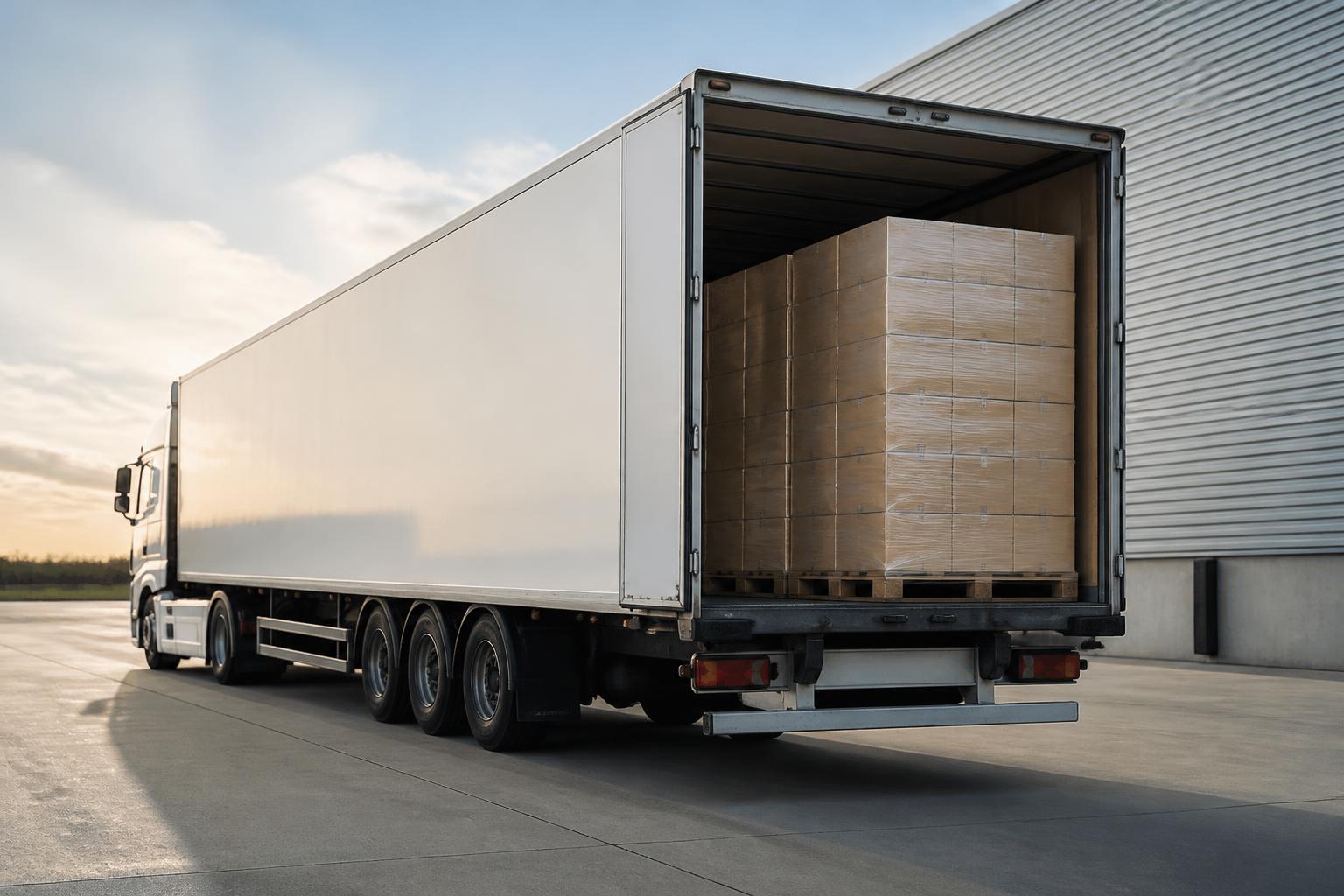
If a shipment needs one vehicle, one route, and tight control over timing and handling, a full load is usually the right fit. In UK haulage, that normally means the vehicle is assigned to one customer’s consignment for that journey, rather than being shared with other freight moving through a network. You are paying for dedicated capacity and a simpler operating plan, not just for cubic space or pallet positions.
That matters when the cost of delay is higher than the saving from sharing space. Production materials, urgent replenishment, export cut-offs, awkward lengths, heavy consignments, and high-value goods often justify a full-load move because there are fewer touchpoints, fewer dependencies, and less chance of the load being held up by someone else’s freight.
What full load means in UK haulage
In practical terms, a full-load movement is a dedicated vehicle movement. The trailer or rigid is planned around one customer’s job, one collection sequence, and one delivery sequence. That does not always mean the trailer is physically full to the roof or at maximum gross weight. It means the vehicle is committed to that movement rather than being built into a shared multi-drop or hub-and-spoke operation.
That distinction matters because many buyers hear “full load” and assume it only applies when they have 26 pallets, a complete trailer of product, or a payload close to the legal limit. In reality, a consignment can still be a full-load booking if it needs sole use of the vehicle because of timing, security, loading method, contamination risk, product compatibility, or site process.
By contrast, a part-load movement shares vehicle space and route planning with other consignments. That can be excellent value when timings are flexible and the freight is straightforward to combine. It can also work well where a network or groupage structure already serves the lanes you need. But part-load usually involves more planning dependencies. Another collection running late, a hub delay, or a delivery sequence change can affect your consignment even if your own site was ready on time. If you are weighing up the difference, our guide on when part-load reduces cost without losing control sets that out in more detail.
In UK haulage, the vehicle type still has to match the job. A full-load movement might be done on a curtainsider, box trailer, flat, Euroliner, refrigerated trailer, skeletal trailer for container haulage, or a rigid with tail lift if site equipment is limited. The “full” part is about dedicated use and operating pattern, not one standard trailer format.
For container haulage, the same logic applies. A single import or export box moving from Felixstowe, London Gateway, Southampton, Tilbury, Liverpool, Teesport or Immingham to one inland point is commonly treated as a dedicated move even though the container itself is the load unit. Ports, VBS bookings, cut-off times, quay restrictions, and driver hours make shared planning less forgiving than many general haulage jobs.
When full-load is the better option
Full-load is usually the better option when the shipment has one or more of the following characteristics.
First, the consignment is large enough to make sharing inefficient. If the freight occupies most of the available deck space, uses most of the payload, or requires loading in a way that blocks other freight, a dedicated vehicle is often the cleanest answer. Long lengths, oversized pallets, unusual packaging, or freight that cannot be double-stacked often fall into this category.
Second, the timing is critical. If a factory line needs raw material at a defined time, if a retailer has a booking slot that cannot be missed, or if a site shutdown depends on the arrival of plant or components, a dedicated movement usually gives better control. The route is not being adjusted around other customers’ deliveries. Collection and delivery can be planned more tightly, and the ETA is easier to manage because there are fewer moving parts.
Third, the goods need limited handling. Fragile products, high-value items, food-related loads, pharmaceuticals, or goods with contamination sensitivity are often better on a full-load basis because they are loaded once, moved, and delivered with fewer interventions. That reduces handling risk and can simplify claims if something does go wrong.
Fourth, the commercial risk of delay is higher than the transport saving. This is common with urgent replenishment, event freight, project cargo, and export work. Missing a vessel cut-off, warehouse booking, or installation window can cost more than the difference between shared and dedicated transport. For port-related work, especially container haulage, one missed slot can trigger storage, demurrage, detention, or rebooking complications.
Fifth, the delivery profile is simple. One collection and one delivery, or one collection and a very small number of deliveries on a direct route, often suits a full-load move. Once there are many drops, the question becomes whether you need dedicated capacity or route optimisation. Sometimes a dedicated vehicle still wins because the freight is awkward or time-sensitive. Sometimes a shared network is more sensible.
There is also a capacity reason. During peak periods, awkward lanes, late bookings, and out-of-pattern jobs can be hard to place through standard channels. A direct full-load movement can be easier to source than trying to squeeze an unusual consignment into a part-load schedule. This is one of the situations where buyers come to us. They are not looking for theory, they need workable coverage without a day of phone calls and spreadsheet chasing.
For operators, the same logic applies in reverse. If your own fleet is committed, but the customer requirement is a clean dedicated move, subcontracting a suitable haulier can protect service without forcing the load into the wrong operating model. We see this regularly when volumes spike or when a customer asks for a lane outside normal coverage.
How full load pricing usually works
Full-load pricing is built around the cost of assigning a vehicle and driver to the job, plus the commercial realities of the lane. It is not simply a rate per pallet multiplied up.
Distance is one obvious driver, but not the only one. A short run into a congested urban site with strict booking rules can cost more, operationally, than a longer straightforward trunk. Time matters as much as miles because the haulier is pricing vehicle and driver utilisation across the day.
Equipment type changes the rate. A standard curtainsider is one thing. A fridge, Moffett-equipped vehicle, flat with straps and edge protection, ADR-capable unit, or skeletal trailer for container haulage is another. So is any requirement for tail lift, pump truck, load restraint beyond the norm, or specialist permits and route checks.
Collection and delivery windows matter a great deal. A broad window gives the operator room to plan around other commitments and reduce empty running. A fixed collection at 09:00 and delivery before 12:00 gives far less flexibility. Out-of-hours work, weekend coverage, and bank holiday requirements also affect pricing because they narrow available capacity and can trigger additional labour and planning constraints.
Waiting time is a major cost driver that buyers sometimes overlook. If a vehicle arrives on time but sits for hours because the bay is blocked, the paperwork is not ready, or the load is not picked, that time has to land somewhere commercially. Many hauliers build in a loading and unloading allowance and then charge waiting time after that agreed period. If the site regularly causes delays, the rate will reflect it even before any separate waiting charge is applied.
Empty running is another key factor. If the collection point or delivery point is off the operator’s normal traffic pattern, or if there is little prospect of a backload, the price will reflect the dead mileage. This is especially relevant for remote sites, one-way flows, and urgent jobs that pull a vehicle away from its natural lane.
Port work adds further variables. Container haulage rates can be affected by port location, booking systems, quay or terminal procedures, container type and weight, whether the move is import or export, whether a pre-pull or storage arrangement is needed, and whether the box can be returned within free time. Since Brexit, document accuracy and customs readiness also have a direct operational impact on whether the movement runs smoothly or turns into chargeable delay.
If you want a rate that can actually be used, not just a number to compare in a spreadsheet, the request needs enough detail to be priced properly. We cover that in how to get a usable full-load haulage quote.
What to confirm before booking
The fastest way to get the right vehicle first time is to give the operational facts up front.
Start with the load itself. State the goods description clearly, the number of pallets or packages, dimensions, gross weight, whether the pallets are standard or oversized, whether the freight can be stacked, and whether there are any special handling requirements. “Full load of stock” is not enough if the goods are 1.9 metre pallets, unstable, or floor-loaded by handball.
Then confirm the vehicle requirement. If you know you need a curtainsider, box, flat, tail lift rigid, skeletal trailer, or fridge, say so. If you do not know, describe the loading and unloading method at each end. Whether the site loads from a bay, side-loads by forklift, requires rear access, or has no FLT on site will determine the vehicle choice.
Give full addresses and site restrictions. Postcodes are useful, but not enough on their own for difficult sites. Mention height restrictions, narrow access, timed gatehouse procedures, PPE rules, booking references, and whether the vehicle must reverse, park on-road, or report to a separate office before loading. A 44 tonne artic is not suitable everywhere, and changing to a smaller vehicle late in the day can be expensive or impossible.
Provide realistic collection and delivery windows. If the load is not actually ready until 14:00, a “from 08:00” collection request just creates avoidable waiting time and frustration. The same applies to delivery. If the receiver only books in between 07:00 and 10:00, that needs to be stated from the outset.
Paperwork is equally important. Confirm what needs to travel with the load, whether there is a delivery note, whether a POD is required in original form or a scan is acceptable, and whether references must be shown at collection or delivery. For port and customs-related moves, list the container number, booking references, release status, customs status, and any cut-off or return deadlines.
Also confirm the commercial basics. Who is the contracting party, where the invoice goes, and whether VAT applies as standard to the movement should be clear before the job runs. Most domestic UK haulage movements will be invoiced with VAT in the normal way, but the tax treatment of wider supply chains can involve additional considerations for your finance team. It is better to settle that early than after the POD has been uploaded and the invoice queried.
Where full load can still go wrong
A dedicated vehicle reduces complexity, but it does not remove it.
The most common failure point is site delay. A vehicle can arrive on time and still lose the day because the load is not ready, the bay is occupied, the forklift driver is on break, or the delivery site has overbooked. Even where waiting time is chargeable, that does not fix the operational knock-on. The driver can run out of hours, the delivery slot can be missed, and the customer still has the problem.
Access problems are another frequent issue. Wrong postcodes, hidden low bridges, weight-restricted roads, and sites that are physically unsuitable for an artic can all turn a simple job into a rescue exercise. If the freight has to be transhipped to a smaller vehicle because access was not declared, the cost and delay can be significant.
Paperwork gaps cause more disruption than they should. Missing references, incorrect goods descriptions, absent customs clearance, or unclear delivery instructions can stop a movement that was otherwise perfectly planned. Since Brexit, cross-border and port-related paperwork discipline matters more, not less. Even domestic container haulage linked to import or export flows can be affected if the underlying release or customs status is not in order.
Port timing is its own category of risk. A collection from Felixstowe, London Gateway, Southampton, Tilbury, Liverpool, Teesport or Immingham can fail because the booking is wrong, the container is not available, the quay is congested, or the export box misses cut-off. Add driver hours, traffic, and terminal processes, and it becomes clear why vague instructions are not enough for port work. This is why we keep container haulage planning for major UK ports tightly organised rather than treating it as just another collection and delivery.
Communication failures are the final common problem. If the warehouse knows the load is delayed but transport is not told, the vehicle still turns up and starts the clock. If a consignee changes the delivery slot but the driver is not informed, the job can fail at the gate. Good transport execution depends on one current version of the truth, not five people forwarding different email chains.
How organised quote handling helps both sides
The friction in UK haulage often starts before the vehicle is even assigned. Buyers send partial details, operators ask for clarifications, deadlines move, inboxes fill, and by the time all the facts are assembled the best vehicle is gone. That is not a pricing problem, it is a handling problem.
Our approach at Haulier.AI is to organise that front end properly. We use an AI-assisted, human-backed transport desk to capture the job details in a usable form, route them to suitable operators, and keep a person in the loop where judgement is needed. That means less manual chasing for the buyer, but it also means hauliers are not forced into a blind auction where price is the only signal.
That commercial control matters. A haulier knows whether a lane works with today’s fleet position, whether the site is likely to cause delay, whether the equipment is actually available, and whether the job fits the driver hours picture. Good quote handling lets operators respond on that basis. It does not strip out judgement in the name of speed.
For buyers, this reduces the usual back-and-forth over missing basics. If the request includes the right load data, the right site information, and the real timing requirement, the quote that comes back is far more likely to be actionable. If the job changes, that change can be managed clearly rather than disappearing into someone’s inbox until the vehicle is already en route.
For hauliers, organised request handling improves subcontract opportunities as well. Relevant work is easier to identify, awkward gaps in the traffic pattern are easier to fill, and the operator can still decide what to price and what to decline. That is a better model than flooding the market with vague requests and hoping somebody bites.
When teams are overloaded, this structure becomes even more valuable. Many transport and operations teams do not need more noise, they need cleaner inputs and tighter follow-through. That is why we focus on organised request and quote handling, with human oversight where it counts. If your transport desk is spending too much time on chasing, retyping, and correcting, our article on keeping UK haulage moving when the team is overloaded is a useful next read.
A full-load move is the right fit when direct control, dedicated capacity, and predictable execution matter more than squeezing every last pound out of shared space. If the load is time-critical, awkward, high-risk, port-linked, or simply better handled on one vehicle from start to finish, booking it that way usually saves trouble later. The key is not just choosing the right transport mode, it is getting the request, the quote, and the handover organised properly from the start.
What is the difference between full load and part-load?
full-load usually means one shipment takes most or all of the vehicle capacity for a direct movement. part-load means your freight shares space with other consignments, which can lower cost but add handling and coordination.
Is full load always faster?
Not always, but it is often simpler. With fewer handovers and less consolidation, full-load can reduce delay points. Actual speed still depends on collection slots, delivery booking, route, driver hours and site turnaround.
How do I know if my shipment is big enough for full load?
It depends on pallet count, weight, dimensions, loading method and urgency. A shipment may justify full-load because of timing, fragility or security even if it does not physically fill the whole vehicle.
Can full load include container haulage?
Yes. container haulage can be a full-load movement where one container is collected and delivered for one customer movement, including work linked to Felixstowe, London Gateway, Southampton, Tilbury, Liverpool, Teesport or Immingham.
What information should I send for a quote?
Send collection and delivery postcodes, dates, time windows, pallet or load details, weight, dimensions, special equipment needs, site restrictions, reference numbers and any POD or ETA requirements.
Does using a transport desk mean hauliers lose control of pricing?
Not if the process is set up properly. Hauliers should keep commercial control over whether to quote and at what rate, without being pushed into race-to-the-bottom auction pricing.