
Container haulage article
Starting a UK haulage business without costly early mistakes
A practical guide to starting a UK haulage business, covering licences, vehicles, costs, compliance, customers and early operating decisions.
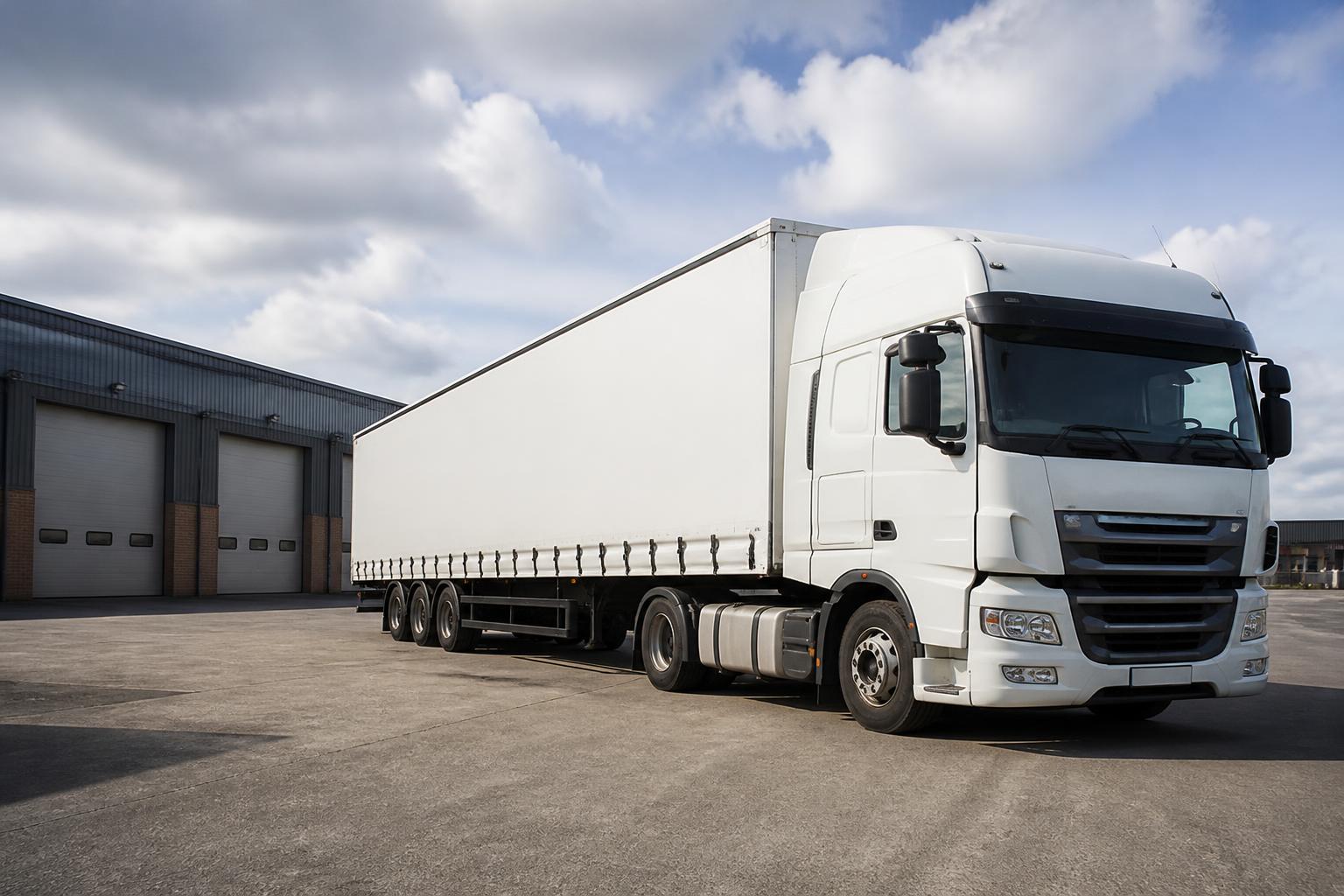
Starting a haulage business in the UK is perfectly achievable, but the early mistakes are expensive and usually predictable. Most of them come from setting up the wrong operating model, underestimating compliance, buying the wrong equipment, or taking work at rates that look busy but do not leave enough margin to run properly.
If you are working out how to start a haulage business in the UK, the safest approach is to make a few decisions in the right order. Decide what traffic you will carry, get the legal and financial base right, match your vehicles and systems to the work, and only then push hard on sales. That sequence matters. In UK haulage, a rushed start often creates problems that are harder to unwind later.
What type of haulage business are you actually starting?
Before you apply for licences or look at trucks, be clear about the traffic you want.
General UK haulage is broad. It can include palletised freight, packaged goods, building materials, retail movements, machinery, and ad hoc collections and deliveries. That sounds flexible, but “general haulage” still needs definition. Are you planning local multi-drop work, regional trunking, nationwide deliveries, or overnight linehaul? Each one changes your vehicle choice, driver hours pattern, admin load, and cashflow.
If you are moving containers, you are not setting up the same business as a general curtainsider operation. Container haulage brings port processes, booking references, quay cut-offs, demurrage and detention exposure, and more time-sensitive coordination. Your work may revolve around container movements through major UK ports, and that means planning around port systems, waiting time, and customer paperwork. It also means understanding the specific operating patterns around Felixstowe, London Gateway, Southampton, Tilbury, Liverpool, Teesport, and Immingham.
Then there is the load profile. A part-load operator needs route planning discipline, tighter traffic desk control, and stronger proof of collection and delivery handling because one vehicle may carry several customers’ freight at once. A full-load operator has a simpler planning model, but often depends on fewer, larger customers and can be exposed if one account slows down.
Subcontract work is another distinct model. Many new entrants begin by pulling for larger operators or working under agreed terms for freight forwarders, container operators, pallet networks, or established haulage firms. That can be a sensible route because it reduces the pressure of finding direct customers on day one. But it still needs discipline. Some subcontract work is stable and commercially fair. Some is last-minute, underpriced, and hard on vehicles and drivers.
The mistake to avoid is saying yes to every type of work in the first six months. A new operation usually works better with a narrow starting point. For example, one tractor unit on local container haulage from Felixstowe is a different setup from two rigids doing part-load distribution in the Midlands. The clearer you are, the easier every other decision becomes.
Which licences, permissions and registrations do you need?
The legal setup is not optional admin. It is the foundation of whether you can trade at all.
If you use goods vehicles over 3.5 tonnes gross vehicle weight for hire or reward, you will usually need a goods vehicle operator’s licence, often called an O-licence. In Great Britain, this is regulated by the Traffic Commissioner. The type of licence matters. A restricted licence is for carrying your own goods in connection with your business. If you are carrying other people’s goods for payment, which most haulage businesses are, you will normally need a standard national licence. If you will carry goods internationally, the requirement moves into standard international territory.
Your application will need an operating centre, financial standing, maintenance arrangements, and a professionally competent transport manager if you are applying for a standard licence. The transport manager must have the required qualification and must genuinely exercise continuous and effective management of the transport operation. This is one area where people cut corners early and regret it later.
Your operating centre also matters. You need a site where the vehicles can normally be kept, and it must be suitable from both a planning and operational point of view. Neighbour objections, access problems, and local authority issues can delay or derail an application.
You will also need to register the business itself, usually as a limited company or sole trader structure, and set up the usual HMRC registrations. That includes VAT registration once required, although some operators choose voluntary VAT registration earlier depending on their customer base and input costs. You should also set up PAYE if you employ drivers, traffic staff, or workshop staff.
Insurance is another day one requirement. In practice, you will be looking at motor insurance, employers’ liability if you have staff, public liability in many cases, and goods in transit cover if your contracts require it. For container haulage and subcontract work, check the exact terms carefully. Do not assume a generic policy matches port work, unattended vehicles, or high-value freight.
Compliance responsibilities begin immediately. That includes vehicle maintenance inspections at the correct intervals, daily walkaround checks, tachograph rules, drivers’ hours, Working Time Directive obligations where applicable, record keeping, and defect reporting. If you operate HGVs, you will also need to manage MOT scheduling, tyre condition, brake performance, and load security procedures.
Where rules differ from the EU generally, follow the UK position. Since Brexit, cross-border work, customs processes, and some documentary requirements changed for UK operators. If your business is UK domestic only, the impact is smaller. If you plan to move international traffic or port-related cargo linked to customs procedures, you need to understand those flows properly before taking the work.
How much money do you need to start?
The biggest startup mistake is focusing only on the truck purchase and forgetting the months around it.
Your startup costs usually fall into five groups. First, the vehicle and trailer. That may be outright purchase, hire purchase, finance lease, contract hire, or rental. New entrants often prefer used equipment to keep the initial outlay down, but cheap vehicles can quickly become expensive if they create downtime and maintenance bills.
Second, there is compliance and maintenance. You need inspection arrangements, repairs, tyres, MOT preparation, tachograph calibration, and the admin time to keep all records in order. If you are applying for an O-licence, financial standing is not just a rough idea of available money. It is a formal requirement, and you need to be able to demonstrate it.
Third, there is working capital. This catches many new operators out. Fuel is paid now. Wages are paid now. Roadside breakdowns are paid now. Your customer may pay on 30, 45, or 60 day terms, and some large customers are not quick. A business can be busy and still run into cash trouble if the payment cycle is poorly managed.
Fourth, there are people costs. Even if you start as an owner-driver, there is still holiday cover, accountancy, transport admin, and often outsourced support. If you employ drivers, add wages, employer costs, holiday pay, and agency cover for sickness or peaks.
Fifth, there are systems and overheads. You need accounting software, transport admin processes, phones, document storage, and a reliable way to manage jobs, POD collection, invoicing, and customer communication. If you are taking subcontract work, organised quote and request handling matters too. That is one reason operators use an AI-assisted, human-backed desk model like ours, because it helps keep opportunities and responses structured without turning pricing into a race to the bottom.
Do not build the budget on best-case utilisation. Start with a conservative plan. Assume some empty running, some waiting time, some non-billable admin, and occasional late payment. If the business still works on that basis, you are starting from a realistic position.
How do you choose vehicles, premises and systems?
Choose equipment for the work you want, not the work you vaguely hope might appear.
If you are doing container haulage, a tractor unit and skeletal trailer may be the obvious answer, but the exact specification still matters. Think about typical box weights, port access, local versus longer-distance work, and whether your customers expect flexibility around 20ft and 40ft movements. If your work is concentrated around a port such as container collections and deliveries around Felixstowe, your operating rhythm will be very different from a general curtainsider fleet.
For general UK haulage, think about body type first. Curtainsiders suit a wide range of palletised and packaged freight. Box bodies may suit retail or secure distribution. Flatbeds and plant bodies are specialist choices. A rigid can be right for local and regional work, especially if access is tight. An artic gives more flexibility on volume and distance, but only if the work supports it.
Premises matter more than many startups expect. Your operating centre needs lawful use, enough parking and manoeuvring space, and practical access for your vehicles. If trailers are involved, check turning circles, security, lighting, and whether you can safely manage out-of-hours movements. If you are near ports or industrial areas, site costs may be higher, but dead mileage may be lower.
On systems, do not overcomplicate the first setup, but do not run it from memory and WhatsApp alone either. At a minimum, you need a process for job intake, booking confirmation, collection and delivery instructions, driver briefing, defect reporting, live ETA updates, POD capture, invoice creation, and credit control. Those are not “nice to have” processes. They are the basic controls that stop revenue leaking.
For container work, document discipline is especially important. Booking references, release details, customs status where relevant, VBS timings where applicable, and customer-specific handover instructions all need to be clean and accessible. If you are targeting ports like London Gateway container work, build your admin around the real sequence of a container movement, not around a generic delivery note process.
How will you win work and price it properly?
Early work usually comes from one of four places. Direct local customers, subcontracting for larger hauliers, freight forwarders and logistics providers, or specialist traffic such as container haulage linked to ports and distribution centres.
Direct customers are attractive because the margin can be better and the relationship is yours. But direct sales take time. You need to convince someone to move live transport spend to a new supplier, and that normally happens because you solve a real problem, poor service from the incumbent, awkward lanes, seasonal overflow, or urgent cover.
Subcontract work is often the quickest route to wheels turning. It can help a new operator build utilisation, learn lane patterns, and create cashflow. The key is to choose the right partners and be disciplined on rates, waiting time, cancellation terms, and paperwork. Busy unprofitable work is not a good foundation.
Pricing needs more than a pence-per-mile guess. Build the rate from actual cost drivers. Include vehicle finance or depreciation, wages, fuel, maintenance, tyres, insurance, road costs, overhead, empty running, and admin time. Then add a margin that reflects the risk and capital involved. For port work, include likely waiting time, booking-related delays, and the operational reality of the route.
Underpricing does not just reduce profit. It creates operational risk. If the rate is too low, maintenance gets deferred, vehicle replacement slips, and driver pressure increases. That is when compliance starts to fray. A rate that only works if everything goes perfectly is not a workable rate.
We built Haulier.AI around a simple commercial principle. Operators need relevant opportunities, clear information, and the ability to keep commercial control. That is why our model is AI-assisted and human-backed, not an auction that pushes everyone towards the lowest number regardless of service quality or operational fit.
What should be in your first 90 days operating plan?
Your first 90 days should be controlled, not ambitious for the sake of it. The aim is to prove that the operation can run cleanly, compliantly, and profitably.
In the first 30 days, lock down compliance routines. Make sure walkaround checks are being completed properly and recorded. Confirm maintenance inspections are booked to schedule. Review tachograph data regularly, not when a problem has already built up. Check that driver files are complete, including licence checks, CPC status where required, right to work, and any induction records.
At the same time, tighten your job admin. Every movement should have a clear booking reference, customer instructions, collection and delivery points, agreed rate, and invoicing trigger. Drivers should know exactly what constitutes a completed job, including what paperwork or POD is required.
From day 30 to day 60, focus on service consistency. Track on-time collection and delivery performance. Make ETA communication routine, especially where delays affect booking slots, site labour, or customer production. If a vehicle is running late, update early and clearly. Customers usually accept problems better than silence.
This is also the point to review your customer and subcontract mix. Which jobs are profitable after fuel, wages, and time? Which customers are easy to invoice and collect from? Which jobs look fine on paper but absorb too much waiting time or admin effort? New operators often discover that a small number of awkward accounts create most of the stress.
From day 60 to day 90, strengthen the commercial controls. Invoice promptly, reconcile every job to the agreed rate, and chase missing PODs before they become a payment delay. Late or missing POD paperwork is one of the simplest ways to damage cashflow. Build a habit of same-day or next-day document handling.
Also review driver management properly. Are start times realistic? Are breaks and hours being planned or just hoped for? Are defects being reported early enough to prevent roadside failures? A good first quarter is not one where nothing went wrong. It is one where issues were spotted, communicated, and corrected before they became expensive.
Finally, keep your growth discipline. Do not add another vehicle just because the phone is busy for two weeks. Add capacity when your traffic pattern, margin, and cashflow support it. In UK haulage, controlled growth usually beats fast growth.
Starting well is mostly about avoiding avoidable mistakes. Pick the right model, set up the legal and compliance base properly, budget for real working capital, and run tight operational admin from day one. If you do that, you give yourself a much better chance of building a stable haulage business rather than a stressful one.
Do I need an operator licence to start a haulage business in the UK?
In most cases, yes. If you use goods vehicles above the relevant weight thresholds for hire or reward, you will usually need the correct operator licence before trading.
How much does it cost to start a haulage business?
It varies by vehicle type and scale, but startup cost is only part of it. Working capital for fuel, wages, maintenance, insurance and slow-paying customers is often the bigger issue.
Is it better to buy or lease the first truck?
That depends on cash, credit and risk. Leasing can reduce upfront spend, while buying may suit operators with capital and a clear maintenance plan.
Can I start with subcontract haulage work?
Yes, many operators do. It can help fill the diary early, but rates, payment terms and service expectations still need careful checking.
What paperwork matters most in the early months?
Licence records, maintenance planning, driver documents, insurance, invoices, POD capture and clear job communication all matter from the start.