
Container haulage article
How to keep UK haulage moving when your team is overloaded
A practical guide to maintaining UK haulage coverage when transport teams are stretched, with clear processes, escalation points and realistic support options.
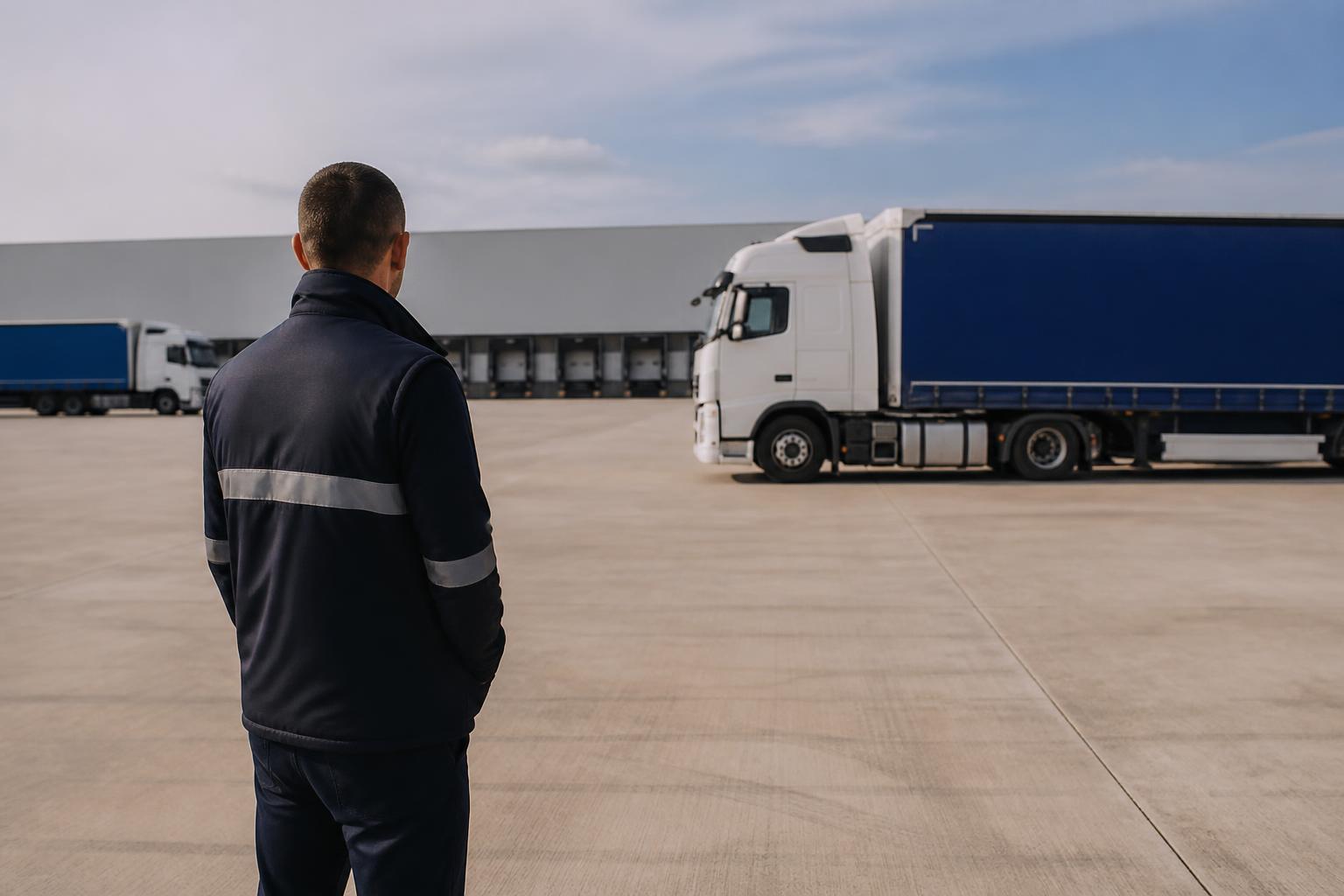
When a transport team is overloaded, the first job is not to find more emails to send or more people to copy in. It is to stop low-value manual work from swallowing the day. In UK haulage, teams usually come under pressure in very ordinary ways, extra bookings, delayed confirmations, container amendments, late-running vehicles, port issues, awkward collection windows, and customers wanting updates before there is anything new to report. If nobody takes those tasks out of the middle of the day, planners and operators end up firefighting instead of controlling the work.
The most effective support does not replace your judgement. It gives you extra hands around request handling, quote chasing, booking follow-up, operator communication, ETA updates, POD collection and exception escalation, while you keep control of who moves the load, what rate is accepted, and what service level you will stand behind. That is exactly where we position Haulier.AI, as an AI-assisted, human-backed transport desk built for practical UK haulage operations.
Where stretched transport teams usually start to slip
Most overloaded teams do not fail at the dramatic moments first. They start to slip in the routine stages between enquiry and delivery.
The first warning sign is slower acknowledgement. A customer sends a movement request at 09:12 and nobody confirms receipt until much later because the team is tied up on live jobs. That delay creates avoidable chasing and makes the customer think the work is not being managed, even if it is.
The second is planning by inbox. When jobs are being sorted by who has shouted loudest, or by whichever email was opened last, you begin to lose clean control over priorities, booking status and handover notes. The spreadsheet still exists, but it is no longer the real operating picture.
Another common sign is quote handling becoming inconsistent. One load gets sent to five operators, another to one. A container movement gets priced without checking the slot, the cut-off or whether the haulier can actually cover the relevant port. A part-load request sits because nobody has had time to group it with compatible work. None of that means your team is weak. It means the manual process has outgrown the time available.
Follow-up is usually the next pressure point. Collection times are not rechecked. Driver details arrive late. A missed call from a subcontractor sits unnoticed while the planner is on another line. POD requests pile up at the end of the week. Customers ask for ETA updates, but the team is still waiting for a return call. In road transport, delay compounds quickly because every unanswered message creates two more.
For container haulage, the warning signs are even sharper. Port work punishes loose administration. If the team is stretched, somebody eventually misses a release detail, a booking reference, a VBS slot amendment, or a customs-related instruction. Since Brexit, documentation and movement readiness have become less forgiving on many UK movements linked to international trade. Where the movement involves border processes, the UK position is not simply the same as the EU generally, and teams need to work to the actual UK requirements for the specific move, not broad assumptions.
Commercial control can also start to slip when teams are overloaded. Rates get agreed too quickly just to secure cover. Work is offered to whoever answered first, not whoever is best placed. Margin checks become rushed. Credit and VAT details are not checked as carefully as they should be. When that happens, pressure is no longer just operational. It is affecting service quality and profit.
If you are looking for haulage support when your transport team is stretched, these are the signs to act on. Do it before missed follow-up turns into missed collections.
What support should take off your desk first
Not every task should be handed over first. The right starting point is the repetitive work that consumes attention without requiring your commercial decision at every step.
Top of that list is initial request handling. Somebody needs to log the requirement properly, check the basics, and make sure the movement is clear before it reaches the point of pricing or allocation. That means collection and delivery postcodes, dates, commodity, pallet or load details, weight, equipment needed, access constraints, and whether the job is full-load, part-load or container haulage. It also means checking whether the request is complete enough to send to operators without a chain of avoidable clarification emails.
Quote gathering is another obvious task to take off your desk. This does not mean surrendering rate control. It means letting a support desk organise the outbound requests, chase responses, line up the options, and present them clearly. Your team should not have to spend half the morning repeating the same lane details to multiple operators.
Booking confirmation and routine follow-up are also safe to hand over when done properly. Once you have approved the operator and rate, the support function can issue the booking details, confirm collection requirements, chase acknowledgement, and track whether driver and vehicle information has been returned where needed.
Then comes status management. A good support model can collect ETA updates, monitor whether the movement is on plan, pass on delays, and keep a record of what was said and when. It can also chase POD after delivery so your own team is not left cleaning up the paperwork gap days later.
For many businesses, awkward jobs are where the desk gets stretched first. Out-of-pattern lanes, late afternoon same-day requests, difficult access points, partial loads with narrow windows, and jobs that need more calling around than usual. Those are exactly the movements where structured support helps. We have covered that in more detail in how to handle awkward UK haulage requests more consistently.
The tasks that should usually stay with you are the ones involving commercial authority and customer commitment. Final rate approval, customer-specific service promises, exception decisions with cost impact, and any choice that changes your exposure should remain under your control. Good support reduces admin. It does not quietly take decision-making away from you.
How to add capacity without losing commercial control
The main fear with outside support is understandable. If someone else starts touching your transport desk, do you lose control of operator choice, rates, customer handling, or standards?
You should not accept a model that requires that trade-off.
The practical answer is to separate execution support from commercial authority. The support team can manage the flow of requests, operator outreach, booking administration and tracking activity, while you decide which operators are acceptable, what lanes they are suitable for, what rates work, and when an exception needs management escalation.
That matters because many overloaded teams do not actually need somebody else to run their network. They need a disciplined desk to keep the process moving. We built Haulier.AI around that principle. Our model is AI-assisted for speed and structure, but human-backed where transport reality needs judgement. We are not trying to force work into a race-to-the-bottom auction. We organise requests and responses so that operators and transport teams can act quickly without giving up commercial control.
In practice, that means a few non-negotiables.
First, operator selection should follow your rules. You may have preferred hauliers by lane, vehicle type, customer sensitivity or port coverage. Outside support should work within that list or within an agreed framework, not bypass it because somebody unknown came back cheaper.
Second, rate acceptance should sit where you want it to sit. Some teams want every rate approved. Others work to agreed thresholds by lane or job type. Either way, the process must be explicit. If there is no clear approval rule, the support model will create as much uncertainty as it removes.
Third, communication ownership should be clear. Who updates the customer, who speaks to the operator, who handles delay notifications, and who closes out POD? If those lines are blurred, duplication and mixed messages follow.
Fourth, escalation rules need to be written down. If a vehicle misses a slot at Felixstowe, if a delivery at London Gateway needs to be rebooked, if Southampton is congested, if a driver is turned away at Tilbury, if Liverpool has a timing issue, or if an Immingham container cannot be collected because release is not in order, everyone needs to know who is doing what in the next 15 minutes.
When your internal fleet is already full, the issue is often not whether outside capacity exists. It is whether you can access it without losing control of margin and service. We have set out that pressure point separately in what to do when your own haulage fleet is already full.
What good cover looks like for UK haulage and port work
Good support for UK haulage is not just a person answering emails. It is a process that can cope with the actual differences between movement types.
For full-load work, cover should handle clean job capture, prompt operator outreach, booking confirmation, collection and delivery checks, live progress updates, and POD retrieval. The support desk should understand the commercial difference between a straightforward trunk and a time-critical or high-risk movement. A same-day full-load with strict site restrictions needs tighter handling than a routine next-day trunk.
For part-load, the support requirement is different. The key value is in clarity and consolidation discipline. The desk needs to capture dimensions, weight, stackability, handling requirements, and timing flexibility properly, because part-load fails when details are vague. It also needs to recognise when a part-load request is actually too awkward or too urgent to be treated as standard groupage support.
For container haulage, the standard rises again. Good cover must understand port-specific realities, not just general road haulage. That includes whether the movement is import or export, whether the container is loaded or empty, what booking and release references are required, whether the haulier can access the relevant terminal, and whether the timing works around the actual port process.
Major UK ports each bring their own operating pressures. Felixstowe, London Gateway, Southampton, Tilbury, Liverpool, Teesport and Immingham all require disciplined handling of bookings, timings and communication. A support desk helping with port work should be able to organise requests for those ports without treating them as generic collections. If you are moving boxes regularly, our container haulage support for UK port movements is built around that reality.
The desk also needs to understand what it is not doing. It is not a customs broker. It is not inventing compliance from scratch. But it does need to identify when a movement is not ready to send to a haulier because the operational prerequisites are missing. Since Brexit, that distinction matters more, because movements linked to international trade can fail before wheels turn if the underlying release or customs position is incomplete.
Port work also makes escalation discipline essential. Containers miss slots. Terminals get busy. Drivers are delayed at previous jobs. Delivery points refuse early arrivals. The support model must know when to push for a revised ETA, when to alert the customer, when to seek a new booking, and when additional cost risk needs approval before anybody commits.
How to judge whether a support model will actually help
Before you commit to any support arrangement, test it against the points that make the difference in real transport operations.
Start with responsiveness. How quickly are new requests acknowledged? How fast can the desk turn a complete job into a structured outreach to operators? What happens outside your busiest office hour, when the overload usually hits? You do not need vague promises of being proactive. You need a defined response process.
Next, look at visibility. Can you see what has been sent, who has responded, which jobs are awaiting approval, what has been booked, what is delayed, and which PODs are outstanding? If the support model creates a black box, it has not solved the original problem. It has just moved it.
Then test escalation handling. Ask what happens when a subcontractor stops answering, a collection window is missed, a port booking has to change, or a delivery refusal creates storage or waiting risk. A useful answer includes named triggers, timing expectations, and clear ownership. An unhelpful answer is simply that the team will keep you informed.
Check the limits as well. Can the support team deal with full-load, part-load and container haulage? Which ports can it support confidently? Does it understand movements through Felixstowe, London Gateway, Southampton, Tilbury, Liverpool, Teesport and Immingham? Can it handle awkward, low-notice and out-of-pattern work, or only tidy standard jobs? You need to know where the model stops before you rely on it on a difficult day.
Commercial control is the next test. Who chooses the operator? Who approves the rate? Who decides whether extra waiting time, redelivery or port-related cost is accepted? If the answer is unclear, the model will create friction the moment something changes mid-movement.
Finally, look for a balance of speed and judgement. Purely automated workflows can move quickly, but UK haulage rarely runs on clean data alone. Purely manual support can be careful, but too slow under pressure. The practical answer is AI-assisted structure with human-backed oversight, so routine handling is faster but exceptions are still managed by people who understand transport operations.
That is the standard we work to at Haulier.AI. We help overloaded transport teams add capacity where they usually need it most, request handling, quote organisation, booking follow-up, live movement support and POD closure, while leaving operator choice, rates and service control where they belong, with you. When the day is busy, that is often the difference between just coping and actually keeping UK haulage moving.
When does a transport team usually need extra haulage support?
Usually when volumes swing, regular suppliers are full, urgent jobs increase, or staff are tied up chasing quotes, POD and ETA updates instead of planning the next movement.
Can outside support help without taking over our transport function?
Yes, if the model is AI-assisted and human-backed, with clear handover rules. The aim should be to reduce admin pressure, not replace your transport operators or their judgement.
Is this only useful for container haulage?
No. It can help with container haulage through Felixstowe, London Gateway, Southampton, Tilbury, Liverpool, Teesport and Immingham, but also with part-load and full-load road movements.
How do we keep control of rates and operator choice?
Set approval rules in advance. Good support should organise requests and quotes, present suitable options and preserve your commercial control rather than forcing race-to-the-bottom auction pricing.
What information should be ready before asking for support?
Have collection and delivery details, timing, load type, site constraints, reference numbers, customs or Brexit-related requirements where relevant, and any POD or ETA reporting expectations.