
Container haulage article
When full truck load is the right call for UK haulage
A practical guide to full truck load in UK haulage: when it fits, how pricing works, where risks sit, and how to plan smoother road movements.
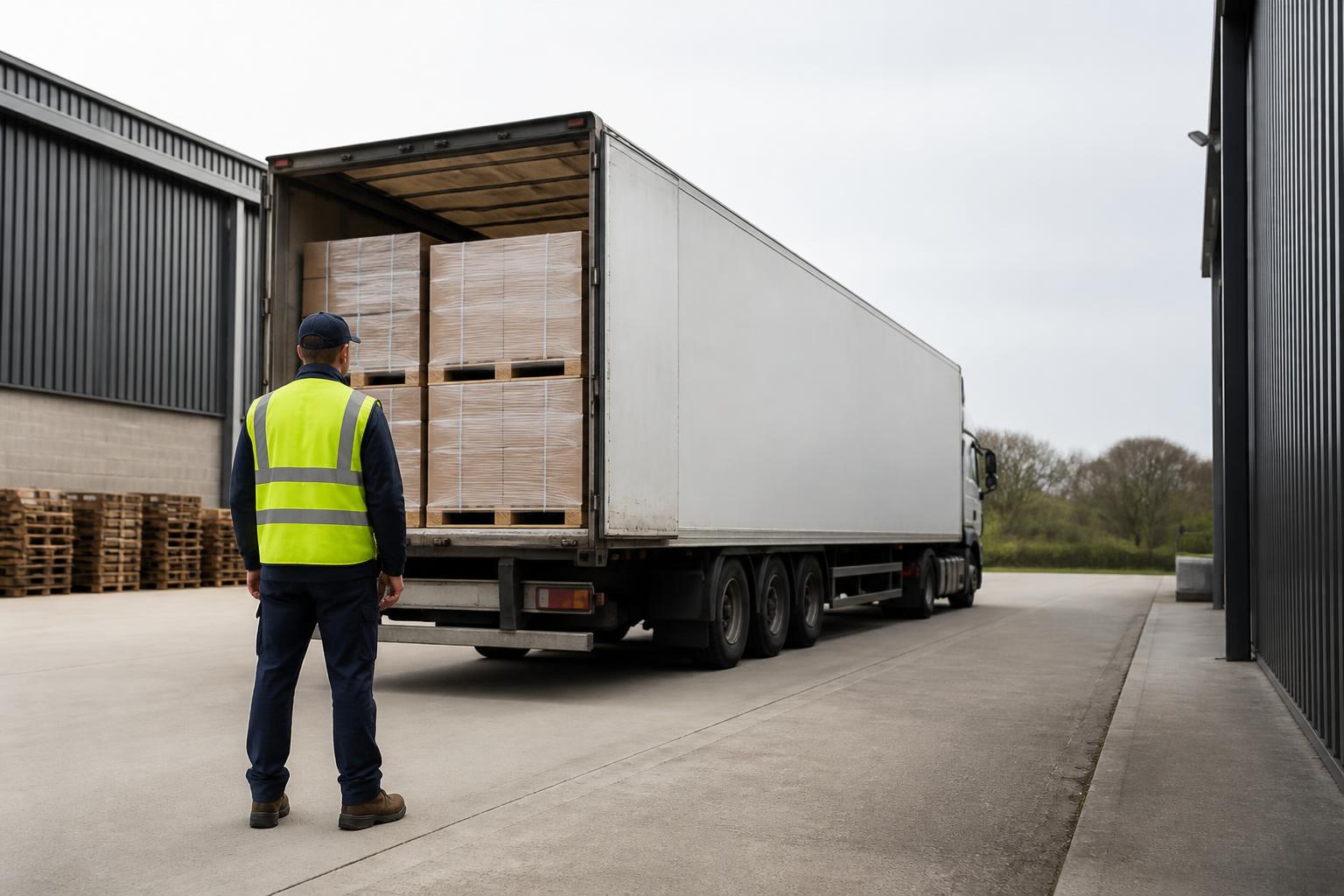
If you are deciding whether to book a dedicated vehicle or try to share space, the right answer usually comes down to control. A full truck load is the right call in UK haulage when the shipment needs one vehicle, one collection plan, one delivery sequence, and no unnecessary handling in between. That applies just as much to urgent factory output as it does to awkward freight, high value goods, retail deadlines, or port collections where timing matters more than shaving a little off the linehaul.
We see this choice come up when transport teams are under pressure. Volumes change, warehouse slots move, customer delivery windows tighten, and suddenly a job that looked fine as a shared movement starts carrying too much risk. In those cases, a dedicated truck is not a luxury. It is often the cleaner operational decision.
What full truck load means in day-to-day UK haulage
In practical UK haulage terms, a full truck load means booking a vehicle for your job rather than buying a few pallet spaces on a multi-drop route. The vehicle may be physically full, but it does not have to be. What matters is that the truck is allocated to that movement and planned around your collection and delivery requirements.
That is why buyers sometimes get caught out by the language. In everyday conversation, people use full truck load, full-load, and dedicated vehicle almost interchangeably. They are close, but not always identical in the way different operators speak. Some will use full-load to mean a trailer filled to capacity. Others will use it more commercially, meaning the customer is paying for exclusive use of the vehicle. If there is any doubt, the sensible question is simple: is this truck dedicated to our load only, or is it being combined with other freight?
That is the main difference from part-load. With a part-load option that cuts cost without losing control, your freight shares vehicle space and route planning with other consignments. That can work very well for standard palletised goods with flexible timing. It becomes less attractive when sequence, handling, or timing are critical.
Buyers use a full truck load when they need certainty around a few practical points:
- direct collection and delivery, or as near to direct as the driver hours and route allow
- less touch points and less risk of damage
- clearer ETA management
- simpler communication with one operator and one vehicle
- easier control over loading method, securing, and paperwork
- less chance of freight being bumped because another stop overruns
This matters across standard curtain work, refrigerated movements, machinery, retail replenishment, and container haulage. It also matters on jobs that are not especially large, but are operationally awkward. A load can be only half a trailer and still be better moved on a dedicated basis.
When a dedicated vehicle makes operational sense
The strongest case for a dedicated vehicle is when delay or mishandling costs more than the saving from sharing space.
Urgent production and stock movements are the obvious example. If a manufacturer is waiting on components, or a distribution site needs stock for a booked outbound run, a part-load network introduces extra dependencies. One late collection can affect the route. One failed delivery can knock the schedule. A dedicated truck removes most of that complexity.
Time-specific delivery windows are another common trigger. Retail RDC bookings, site deliveries with crane slots, and locations with strict access periods are all easier to manage when the vehicle is assigned to one job. If a delivery has to be there at 08:00, or not before 14:00, route-sharing becomes a gamble unless there is a lot of slack in the day.
Handling risk is just as important as timing. Goods that are fragile, high value, unusually shaped, or difficult to secure generally benefit from fewer touches. The more often freight is moved, cross-loaded, or repositioned to make other consignments fit, the more chances there are for damage, shortage, or dispute. A dedicated full truck load reduces those intervention points.
There is also a strong case where the loading profile is awkward. Long lengths, mixed dimensions, side-loaded freight, machines that need careful strapping, or loads that need a particular deck arrangement can be hard to combine efficiently with other work. The same applies where the freight is not stackable, not top-loadable, or takes up floor space disproportionate to its weight.
Temperature-controlled work often leans the same way. If product integrity depends on one set point, one delivery sequence, and minimal door openings, sharing space with other consignments can create unnecessary risk.
Port work is another area where a dedicated vehicle often makes sense. In container haulage, timing around slots, quay releases, VBS bookings, and storage deadlines can be unforgiving. A missed collection at Felixstowe, London Gateway, Southampton, Tilbury, Liverpool, Teesport, or Immingham can create cost and planning issues quickly. If the box has to come out and move straight to a warehouse or devanning point, a dedicated plan is usually safer than trying to fit the move around other work. If your operation regularly deals with port collections, our container haulage support for major UK ports is built around that reality.
A dedicated vehicle also makes sense where compliance and paperwork need tighter control. Post-Brexit, some movements linked to ports, customs procedures, or cross-border supply chains create more document sensitivity than a simple domestic pallet delivery. Even when the road leg is entirely within the UK, missing references, release details, or delivery instructions can stop the job. The fewer moving parts in the transport plan, the easier those issues are to manage.
How full truck load pricing is usually built
A full truck load rate is usually built from the vehicle requirement first, then adjusted for the operational detail around the job.
Distance is the starting point, but it is never the whole answer. A clean A-road or motorway trunk move between easy sites is priced differently from a job with city access, narrow approach roads, timed bookings, or long dead mileage into the collection point.
Equipment matters next. A standard curtainsider, box van, skeletal trailer, fridge, flat, or Moffett-equipped vehicle all carry different operating costs and availability constraints. If the load needs load restraint equipment, edge protection, pump truck access, tail lift, or specific trailer dimensions, that changes the quote as well.
Turnaround expectations are a major pricing factor. A quick load and tip is one thing. Three hours at collection, a missed booking at delivery, or a site that regularly keeps drivers waiting is another. Most operators will price based on a reasonable loading and unloading allowance, then add waiting time if the site exceeds it. If the customer does not mention likely delays up front, the original rate may not reflect the real job.
Collection and delivery conditions also make a visible difference. Examples include:
- restricted access for articulated vehicles
- handball rather than forklift offload
- driver assist requirements
- out of hours attendance
- booked delivery slots with penalty risk for late arrival
- ADR implications where relevant
- port-related admin and queue risk
- urban delivery restrictions, including ULEZ or other local charging considerations where applicable
For container haulage, pricing can include further moving parts such as port waiting, quay rent exposure if timings slip, empty returns, and whether the work is merchant haulage or carrier haulage. The exact commercial treatment varies by operator and shipping line arrangement, but the common point is that port jobs need cleaner detail than a basic warehouse to warehouse movement.
VAT also needs to be understood properly in the commercial chain. In domestic UK haulage, VAT is usually chargeable in the normal way unless a specific relief or different treatment applies. That is not something to assume from old EU-era habits. Brexit changed a lot of related trade administration, but it did not remove the need to confirm the right tax treatment on the actual service being supplied.
If you want a better sense of how operators build a usable rate, our guide on getting a full-load haulage quote that is actually usable sets out the details that matter before the first truck is booked.
What information operators need before they can quote properly
The fastest way to get a poor quote is to send a thin brief. Operators can only plan properly when they know what they are actually moving, where it is going, and what will happen on site.
For a proper quote, we normally need:
- full collection and delivery postcodes
- site names and contact details
- requested collection date and delivery deadline
- whether the timing is fixed, preferred, or flexible
- commodity description
- number of pallets, packages, or units
- weight
- dimensions, especially for long or oversized items
- whether the freight is stackable
- loading method and unloading method
- whether the freight is palletised, loose, stillaged, crated, or on reels
- vehicle type required
- any booking reference, PO, or delivery note requirement
- whether a POD must be signed, stamped, or uploaded in a particular format
- any access restrictions, such as narrow lanes, height limits, site PPE rules, or no artics
- any port, customs, or release information for container haulage
- any special handling needs
Missing details create three kinds of problem.
First, they slow the quote down. If the transport desk has to chase for weight, dimensions, or the actual delivery postcode, planning stops while emails go back and forth.
Second, they create rework. A rate given for a standard curtainsider may have to be withdrawn if the freight turns out to need a flat with straps and edge protection, or if the delivery point cannot take an artic.
Third, they create wrong pricing. If a site usually detains vehicles for two hours, but the quote assumed a normal turnaround, someone will end up disputing waiting time later. That is avoidable if the site behaviour is declared at the start.
This is one reason transport teams come to us when their own desks are overloaded. The issue is not just finding a truck. It is getting the request into a form that operators can price and accept without guesswork. When that admin burden is landing on a busy operations team, our article on keeping UK haulage moving when your team is overloaded covers the practical pressure points.
Where full truck load can still go wrong
A dedicated truck reduces risk, but it does not remove it.
Site access is one of the biggest failure points. The vehicle may be right for the load but wrong for the location. We still see jobs where an artic is booked to a site that can only realistically take a rigid, or where a driver arrives to find parked cars blocking the only turning area. If access is tight, photos, What3Words references, or a clear note from the site can save a failed attendance.
Loading delays are another regular issue. Even when a vehicle is dedicated, it still runs on driver hours, booking slots, and the next planned movement. If the goods are not ready, or the warehouse has not picked the order, the whole day can move. That is where expectations need to be realistic. A dedicated vehicle is not unlimited waiting time bundled into one rate.
POD issues can also cause avoidable friction. Some customers need a signed POD on the day. Others need a stamped delivery note, a photo, or a portal upload. If that requirement is not made clear before the job starts, the driver may leave with the wrong document or no document at all. Sorting it out later is often much harder than getting it right on the gatehouse desk.
Missed ETA expectations are another common source of dispute. A customer may hear "collected this morning" and assume "delivered by lunchtime", even if the route, traffic, and booking window do not support that. A realistic ETA should be based on the actual plan, not a hopeful interpretation. That matters even more where the delivery site has labour or crane resource waiting.
Port-related complications deserve their own mention. Container movements can fail for reasons that have nothing to do with the truck itself, including missing release references, customs holds, booking issues, terminal congestion, or cut-off times. Those risks exist at Felixstowe, London Gateway, Southampton, Tilbury, Liverpool, Teesport, and Immingham alike. The exact process varies by line, terminal, and movement type, but the operational lesson is the same. Port jobs need the paperwork and timing checked before the driver is on the road.
How Haulier.AI helps organise full truck load requests
At Haulier.AI, we built our process for the point where manual transport admin starts getting in the way of good decisions.
Our role is not to run a race-to-the-bottom auction board. We use an AI-assisted, human-backed transport desk to organise requests, structure the job information properly, and connect work with suitable operators while preserving commercial control. That matters for both sides. Customers need usable quotes and realistic delivery plans. Hauliers need relevant opportunities, clear job detail, and the ability to price the work on its actual merits.
For a full truck load request, we help turn a vague need into an operational brief. That means checking the collection and delivery profile, the equipment requirement, the timing, and any risk points such as difficult access or port dependencies. If the request is incomplete, we can identify what is missing before it goes out to operators. That reduces the back-and-forth that wastes time on urgent jobs.
For hauliers, the benefit is similar. Instead of chasing thin enquiries and competing in a blind price spiral, they receive work that has been better organised and reviewed by people who understand UK haulage realities. That is especially valuable on awkward work, quiet-day backfill, overflow support, and jobs linked to container haulage.
Human oversight is a key part of this. AI-assisted does not mean unattended. It means using technology to sort, structure, and speed up the request and quote flow, while keeping people involved where judgement is required. If a site looks risky for an artic, if a timing request is unrealistic, or if a container move has missing references, that needs a human eye.
The result is a cleaner process for dedicated vehicle work. Customers get a better chance of receiving quotes they can actually act on. Operators get a better chance of seeing work that is properly described. And both sides spend less time buried in phone calls, inbox chasing, and spreadsheet updates.
When a shipment needs control, speed, or lower handling risk, a full truck load is often the right answer. The important thing is not just asking for one, but asking in a way that gives the operator enough detail to plan it properly. That is where we help.
Does full truck load mean the trailer must be completely full?
No. It often means the vehicle is dedicated to one shipment or one customer movement, even if every cubic metre is not used. Timing, security and handling can matter more than absolute fill.
Is full truck load always cheaper than part-load?
Not always. For smaller consignments, part-load can cost less because vehicle space is shared. full truck load can be better value when speed, reduced handling or dedicated timing matters.
What details should I send when asking for a quote?
Send collection and delivery postcodes, dates, times, pallet or load dimensions, weight, loading method, any special equipment needs, and site restrictions. Clear details improve quote accuracy and ETA planning.
Can full truck load include container haulage?
Yes. container haulage can involve dedicated road movements to and from ports such as Felixstowe, London Gateway, Southampton, Tilbury, Liverpool, Teesport and Immingham, subject to port and timing constraints.
Why is human oversight still important in transport planning?
Because real jobs involve exceptions: site limits, waiting time, urgent changes, port issues, POD requirements and commercial judgement. AI-assisted tools help organise work, but people still need to review and manage it.