
Container haulage article
How part-load cuts cost without losing control
A practical guide to part-load in UK haulage: when it works, how pricing is built, what can delay it, and how to book it with fewer surprises.
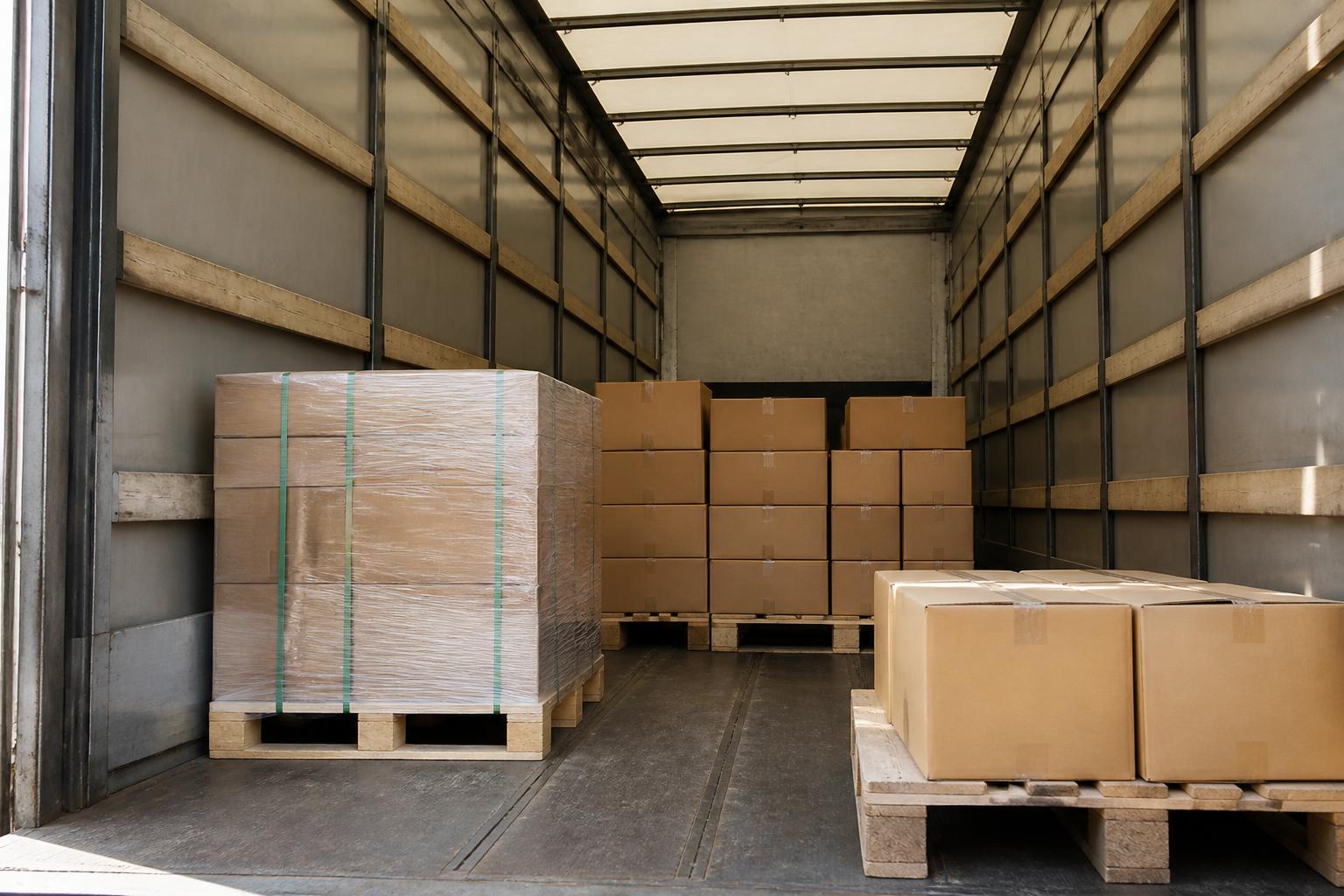
Part-load cuts cost by letting you buy only the vehicle capacity you need, while still keeping a defined collection, a named carrier, and a workable delivery plan. For many UK haulage jobs, that is the balance that matters. You avoid paying for an entire trailer when your freight does not justify it, but you do not have to drop all control and accept the looser handling model that often comes with broad groupage networks.
In practice, the saving only holds if the movement is planned properly. The right booking details, realistic timing, clear site information and sensible handling assumptions make the difference between an efficient part-load move and a job that burns time in phone calls, rework and waiting charges. That is where organised request handling matters.
What part-load means in day-to-day UK haulage
In day-to-day UK haulage, a part-load movement means your freight takes only part of a vehicle, with the rest of the space used for other compatible consignments. You are not booking exclusive use of the trailer. You are buying a defined amount of transport capacity, usually measured through a mix of pallet spaces, loading metres, dimensions, weight, and the operational effort needed to move the load.
That sits between full-load and groupage.
A full-load booking normally means one customer has sole use of the vehicle for that movement, whether the trailer is physically full or not. You are paying for dedicated capacity, direct routing, and a higher degree of control over timing and handling.
Groupage is usually a hub-based consolidation model. Freight from many customers is brought together, sorted through a depot or network, then trunked and distributed. That can be very efficient on cost for smaller consignments, but it often involves more touch points, more scanning, and less flexibility if the job is unusual.
Part-load is different. It is commonly built around direct planning by a haulier or transport desk, combining a small number of loads on one vehicle where the route, timing, freight type and handling requirements fit together. The freight may still share a vehicle, but it is not necessarily going through the same depot structure as network pallet freight.
What the shipper is actually buying is not just empty floor space. You are buying:
- Collection from an agreed point
- Capacity on a suitable vehicle
- A route that can absorb your delivery point
- Handling appropriate to the freight
- A realistic delivery window or agreed service level
- Communication if the ETA changes
- A POD process at completion
That distinction matters. Two jobs can take the same number of pallets but need very different planning. Eight standard pallets with forklift access at both ends are straightforward. Four oversized crates with timed delivery into a restricted site are not. Both may be called part-load, but the transport product is not the same.
The same logic applies in port work. A container haulage movement from Felixstowe or Southampton may look simple on paper, but whether it can be treated like a clean part-load-style allocation depends on the container type, slot timing, VBS arrangements, quay release, customs status, and delivery point constraints. Port jobs involve their own operating rules, especially since Brexit added more document and customs checks to some flows.
When part-load is the right fit
Part-load is usually the right fit when your freight is too large or too time-sensitive for standard groupage, but not large enough to justify paying for a full-load vehicle.
That often includes:
- Several pallets going to one delivery point
- Long or awkward freight that needs direct planning
- Loads with a defined delivery day but not a minute-by-minute booking slot
- Freight that must stay together on one vehicle
- Overflow volumes when your normal full-load pattern drops
- Jobs where you want fewer handling points than a network service would give
The first test is physical suitability. If the freight can be loaded safely with other goods, secured properly, and unloaded without excessive rework, it may suit a part-load move. If it is highly fragile, hazardous, temperature-controlled, or likely to contaminate other freight, the options narrow quickly. Some of those jobs still move as part-load, but only with the right vehicle and compatible planning.
The second test is timing. Part-load works best where there is some flexibility around route building. If you need a dedicated same-morning collection and direct delivery with no intermediate stops, that is often closer to full-load pricing even if the freight only uses part of the trailer. The more fixed and urgent the service requirement, the less room there is to share cost with other loads.
The third test is delivery control. If the consignee requires a strict booked slot, advance security paperwork, vehicle registration pre-advice, and a narrow unloading window, the movement can still be done, but the planning margin is tighter. A missed slot can mean standing time, failed delivery, or a rebooking fee. That does not rule out part-load, but it does mean the quote needs to reflect the real operating risk.
It is also worth checking whether your freight is genuinely too big for groupage, or whether it only feels that way because the details have not been set out properly. A clear dimensions list, pallet spec, and handling note often opens up options. Equally, some loads that look suitable for a shared vehicle turn out to be poor part-load candidates once the access restrictions and booking conditions are known.
For businesses with changing volume, part-load is often the practical middle ground. It helps when there are quiet periods, partial orders, split despatches, or customer demand that does not line up neatly with trailer utilisation. If your team is spending too much time ringing around to fill awkward gaps, practical support to keep UK haulage moving when your team is overloaded can make a real difference.
How part-load pricing is usually built
Part-load pricing is usually built from a combination of capacity used and operational complexity. There is rarely a single flat formula that fits every job.
The main factors are these.
Space used on the vehicle is usually the starting point. That may be priced by pallet spaces, loading metres, or actual dimensions. For irregular freight, dimensions matter more than pallet count. A light but long load can block more usable trailer space than a heavier square load.
Weight still matters, even when the freight does not fill much floor area. A dense load can limit what else the vehicle can legally carry. Gross weight, individual item weights, and axle distribution can all affect whether a job fits efficiently with other work.
Route is a major factor. A collection in the Midlands with delivery near a main motorway corridor is easier to combine than a remote collection with a narrow delivery slot in a rural area. Mileage matters, but so does the shape of the route and whether the stops fit naturally into existing traffic patterns.
Handling requirements affect price quickly. Is it forklift on and forklift off, or does the driver need to tail-lift, pump truck, handball, or wait for site labour? Does the freight need straps, edge protection, or specific load restraint? Does it have to stay upright? Every extra handling condition reduces flexibility.
Timing is another key driver. Standard weekday collections and deliveries are easier to absorb. Late booking, same-day requests, next-day deadlines, out-of-hours work, and fixed delivery appointments all reduce planning options. If you need a quick turnaround, it helps to know how to get a next-day part-load quote without delays.
Access constraints are often underestimated. Narrow roads, urban delivery restrictions, residential unloading, Moffett requirements, port procedures, or sites that cannot take an artic can all change the vehicle type and therefore the rate. A job priced on an artic assumption may need to be replanned onto a rigid if the delivery point cannot accept the larger vehicle.
Waiting time and failed collection risk also sit behind the rate, even if they are not obvious in the first quote. If a site is known for delays, if goods are often not ready, or if booking references are frequently wrong, hauliers price that risk somewhere. Where it is not included, it often appears later as a surcharge.
For container haulage, pricing can also be affected by port-related elements such as quay rent exposure, demurrage risk, pre-pull requirements, and whether the move is from Felixstowe, London Gateway, Southampton, Tilbury, Liverpool, Teesport or Immingham. If you are moving port traffic, our guide to choosing the right partner for container haulage in the UK is a useful next read, and our container haulage support across UK ports explains how we handle those movements.
As with any UK haulage quote, rates should also be clear on VAT treatment, waiting time assumptions, and any accessorial charges. In the UK, domestic road haulage is generally subject to VAT unless a specific relief applies. That differs from some cross-border EU arrangements, so if a movement involves onward international elements, the tax position should be confirmed on the actual job rather than assumed.
What can go wrong and how to reduce delays
Most part-load problems are not caused by the idea of sharing vehicle space. They are caused by missing operational detail.
One common issue is poor collection information. If the collection point is missing a postcode, contact name, booking reference, or opening hours, the driver may lose the slot before the vehicle even arrives. If the freight is not ready, a shared route can unravel quickly because the rest of the day is planned around it.
Restricted sites are another frequent problem. A delivery point may say it can take a lorry, but that does not always mean an artic can reverse onto the bay. Weight-restricted roads, school-run congestion, city centre restrictions, site induction rules, and mandatory PPE all need to be known in advance.
Rework is also costly. If the consignment is described as six standard pallets but turns out to be loose cartons, overhanging pallets, or unbanded goods, the loading plan may fail. The freight may need to be remeasured, rewrapped, or shifted onto another vehicle. That adds delay and often extra cost.
Waiting time is a major hidden drain. Shared vehicles rely on each stop running broadly to plan. If one collection takes an extra hour because the goods are buried in the warehouse or the forklift is unavailable, every later stop is affected. The ETA moves, customers chase updates, and the chance of missing a booked delivery increases.
Shifting ETA is not always poor service. Sometimes it is simply the reality of live road transport when there are multiple stops, traffic disruption, and fixed site rules. What matters is whether the movement is being monitored and whether updates are passed on early enough for the receiving site to react.
You can reduce most delays by doing a few basic things well:
- Send exact dimensions and weights, not estimates if you can avoid them
- Confirm whether the goods are palletised, crated, loose, or oversized
- State loading and unloading method at both ends
- Give site contacts who will answer the phone
- Declare delivery booking requirements at quote stage
- Flag access issues, vehicle limits, and time restrictions early
- Make sure labels, references and paperwork match the booking
- Be clear about POD expectations before the vehicle moves
For port-related work, add the port-specific requirements as early as possible. Container number, booking reference, release status, customs status, and any hold position all matter. Since Brexit, document mismatches and customs holds can create delays that have nothing to do with road planning, so they need to be visible from the start.
What information to send when requesting a quote
A good quote request saves time for everyone. It gives us enough to match the job to suitable UK haulage capacity without repeated back-and-forth.
For a standard part-load quote, send:
- Collection postcode and full address
- Delivery postcode and full address
- Collection date
- Required delivery date or delivery window
- Site opening hours at both ends
- Contact name and phone number at both ends
- Number of pallets or items
- Exact dimensions of each item or pallet
- Weight per item and total weight
- Whether the goods are stackable
- Whether the freight is fragile, high value, hazardous, or non-standard
- Loading method and unloading method
- Any booking-in requirement
- Any access restriction, such as no artic, limited height, tail-lift needed, or timed access
- Purchase order, delivery reference, or job reference if needed on paperwork
If the freight is unusual, photos help. A quick side-on and end-on image can prevent a lot of wrong assumptions.
If you need a POD in a particular format, say so at the start. Some customers need a signed paper POD, some accept an electronic record, and some want the POD returned with a delivery note reference visible. If your accounts team will not release payment without a specific POD standard, that is operationally important information, not an afterthought.
For container haulage, add the essentials specific to the box:
- Container number
- Size and type
- Port location, such as Felixstowe, London Gateway, Southampton, Tilbury, Liverpool, Teesport or Immingham
- Release or collection reference
- Delivery address and whether tipping or live unload is required
- Whether the movement is merchant haulage or carrier haulage
- Customs status where relevant
The more complete the first request, the faster the quote handling. It also reduces the risk of a rate being accepted on the wrong basis and then needing revision later.
How Haulier.AI helps with part-load movements
At Haulier.AI, we use an AI-assisted, human-backed transport desk to organise requests properly, match them to suitable operators, and keep the commercial process usable for both customers and hauliers.
That matters in part-load because these jobs are often won or lost on detail. A basic load board approach can push work into the market quickly, but it does not always separate a clean, standard movement from a job with awkward access, strict booking conditions, or handling risk. When those details are buried in a late email, everybody loses time.
Our process is built to structure the request before it goes too far. We help capture the dimensions, timing, site limits, and service requirements that make a quote meaningful. Then we match the movement with suitable UK haulage capacity, with human oversight on the operational fit.
For customers, that means less spreadsheet chasing and fewer unusable quotes. For hauliers, it means relevant subcontract opportunities without stripping away commercial control. We are not built around a race-to-the-bottom auction model. Hauliers still decide what work fits their fleet, their network and their rate.
That is especially useful where the work sits in the grey area between easy network freight and dedicated full-load. Part-load often needs judgement. Can the job sit with another movement already planned? Is the delivery slot too tight for a shared route? Does the site restriction force a different vehicle? Those are practical transport questions, and they need more than automation alone.
We also support work that overlaps with port activity and container haulage, where timing, release status and local knowledge matter. Whether the job is a straightforward inland movement or a more awkward request linked to Felixstowe or another major port, the aim is the same, to keep the request organised, the quote realistic, and the movement under control.
If you are buying transport, we help turn incomplete requests into workable jobs. If you are a haulier with spare capacity or looking for better-matched subcontract work, we help surface the right opportunities without flooding you with noise. That is how part-load saves money without giving away control, by combining the right amount of shared capacity with proper operational handling.
Is part-load the same as groupage?
Not always. part-load usually means your freight shares a vehicle but still moves as a planned load segment. Groupage often involves a wider hub-and-spoke network with more consolidation points and handling.
When should I book full-load instead?
Use full-load when the freight fills most of the vehicle, needs a direct run, has tight delivery timing, or is awkward enough that sharing space creates too much risk or delay.
What details affect a part-load quote most?
Pallet count, dimensions, weight, collection and delivery postcodes, access limits, delivery window, handling needs, and whether the freight is stackable all have a direct effect on price and routing.
Can part-load work for container haulage from ports?
It can in some cases, but it depends on the movement. Port work through Felixstowe, London Gateway, Southampton, Tilbury, Liverpool, Teesport and Immingham often has timing and handling constraints that need checking first.
Will I get a fixed ETA with part-load?
You may get an ETA, but part-load is more exposed to route changes, other drops and site delays than a dedicated vehicle. Clear delivery windows and good booking data improve reliability.
Does Haulier.AI run an auction for part-load jobs?
No. Haulier.AI focuses on organised request and quote handling with AI-assisted, human-backed oversight, while preserving hauliers' commercial control rather than pushing race-to-the-bottom auction pricing.