
Container haulage article
How freight moves without the usual phone-and-email chase
A practical guide to how freight is planned, quoted and moved in UK haulage, including container haulage, ETAs, PODs and human oversight.
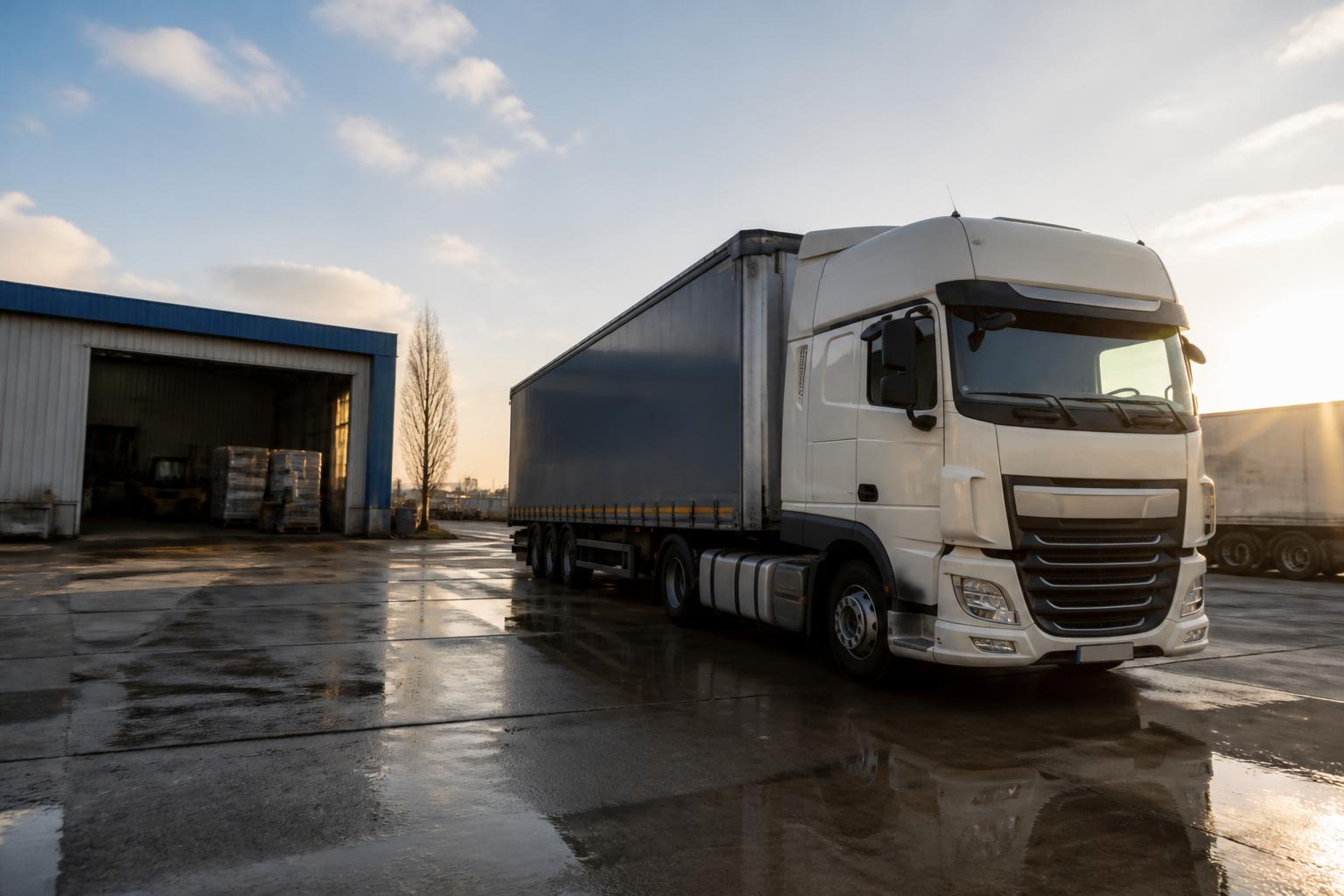
Most transport teams do not lose time on the driving. They lose it on the chase before the wheels turn. One person is calling around for coverage, another is forwarding half-complete collection details, someone else is waiting for a price, and the haulier is still trying to work out whether the job actually fits the vehicle, the timing and the site restrictions. That is where routine freight work becomes slow, messy and expensive in admin time.
We built Haulier.AI to take that chase out of UK haulage without turning transport buying into a blind auction. Our approach is AI-assisted and human-backed. We organise the request properly, surface the right operational points early, match the job to suitable operators, and keep people involved where judgement matters. The result is not less control. It is better control, with less calling, less inbox traffic and fewer surprises on the day.
What freight means in day-to-day UK haulage
In practical UK haulage terms, freight is the load being moved by road from one point to another under agreed collection and delivery conditions. That can be palletised goods from a warehouse, loose cartons for retail, machinery on a flat, building products to site, food products moving under time pressure, or a container coming off a quay and going inland.
Most buyers are not dealing with freight as an abstract category. They are dealing with a job type. In day-to-day operations, that usually means one of the following:
- A part-load where the goods share space with other consignments
- A full-load where the vehicle is effectively dedicated to one movement
- A same day or urgent movement where timing matters more than consolidation
- A planned trunk or repeat lane
- A site delivery with booking rules, timed slots or restricted access
- A specialist movement such as abnormal dimensions, Moffett requirement, ADR, or container haulage
That distinction matters because the information, pricing basis and operator choice change with the job. A part-load may be priced around pallet count, dimensions, handling profile and postcode pair. A full-load may depend more on vehicle type, waiting risk, route, loading window and whether there is a return opportunity. An urgent dedicated movement may be driven by immediate vehicle availability and realistic ETA rather than by the cheapest rate on paper.
For hauliers, the same word covers very different operating realities. One subcontract load may suit a curtainsider already near the collection point. Another may only work for a rigid with tail-lift and pump truck. Another may be commercially viable only if it can be paired with existing work. So when we talk about freight, we mean the real movement, with the actual constraints that decide whether the job runs smoothly or becomes a problem.
What information needs to be right before a load is quoted
Accurate pricing starts with accurate job data. Most bad quotes are not really pricing mistakes. They are information mistakes that only show up once the truck is on the way or already at site.
Before a load is quoted properly, we need the operational basics to be clear:
- Collection and delivery postcodes
- Site names and full addresses
- Required collection date and time window
- Required delivery date and time window
- Load type, such as palletised, loose, long lengths, machinery or container
- Weight, pallet count, dimensions, and whether the load is stackable
- Vehicle requirement, such as van, rigid, curtainsider, box, flatbed, skeletal, or tail-lift
- Loading and unloading method, including forklift on site, crane offload, handball or driver assist
- Contact names and numbers for collection and delivery
- Booking reference, PO number or delivery note reference if needed
- Any compliance point that affects legality or access
Those compliance points are often where a straightforward job stops being straightforward. Examples include ADR classification, overweight pallets, waste movement paperwork, food-grade requirements, security instructions, customs status, and whether the goods are subject to seals or port release conditions.
Access details are just as important as the load itself. A delivery point may have a height restriction, a narrow approach, a red route issue, a requirement for a booking slot, or a no-artic policy. A collection point may close for lunch, insist on PPE, refuse early arrivals, or need a vehicle registration in advance. If that information appears after allocation, the original quote may no longer reflect the real job.
Timing details need to be exact enough to be usable. “AM delivery” is not always enough. If the site only accepts between 08:30 and 10:00, that changes planning. If the load must collect the day before because the warehouse closes at 16:00, that changes planning too. If waiting time becomes likely, it needs to be visible from the start.
For international-facing work moving by road in the UK, Brexit still matters where customs status, transit movement references, port community system entries, or release instructions are involved. The UK position is not simply the same as EU domestic road movements. Documents and data points can differ, especially where goods are arriving into or leaving from a UK port environment. VAT treatment can also matter commercially and administratively, particularly where storage, port charges or cross-border elements sit around the core haulage move.
When we handle a request, the aim is simple. Get the job into a quote-ready shape before it starts doing the rounds. That prevents the familiar chain of revised prices, changed assumptions and last-minute phone calls.
How freight jobs are matched to the right operator
A good transport match is not just about who says yes first or who offers the lowest number. It is about operational fit and commercial fit.
Operational fit means the haulier can actually do the job properly. That includes the right vehicle, the right geography, the right customer service level, the right compliance position, and the right availability for the timing involved. A strong operator for container haulage from Southampton may not be the right operator for a same day tail-lift delivery into central London. A haulier that is excellent on repeat full-load work may not want irregular handball jobs with uncertain waiting time.
Commercial fit matters just as much. Hauliers need work that suits their network, their fleet mix and their margin discipline. Buyers need dependable coverage, not a headline rate that falls apart when the real details appear. That is why we do not run a race-to-the-bottom auction model. Cheap prices generated in the wrong format often create expensive failures later, in missed collections, refused loads, rebooking charges or damaged relationships with end customers.
Our process is to organise the requirement first, then put it in front of suitable operators. That means the haulier sees a clearer picture of the work before responding. It also means the buyer gets quotes from operators who are more likely to be appropriate from the outset.
This is especially useful when volumes change or the work is awkward. A business might have a sudden run of extra outbound pallets, a supplier failure, a late-booked import collection, or a difficult lane that regular providers do not want. Equally, a haulier may have a quiet day in one traffic area and want relevant subcontract work without spending hours checking scattered emails. Matching works better when both sides keep their commercial control and get cleaner information.
For businesses moving port traffic, we also direct readers to our pages on container haulage through major UK ports and specific flows such as Felixstowe container collections and deliveries, where the planning points are different from standard road work.
Where freight movements usually go wrong
Most failed jobs do not fail for dramatic reasons. They fail because one ordinary detail was wrong, missing or assumed.
The most common causes of delay or failed collection include:
- Wrong or incomplete address details
- No booking reference or missed booking slot
- Vehicle type not suitable for site access
- Load dimensions or weight supplied inaccurately
- Goods not ready when the vehicle arrives
- Warehouse cut-off misunderstood
- Driver arrival outside the accepted window
- Port release not in place
- Customs or document issue not identified in advance
- No one available to load or unload
- Contact number unanswered when a problem arises
Missed ETA usually starts much earlier than the actual delay. If the collection window was vague, if the route included known congestion points, if the delivery site had a fixed slot, or if previous jobs on the vehicle were not factored in properly, the ETA was fragile from the beginning. Urgent jobs make this more obvious, but the same problem exists in standard planned work.
POD issues are another regular source of avoidable admin. A delivery can be completed physically but still remain commercially incomplete if the POD is missing, illegible, unsigned where required, or detached from the correct reference. That creates chasing on all sides, especially where invoice approval depends on a clean POD trail. In some flows, a delivery note, gate stamp, seal check or exception note matters just as much as the signature itself.
Urgent jobs add pressure because every missing detail causes a disproportionate delay. If the load is same day and the driver reaches site only to find no forklift, no booking, or a closed gate, the whole plan can collapse quickly. That does not mean urgent work is inherently unreliable. It means urgent work needs cleaner information and tighter handling.
This is where organised admin makes a visible difference. If the request has been structured properly, the key details are easier to validate before dispatch. If status updates are centralised, fewer people are chasing the same answer in parallel. If exceptions are flagged quickly, human intervention can happen while there is still time to recover the job.
What changes when the job is container haulage
Container haulage adds another layer of planning because the road move is only one part of the task. The container is tied to port systems, release status, quay operations, storage rules, cut-offs, equipment requirements and, in many cases, customs-related checks.
Through Felixstowe, London Gateway, Southampton, Tilbury, Liverpool, Teesport and Immingham, the basics of road transport still apply, but extra questions become essential:
- Has the container been released?
- What is the container number and size?
- Is it import or export?
- What is the VBS or booking position, if applicable?
- Is the box standard, reefer, open top, flat rack or otherwise non-standard?
- Is the weight within legal road limits for the planned route and equipment?
- Is there a quay rent or storage risk if collection is delayed?
- Does the delivery point accept the container type and vehicle combination?
- Is the export unit packed and customs-cleared in time for port return?
- Are there seal instructions, inspection holds or documentation dependencies?
Port habits differ. Felixstowe traffic has its own timing and operational rhythm. London Gateway and Southampton each have their own access patterns and planning considerations. Tilbury may sit differently in route planning for London and South East deliveries. Liverpool, Teesport and Immingham bring their own inland connections, customer bases and equipment realities. The point is not that one port is harder than another. It is that container haulage depends on details that are not interchangeable.
The UK context also matters. Since Brexit, port-related movements can involve customs statuses and references that domestic EU road work would not. That does not make every movement complex, but it does mean assumptions are risky. A road haulier turning up before release is in place has not solved anything. They have just created waiting time and more admin.
Weight and equipment planning are especially important. A legal gross weight on paper does not automatically mean a practical road move once tractor, skeletal trailer, fuel, route and axle distribution are considered. Delivery site suitability also matters. A container delivery to a tight industrial unit is not the same as a standard curtainsider drop. Ground conditions, unloading capability and detention risk all need to be understood beforehand.
For port-specific movements, readers often want a clearer view of the local process, so we also cover London Gateway container haulage planning and Southampton container haulage requirements in more detail.
How AI-assisted admin helps without replacing transport judgement
Transport admin contains a lot of repetitive work that should be faster than it usually is. Reading inbound requests, extracting the key job details, spotting gaps, grouping updates, tracking message threads and prompting for missing fields are all useful places for AI-assisted handling.
Used properly, that reduces manual chasing. A request can be turned into a clearer transport brief more quickly. Missing information can be flagged before the job is quoted. Updates can be kept in one place instead of being scattered across inboxes, call notes and spreadsheets. Hauliers can receive cleaner subcontract opportunities. Buyers can avoid re-explaining the same movement several times to different people.
That does not mean software should make every transport decision on its own. It should not.
Judgement is still needed when a quote looks cheap because a key assumption has been missed. Judgement is needed when a site restriction makes the original vehicle choice risky. Judgement is needed when a port release is uncertain, a customer insists on an unrealistic ETA, or an exception on the day requires a practical recovery plan. Transport is full of edge cases, and edge cases are where experience earns its keep.
That is why our model is human-backed as well as AI-assisted. We use process and automation to remove avoidable admin, but we keep people involved where the work needs interpretation, escalation or commercial sense. For buyers, that means less time spent chasing and a better chance of getting the right operator on the right job. For hauliers, it means relevant opportunities presented more clearly, without handing pricing control to a reverse auction.
The aim is straightforward. Freight should move because the job was defined properly, matched properly and managed properly, not because somebody happened to win an inbox race. When the routine admin is organised, transport teams can focus on the parts of UK haulage that actually need expertise.
What is the difference between part-load and full-load?
part-load uses only part of a vehicle’s capacity, while full-load takes the vehicle for one shipment. The right choice depends on urgency, handling risk, cost and whether the load can share space safely.
Why do freight quotes vary so much between jobs?
Price changes with distance, vehicle type, timing, waiting risk, loading method, delivery restrictions, fuel, port factors and whether the work is straightforward or awkward to cover at short notice.
What details are needed to book UK haulage properly?
At minimum: collection and delivery points, dates, load dimensions or pallet count, weight, goods type, contact names, site restrictions, reference numbers and any special timing or handling requirements.
What does ETA mean in a freight movement?
ETA is the estimated time of arrival. It is a working estimate, not a guarantee, and can change with traffic, loading delays, port issues, driver hours and delivery queue times.
What is POD and why does it matter?
POD means proof of delivery. It confirms the load was delivered, usually with a signature, time or delivery record, and it matters for customer updates, dispute handling and invoicing.
Does Brexit still affect UK freight planning?
Yes. Brexit still affects some customs processes, border timing, paperwork and VAT treatment, especially where port movements, imported goods or cross-border supply chains are involved.