
Container haulage article
Proof of delivery that cuts chasing and disputes
A practical guide to proof of delivery software for UK haulage, covering POD capture, exceptions, ETA updates, invoicing and operator control.
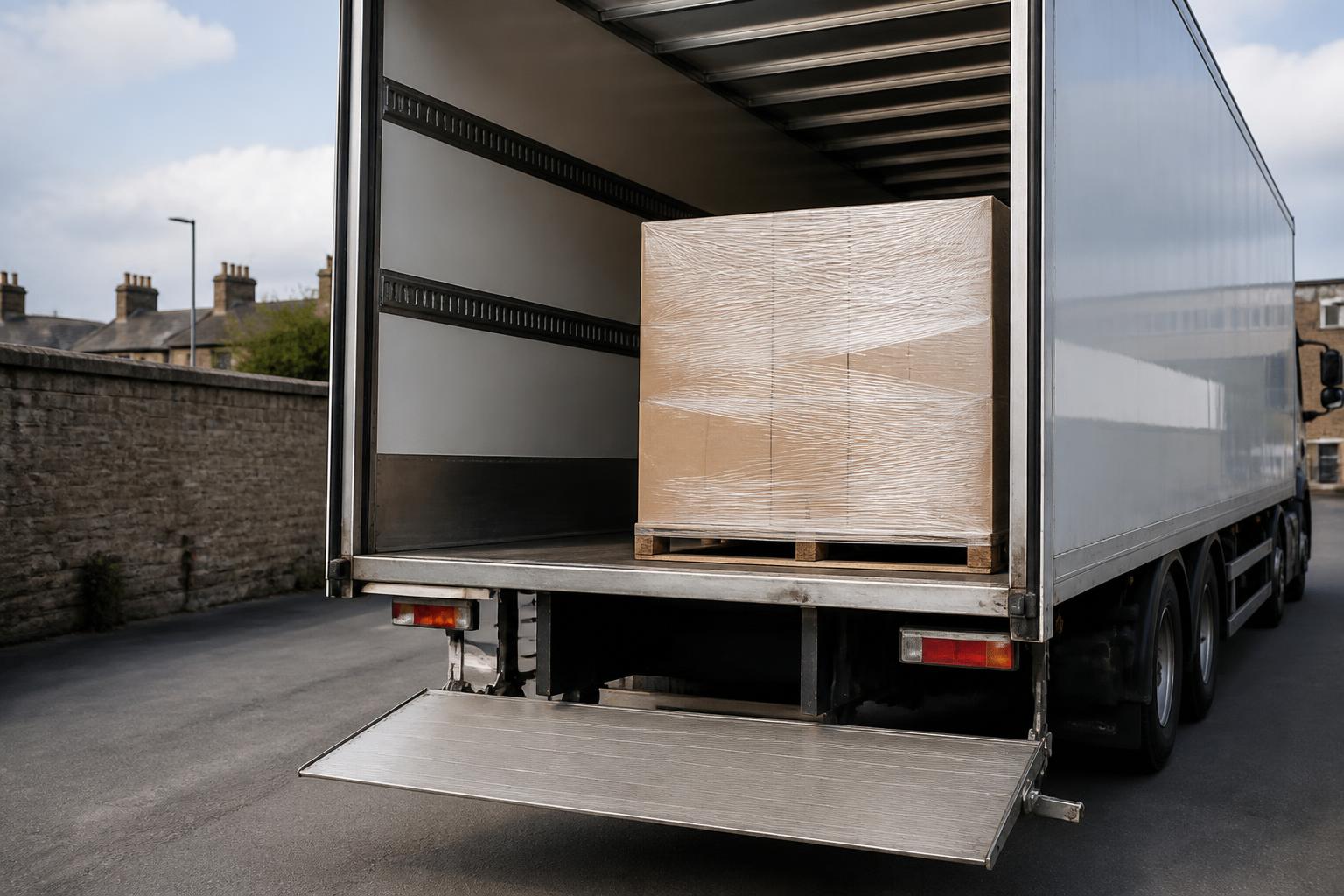
If you are still waiting for signed notes, blurred photos from a driver’s phone, or a forwarded email to confirm a delivery happened, the problem is not just paperwork. It is control. A proper proof of delivery software setup reduces chasing because it records the delivery event as it happens, shows the status to the right people, and keeps the evidence tied to the job.
In UK haulage, that matters on both sides. Shippers want to know whether a load is delivered, delayed, refused or short. Hauliers want to close jobs, deal with exceptions properly and invoice without arguments. The difference between a tidy operation and a messy one is usually not whether a POD exists somewhere. It is whether the process captures the right information at the right point, and makes it usable straight away.
What proof of delivery software actually does
At its core, proof of delivery software manages delivery events, not just documents.
A basic document store can hold a scanned POD, a delivery note, a CMR, a booking reference, or a photo of paperwork after the fact. That is useful, but it does not tell you much about the live state of the job. It does not show whether the vehicle is on site, whether the delivery was accepted with damage noted, whether the consignee refused the load, or whether the driver is still waiting on a bay.
A proper POD process in UK haulage usually includes:
- Job creation against a booking or traffic movement
- Driver access to delivery details
- Live or near-live status updates
- Arrival and departure event capture
- Signature capture where required
- Photo capture for pallets, seals, packaging, damage or site conditions
- Notes for shortages, refusals, waiting time and other exceptions
- Time-stamped evidence linked to the specific job
- A clear handoff into invoicing and customer communication
That matters because many disputes are not really about whether a vehicle turned up. They are about what happened when it got there. Was all freight delivered? Was there damage? Did the site refuse because the booking slot was missed? Was the driver delayed by site congestion? Did the consignee sign, print a name, or decline to sign?
In UK practice, a POD can be a signed delivery note, an electronic signature, a named acceptance recorded in the system, or a combination of those, depending on the customer’s process. If the movement involves international legs, customs-linked freight, or container work connected to ports, the evidence trail may also need to sit alongside release references, collection references, seal checks, and time records. Since Brexit, operational records often matter more because more jobs involve border-related checks, customs intermediaries, and tighter scrutiny of what moved and when. That does not change the legal basics of a delivery receipt, but it does increase the value of a clean audit trail.
The best proof of delivery software also separates operational truth from admin lag. A traffic desk should be able to see that the job was delivered at 10:42, with a name, signature and two photos attached, even if the final document pack is reviewed later. That is the difference between event management and passive storage.
Where it saves time in day-to-day transport work
Most wasted time around POD is not at the point of delivery. It is afterwards.
A shipper asks whether a load delivered. The traffic desk phones the driver. The driver says he left the note in the cab. Someone asks for a photo on WhatsApp. Then an email goes to accounts because the invoice cannot be raised without backup. Later, customer service asks again because the consignee says only part of the load arrived. None of this is unusual. It is also avoidable.
When proof of delivery software is working properly, it cuts out several routine delays.
First, it reduces phone calls. If status updates and delivery evidence are visible on the job, operations staff do not need to ring around for every delivery confirmation. That matters most on busy traffic desks where one person may be handling multiple vehicles, subcontractors and customer queries at once.
Second, it reduces email chasing. A large amount of admin traffic in UK haulage is just people asking for the same thing in different ways: has it delivered, can you send the POD, who signed for it, why is there a discrepancy? If the record is already attached to the movement, that back and forth drops sharply. We see this especially where a business is trying to manage changing volumes or awkward work without adding more manual admin.
Third, it reduces spreadsheet maintenance. Many operators still run side spreadsheets to track outstanding POD, invoice holds, damage claims and delivery exceptions. Spreadsheets are not the problem in themselves. The problem is duplication. If one team updates the TMS, another keeps a spreadsheet, and a third relies on inbox folders, nobody trusts the same version of the truth.
Fourth, it speeds up invoicing. In practice, a lot of invoice delay comes from missing proof, unclear waiting time, or unresolved exceptions. If the POD, arrival time, departure time and notes are already on the job, accounts can invoice faster and with fewer queries. Where charges depend on detention, redelivery, failed delivery, or extra handling, the evidence is there to support the rate being billed. That is as important for hauliers protecting margin as it is for customers checking what they are paying.
This is one reason clear ownership matters. We have written before about who should chase a POD after delivery in UK haulage, because too many operations leave that responsibility unclear until a customer starts asking questions.
For shippers, the saving is less disruption. For hauliers, it is fewer unpaid admin hours. For subcontracted networks, it is less friction between the principal contractor, the delivering carrier and the end customer.
What a good POD process looks like on real jobs
A good POD process starts before the vehicle moves.
When a job is booked, the system should hold the core movement details clearly: collection point, delivery point, booking references, contact names, delivery window, load type, quantity, and any site instructions. If there is a timed booking, a reference needed at gatehouse, or a restriction on vehicle type, that must be visible to the driver and the desk. If the job is in London, route and timing restrictions can affect whether an ETA is realistic, as set out in our guide to delivery planning under London lorry control rules.
From there, the workflow should look something like this.
The traffic desk allocates the movement, whether to an employed driver or a subcontractor. The driver receives the job details in a usable form, not buried in a long email chain. As the vehicle progresses, status updates show key stages such as assigned, en route to collection, loaded, en route to delivery, arrived on site, delivered, or delivery exception.
ETA visibility is important here, but only if it is practical. There is no value in a polished map if the ETA is not grounded in actual road conditions, booking slots and driver hours. In UK haulage, especially on port-related or urban work, ETA needs context. A truck heading from Felixstowe or Southampton can be delayed by port queues, VBS timing, road congestion, or customer booking constraints. A system should help the desk communicate realistic arrival expectations, not just optimistic ones.
At delivery, the driver should be able to capture the outcome quickly. On a straightforward job, that may be a signature, printed name, time stamp and one clear image of the signed note. On pallet work or high-value freight, it may also include photos of the delivered goods, the trailer condition, or seal status. On a refused or short delivery, the process needs to force enough detail to avoid later argument. “Refused” on its own is not enough. The record should show why it was refused, who refused it, what remained on board, and what instruction was given next.
A failed delivery process also needs structure. If site is closed, booking is not recognised, access is impossible, or the consignee will not accept the freight, the driver should record the failed attempt with time, location, notes and supporting images where relevant. The desk can then inform the customer promptly and agree the next step, whether that is redelivery, return, storage, or hold pending instruction.
Customer communication should come from the same operational record. If a customer asks what happened, the answer should not rely on someone reconstructing events from calls and messages. It should come from the job timeline.
That is one of the reasons we favour organised, AI-assisted, human-backed workflows. Automation can help collect updates and keep records moving, but real transport work still needs people to review exceptions, challenge unclear information, and protect commercial control. A delivery event is only useful if somebody can trust what it means.
What to check before choosing a system
The first check is whether drivers will actually use it.
If the app or process is awkward, slow, or unreliable in poor signal areas, adoption will fail. Drivers will revert to texting photos, ringing the office, or handing in paperwork later. The best design is usually the one that asks for the minimum needed to complete the job properly, with clear prompts for exceptions.
Second, check how the system handles real-world exceptions. A lot of software demos look good on a clean delivered job. The harder questions are these:
- Can it record part delivery properly?
- Can it capture waiting time start and finish?
- Can it attach multiple photos in sequence?
- Can it distinguish damaged on arrival from damaged on unloading?
- Can it record refusal reasons in a structured way?
- Can it show rebooked delivery attempts without losing the first failed event?
- Can it deal with a site that will not sign but will provide a named receiver?
Third, check integrations. If the POD process sits apart from job allocation, invoicing or customer updates, you may just move the admin somewhere else. At minimum, the system should tie delivery evidence to the transport order, movement reference or consignment record that the rest of the business uses. If you are handling container haulage, that may also need to sit against container number, booking reference, release, or port movement details.
Fourth, check document quality. A POD image that is cropped, blurred or unreadable is often no better than no POD at all. The system should preserve image clarity, not compress it into something useless for a claim or invoice backup.
Fifth, check the audit trail. You need to know who uploaded what, when it was captured, whether it was edited, and what status changes happened in what order. In a dispute, that timeline matters. It also matters for internal control, especially where subcontractors are involved.
Sixth, check commercial control. This is often missed. If you use subcontract hauliers, can you control what the end customer sees and when? Can you manage who owns the communication? Can you keep rates, supplier details and customer details properly separated? We take that seriously because the point is not just to digitise the process. It is to keep it operationally tidy without turning it into a race to the bottom.
Finally, check whether the provider understands transport reality. A generic field service tool may capture signatures, but that is not the same as understanding timed RDC bookings, port collections, demurrage-related knock-on effects, or invoice holds caused by missing paperwork and VAT treatment. In the UK, those practical details often differ from broader EU workflows, especially after Brexit, where domestic and cross-border admin expectations are not always aligned.
How proof of delivery software fits mixed UK haulage networks
Most UK haulage networks are mixed. A business may run its own vehicles on some lanes, use regular subcontractors on others, cover urgent gaps with spot capacity, and handle a combination of container haulage, part-load and full-load work in the same week.
That means the POD process must work across different operating models.
On direct full-load work, the main need is usually clean event visibility and quick closeout. One vehicle, one load, one delivery point sounds simple, but disputes still arise around waiting time, late arrival, offload delays and damage notes. The system needs to capture those details without slowing the driver down.
On part-load work, the challenge is more granular. One vehicle can have multiple drops, each with its own delivery window, receiver, shortage risk and exception profile. Proof of delivery software needs to keep each drop separate, with its own POD and status, while still linking back to the trunk movement and route plan.
On container haulage, the process is different again. The delivery event may be only one part of a longer chain that includes port collection, waiting, quay release, tipping, reloading, return of the empty, and possible interchange or seal checks. Work linked to container movements through Felixstowe, London Gateway, Southampton, Tilbury, Liverpool, Teesport and Immingham needs a POD approach that understands that the final signature is not the whole story. Time stamps at each stage can affect detention, storage exposure, driver planning and customer communication. For businesses moving boxes regularly, our wider container haulage support sits alongside that operational need.
Subcontracting adds another layer. If a principal contractor passes a job to another haulier, the POD process still needs to be consistent. The delivering carrier must be able to submit evidence quickly, but the principal contractor needs control over how that evidence is checked, released to the customer and tied to billing. That is particularly important on awkward jobs, urgent cover, or specialist slots where the subcontractor may not be part of the usual network. We see this often when customers are trying to cover awkward delivery slots with a subcontract haulier.
A mixed network also needs flexibility on communication. Some customers want automatic delivery alerts. Others only want updates on exceptions. Some require a signed PDF attached to every invoice. Others are happy with a digital event record unless there is a claim. The system should support those differences without creating a separate admin process for every account.
That is where Haulier.AI fits. We are not trying to replace transport judgement with a black box. We use an AI-assisted, human-backed approach to keep request handling, job communication and delivery follow-up organised across real UK haulage work. That includes the messy parts, subcontracted cover, changing volumes, and port-linked jobs where a clean POD trail is tied to operational decisions, not just filing.
The practical test is simple. When a customer asks whether the load delivered, can we answer quickly with evidence? When a haulier wants to invoice, is the record already there? When there is a dispute, can we show what happened in order? If the answer is yes, the POD process is doing its job. If the answer still depends on chasing three people and opening five inbox threads, it is not.
What counts as proof of delivery?
Usually a signed POD, but it can also include time stamps, location data, photos, delivery notes, exception notes and named receiver details. The right evidence depends on the load, customer terms and what happened on site.
Is a photo enough instead of a signed POD?
Sometimes, but not always. A photo may support delivery evidence, especially for unattended or damaged deliveries, yet many customers still want a signed POD or a clear named receipt.
Can proof of delivery software help invoicing?
Yes. Faster POD return usually means faster invoice approval because the delivery evidence is already attached to the job. That matters when cash flow depends on quick document turnaround.
Does it work for subcontracted haulage?
It can, if the process is clear. The key is getting POD and exception data back from the delivering operator quickly without losing audit trail, customer visibility or commercial control.
Is proof of delivery software only useful for large fleets?
No. Smaller operators and busy transport teams often feel the benefit first because they spend a higher share of the day chasing updates, missing PODs and delivery queries manually.