
Container haulage article
When full container load is the right UK haulage choice
A practical guide to full container load in UK haulage, including when it fits, how port moves work, costs, risks and what to check before booking.
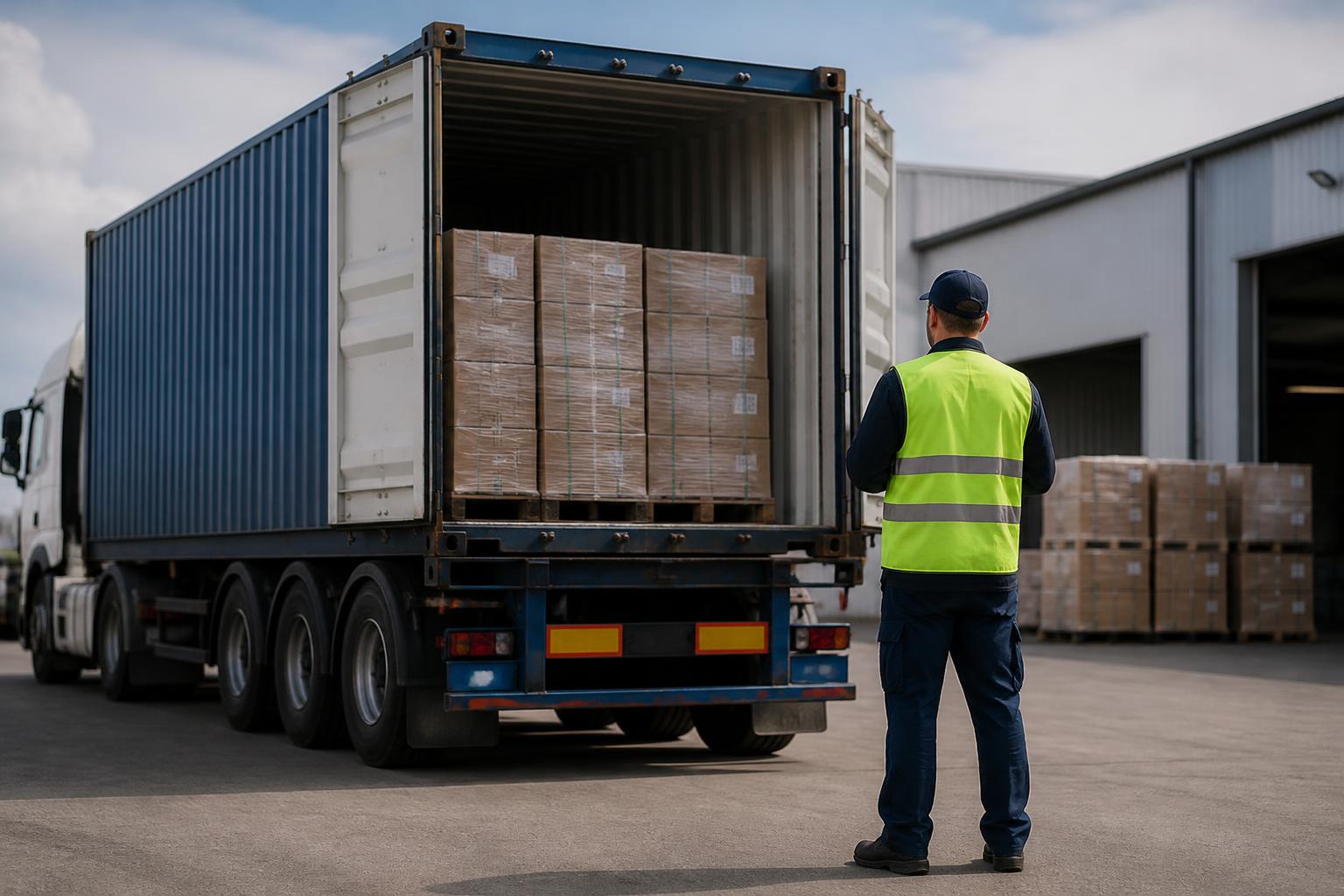
A full container load is the right UK haulage choice when the container needs to move as one controlled unit, on one booking, with less handling and fewer points of failure. In practice, that usually means an import or export box moving through a port such as Felixstowe, London Gateway, Southampton, Tilbury, Liverpool, Teesport or Immingham, collected under a valid release, delivered to a named site, then returned empty within the allowed time.
The reason the term matters is that container work is not priced or planned like a standard curtain-sided job. Port systems, empty return rules, demurrage, detention, VBS slots, site restrictions and customs status all affect whether a movement runs smoothly. If you are deciding between splitting freight and moving a whole container as one job, the operational detail is what decides it.
What full container load means in day-to-day UK haulage
In day-to-day UK haulage, a full container load usually means one shipper or consignee is using the whole shipping container, and that container is moved as a dedicated unit from port or rail terminal to the delivery point, or the other way round for export. The cargo may or may not physically fill every cubic metre, but commercially and operationally the box is treated as one complete movement.
That is different from part-load and different from full-load, even though people sometimes use the terms loosely.
With part-load, the freight itself is split across a shared vehicle or shared network. The haulier is planning around multiple consignments, multiple customers and often multiple drops. That can be efficient for smaller volumes, but it brings more handling, more consolidation points and less control over exact timing.
With full-load, the vehicle is dedicated to one customer’s load for that trip. That might be a trailer full of pallets, machinery, packaging or retail stock. It does not have to involve a shipping container at all. If you want the wider comparison, we set that out in our guide to when a dedicated full-load movement makes more sense.
A full container load sits in its own lane. The unit being planned is not just the cargo, it is the container itself, with a port release, a container number, a seal, a line, a free-time position and an empty return instruction. That changes the planning from the start. We need to know whether it is a 20ft, 40ft or 45ft unit, whether the gross weight is suitable for the route and site, whether the collection is from quay, terminal stack or railhead, and whether the delivery site can actually receive a container on a skeletal trailer.
This matters because container haulage has constraints that ordinary domestic trailer work does not. Port cut-offs, customs holds, line instructions, VBS bookings and empty return depot rules can all change after the original plan is made. If the movement is not identified correctly at booking stage, the quote can be wrong, the slot can be missed, and the risk sits with everyone in the chain.
When full container load is the better fit
A full container load is usually the better fit when the freight is already in a port container and needs to stay together until delivery. Once a box has landed, splitting it too early often creates extra cost, extra handling and extra delay.
Volume is the obvious starting point. If your shipment is large enough to justify using the whole container, or if it already occupies a full box from origin, a dedicated movement is normally the cleanest option. That is especially true where de-vanning at a third-party warehouse would add unnecessary labour and another booking layer before the goods even start their inland journey.
Handling risk is the next point. Every extra touch increases the chance of damage, shortage, mis-sorts or seal issues. Goods that are fragile, high value, retail-sensitive, packed floor-loaded, or difficult to re-palletise often travel better if the container goes straight from port to the receiving site. The same applies where the consignee wants to break the seal at its own premises and control unloading internally.
Timing also matters. If your delivery window is tight, or if the receiving site has labour booked for a specific day, a dedicated container move is often easier to manage than unpacking and reallocating freight into a shared road service. Ports do not always run to a neat timetable, so keeping the movement as one job reduces the number of hand-offs between release and delivery.
Risk and responsibility are another reason. With a full container load, it is clearer who is collecting, where the box is going, when the empty must be returned and what evidence is needed at each step. Once freight is split, commercial responsibility can become more fragmented, especially if there is a dispute over shortage, condition or timing.
There are also practical cases where a dedicated container move is simply the only sensible option. Heavy cargo in a 20ft box is one. A 20ft container can cube out slowly but weight out quickly, so the issue is not just how much space the goods take, but whether the gross weight is manageable for road movement and unloading. Another is cargo going to a site with container-rated unloading equipment and a process built around direct receipt from the port.
By contrast, if the goods are only a small portion of a container, the delivery points are multiple, or the final site cannot accept a container at all, a devanned part-load arrangement may be more suitable. The right answer depends less on labels and more on the operational chain you are trying to run.
How a UK port container move actually works
A UK port container move starts with release and status, not with the truck turning up at the gate. Before collection, we need the basic movement data and confirmation that the container is available to collect. That usually includes the container number, port or terminal, shipping line, release reference, customs status and delivery details. If the box is still on hold, not customs-cleared, or not yet discharged, sending a vehicle achieves nothing except wasted time and likely abortive cost.
Once the release is in place, the collection needs to be planned around the terminal’s booking process. At ports such as Felixstowe and London Gateway, that may mean a VBS or other pre-booked slotting arrangement, depending on the terminal and the haulier’s access method. Southampton, Tilbury, Liverpool, Teesport and Immingham each have their own practical routines, traffic patterns and cut-off pressures. The principle is the same. We need a valid collection plan, not just an address.
The next step is assigning the move to a suitable operator with the right equipment and coverage. Container haulage is not just any artic on any day. The haulier needs a skeletal trailer, a driver briefed for the port, and a workable route to the delivery point. If the box is overweight, if the delivery site is time-critical, or if the empty return depot is in a different area from the port, that all affects who is best placed to do it.
At collection, the driver presents for the booked slot, enters the terminal system and lifts the nominated container. Seal condition and visible damage should be noted where relevant. If the terminal rejects the collection because the container is not available, the release is invalid, the customs status is wrong or the booking has a problem, the movement may fail there and then. That is why accurate pre-advice matters.
From the port, the container is trunked to the consignee or nominated delivery site. During transit, the key operational information is usually ETA, any traffic or port delay, and any issue that may affect unloading. On arrival, the site needs to be ready for a container vehicle, not just for a van or a curtain-sider. Access width, turning area, surface condition, unloading method and booking-in arrangements all matter.
After unloading, the driver obtains POD. In container work, POD can mean more than one thing in practice. There may be a signed delivery note for the cargo, a site stamp, a gate record, or digital confirmation from the receiving point. If there is a seal discrepancy, damage note or refused quantity, it needs recording there and then.
The job is not finished when the cargo is off. The empty container still has to be returned to the correct depot or terminal within the permitted time. That instruction usually comes from the line or its system and can change. Returning the empty late, to the wrong place, or without the right reference can trigger avoidable cost. That final leg is part of the movement and needs planning from the outset.
If you want a clearer view of the port-specific side, our UK container haulage coverage across major ports sets out where we support these movements.
What affects cost and delay on a container movement
The biggest mistake in container pricing is treating it like a simple A-to-B road job. The road leg matters, but so do the port conditions around it.
Distance and geography are obvious cost drivers. A container out of Felixstowe for a Midlands delivery is a different proposition from a local move out of Liverpool, and both are different again if the empty has to be returned to a depot some distance away from the delivery point. The loaded leg and the empty leg both count.
Port waiting time is another major factor. Even with a booked slot, queues and operational disruption happen. Some terminals run cleanly on one day and then tighten up the next because of vessel activity, IT issues or traffic pressure. Waiting time can also arise at the delivery site if unloading is not ready when the vehicle arrives.
Storage, demurrage and detention are often confused, but they are not the same. In broad terms, storage is usually charged by the port or terminal for boxes left in the terminal beyond the free period. Demurrage is generally a shipping line charge linked to use of the container while it remains uncleared or unreturned under the line’s terms. Detention is usually charged when the container is out of the port but not returned empty within the allowed free time. The exact charging basis depends on the line and contract terms, so the important point is to check the specific free-time position on each shipment.
Access limits can change the job completely. A site may say it can take an artic, but that does not always mean it can take a loaded container on a skelly, reverse it safely, unload it promptly and release it within a sensible time. Narrow roads, weak yard surfaces, overhead obstructions, restricted hours and lack of turning space all add risk. If we know that in advance, we can assess whether the move is suitable or whether another arrangement is needed.
Failed collections and failed deliveries also affect cost. Common causes include missing release references, customs holds, unpaid line charges, incorrect container numbers, site closures, no unloading equipment, and booking windows being missed. After Brexit, customs status and documentary readiness have become more important on some flows, particularly where goods are moving under a procedure that is not yet discharged or where the inland site expects specific references before accepting the load.
Commercial terms matter too. Is the quote based on a standard collection and delivery window, with waiting time charged after an agreed allowance? Does it include the empty return? What happens if the line changes the return depot? Is a rebook fee likely if the collection slot is missed for reasons outside the haulier’s control? A realistic quote needs those points surfaced early, not argued over after the event.
What to check before you request a quote
A usable quote starts with usable information. If key details are missing, the first price is often only a placeholder.
Have the collection point confirmed. That means the exact port, terminal or depot, not just “London” or “South coast”. Felixstowe, London Gateway, Southampton, Tilbury, Liverpool, Teesport and Immingham all have different operating conditions.
Have the container details ready. We need the container number if available, size, type, gross weight or estimated gross weight, and whether it is an import, export, empty repositioning or merchant haulage movement.
Confirm release and customs status. Is the box customs-cleared? Is there a hold? Is the release live? If this is an export, what is the cargo cut-off and when does the unit need to be at port?
Give the full delivery address and site constraints. Include opening hours, booking requirements, unloading method, whether the site can accept a container vehicle, and any restrictions on vehicle size or waiting.
State the timing clearly. Is it next available, same day, next day, or a fixed booked window? If there is a required ETA, say so.
Check the empty return position. If you have line instructions, include them. If not, say that clearly so the quote can reflect that the return point may still change.
Share the document trail. Depending on the movement, that may include release references, booking references, delivery orders, contact names, purchase order numbers and any special instructions relevant to POD.
Be honest about uncertainties. If the site has awkward access, if the goods are heavy, or if the release is expected but not yet confirmed, say so. It is far better to price and plan around the real job than to force a clean-looking quote that falls apart on the day. We cover that principle in more detail in our guide on getting a haulage quote that is detailed enough to use.
For imports, also check the commercial side internally. If there are likely line charges, storage exposure, or questions around VAT treatment and customs entries, those need to be understood before the container starts incurring time outside free periods. In the UK, those points are governed by UK rules and the relevant shipping line terms, not by an EU-wide default approach.
Where Haulier.AI fits in for container haulage
We built Haulier.AI for the situations where manual chasing starts to break down. Container work is one of those areas, because the job data changes, the documents matter, and the cost of a missing detail is usually felt immediately.
Our role is not to turn container haulage into a blind auction. We run an AI-assisted, human-backed transport desk that helps organise requests, surface the operational facts, and route work towards suitable UK haulage operators. That matters for buyers who need coverage without endless phone calls, and for hauliers who want relevant subcontract opportunities without losing commercial control.
For the customer moving freight, we help structure the request properly. That means collecting the details a haulier actually needs, such as port, release status, container type, delivery constraints, timing and return requirements, rather than just a postcode pair and a vague collection date. That improves quote quality and reduces the back-and-forth that wastes time on both sides.
For the haulier, we keep the commercial decision where it belongs. Operators can assess whether a movement fits their fleet, port access, traffic pattern and day-to-day capacity. We do not rely on a race-to-the-bottom model that ignores the realities of waiting time, failed collections and line-driven changes.
The human-backed part matters as much as the AI-assisted part. Container jobs often need a person to sense-check the release position, challenge an unrealistic site assumption, or spot that a quote is missing the empty return leg. Good systems help, but they do not replace operational judgement.
If your work regularly touches Felixstowe or London Gateway, we also have port-specific pages for container collections through Felixstowe and London Gateway container movements, alongside wider support for container haulage across the UK.
When a full container load is the right choice, the value is not just in filling a box. It is in keeping the movement controlled from release to return, with the right information in the right hands early enough to avoid preventable cost and delay. That is the part we help organise.
Is full container load always cheaper than sharing space?
No. It can be better value when volume is high or handling risk is costly, but a smaller shipment may still be cheaper as part-load. The right choice depends on volume, timing, handling and total access costs.
Does full container load mean the goods fill the container completely?
Not always. In practice, it often means one shipper uses the container and the movement is handled as a dedicated shipment, even if every cubic metre is not fully used.
Which UK ports matter most for container haulage?
Common container flows often involve Felixstowe, London Gateway, Southampton, Tilbury, Liverpool, Teesport and Immingham, depending on the shipping line, inland destination and available routing.
What documents or references are usually needed before collection?
Typically the haulier needs the container number, release details, collection reference, port or line instructions, delivery address, cargo details, weight and any booking or access requirements.
Can Haulier.AI guarantee a haulier or a rate?
No. Haulier.AI is an AI-assisted, human-backed transport desk for organised request and quote handling. Availability, timing and price still depend on the actual job, market conditions and operator acceptance.