
Container haulage article
Sideloader delivery vs standard: which one gets your box moved?
Discover whether sideloader or standard delivery is best for your needs, balancing cost, flexibility, and accessibility for your shipment.
Choose a sideloader when a container needs to land at ground level and there’s no dock, no crane, and no room for manoeuvre. Choose a standard skeletal or chassis delivery, often paired with a HIAB for lifting, when you’re running depot to depot, port to terminal, or any high-volume lane where cost per mile matters more than lifting flexibility.
- Sideloaders are scarcer and pricier per mile, so book with more lead time and expect a premium.
- Standard skeletal trailer haulage is cheaper and more widely available, but it assumes dock access or a separate lifting plan.
Haulier matches jobs to whichever vehicle type the site actually needs, which is the whole point of getting this decision right before you book.
Key Takeaways
Matching vehicle type to site conditions, not just to price, is what actually prevents failed deliveries and hidden demurrage costs.
| Point | Details |
|---|---|
| Choose by site, not habit | Sideloaders suit no-dock, ground-level sites; standard skeletal suits docked or depot-to-depot runs. |
| Sideloaders cost more per mile | Scarcity drives the premium, but it can beat hiring a separate crane for ground-level drops. |
| Compliance data prevents failures | Container ID, verified gross mass, and twist-lock confirmation must be ready at collection. |
| Book with exact site data | Ground type, access width, turning circle and load window belong in the booking, not a phone call. |
| Haulier matches vehicle to site | Its AI-assisted desk captures site details upfront and matches jobs to hauliers with the right fleet. |
Table of Contents
- What is sideloader delivery and how does it work?
- What is standard delivery on a skeletal or chassis trailer?
- Sideloader vs standard delivery: comparing the trade-offs
- Site checks and compliance that stop deliveries failing
- What sideloader and standard delivery actually cost
- A quick checklist before you book either vehicle
- How Haulier.AI takes the guesswork out of vehicle matching
- Sources
- FAQ
What is sideloader delivery and how does it work?
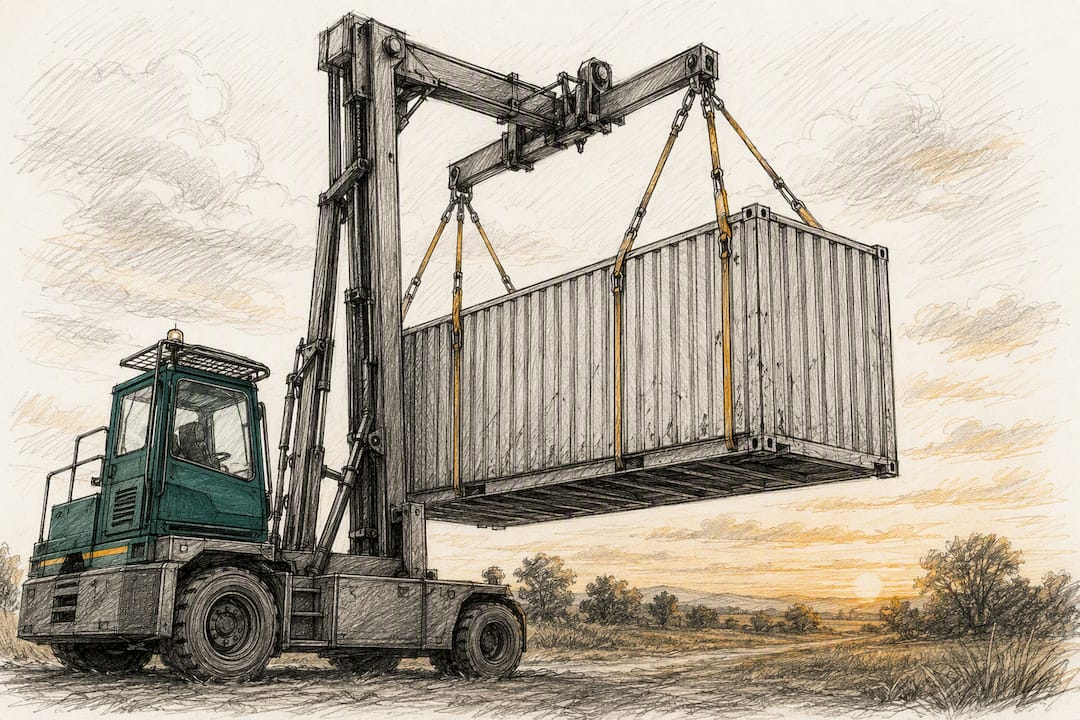
A sideloader, sometimes called a sidelifter, is a truck fitted with hydraulic cranes mounted along its own chassis. It lifts a container laterally off the trailer bed and sets it straight onto the ground, or lifts it back up again, without needing a dock, forklift, or reach stacker on site. That’s the entire appeal: sideloaders exist for sites without dock infrastructure, narrow yards, farms, self-storage drops, and anywhere a container needs to swap between trailer and ground with no other lifting equipment around.
The trade-off is operational rigidity. The ground has to be reasonably level and firm enough to take the outriggers, and the vehicle needs space to swing its crane arm through a full arc. Availability is thin. Most hauliers run only a handful of sidelifters against a much larger standard fleet.
- Best for: no-dock sites, swap-over deliveries, uneven or remote locations.
- Watch for: soft ground, overhead cables, tight turning circles.
Pro Tip: Give exact ground surface, slope, and access width when you book. A sideloader crew that arrives to find soft grass or a six-foot gate has wasted a trip and you’re paying for it either way.
What is standard delivery on a skeletal or chassis trailer?
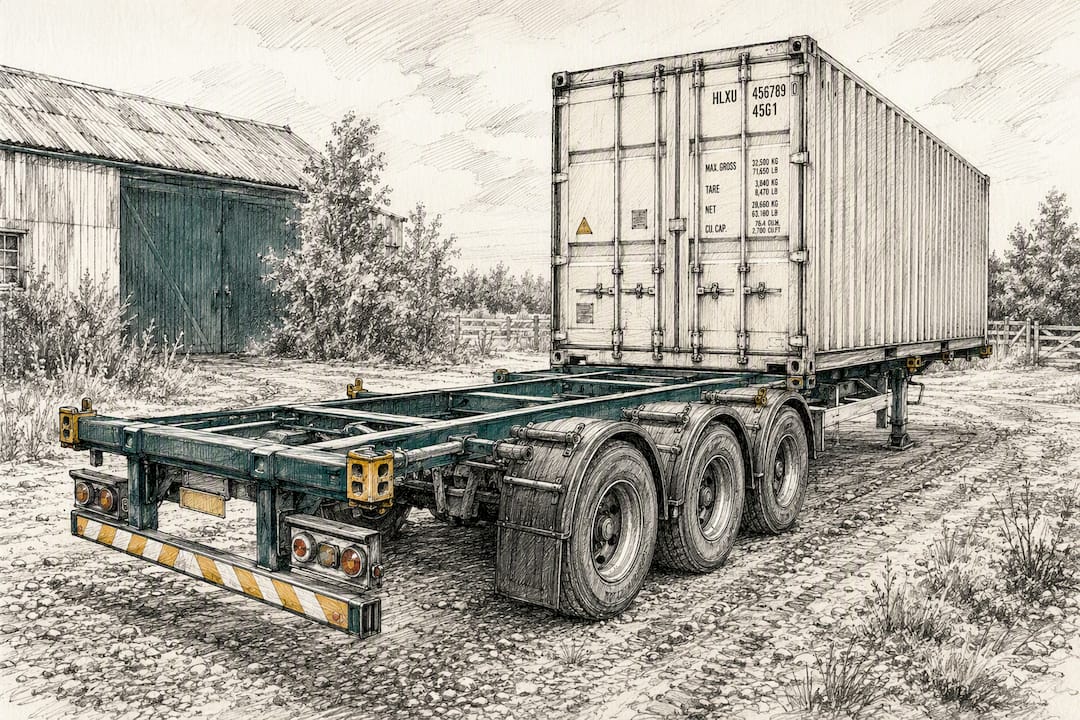
Standard delivery means the container rides on a skeletal trailer, sometimes called a chassis, and is either lifted off by a HIAB crane, handled by dock-side equipment, or dropped by tilting the trailer bed where fitted. There are two main skeletal types. Fixed skeletals are lighter, more fuel-efficient, and suit operators running consistent container sizes. Sliding skeletals extend to handle different lengths and swapbodies, at the cost of extra weight and more maintenance points like locking pins and rollers.
Containers often stay on the trailer entirely, useful for depot-to-depot moves or when the receiving site has its own crane or forklift. Where ground-level placement is needed but no sideloader is booked, a HIAB truck can lift from above instead, though it has less reach and stability than a sidelifter for awkward positioning.
- Fixed skeletal: lighter, cheaper to run, less flexible on container length.
- Sliding skeletal: handles mixed cargo, more moving parts to maintain.
- HIAB-backed drop: viable alternative when lifting capacity needs are modest.
Standard haulage wins on cost and fleet availability because it’s the default configuration almost every operator runs.
Sideloader vs standard delivery: comparing the trade-offs
The decision comes down to six axes, and comparisons of chassis versus sideloader delivery consistently land on the same pattern: neither method wins across the board.
- Site access: sideloader wins where there’s no dock or lifting gear; standard wins where docks exist.
- Speed: standard delivery is usually quicker to schedule, since more vehicles are available; sideloader unload can be faster once on site because it needs no third-party equipment.
- Cost profile: standard trailers run cheaper per mile; sideloaders cost more but avoid hiring a separate crane.
- Availability: standard fleets are large and flexible; sideloaders are a minority asset, often booked out regionally.
- Payload and size constraints: both handle standard 20ft and 40ft boxes, but sideloader outriggers need clear ground either side.
- Risk of failed delivery: mismatched vehicle choice is the single biggest driver of failed attempts and demurrage.
Picture a farm delivery with no dock and a soft gravel yard. Booking a standard trailer there means arranging a separate crane hire, adding a day and a cost line that often exceeds the sideloader premium outright. Run the maths before you book on price alone.
Site checks and compliance that stop deliveries failing
Failed deliveries rarely come down to bad luck. Compliance reviews of container haulage point to the same weak spots again and again: missing documentation at collection and site conditions nobody checked in advance.
- Confirm ground surface, slope, and load-bearing capacity, particularly for sideloader outriggers.
- Measure turning circle radius, access width, and gate clearance against the vehicle’s actual dimensions.
- Check overhead obstructions, cables, and branches along the full approach route.
- Verify twist-lock seating and axle weight distribution before the container leaves the yard.
- Have the container identifier, verified gross mass, and axle-risk assessment ready as documents, not verbal assurances.
Nearly every failed collection traces back to one of these checks being skipped rather than a vehicle fault. Detention and waiting-time charges usually start clocking the moment a driver arrives and can’t proceed, so the paperwork gap costs money even when the truck itself was never at risk.
What sideloader and standard delivery actually cost
Sideloaders sit at a premium because they’re rare. Most UK hauliers run a small sidelifter fleet against a much larger standard trailer pool, and that scarcity pushes per-mile rates up regionally, sometimes sharply if you’re outside a major freight corridor. The premium is real, but so is the alternative cost: hiring a separate crane or forklift for a ground-level drop can easily outweigh what the sideloader charges for doing the job in one visit.
- Book sideloaders further ahead. Thin fleets mean short-notice slots vanish fast.
- Ask about swap-over options if you need multiple lifts on the same visit.
- Give ground type, access width, and load window at the point of booking, not after the truck is dispatched.
- Weigh the sideloader premium against avoided crane hire and avoided waiting-time charges before assuming standard is cheaper.
Getting the container haulage rates picture right at the quoting stage saves far more than chasing the lowest headline price.
A quick checklist before you book either vehicle
Run through these before confirming any booking:
- Does the site have a dock, forklift, or crane already on hand?
- What’s the expected load or unload time, and does the site have a fixed window?
- What’s the ground surface, and is there a slope steeper than the vehicle can handle?
- How wide is the access route, and what’s the turning circle at the gate?
- Are there overhead obstructions along the approach?
Ground-level drop with no lifting equipment and a tight yard means sideloader, no debate. Dock access or an existing crane on site usually means standard delivery is the cheaper, faster call. Whichever you choose, put the exact site data in the booking itself. Free-text notes get skipped; discrete fields on ground type, access width, and turning circle get read.
Pro Tip: Photograph the access route and gate width when you scope a new site. It takes thirty seconds and settles arguments about “will it fit” before a driver is already on the road.
How Haulier.AI takes the guesswork out of vehicle matching
Booking the wrong vehicle type is the single most avoidable cause of failed deliveries, and it usually happens because site details got lost between a phone call and a dispatch sheet. Haulier’s AI-assisted transport desk captures ground type, access width, and load windows as structured fields at the point of quoting, then matches the job to hauliers who actually run the right vehicle, sideloader or standard.
- Hauliers keep control of their own rates and can decline jobs that don’t suit their fleet or site conditions.
- Real-time visibility on quoting and transport status cuts the missed updates that cause waiting-time disputes.
- Matching considers port coverage and vehicle type together, not price alone.
Author perspective: rules of thumb from a haulage desk
Three heuristics hold up more often than not. If there’s no dock, book a sideloader before you book anything else. If the ground is soft or sloped, say so before the vehicle is dispatched, not after. If the site has a crane already, standard delivery nearly always wins on cost. One planner once nearly lost a day and a crane hire fee on a farm drop, simply because nobody flagged the gravel yard until the sideloader was already booked.
How to request container haulage from Haulier.AI
Before requesting a quote, have the container size, ground type and access details, expected load or unload window, and desired pickup and drop dates ready. Haulier’s transport desk takes that information and matches it against hauliers who can actually deliver against it, whether that means a sideloader for a no-dock site or a standard skeletal for a depot run, without the back-and-forth phone calls that usually eat up a planner’s morning.
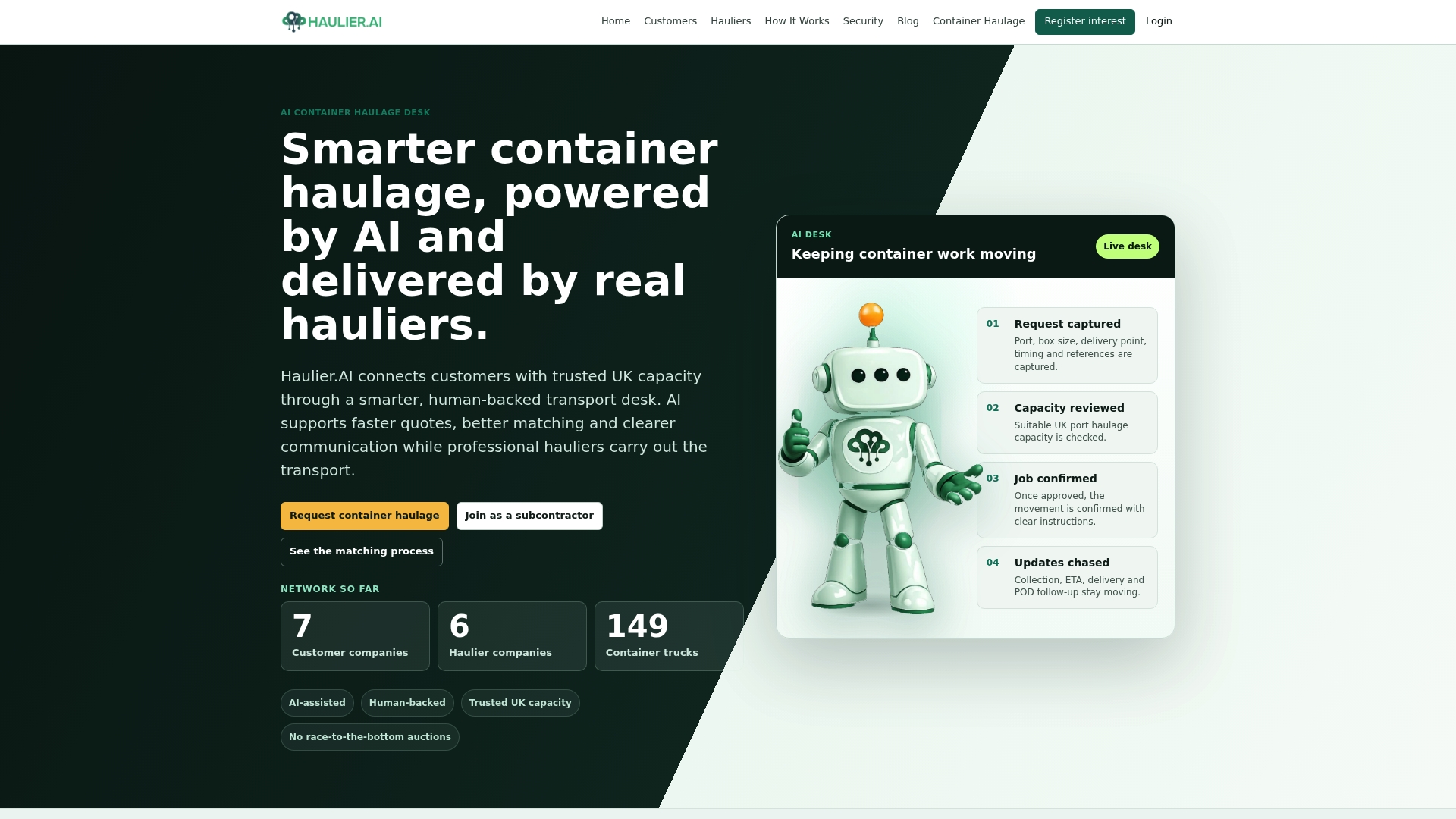
There’s no long lead-time commitment and no obligation to accept a quote that doesn’t fit. Request container haulage through Haulier and get matched to the right vehicle for your site, not just the cheapest one available that day.
Sources
- Shipping Container Transportation | Pay Less for Storage
- Trailer specification: skeletal trailers
- Container haulage compliance review | OperatorLicence
- Shipping Container Haulage Options | Budget Shipping Containers
FAQ
What is the difference between sideloader and standard container delivery?
A sideloader lifts containers laterally using its own onboard crane, so it needs no dock or external lifting gear, while standard delivery relies on a skeletal or chassis trailer paired with dock equipment or a HIAB crane for lifting.
Is sideloader delivery better than standard delivery?
Neither is universally better. Sideloaders suit sites with no dock or lifting equipment, while standard delivery is cheaper and more available for depot-centric, high-volume runs.
What is the difference between standard and high cube shipping containers?
Standard containers come in common heights, while high cube containers add roughly a foot of internal height for bulkier or less dense cargo, and both can be moved by either sideloader or standard trailer.
What are the different types of shipping containers and delivery vehicles?
Common container types include standard, high cube, and open-top boxes, and they’re moved using sideloaders, fixed or sliding skeletal trailers, and HIAB-equipped trucks, each suited to different site and lifting conditions.
How much should I pay for sideloader versus standard haulage?
Sideloader rates run higher per mile because the fleet is smaller and demand is regional, while standard skeletal haulage is generally the cheaper option; Haulier’s pricing guide breaks down what shapes those rates further.