
Container haulage article
How to compare quotes for regular pallet deliveries
A practical comparison of how to assess a UK haulage quote for regular pallet deliveries on price, service fit, coverage and control.
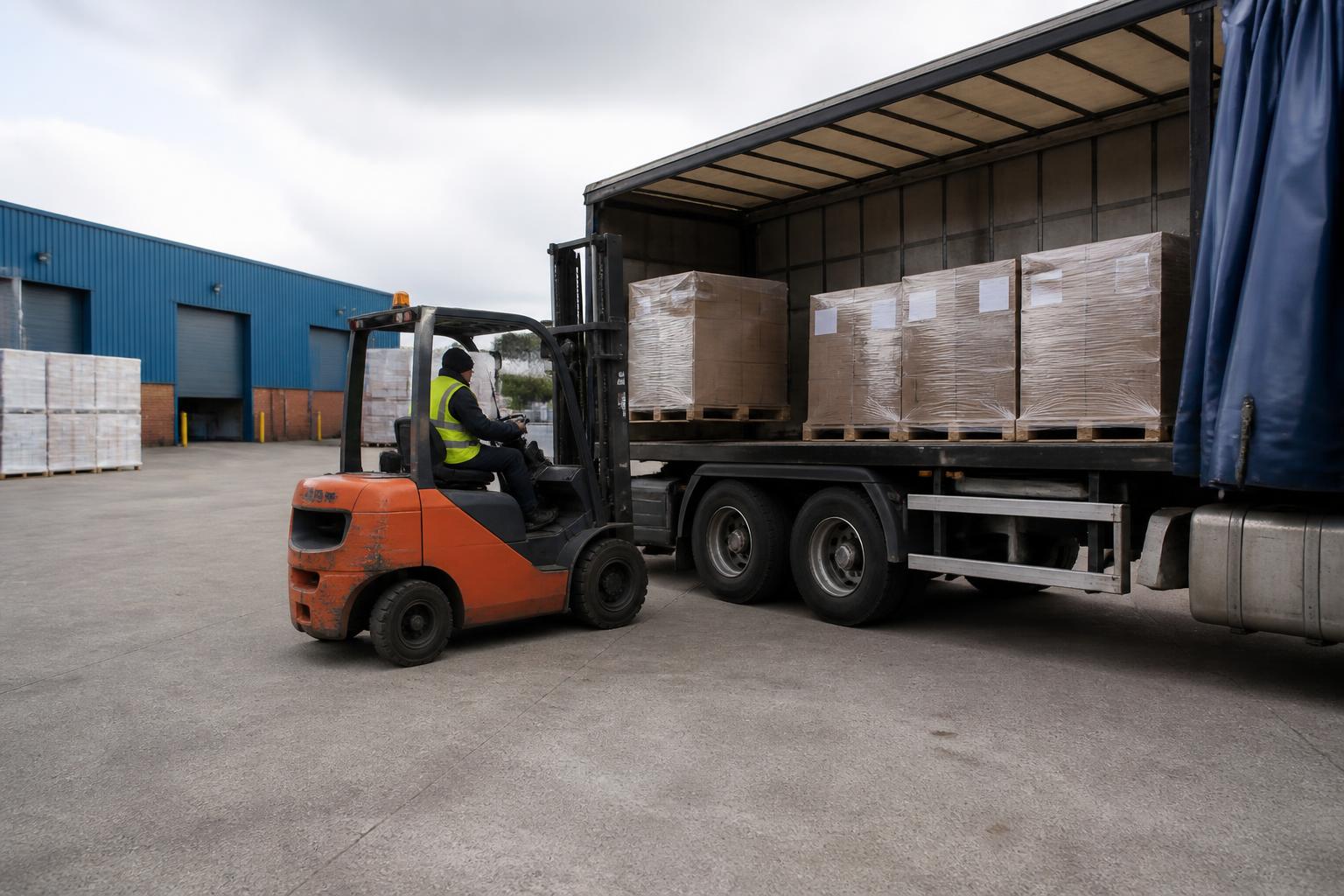
When you compare quotes for regular pallet work, the headline rate is only the starting point. A lower figure per pallet can still cost more over a month if the service is built around the wrong cut-off, the wrong delivery model, weak POD handling, or surcharges that only appear once the traffic starts moving.
A usable comparison looks at how the quote will behave in day-to-day operation. For regular freight, we need to compare postcode coverage, pallet profile, booking rules, access limits, delivery expectations, waiting time, failed delivery process, claims handling, and how quickly updates come back when something changes. That is what tells you whether a UK haulage quote for regular pallet deliveries is commercially sound, not just whether one line is cheaper than another.
What a good quote comparison should actually cover
For repeat pallet traffic, a proper comparison should separate commercial terms from operating assumptions. Many quote requests are sent out with only collection postcode, delivery postcode, pallet count and weight. That is enough to get a number back, but not enough to compare like with like.
Start with the freight profile. We need to know whether the quote is for quarter, half, standard or oversized pallets, and whether height limits apply. One operator may quote a standard pallet rate assuming a basic footprint and moderate height, while another may be pricing for a taller or heavier pallet. If those assumptions are not aligned, the cheaper quote may simply be based on a different load profile.
Then look at the lane structure. A regular pallet contract with one delivery postcode behaves very differently from one that spreads across multiple postcodes in the Midlands, Scotland, Wales and the South West. A quote that works for a tight regional pattern may not hold up if your delivery map is broad and irregular. We always advise buyers to compare quotes against the actual postcode spread, not a simplified average lane.
Service level matters just as much. Is the quote for economy, next day, timed delivery, tail-lift delivery, booked-in delivery, or a service with limited delivery windows? If your customer base includes retail sites, shared-user warehouses, construction locations or sites with strict booking slots, the quote must reflect that. Otherwise the first few failed deliveries will wipe out any saving on the linehaul rate.
You also need clarity on collection and delivery assumptions. Check whether the rate assumes forklift offload, whether tail-lift is included, whether residential delivery is excluded, and whether there are restrictions on access, vehicle size or manual handling. A pallet rate to an industrial estate with open access is not the same job as a pallet rate to a congested town centre site with booking requirements and limited unloading space.
Administrative handling is another major point. For regular traffic, ask how bookings are submitted, what cut-off applies, how amendments are handled, how POD is returned, and what the process is for ETA chasing. A quote that looks competitive but requires constant phone follow-up has a hidden internal cost. This is one reason many operations teams ask us to support haulage quotes and POD updates, because the transport rate is only one part of the workload.
Finally, compare exclusions and liability. Does the quote include fuel surcharge or reserve the right to adjust it? Are there separate charges for re-delivery, waiting time, booking-in failure, tail-lift use, out-of-area postcodes, or uplift of non-stackable freight? What is the claims procedure, and what evidence is required? If there is damage, shortage or wet freight, you need a clear route from notification to resolution.
Price per pallet versus total transport cost
A simple price-per-pallet comparison is useful, but only if the operating pattern is stable and the quote basis is genuinely identical. In practice, total transport cost is shaped by several variables that do not sit neatly on one tariff line.
Postcode spread is one of the biggest. If you ship ten pallets a day but they go to ten different delivery points, the cost profile is different from ten pallets to one RDC. Network pallet services often price by pallet and postcode zone, so the geographical mix matters. A dedicated vehicle solution may look more expensive on paper until you compare the full day’s drops and route efficiency.
Delivery frequency also changes the economics. A regular lane with daily volume may justify a standing arrangement, a milk-round style route, or a recurring part-load plan. An irregular pattern with spikes on certain weekdays may suit a network model better. When you compare rates, match them to the actual dispatch rhythm. Weekly averages can hide operational peaks that trigger premium pricing or capacity issues.
Waiting time is a common source of avoidable cost. If your collection point turns vehicles around quickly, one quote may work well. If your warehouse regularly runs late, or if your delivery points have long booking queues, the same quote may attract waiting charges. Ask when waiting time starts, how it is charged, and whether there is any free time included. Do not assume every haulier applies the same rule.
Failed delivery risk should also be priced mentally, even if it is not visible on the quote. If consignee details are weak, booking references are missing, or sites frequently refuse freight outside a narrow slot, re-delivery charges and admin time mount up quickly. A cheaper service with poor communication can become expensive if the team spends hours each week chasing ETAs, rebooking drops and locating PODs.
Surcharges need careful reading. Fuel is the obvious one, but not the only one. There may be additions for tail-lift, timed delivery, non-conveyable freight, manual handling, remote areas, abnormal dimensions, or collections that miss the standard cut-off. If your business imports through UK ports and then distributes pallets inland, you may also be comparing quotes that mix general pallet work with port-related waiting and timing constraints. For port traffic, the assumptions around quay collection, VBS slots, and container timing need to be checked separately. Where container movements are part of the wider flow, our UK port-to-warehouse haulage quote guide explains what to confirm before comparing rates.
VAT should be obvious, but it still causes confusion in quote reviews. In the UK, domestic road transport quotes are normally shown net of VAT unless stated otherwise. If one supplier sends rates excluding VAT and another presents a gross figure, the comparison is distorted from the start. Also check whether accessorial charges are subject to VAT in the same way as the main transport line, because the invoice total is what matters to your finance team.
The right question is not, "Who has the cheapest pallet rate?" It is, "Which quote gives us the lowest reliable total cost for the way we actually ship?"
Network pallet service or dedicated UK haulage?
For regular pallet freight, the best model depends on volume, delivery pattern, service expectation and freight characteristics.
A network pallet service usually suits lower-volume, multi-drop traffic where consignments are moving as individual pallets or small groups of pallets to a broad set of UK postcodes. It is often the practical choice when you need scalable national coverage without booking dedicated vehicles every day. If your freight is standard, stackable, and reasonably tolerant of a shared-network process, this can work well.
It is less suitable where freight is fragile, high value, awkward in dimension, or highly time-critical. Shared handling points increase touchpoints. More touchpoints can mean more risk, even with a good operator. If your pallets are overheight, non-stackable, unstable or regularly close to weight limits, make sure the service design matches that reality.
Dedicated UK haulage becomes more attractive when volume is dense, routes repeat, or service control matters more than pure pallet tariff pricing. If you are regularly moving enough freight to fill a vehicle, or close to it, a full-load arrangement often gives better control over timing, loading sequence and delivery handling. If the load sits between a few pallets and a full trailer, part-load can be the right middle ground, especially where regular lanes allow planning efficiency.
This is particularly relevant if your deliveries are concentrated by region or customer. A dedicated vehicle can reduce handling, simplify communication and improve ETA accuracy. It can also help where booking windows are tight or where sites need a specific vehicle type. For many operations teams, the decision is not network versus dedicated in all cases. It is a lane-by-lane mix.
Port-related work is another area where dedicated planning often matters. If your regular pallet flow links into import traffic, container haulage from Felixstowe, London Gateway, Southampton, Tilbury, Liverpool, Teesport or Immingham may need to be treated separately from inland pallet distribution. Port timings, quay delays, customs clearance status and demurrage or detention exposure all affect the movement plan. Since Brexit, paperwork and release timing can also affect whether a movement should be priced as a simple road leg or as a more managed operation. For businesses moving import units inland, our container haulage services explain how we handle those UK movements alongside general road transport requirements.
The key is to compare the quote against the actual transport model. If the freight naturally suits a network, forcing it into dedicated haulage can add cost without adding value. If the freight really needs control, trying to save money with a generic pallet tariff can create repeated service failures.
Questions to ask before accepting a regular pallet quote
Before accepting any regular pallet quote, confirm the practical details in writing.
First, define the pallet specification. Ask what pallet footprint, maximum height, maximum weight and stackability the rate is based on. Confirm whether oversized or overheight pallets fall outside the quoted rate. If your operation uses mixed pallet sizes, ask how each type will be charged.
Second, confirm site access and unloading assumptions. Is collection and delivery forklift assisted? Is tail-lift included? Are there restrictions on vehicle size for either end? If any delivery point has narrow access, red routes, timed restrictions, or booking-in rules, state that up front. A quote built on incorrect access assumptions is not a real quote.
Third, ask about the booking process. Can bookings be sent by email, portal, spreadsheet upload or API? What is the daily cut-off for next-day collection? How are changes handled after booking? For regular work, a clumsy booking method becomes a daily problem very quickly.
Fourth, ask what update standard you will receive. Will you get booking confirmation, collection confirmation, in-transit updates, POD and exception alerts? How quickly is POD normally returned? Is there a standard ETA process for delayed or booked-in deliveries? If your customer service team depends on live status, this should be part of the buying decision, not an afterthought.
Fifth, confirm the failed delivery process. What happens if the consignee is shut, refuses the freight, or cannot unload? Is re-delivery automatic? Is storage available? Who approves additional cost? Ask the same for collection failures, because a missed collection can disrupt the next day’s route and cost more than the original movement.
Sixth, review claims handling. Ask how shortages, damage, wet freight or packaging disputes must be reported, what evidence is required, and what the time limits are. In UK road transport, terms may differ by operator and by service type, so do not assume a standard process. If the work includes port traffic, also ask how issues are handled when delay is caused by release status or terminal conditions rather than linehaul execution.
Seventh, check surcharge triggers. Get clarity on fuel, waiting time, tail-lift, timed delivery, booking-in, re-delivery, remote areas and out-of-gauge freight. Ask for the surcharge table if there is one. It is easier to compare two honest rate cards than two attractive base rates with vague extras.
If you need rates urgently, it also helps to know what a usable quote request looks like. Our guide to getting a same-day haulage quote without the phone chase covers the information that makes a fast quote meaningful rather than approximate.
How Haulier.AI fits into regular pallet quote handling
At Haulier.AI, we built our process around organised request handling, clear commercial control and operator judgement. We are AI-assisted and human-backed, which means we use structured tools to keep requests, updates and quote handling organised, but we do not remove the transport desk thinking that regular pallet work still needs.
For buyers, that means we can help turn a loose request into a quote package that operators can price properly. We help capture the details that often get missed, pallet type, dimensions, weight, access, booking constraints, service level, cut-off, and update expectations. That improves quote quality because hauliers are pricing the real job, not filling gaps with assumptions.
For hauliers and transport operators, we do not run a race-to-the-bottom auction model. Commercial control stays with the operator. That matters in regular pallet work, where service reliability and fit are often more important than being the lowest number on the page. A rate only works if it can be delivered sustainably.
Our role is to make the request and response process more organised. We help reduce the manual calling, inbox chasing and spreadsheet duplication that often appears when volumes change, suppliers are stretched, or awkward work lands late in the day. We can support general UK haulage, part-load, full-load and container haulage, including movements linked to major UK ports such as Felixstowe and Immingham.
Just as importantly, we keep human oversight in the loop. Transport is full of exceptions. A buyer may ask for a regular pallet rate, but the real answer depends on whether the freight is network-suitable, whether access requires a smaller vehicle, whether the consignee needs booking references on every job, or whether a port release issue has changed the timing completely. Those decisions still need operator judgement.
When businesses compare a UK haulage quote for regular pallet deliveries, the goal should be clarity, not just speed. We help make that comparison cleaner by structuring the request properly, supporting quote handling, and keeping communication practical from first enquiry through to POD.
What should be included in a quote for regular pallet deliveries?
It should state pallet type, weight and dimensions, collection and delivery postcodes, frequency, cut-off times, access limits, waiting time rules, surcharge terms, POD process and expected ETA handling.
Is the cheapest pallet quote usually the best option?
Not always. A low rate can hide narrow postcode coverage, strict cut-offs, weak communication, extra charges or poor fit for your delivery pattern. Compare the operating assumptions, not just the price.
When is part-load better than a pallet network service?
part-load can suit awkward freight, mixed dimensions, changing volumes or lanes where standard pallet rules create extra cost or service risk. It depends on the freight profile and delivery requirement.
Can regular pallet work move on full-load rates?
Yes, if volume is dense enough on a lane or over a week. A full-load structure can be more efficient than per-pallet pricing when you regularly fill vehicle space.
How does Haulier.AI differ from an auction platform?
Haulier.AI is built around organised AI-assisted, human-backed handling of requests and quotes. It does not position the work as race-to-the-bottom auction pricing and keeps hauliers' commercial control intact.