
Container haulage article
Finding a subcontract haulier for awkward delivery slots
Compare the main ways to find a subcontract haulier for awkward delivery slots in UK haulage, with trade-offs on speed, cost, control and risk.
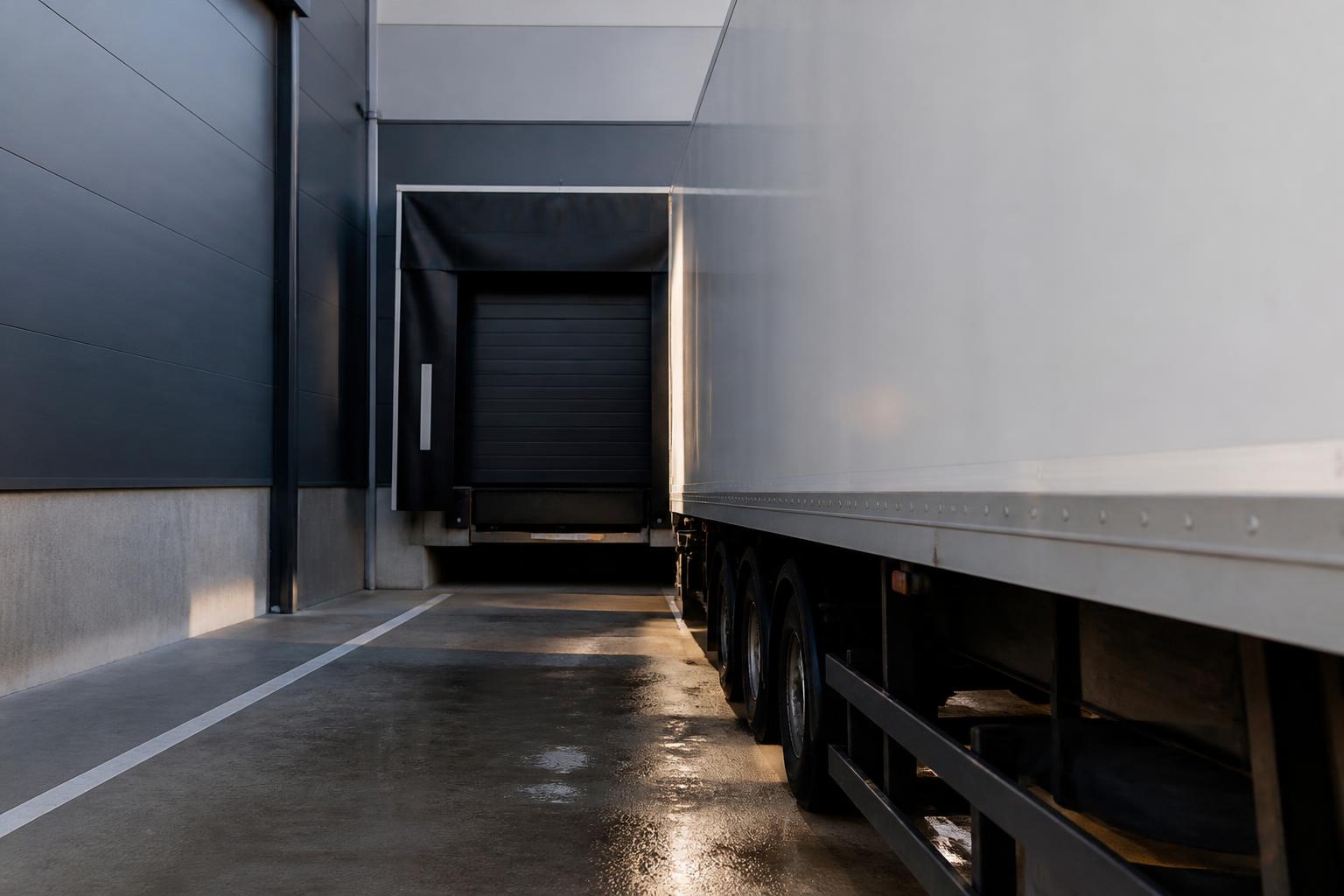
If you need a subcontract haulier for an awkward delivery slot, the job usually gets won or lost before anyone quotes. The hard part is not only finding a truck. It is finding an operator who can actually meet the booking window, accept the waiting risk, satisfy the site rules, and still make the job work commercially.
That is why we do not treat awkward work like a standard rate request. At Haulier.AI, we run an AI-assisted, human-backed transport desk built for UK haulage, where difficult timings, port dependencies and site restrictions are common. The aim is simple, get the right operators looking at the right detail early, without turning the exercise into a blind price chase.
What makes an awkward delivery slot hard to cover
Some delivery slots are awkward because they are unpopular. Others are awkward because they are operationally risky.
A narrow booking window is the most obvious example. If delivery is booked for 09:00 to 09:30 and the site will not accept early arrival, the haulier has almost no recovery room if the previous job overruns, traffic builds, or the collection point delays loading. A two hour slot can often be planned around. A 30 minute slot, especially in a congested area, is a different proposition.
Site restrictions matter just as much. Many jobs look straightforward until the operator learns that the delivery point has a strict booking-in process, driver induction, timed access gate, high-vis and PPE rules, or a ban on certain trailer types. Some sites will not unload curtainsiders from one side. Others insist on a pump truck, tail lift, Moffett, or specific load securing. If the booking requires a rigid rather than an artic, or a shorter trailer because of turning space, the pool of suitable subcontractors narrows immediately.
Waiting risk is another reason awkward slots are hard to place. A low linehaul rate can become poor value if the driver regularly sits for two or three hours at collection or delivery. That is especially true where there is uncertainty over whether waiting time is paid, from what point it starts, and what proof is needed to recover it. If a job is likely to tie up a vehicle for half a day, operators price that risk in, or decline it.
Vehicle type and equipment also affect coverage. Standard curtainsider work is easier to place than refrigerated, ADR, container haulage, skeletal work, or movements needing twistlocks, genset capability, or port card access. The same applies to part-load jobs that need careful sequencing against other freight. A part-load can be efficient in the right network, but awkward if the delivery slot is fixed and the rest of the route has to flex around it.
POD expectations can turn a normal movement into a problem if they are not stated up front. Some customers need same-day POD, signed delivery notes, seal checks, bay timestamps, or photographic proof. Others can wait until the next morning. If a site is known for slow paperwork or contactless receipt, the operator needs to know what standard is expected and what will count as acceptable evidence.
Port-related timing adds another layer. Jobs linked to Felixstowe, London Gateway, Southampton, Tilbury, Liverpool, Teesport or Immingham are often affected by VBS bookings, quay congestion, customs status, release timing, and cut-off times. A collection may be technically available, but not practically collectable within the planned window if the container is not cleared, the PIN is not live, or the booking is not secured. Since Brexit, the knock-on effect of missing a customs or document step can be more severe on some flows than buyers expect, particularly where the movement interacts with border formalities rather than being a simple domestic leg.
Calling known hauliers versus widening the search
Most traffic teams start with the same method, they call the operators they already trust. That makes sense. Known hauliers understand your sites, your paperwork, your tolerance for ETA updates, and how you handle extras. If the slot is difficult but familiar, a trusted operator may say yes quickly because there is less uncertainty.
The weakness in that approach is coverage. Your regular network may be full, out of area, wrong equipment, or unwilling to carry the waiting risk this week. If you only work through your usual phone and email list, awkward jobs can consume hours of calling, voicemail, follow-up emails and spreadsheet updates, only to end with a thin choice set.
Widening the search gives you access to operators you would not normally reach, including firms already running near the collection point, specialists in container haulage, or hauliers with a gap that fits your timing. That broader reach is often what you need when the requirement is last minute, geographically awkward, or linked to a port move.
The trade-off is admin and quality control. The wider the net, the more variation you get in response quality. Some quotes will miss the constraints. Some will be based on assumptions that were never agreed. Some operators will ask the right questions, others will simply send a number. If you are handling that manually, speed can actually fall because your team spends time re-explaining the job and normalising responses.
Trust also works differently. With known hauliers, trust is inherited from previous jobs. With a broader pool, trust has to come from process. You need a consistent request format, clear commercial terms, and an organised way to compare compliance, timing confidence and communication quality. That is where a structured desk helps. We can widen the search without turning the exercise into inbox chaos.
If your current method is becoming too manual, our guide on how UK teams can handle awkward haulage requests better covers the practical signs that the old call-round approach is starting to cost more than it saves.
How load boards, brokers and structured desks differ
When buyers need extra coverage, they usually end up in one of three models, public load boards, traditional brokerage, or a structured desk like Haulier.AI.
Public load boards are open marketplaces. They are useful for reach and speed, especially when a job needs broad visibility. A haulier with spare capacity can spot a movement quickly, and a buyer can test market interest fast. The downside is inconsistency. Job information may be thin, follow-up may be fragmented, and rates can become reactive if multiple operators pile in without a proper view of the operational detail. For straightforward work, that may be acceptable. For an awkward slot, it often creates more noise than certainty.
Traditional brokerage can solve some of that by putting a person in the middle. A decent broker will know which operators are likely to fit the work, who has the right equipment, and who can be trusted on time-critical deliveries. That can be effective, especially where relationships are strong. The limitation is that brokerage quality varies, and some models still drift toward rate pressure if the process is not disciplined.
A structured transport desk sits differently. We use an AI-assisted, human-backed process to organise the request, identify likely fit, gather comparable responses, and keep a human eye on the practical detail. That matters because awkward UK haulage work is rarely won by headline price alone. It is won by whether the operator has understood the slot, the risks, the access constraints, and the paperwork expectations.
Just as important, we do not run a race-to-the-bottom auction model. Hauliers keep commercial control over whether they quote and what assumptions sit behind the price. Buyers get a clearer picture of which option is genuinely workable. That is better for one-off awkward jobs, and better again when you have regular overflow or repeat constraints.
For operators looking for a steadier way to pick up relevant work, we explain the difference in where hauliers find subcontract work without rate chaos.
What information gets better quotes first time
If you want usable quotes first time, give operators enough detail to assess the job properly. The gap between a quick price and a reliable commitment is usually information.
Start with the basics:
- collection postcode and full delivery postcode
- collection date and time window
- delivery date and booked slot
- whether the times are fixed or estimated
- contact names and phone numbers for both ends
Then give the operational detail that decides whether the job is actually coverable:
- loading and unloading method
- pallet count, weight, dimensions, and whether the load is stackable
- whether it is part-load or full-load
- vehicle type required, artic, rigid, curtainsider, box, fridge, skeletal, tail lift and so on
- any equipment needs such as pump truck, straps, edge protection, chains, twistlocks or Moffett
- access limits, including height, width, residential approach, timed gate, booking reference or vehicle restrictions
- whether there is a driver induction, PPE requirement, or on-site security process
- whether the site accepts early arrival or late arrival at all
For timing, be specific about ETA tolerance. Many misunderstandings come from vague language such as “must be there in the morning”. State whether 08:00 to 12:00 is acceptable, or whether arrival after 09:30 means refusal. If there is a latest offload time, say so. If there is flexibility on collection but not on delivery, say that too.
For container haulage, include the details operators need before they can commit:
- port, terminal and whether it is import or export
- container size and type
- whether the unit is loaded or empty
- VBS or booking status
- release reference, PIN or collection reference where applicable
- customs status and whether the box is cleared
- cut-off time for export
- whether quay rent, storage, demurrage or detention risk is already in play
- whether the haulier needs port card access for Felixstowe, London Gateway, Southampton, Tilbury, Liverpool, Teesport or Immingham
Commercial terms also matter. State whether waiting time is payable, from what point, and at what basis. Say whether parking, ferry, tolls or port charges are included or excluded. Confirm invoicing expectations, POD turnaround, and whether VAT should be shown separately. In the UK, VAT treatment follows UK rules, not EU domestic practice, and since Brexit some businesses still mix up domestic haulage invoicing with cross-border documentation requirements. They are not the same thing.
If POD speed matters, state exactly what you need. Signed POD, delivery note, timestamped photo, seal confirmation, or all of them. This avoids disputes later and helps operators judge the admin burden up front. We have covered the handover point in more detail in who should chase a POD after delivery in UK haulage.
How to compare options without creating a pricing race
Awkward jobs should not be compared on rate alone. A lower quote is not cheaper if it misses the slot, triggers a refusal, or creates hours of chasing.
Start with service fit. Does the operator’s response show they have understood the booking window, access rules, and equipment need? A quote that simply says “can do” is weaker than one that confirms the exact slot, vehicle type, waiting basis and POD expectation.
Then assess communication. When a delivery slot is tight, update discipline matters. You need to know whether the operator will flag risk early, confirm ETA properly, and escalate if collection slips. A haulier who communicates clearly can often save a difficult job even when conditions change. A silent one can turn a manageable delay into a failed booking.
Compliance is next. For standard domestic work, that may mean operator credibility, insurance position, and driver suitability. For port work, it may also mean whether the haulier can actually access the relevant terminal and manage the document chain required for the movement. Since Brexit, admin pressure has increased on some flows connected to customs procedures, GVMS-related processes where relevant, and evidence requirements. Buyers should not assume every operator handles those steps the same way.
Timing confidence is worth testing directly. Ask what the quote depends on. Is it based on immediate vehicle availability, a backload opportunity, or a planned truck coming clear nearby? Has the operator priced waiting because they expect congestion? Have they allowed enough time to hit the booked slot without gambling on traffic?
Finally, look at total operational cost. Include likely waiting, failed delivery risk, rebooking risk, internal admin time, and the cost of poor POD recovery. The cheapest linehaul is often the most expensive outcome if your team then spends the afternoon chasing updates, renegotiating site access, and sorting invoice queries.
A structured process helps here because it makes responses more comparable without forcing everyone into the same number. That is the difference between competitive quoting and rate chaos.
When a structured subcontract process is worth it
A structured subcontract process is not necessary for every movement. If the lane is regular, the site is easy, and your usual haulier has room, keep it simple.
It becomes worth it when the job has enough friction that manual methods start failing. Last-minute gaps are the clearest example. If a vehicle has dropped out, the slot is booked, and your team is calling around under pressure, organised request handling saves time immediately.
Volume spikes are another case. Seasonal peaks, promotion periods, and month-end surges can overwhelm a fixed carrier base. The same applies when your work mix changes from full-load into part-load, or from part-load back into full-load, and your normal subcontract network is not set up for the switch.
Port work is where structure often pays for itself fastest. Movements through Felixstowe, London Gateway, Southampton, Tilbury, Liverpool, Teesport and Immingham carry more moving parts than a standard depot-to-depot run. Booking references, release timing, customs status, terminal access and cut-offs all need to line up. If they are handled loosely, the job looks covered until it suddenly is not.
Structured handling also helps when post-Brexit admin pressure is affecting your operation. Even for businesses moving mainly within the UK, there are still jobs where border-adjacent paperwork, customer evidence requirements, and invoice queries create extra load on the traffic desk. A cleaner process for requests, assumptions, quotes and POD reduces the back-and-forth.
For buyers, that means fewer blind spots and a better chance of placing awkward work with operators who genuinely fit it. For hauliers, it means seeing requests with enough detail to quote properly, without being dragged into a pure auction.
If you regularly find yourself needing a subcontract haulier for an awkward delivery slot, the answer is usually not more frantic calling. It is a better way to structure the job, widen the right search, and compare responses on what actually matters. That is what we built our organised subcontractor request process for UK haulage to do.
What counts as an awkward delivery slot in UK haulage?
Usually a job with tight booking times, restricted site access, long waiting risk, unusual equipment needs, or poor flexibility on ETA, loading or POD requirements.
Is the cheapest subcontract quote usually the best option?
Not always. A low rate can become expensive if the operator is a poor fit for the site, misses the slot, or creates extra chasing, waiting time or failed delivery costs.
What details should I send when I need a subcontract haulier?
Send collection and delivery postcodes, booked times, load type, weight, dimensions, access limits, equipment needed, reference numbers, POD expectations and any waiting or booking rules.
Can this approach help with container haulage jobs?
Yes, especially where timing, port procedures and handover details matter. Clear information is vital for container haulage linked to Felixstowe, London Gateway, Southampton, Tilbury, Liverpool, Teesport or Immingham.
Does using a wider subcontract network remove human judgement?
No. Good subcontracting still needs human review of operator fit, timing realism and commercial terms. AI-assisted tools can organise requests, but they should not replace operational judgement.