
Container haulage article
How to find reliable heavy haulage without the phone chase
A practical guide to finding reliable heavy haulage in the UK, checking capability, coverage, timing and commercial fit without endless calls.
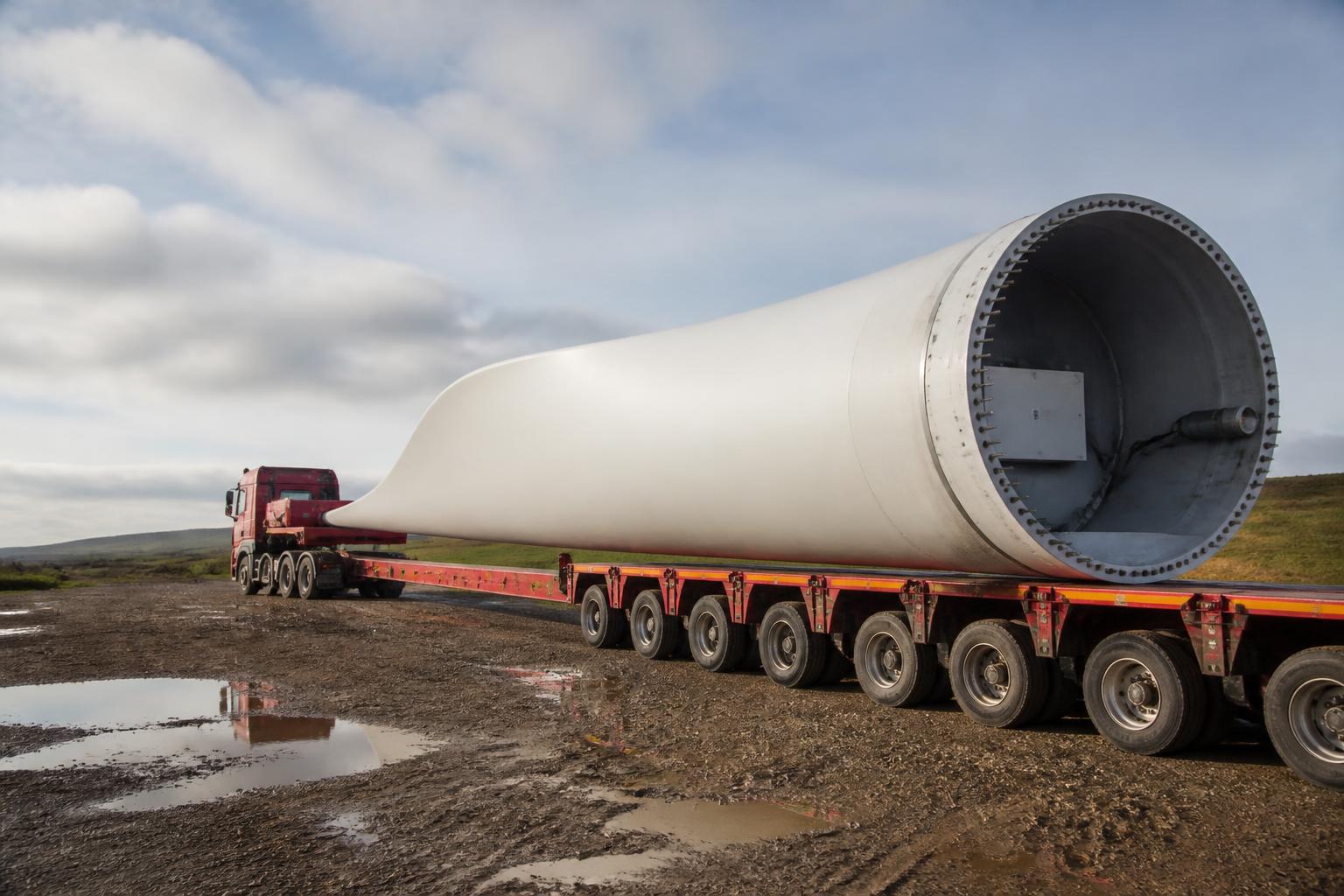
When people search for heavy haulage companies near me, they are usually trying to solve a practical problem quickly. They need someone who can move a load that is awkward, overweight, oversized, time-sensitive, or difficult to route, and they do not want to spend the afternoon ringing round depots to find out who can actually do it.
In practice, the best option is not always the operator with the nearest yard. It is the operator, or network, that can match the job properly, confirm vehicle availability, check the route, and manage the paperwork without a long phone chase. That is exactly where we work at Haulier.AI, with an AI-assisted, human-backed transport desk built around organised request handling for UK haulage.
What people usually mean by heavy haulage companies near me
Most buyers do not literally mean, "show me the closest haulier by postcode". They mean, "show me a transport provider that can handle this job without delay, confusion, or repeated calls".
For heavy movements, suitability matters more than simple distance. A nearby general haulier may be excellent at pallet work, part-load, or full-load trailer movements, but that does not mean they have the right tractor unit, step frame, low loader, extender, escort arrangements, or planning process for a heavier or more awkward consignment.
The real questions are usually these:
- Can the haulier move the load dimensions and weight?
- Can they collect and deliver at the actual sites involved?
- Can they cover the route in the required time window?
- Can they manage restrictions, permits, or port procedures where needed?
- Can they give a clear ETA and provide POD without us chasing?
That is why a search for heavy haulage companies near me often turns into a search for capability and coverage. If the collection is in the Midlands, the delivery is in Scotland, and the load needs a specialist trailer with short notice, the nearest depot is only one part of the picture. What matters more is whether the operator can resource the movement properly, or whether a wider UK haulage network can place the right vehicle faster.
This is particularly obvious where port work or intermodal links are involved. A movement connected to Felixstowe, London Gateway, Southampton, Tilbury, Liverpool, Teesport, or Immingham may need more than a local truck. It may need someone who understands booking references, port release procedures, VBS timing, container haulage constraints, and the practical knock-on effects of late slots or quay delays. If your heavy movement sits alongside port traffic, broad operational reach matters.
For many operations teams, the frustration is not finding a name on a map. It is filtering out unsuitable options without ten calls and twenty emails. Our role is to reduce that manual work by taking a structured brief, matching it to suitable operators, and keeping human oversight in the loop so the job is handled commercially and operationally, not dumped into a race-to-the-bottom auction.
How to tell if a haulier is actually suitable
A haulier is suitable when they can do the job you have, on the route you need, within the time you need, with the paperwork and communication standard your operation requires. That sounds obvious, but it is where many quote requests go wrong.
Start with the vehicle and trailer type. Heavy haulage is not one thing. The right equipment depends on what you are moving. A machine on tracks, a steel fabrication, a cabin, a plant item, or an abnormal indivisible load may each need a different setup. You should confirm:
- overall load length
- overall load width
- overall load height
- gross weight
- axle weights, if known
- whether the item is self-loading or needs external lifting
- whether it can be loaded from the side, rear, or top only
These points affect whether the job can go on a standard trailer, a low loader, a step frame, an extendable trailer, or another specialist combination.
Then check route restrictions. In the UK, route planning for heavier and larger loads is not just a sat nav exercise. Low bridges, weak structures, weight limits, narrow approaches, urban delivery constraints, and timed access restrictions can all change the plan. If the movement is genuinely abnormal, route notifications and police or authority requirements may also arise depending on dimensions and weight. The exact process depends on the nature of the load and the route, and UK practice is not simply the same as EU-wide practice. Since Brexit, buyers also need to be careful not to assume that procedures used for cross-border EU work apply in the same way in Great Britain.
Collection and delivery access is another major filter. A haulier may be technically capable on paper but still be unsuitable if the sites are poor for access. We always want to know:
- is the collection point a factory, farm, port, construction site, RDC, or private address
- is there room to turn
- are there gate width limits
- are there overhead obstructions
- is the ground suitable for heavy vehicles
- are there booking-in rules
- are there forklift or crane arrangements on site
- is there a banksman or site contact available
Timing matters just as much. Some jobs fail not because no one can move them, but because the collection and delivery windows are too narrow for the loading method, route, or driver hours position. If you need same day collection, next morning delivery, out-of-hours access, or weekend movement, say so at the start.
Paperwork also separates suitable hauliers from unsuitable ones. Depending on the movement, the operator may need site references, purchase order numbers, delivery booking references, customs or port release information, and clear instructions for POD return. If a movement touches container haulage, the detail becomes even more important. For that side of the market, our container haulage support for UK port movements is built around the operational detail that often gets missed in a basic quote request.
If you want a better view of the selection logic behind matching operators to jobs, our guide on how suitable transport companies are chosen for UK haulage sets out the practical criteria.
What information to send before asking for a quote
The quickest way to avoid repeated calls and emails is to send one complete brief at the start. A good transport desk can only price and plan properly if the operational facts are clear.
For a heavy movement, send the following as standard:
- collection postcode and full address
- delivery postcode and full address
- collection contact name and number
- delivery contact name and number
- required collection date
- required delivery date or delivery deadline
- load description in plain English
- number of pieces
- dimensions of each piece
- total weight and, if available, individual piece weights
- loading method
- unloading method
- whether the load is stackable or not
- whether the load is loose, crated, palletised, on skids, or wheeled
- any photos
- any technical drawing if available
- any site restrictions
- any booking reference or PO number
- whether same day updates are required
- where POD should be sent
If the load is abnormal in size or weight, add anything you know about axle centres, lifting points, centre of gravity, and whether the item is an indivisible load. Even if not every detail is available, partial technical information is better than none.
For port-related jobs, include the extra operational references from the outset. That may include container number, size, whether it is laden or empty, port, release status, and any cut-off or slot timing. If the movement involves Felixstowe, London Gateway, Southampton, Tilbury, Liverpool, Teesport, or Immingham, say so clearly in the first message because it affects planning immediately. We have dedicated pages for specific port flows, including container haulage through Felixstowe, where timing and release detail are often decisive.
If the movement has any commercial or compliance sensitivity, say that too. For example:
- high value machinery
- export packing
- site induction needed
- strict no-fail production delivery
- customs status to be confirmed
- VAT treatment requiring specific paperwork wording
On VAT, the position depends on the job and the parties involved. Domestic UK haulage is not treated the same way as every international movement, and where a rule differs between the UK and the EU generally, the UK position should be checked on the actual transaction rather than assumed from older pre-Brexit practice.
The more complete your first request, the fewer rounds of clarification are needed. That helps us place the work faster and helps hauliers quote on a real basis rather than building in uncertainty.
When local matters and when wider UK haulage matters more
Local presence does matter in some situations. If the collection site has awkward access, if someone may need to attend at short notice, or if the work is recurring from one production site, a nearby operator can be a strong fit. The same applies where local knowledge of roads, site staff, or regular booking procedures removes friction.
A local operator can also be useful where the job is straightforward but urgent. If a vehicle can genuinely be on site quickly because it is already in the area, that may outweigh the benefits of a wider search.
But there are many cases where broader UK haulage access matters more than local postcode proximity.
One-off specialist work is a good example. If you need a particular trailer type, a specific collection slot, and a long-distance delivery, the right operator may not be the nearest one. The same is true for return-load opportunities, cross-country planning, and jobs that need coordination across several regions.
Wider coverage matters when:
- the load is awkward or unusual
- timing is tight
- your regular supplier is full
- the movement spans distant regions
- the job includes port work
- you need back-up options if the first plan changes
- the requirement is irregular, so building a fixed local arrangement is not practical
This is one of the reasons we do not run a simple nearest-haulier model. Our job is to connect the request to suitable capacity across UK haulage, while keeping the handling organised and commercially sensible for both sides.
That matters for hauliers as well as buyers. Operators looking for subcontract work do not benefit from irrelevant requests outside their lane, equipment type, or operating area. A wider but filtered network works better than a noisy local blast. We wrote more about that from the operator side in our guide to finding relevant subcontract haulage work in the UK.
For container work, wider coverage is often essential. A collection linked to London Gateway may need onward movement inland. A release from Immingham may need matching to a vehicle already positioned sensibly. A Liverpool job may need coordination around port timing and inland delivery windows. In those cases, the best result comes from access to the right operating network, not just the nearest name on a search results page.
How organised request handling reduces delays
Most delays in buying transport do not start on the road. They start in the admin.
An incomplete request goes out. Three operators ask for dimensions. Two ask for addresses. One asks whether the load is forklifted. Nobody is clear on the delivery window. Then the customer starts chasing quotes, the hauliers start chasing site details, and the whole job slows down before a wheel turns.
Organised request handling fixes much of that.
At Haulier.AI, our approach is AI-assisted and human-backed for a reason. The structured side helps capture the details needed to route the request properly. The human side checks whether the job actually makes operational sense, whether the brief is complete enough to place, and whether any commercial or practical point needs clarifying before time is wasted.
That benefits both buyers and hauliers.
For buyers, structured handling means:
- fewer repeated questions
- clearer quote comparisons
- faster identification of missing information
- better visibility on ETA
- cleaner POD capture
- less spreadsheet and inbox chasing
For hauliers, it means:
- fewer unsuitable enquiries
- better load information up front
- less unpaid admin
- reduced back-and-forth before quoting
- preserved commercial control
That last point matters. We do not treat haulage like a blind commodity auction. Serious transport work, especially heavy or awkward work, needs proper matching and proper communication. Price matters, but so do equipment, route, access, timing, and service reliability.
ETA updates are one of the simplest examples. A customer usually does not need constant noise. They need the right update at the right point, especially if loading or unloading resources must be booked around the vehicle. The same applies to POD. If delivery evidence is captured and returned cleanly, accounts and operations teams spend less time chasing paperwork after the event.
Human oversight remains important because transport exceptions are normal. A site may close early. A loader may not be available. A port release may not have landed. A dimension may turn out to be wrong. AI-assisted handling can organise the flow, but human-backed intervention is what keeps a live movement on track when reality changes.
That is also why we are careful about process rather than hype. Not every job can be turned round instantly. Some movements need route checks, specialist equipment confirmation, or additional paperwork. But when the request starts in a structured way, and the handling stays organised through quote, allocation, ETA, and POD, the amount of manual chasing drops sharply for everyone involved.
If you are searching for heavy haulage companies near me, that is usually what you want in the end. Not just a nearby name, but a reliable way to get the right vehicle, on the right route, with the right information, without spending half the day on the phone.
Does near me mean the haulier must be based nearby?
Not always. For heavy haulage, the best option is often the operator with the right equipment, route knowledge and availability, even if the depot is not the closest.
What details do heavy haulage companies need to quote?
Usually load weight, dimensions, collection and delivery postcodes, site access limits, loading method, required dates, and any special handling or route constraints.
Can one operator cover both standard UK haulage and specialist moves?
Sometimes, but not always. Many operators are strong in either general UK haulage, container haulage, part-load and full-load work, or more specialist heavy movements.
Why do heavy haulage quotes take time?
Because the operator may need to check equipment fit, route practicality, timing, site access and whether extra planning is needed before giving a realistic price.
How can Haulier.AI help with awkward or urgent jobs?
Haulier.AI provides an AI-assisted, human-backed transport desk that organises requests and quote handling, helping businesses reach suitable operators without endless spreadsheet and phone chasing.