
Container haulage article
10–15 Pallets: UK Full Load Haulage Cuts Cost and Gets Firm Quotes
Why 10–15 pallets usually tip UK moves to full load. Thresholds, booking lead times, compliance steps and how to get firm quotes fast.
Full load haulage means booking an entire vehicle or container for one shipment, with no stops to pick up or drop off other consignments along the way. It wins on cost and speed once a shipment hits roughly 10 to 15 UK pallets, and it’s the right call below that threshold too when goods are urgent, fragile, high-value or an awkward shape. Everything else in this guide covers the thresholds, costs, booking windows and compliance steps that turn that verdict into a working plan.
HaulierSimplify Your Container HaulageHaulier.AI connects you with suitable UK haulier capacity, clearer transport visibility, and faster access to quotes.Visit Haulier.AITL;DR:
- Full load haulage becomes cost-effective and faster than part load once shipping reaches around 10 to 15 UK pallets, especially for fragile or high-value goods.
- Booking a full load requires accurate load specifications, early scheduling, and clear documentation to avoid delays, rejections, or surcharges.
- Pricing mainly depends on lane and mile rates, with accessorial charges like waiting time and permits affecting the final cost, and volume commitments often secure better rates.
- An AI-assisted platform streamlines quotes, booking management, and capacity matching, reducing admin and increasing reliability for regular full load shipments.
- Peak periods, irregular cargo shapes, and last-minute bookings can extend lead times, while contracted lanes offer more predictable transit times and capacity.
Table of Contents
- What does full load haulage (FTL/FCL) actually mean?
- How many pallets justify a full load booking?
- What drives the price of a full load booking?
- What’s the loading and compliance checklist before dispatch?
- How far ahead should you book a full load?
- How does an AI-assisted transport desk speed up FTL bookings?
- Full load versus other transport methods: the real trade-offs
- What’s the environmental case for booking full loads?
- What commonly goes wrong with full load bookings?
- Who are the main players in UK full load haulage?
- How long does a UK full load delivery usually take?
- Scaling from occasional to regular full load haulage
- Get a firm full load quote without the phone-tag
- Sources
- FAQ
What does full load haulage (FTL/FCL) actually mean?
Full truckload (FTL) and full container load (FCL) both describe the same idea applied to different equipment: one shipper, one vehicle or box, no sharing, which is key in full-truckload haulage supporting larger consignments. A full truck load carries only your goods from origin to destination, with no intermediate consolidation at a depot. That’s the operational difference that matters most against part load or LTL (less-than-truckload) freight, where your pallets sit alongside other customers’ goods and get handled, re-sorted and reloaded at least once en route.
Fewer touches means fewer chances for damage, fewer delays, and a delivery window you can actually plan around. Because the trailer runs point to point, full load transport skips the terminal network entirely, which is why FTL consistently beats part load on transit time for anything approaching a full trailer’s worth of freight.
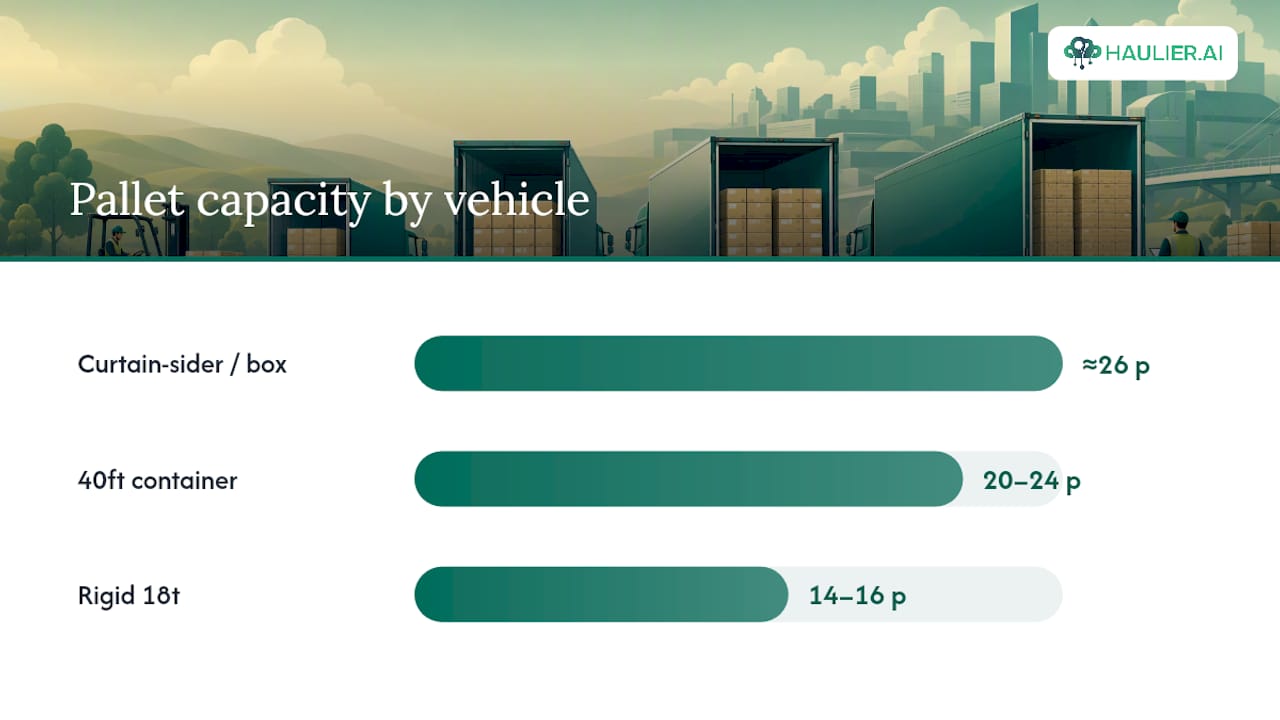
For planning purposes, a standard UK curtain-sider or box trailer takes around 26 standard pallets, a 40-foot container roughly 20 to 24 depending on stacking, and a rigid 18-tonner closer to 14 to 16. Those numbers set the ceiling; the thresholds below tell you where it starts making financial sense to book the whole thing.
How many pallets justify a full load booking?
The break-even point is lower than most people assume. Once you’re moving somewhere between 10 and 15 UK pallets, full load haulage usually becomes both cheaper and faster than part load, because you stop paying the per-pallet handling premium that part load carriers build into LTL rates. Below 10 pallets, part load generally wins on price, since you’re only paying for the space you use rather than an entire vehicle.
Weight gives you a second, complementary check. Broader freight industry guidance puts the crossover around 10,000 to 15,000 lbs, with LTL staying cost-effective under roughly 5,000 lbs. UK pallet counts and US weight bands won’t align perfectly given different pallet and trailer standards, but both point to the same practical zone: somewhere in the low double digits of pallets is where the maths flips.
Pallet count isn’t the only trigger, though. FTL can be the smarter choice well below that threshold when:
- The cargo is fragile, high-value, or needs to avoid re-handling at a consolidation hub.
- Dimensions are awkward. Oversized or irregularly shaped freight often doesn’t stack cleanly with other customers’ goods.
- The delivery is time-critical and you can’t risk a multi-drop route adding hours to the journey.
- You need a guaranteed collection and delivery slot rather than a window.
If your shipment sits in the 6 to 10 pallet grey zone, or your lane has patchy part-load coverage, get quotes for both. The gap between them tells you more than any rule of thumb.
What drives the price of a full load booking?
FTL pricing is built differently to part load. Rather than charging by weight or freight class, carriers price full loads per mile or per lane, quoted either as a one-off spot rate or a contracted rate for a regular route. Spot rates flex with fuel prices, driver availability and how tight capacity is on that corridor that week. Contract rates, agreed for a set volume over weeks or months, tend to run below spot because the haulier can plan its fleet around guaranteed work rather than chasing loads day to day.
Beyond the base rate, a handful of accessorial charges show up often enough that they deserve a line item on every quote you compare:
- Waiting time at collection or delivery, usually billed after a free window of 30 to 60 minutes.
- Tail-lift or specialist unloading equipment where the site has no dock.
- Detention charges if the trailer sits loaded longer than agreed.
- Permits for oversized, hazardous, or abnormal loads.
- Congestion charge or low-emission zone surcharges on certain UK routes.
FTL typically attracts fewer of these than LTL, since there’s no cross-dock handling to add extra fees at each stage, but they still catch out shippers who compare headline rates without checking the small print.
Pro Tip: Ask every haulier for a like-for-like breakdown of base rate plus accessorials before comparing quotes. A “cheap” spot rate that hides a detention clause or a tail-lift surcharge often ends up more expensive than the contract rate you dismissed as pricier upfront.
Committed volume is the biggest lever you have. Locking a lane in for six or twelve months, even at modest weekly volumes, usually earns a materially better rate than booking the same lane on the spot market every time. Full detail on what shapes UK pricing sits in Haulier’s container haulage rates guide.
What’s the loading and compliance checklist before dispatch?
A full load moving wrong is still a full load moving wrong, just at a higher cost per incident. Run through these steps before the trailer leaves the yard:
- Build pallets to spec. Even weight distribution across the trailer bed and correctly wrapped, stable pallet stacks prevent shifting in transit and reduce claims.
- Brace and secure the load. Use load bars, straps or airbags as appropriate; an unsecured full load is a legal and safety risk, not just a damage one.
- Prepare the paperwork. A CMR consignment note (or equivalent for domestic moves), an accurate packing list, and any permits for abnormal loads should be ready before the driver arrives.
- Confirm vehicle and weight compliance. Check the gross weight against the vehicle’s plated limit; UK operators carry specific legal duties around axle weights and overall gross vehicle weight, covered in detail in Haulier’s HGV weight limits guide.
- Verify driver and operator credentials. Operator licensing, driver hours compliance and vehicle roadworthiness sit with the haulier, but a quick check protects you if something goes wrong mid-transit. Haulier’s operator compliance guide walks through what “compliant” actually looks like.
Skipping any of these five steps is usually where delays and disputes start, not on the road itself.
How far ahead should you book a full load?
Lead times vary more by lane and season than most shippers expect. A spot booking on a busy trunk route can sometimes be arranged within a few days’ notice, but tighter or less-served lanes, and peak periods like the run-up to Christmas or the end of a quarter, may require booking a week or more in advance to secure the right vehicle at a sensible rate. Contracted lanes, agreed in advance for regular volumes, largely sidestep this problem because the capacity is already reserved.
Whatever the lead time, a firm quote depends on giving the haulier complete information upfront:
- Exact pallet or crate dimensions and total weight.
- Any access constraints at collection or delivery, tail-lifts, narrow yards, timed delivery windows.
- Realistic collection and delivery ETAs, including any fixed appointment slots.
- Whether the load needs specialist handling, hazardous goods documentation, or temperature control.
Vague specifications are the single biggest cause of rejected bookings and last-minute surcharges. A haulier who turns up expecting 12 standard pallets and finds 18 oversized crates either walks away or renegotiates on the spot, and neither outcome helps your delivery schedule. Clear, complete load data at the point of booking is what turns a quote into a reliable one.
How does an AI-assisted transport desk speed up FTL bookings?
Traditional full load booking still runs on phone calls, email chains and a fair amount of guesswork about who has a trailer free on your lane this week. Haulier replaces that with an AI-assisted, human-backed transport desk that matches your load details against available haulier capacity and returns firm quotes fast, instead of the usual back-and-forth over email.
The practical gains show up in three places:
- Faster firm quotes. Load specs go in once, matched capacity comes back quickly, without chasing multiple hauliers individually for a like-for-like comparison.
- Centralised visibility. Booking status, documentation and live updates sit in one place rather than scattered across inboxes, which is where missed updates usually happen.
- Haulier control preserved. Hauliers set their own rates and can decline a job that doesn’t suit their fleet or route, which keeps pricing realistic instead of forcing a race to the bottom that nobody honours on the day.
This model suits shippers booking on tight timelines, running frequent repeat lanes, or simply trying to cut the admin overhead of chasing quotes manually. For a one-off shipment with weeks of lead time, a phone call to a trusted local haulier still works fine. For anyone booking full loads regularly, how the platform works is worth understanding before your next tight deadline forces the issue.
Full load versus other transport methods: the real trade-offs
FTL’s biggest advantage is directness. No consolidation hub, no waiting for other customers’ freight to fill the trailer, no re-handling risk. That translates into shorter transit times, lower damage rates, and a delivery window you can actually commit to a customer. It also simplifies documentation, since one consignment note covers the whole load rather than juggling multiple part-shipment references.
The trade-off is utilisation. If your shipment doesn’t fill the vehicle, you’re paying for empty space, which is exactly why the pallet and weight thresholds matter so much. Part load and LTL exist precisely to solve that problem for smaller consignments, spreading the cost of the trailer across several shippers’ goods. The cost is longer transit and more handling, since your pallets typically pass through at least one consolidation point.
Multimodal options, rail-linked container moves or coastal shipping for very long domestic hauls, can undercut road FTL on price for high-volume, non-urgent freight, but they add transfer time and reduce flexibility on collection and delivery windows. For most UK domestic and cross-Channel movements where speed and reliability matter, road FTL remains the default for anything at or above the pallet threshold, with part load filling the gap below it and multimodal reserved for planned, high-volume flows where a few extra days genuinely don’t matter.
What’s the environmental case for booking full loads?
A full trailer moving one shipment directly is inherently more fuel-efficient per pallet than the same freight split across multiple part-load journeys with a detour through a consolidation depot. Fewer miles driven per tonne moved is the core sustainability argument for FTL, and it holds regardless of vehicle type, because the emissions cost of running an engine barely changes whether the trailer is half full or fully loaded.
The flip side is the utilisation problem again. Getting pallet counts and weights right before booking isn’t just a pricing exercise, it directly affects how much fuel gets burned per tonne of goods delivered.
Backhaul planning matters more than shippers usually credit it for. A trailer running empty on the return leg after delivery effectively doubles the emissions cost of the outbound journey. Hauliers who can match return-leg capacity against another booking on the same corridor cut wasted mileage meaningfully, which is one of the practical reasons a platform that pools visibility across multiple shippers and lanes tends to fill trailers more efficiently than a single haulier working their own contact book. Choosing hauliers who prioritise backhaul matching, and consolidating your own volume onto fewer, fuller trailers rather than frequent part-loads, are the two levers within a shipper’s direct control.
What commonly goes wrong with full load bookings?
The most frequent problem isn’t the road, it’s the information gap before the vehicle even leaves. Inaccurate weight or dimension data leads to rejected bookings, last-minute vehicle swaps, or a haulier arriving with the wrong equipment. Fixing this is straightforward in principle: measure and weigh before you quote, not after.
Capacity shortages during peak periods, pre-Christmas retail volumes, harvest season for agricultural freight, or sudden fuel price spikes that push hauliers off marginal lanes, can leave shippers without cover exactly when they need it most. Locking in contracted lanes ahead of known peak periods, rather than relying on the spot market, is the standard mitigation.
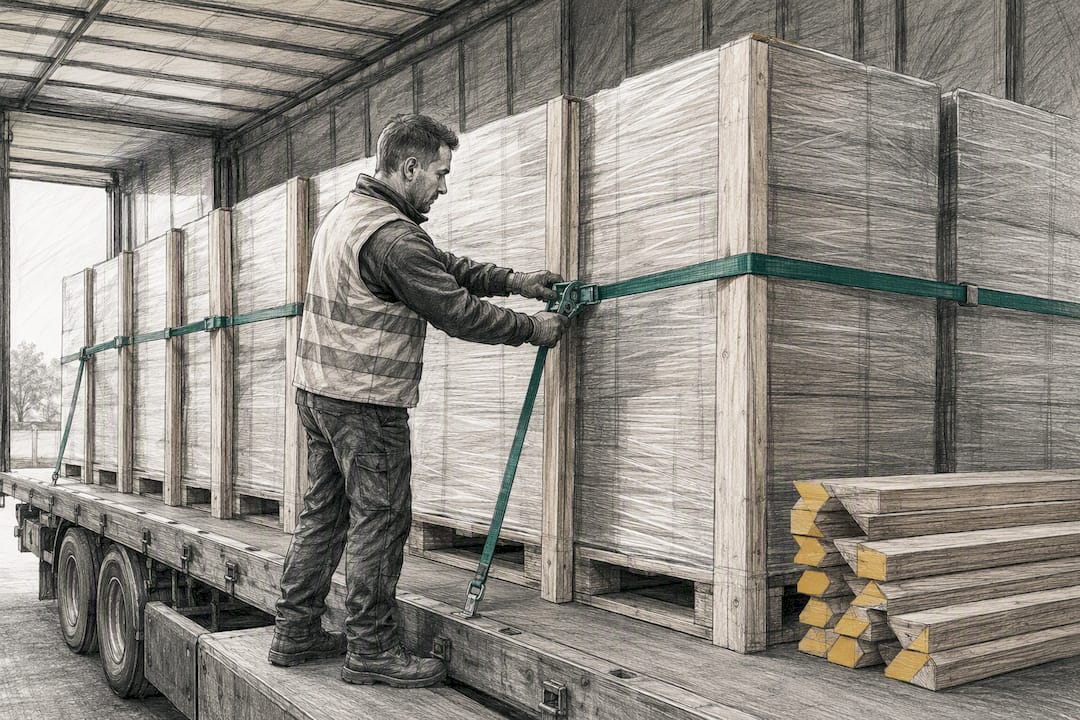
Damage and claims tend to trace back to poor load securing rather than driving incidents. Bracing, strapping and correct weight distribution across the trailer bed prevent the majority of in-transit damage, which is why the loading checklist above earns its place rather than being an afterthought.
Communication breakdowns, missed status updates, unclear delivery windows, paperwork arriving late, cost real money in demurrage, storage and rebooking fees even when the physical move itself goes fine. This is the specific problem a centralised, AI-assisted transport desk is built to solve, since it replaces scattered phone and email updates with one visible booking record both sides can check.
Finally, price disputes usually stem from accessorials not agreed upfront. Confirming waiting time allowances, detention terms and permit costs at the quote stage, not after the invoice arrives, avoids the argument entirely.
Who are the main players in UK full load haulage?
The UK full load market runs from large national fleet operators handling thousands of trailers, through regional hauliers specialising in particular lanes or sectors, to owner-drivers and small fleets who often offer the sharpest rates on niche routes. No single operator dominates the market the way a handful of retailers dominate their sector, which is part of why sourcing capacity has traditionally meant maintaining a personal list of contacts built up over years.
Industry standards centre on operator licensing through the Traffic Commissioner, driver hours compliance under EU/GB drivers’ hours rules, and vehicle roadworthiness inspections. Any operator running goods vehicles over 3.5 tonnes for hire or reward needs an operator’s licence, and reputable hauliers will confirm theirs without hesitation if asked. Beyond licensing, membership of trade bodies such as Logistics UK signals a haulier that operates to recognised industry codes of practice, though it isn’t a legal requirement to trade.
For shippers, the practical question isn’t which single haulier is “best”, it’s which one has the right capacity on your specific lane, at the right price, with a track record you can verify. That’s precisely the matching problem a transport desk model is designed to solve, pooling verified haulier capacity rather than asking a shipper to build and maintain that contact list themselves. Full detail on compliance expectations for operators sits in Haulier’s operator compliance guide.
How long does a UK full load delivery usually take?
Domestic UK full loads typically move same-day or next-day on trunk routes between major hubs, London to Manchester, Birmingham to Glasgow, that sort of distance. Cross-country moves involving more rural collection or delivery points can add half a day to that estimate simply because of access and yard constraints rather than distance.
Several factors shift that baseline. Driver hours rules cap how far a single driver can cover before a mandatory rest break, which matters on longer hauls that would otherwise be a single continuous run. Port and terminal congestion adds unpredictable delay to container moves specifically, since collection slots at busy ports can queue regardless of how quickly the road leg itself would run. Weather and seasonal road conditions, particularly winter disruption on northern and rural routes, are the other recurring variable worth building buffer time around.
Booking a contracted lane rather than relying on the spot market tends to produce more consistent transit times, as the haulier is more familiar with the route, the access points and any recurring quirks of your specific delivery locations. That familiarity, more than the raw distance, is often what separates a reliably on-time lane from one that needs constant chasing.
Scaling from occasional to regular full load haulage
Booking the odd full load reactively is a different discipline to running FTL as a standing part of your supply chain, and treating it the same way past a certain volume is where most of the avoidable cost creeps in.
The shift worth making first is negotiating contract rates on your genuinely repeating lanes rather than defaulting back to spot every time, since that’s where the pricing gap widens fastest once volume is predictable. Second, standardise your own load specifications, pallet dimensions, weight declarations, access notes, so every haulier gets consistent, accurate data and rejections drop off almost immediately. Third, track a small set of KPIs rather than a dashboard full of them: on-time delivery rate, claims per hundred loads, and how often a quoted price survives to invoice unchanged. Those three numbers tell you more about a haulage relationship than any amount of anecdotal feedback.
None of this requires enterprise-scale volume to matter. Even a business running four or five full loads a week benefits from treating haulage as a managed relationship rather than a series of one-off transactions.
— Vytautas
Get a firm full load quote without the phone-tag
A modern platform is built for exactly the gap this guide keeps circling back to: getting accurate load information matched to available capacity fast, without either side losing control over price. Users get quicker firm quotes, clearer instructions and status updates in one place instead of scattered across email threads, while hauliers keep the right to set their own rates and turn down jobs that don’t suit their fleet, so pricing stays realistic on both sides.
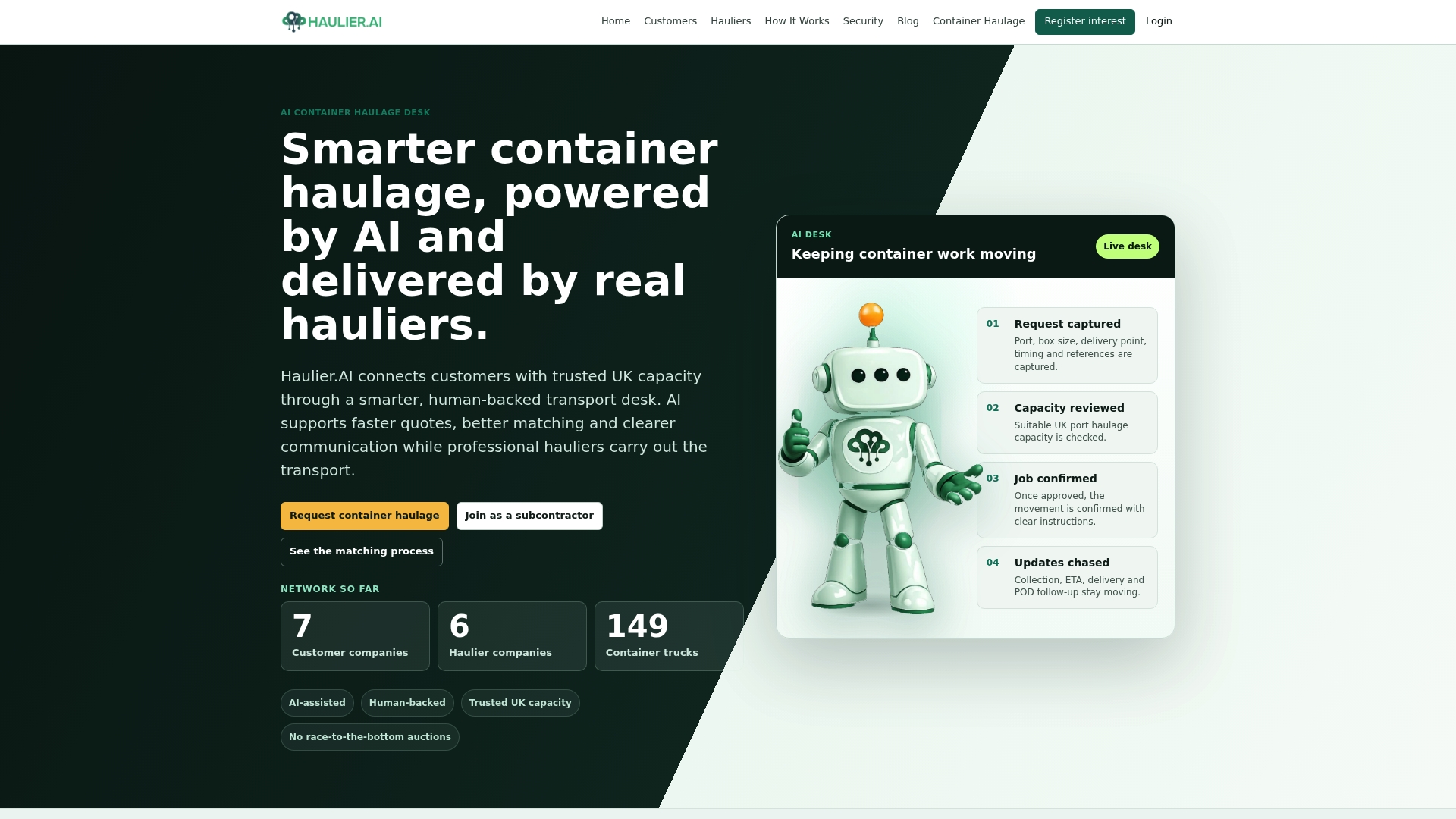
If you’re booking full loads regularly, or just tired of chasing five hauliers for one quote, request a container haulage quote and see how the matching works on your own lanes. Hauliers looking to fill capacity more reliably can also register interest in joining the network.
Sources
- LTL vs FTL Freight: How to Choose the Right Shipping Mode (and When to Mix Both)
- Full Load – Soloplan
FAQ
What Is the Difference Between Full Load and Part Load?
Full load (FTL) dedicates an entire vehicle to one shipment with direct routing, while part load (LTL) shares a trailer with other customers’ goods and typically passes through a consolidation depot.
How Many Pallets Justify Booking a Full Load?
Roughly 10 to 15 UK pallets is the usual break-even point, though fragile, urgent or oddly shaped freight can justify FTL well below that.
How Is Full Load Haulage Priced?
FTL is typically priced per mile or per lane, as either a spot rate or a contracted rate, with accessorials like waiting time and permits added on top.
How Can an AI-Assisted Desk Speed Up FTL Booking?
Platforms like Haulier match load details to available haulier capacity and return firm quotes quickly, while keeping rate control and job acceptance in the haulier’s hands.
How Far Ahead Should I Book a Full Load?
Spot bookings on busy trunk routes can sometimes be arranged within a few days’ notice, but tighter lanes or peak season can need a week or more, which is why contracted lanes reduce booking risk for regular volumes.