
Container haulage article
Finding a UK haulier fast for urgent part-load work
Need a UK haulier quickly for part-load work? This guide explains what to prepare, what affects availability, and how urgent UK haulage gets placed.
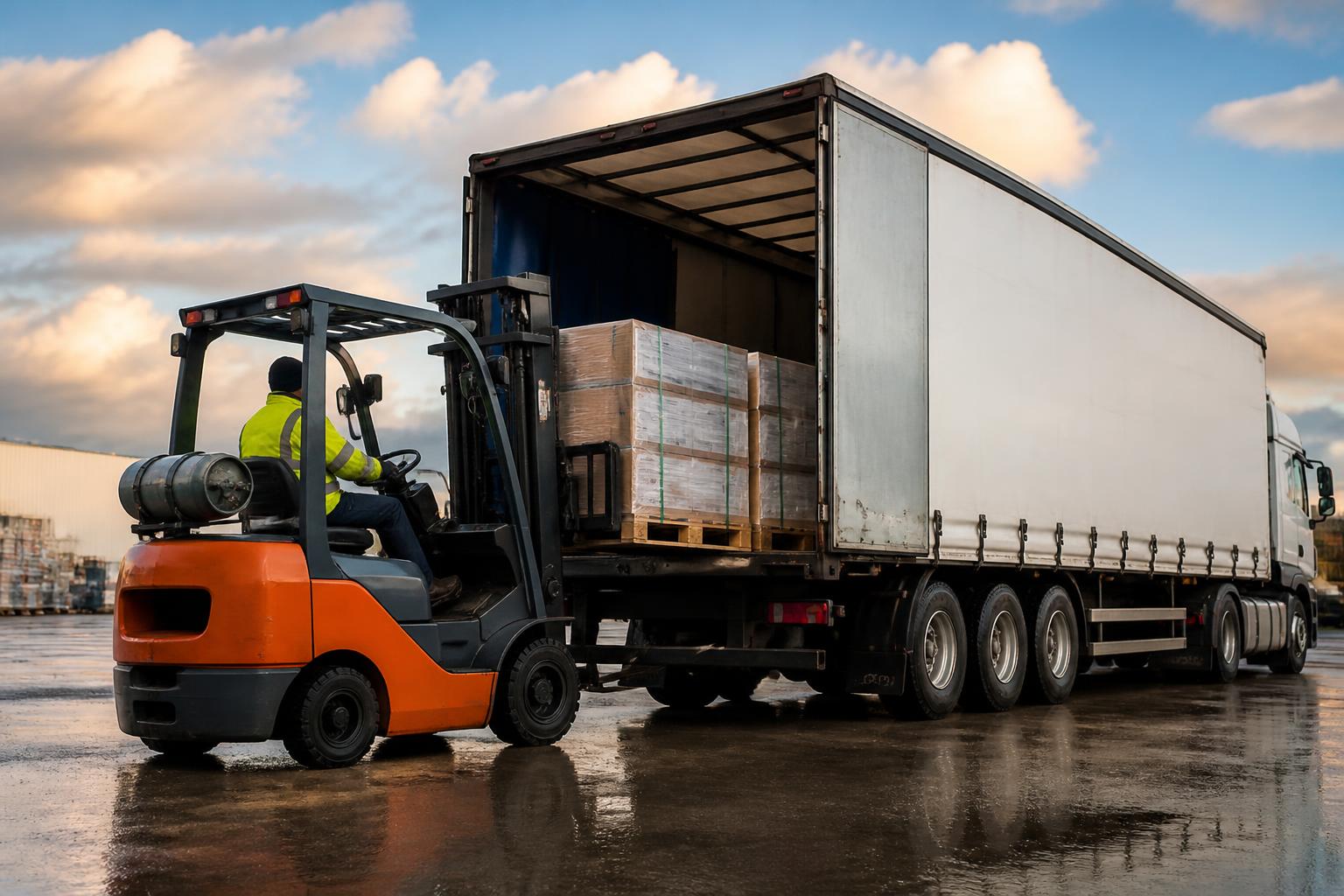
If you need a UK haulier for part load at short notice, the fastest route is not calling a long list at random. It is getting the movement defined properly, checking whether it can be consolidated without breaking the delivery window, and putting it in front of operators whose fleet, lane and timing actually fit the job.
That is exactly where urgent requests usually stall. The load is real, the pressure is real, but key details are missing, the collection site has restrictions nobody mentioned, or the delivery window leaves no room for a shared run. In UK haulage, urgent part-load work can be covered quickly, but only when the information is clear enough for a haulier to say yes with confidence.
What urgent part-load usually means in UK haulage
In practical terms, a part-load is a movement that does not need the whole vehicle. It may be a few pallets, several oversized items, a half trailer, or a shipment that is too large for parcel networks but too small to justify a dedicated full-load on cost alone.
Urgent part-load work usually appears when something has changed late. A production line is waiting on components. A customer has brought a delivery date forward. A booked vehicle has fallen off. A supplier has released stock later than planned. A warehouse has to clear space today, not tomorrow. Sometimes the urgency is genuine same-day collection. Sometimes it means next-day delivery, but the booking still needs to be secured within the hour.
That distinction matters. In UK haulage, "urgent" can mean several different operating realities:
- collection required within a few hours
- delivery booked for a fixed next-day slot
- timed delivery to avoid site charges or missed labour
- late afternoon booking for a movement that needs planning before evening traffic and driver hours become a problem
- recovery cover when an original carrier cannot complete
Part-load also covers a wide range of freight profiles. Standard palletised goods are the simplest to place. Long lengths, fragile items, irregular machinery, and loads needing straps, edge protection or careful handball are more restrictive. If the job includes tail-lift, pump truck, Moffett, HIAB, or ADR requirements, the available pool narrows quickly.
For import and export related work, urgency can also come from port and customs timing. With container haulage through Felixstowe, London Gateway, Southampton, Tilbury, Liverpool, Teesport or Immingham, a shipment may need onward inland movement because a container has landed, devanning has finished, or a delivery booking has shifted. Since Brexit, paperwork and customs timing can create additional pinch points, especially where goods are released later than expected or a consignee cannot receive until documents are cleared.
Urgent part-load, then, is not just "small load, fast please". It is a movement where load size, timing and operating constraints all need to be checked together.
What information a haulier needs before they can say yes
The quickest way to lose time is sending a vague brief and then filling in the basics one email at a time. Before any haulier can confirm fit, price and timing, they need enough detail to understand the movement operationally.
At minimum, we need:
- full collection postcode
- full delivery postcode
- collection date
- earliest ready time
- latest collection time
- required delivery date
- delivery window or booked slot
- number of items or pallets
- dimensions and weight
- whether the goods are stackable
- whether they are palletised, loose, crated, banded or awkward
- loading and unloading method
- contact names and phone numbers on both ends
If the load is palletised, pallet count alone is not enough. A haulier will want to know pallet footprint, height, and gross weight. Two "pallets" can mean two light standard pallets or two heavy, overheight units that cannot go on a shared trailer safely.
If the goods are not palletised, dimensions become critical. Lengths over standard pallet space, top-heavy items, or freight that cannot be double stacked all reduce consolidation options. The same applies to fragile goods that need segregation from other freight.
Site conditions matter just as much as freight details. We need to know:
- vehicle access restrictions
- whether an artic can get in, or if rigid only is required
- forklift availability
- tail-lift requirement
- pump truck requirement
- whether there is handball
- booking-in rules
- PPE requirements
- whether the site is a construction site, residential address, port, RDC or farm
- any waiting time risk
- any refusal risk if the vehicle arrives outside the booked slot
For timed jobs, we also need clarity on whether the delivery is genuinely fixed or just preferred. If a consignee says "before noon", that is very different from "booked at 10:00, late arrivals refused". The second may require a dedicated run even for a small shipment.
Commercial details also need to be right first time. Is the shipment standard goods or high value? Is there a purchase order or reference that must appear on the paperwork? Does the receiver require a POD by email the same day? Is there any customs status issue, especially on movements tied to ports or post-Brexit border processes? For some traffic, whether the charge is to be invoiced with or without VAT also needs to be clear from the outset, depending on the nature of the movement and the customer setup.
If you want less back and forth, it helps to submit the movement in a structured way. We built our process around that, because urgent jobs are often lost in manual chasing rather than lack of actual capacity. For a fuller look at how to speed up the first quote stage, see getting a same-day haulage quote without the phone chase.
What affects whether a short-notice part-load can be covered
The first question is not price. It is whether the movement can be covered at all within the time available.
Lane is one of the biggest factors. A part-load from Birmingham to Manchester is easier to place than a late afternoon collection from a remote Cornwall postcode for delivery to a tight timed slot in East Anglia the next morning. Not impossible, but much more dependent on who is already running nearby and what spare capacity exists on that lane.
Equipment is another real constraint. If the freight needs curtainsider access, flatbed loading, tail-lift delivery, or a vehicle small enough for difficult access, only some operators will fit. If the load is abnormal in shape, very heavy for its footprint, or sensitive in handling, the options narrow again.
Timing drives everything. A short-notice request at 09:00 for collection by 14:00 may be workable if the goods are ready, paperwork is complete, and the site can load promptly. The same request at 16:30, with a warehouse that stops loading at 17:00, is a different proposition. Driver hours, legal break requirements, traffic, and depot cut-offs all come into play.
Collection and delivery site behaviour often decides the outcome. A load may look easy on paper, then fail because:
- the goods are not actually ready
- the forklift driver is at lunch
- the booking reference has not been issued
- the delivery point will not accept early arrival
- the consignee insists on a specific vehicle type
- the site has queueing that creates waiting risk
- access instructions arrive too late
For part-load work, compatibility with other freight matters too. A haulier cannot simply fill leftover space with any load that fits by size. Weight distribution, delivery sequence, freight type, contamination risk, and securing method all matter. Food related goods, packaging, chemicals, engineering parts and retail stock may each have different compatibility limits.
This is why some urgent jobs turn into dedicated runs even though the load is small. If the timing is too tight for consolidation, or if the freight profile does not sit safely with other work, the operator may need to send a vehicle primarily for that movement.
Port related jobs bring extra variables. Container haulage and onward part-load distribution often depend on release status, VBS or booking arrangements, and whether the collection point is a quay, rail terminal, warehouse or devanning site. Delays around Felixstowe, London Gateway, Southampton, Tilbury, Liverpool, Teesport or Immingham can ripple into the inland leg. If the inbound side slips, the delivery side may no longer fit a shared plan.
That is also why there is no universal answer to whether we can cover something "today". We can move quickly, but the answer depends on lane, equipment, timing and site reality, not just willingness.
How urgent part-load work is usually priced and planned
Urgent part-load pricing varies because the haulier is not only selling space. They are pricing the operating effort and risk of fitting that movement into a live network.
If a load sits neatly on an existing route, with compatible freight, sensible timings, and low waiting risk, the rate is usually more efficient. If the operator has to divert significantly, reposition an empty vehicle, or protect a timed delivery with spare capacity that cannot be sold elsewhere, the quote will rise.
The main cost drivers are usually:
- distance and lane
- vehicle type required
- weight and dimensions
- urgency of collection
- rigidity of delivery time
- dead mileage to reach collection
- dead mileage after delivery
- waiting time exposure
- handball or special handling
- likelihood of failed collection or refused delivery
Consolidation is where part-load can save money, but only when the movement genuinely suits consolidation. If a small shipment can travel alongside other freight without creating delay or risk, the economics improve. If it blocks the trailer, forces a detour, or has a delivery slot that disrupts the whole route, the saving may disappear.
Dead mileage is often underestimated by buyers. A load may be short in loaded miles but expensive because the available vehicle is not local, or because the delivery point leaves the truck in an area with poor backload prospects. The haulier has to consider the whole movement, not just the loaded leg.
Waiting risk is another major factor in urgent work. If the collection point regularly queues vehicles, or the delivery site has strict booking rules and no flexibility, the operator must price the chance that the vehicle and driver lose productive time. A small load with a high risk of delay can cost more than a larger one that moves smoothly.
That is why urgent part-load quotes can differ sharply between operators. One may already have the right vehicle on the lane. Another may need to build the movement almost from scratch. Both quotes can be commercially rational.
Planning also affects service quality. A good urgent movement is not just "truck found". It should include confirmed collection details, realistic ETA, named contact points, and a clear route for updates and POD. On many jobs, especially when production or customer service teams are waiting, the operational value lies in certainty and communication as much as in the vehicle itself.
If your team is deciding whether a shipment should stay as part-load or move as a dedicated vehicle, it helps to understand where the break point usually sits. We cover that in more detail in how part-load moves cut cost without losing control and when full-load haulage is the right fit for UK freight.
How Haulier.AI helps when manual chasing is slowing things down
When you need a UK haulier for part load work at short notice, the real problem is often not the market. It is the manual process around it. Operations teams are copying details into emails, calling around for availability, answering the same questions repeatedly, and trying to compare replies that arrive in different formats.
We built Haulier.AI to organise that process properly.
Our model is AI-assisted and human-backed. That means we use structured request handling to capture the details that matter, route the opportunity towards suitable operators, and keep the quote process organised. It does not mean we remove human judgement from transport planning, and it does not mean we run a race-to-the-bottom auction that strips hauliers of commercial control.
For customers, that matters because urgent jobs need clean information flow. We help make sure the request contains the operational details a haulier needs to assess fit quickly. That reduces the wasted cycle of "send dimensions", "is there a forklift?", "what time does the site close?", and "can an artic get in?" after the request has already gone out.
For hauliers, it matters because relevant subcontract work is easier to assess when the core facts are present. Operators can decide whether the lane, equipment and timing suit them, without trawling through incomplete emails or chasing basics that should have been there from the start.
Our role is not to pretend every urgent movement can be automated into an instant answer. In UK haulage, especially for part-load and container haulage linked to ports, there are too many live variables for that. Driver hours, site restrictions, release status, traffic, and network fit still need human oversight. What we do is remove avoidable friction so decisions can happen faster.
That includes the practical things operations teams actually care about:
- clearer request intake
- more consistent quote handling
- fewer missed details
- better alignment between load profile and operator capability
- simpler update flow on collection status and ETA
- smoother POD follow-up after delivery
Where a movement links to port activity, we also understand the surrounding context. Inland deliveries after arrivals through Felixstowe, London Gateway, Southampton, Tilbury, Liverpool, Teesport or Immingham often need tight coordination between release, warehouse readiness and final delivery booking. The same applies where Brexit related processes or document timing affect when freight can move onward.
If your current method is a spreadsheet, a shared inbox and a lot of phone calls, the issue is rarely effort. It is that urgent transport work punishes fragmented information. A structured, human-backed desk gives you a better chance of getting a realistic yes quickly, and a clear no quickly when the movement does not fit, which is just as valuable when the clock is running.
That is how we help. We do not claim that every urgent part-load can be covered. We do make it easier to define the work properly, present it to suitable operators, and keep control of the quote and movement process when time is short.
Can a part-load be collected on the same day?
Sometimes, yes. It depends on where the freight is, the cut-off for collection, vehicle availability, loading time and whether the delivery window is realistic.
What is the minimum information needed for an urgent quote?
Collection and delivery postcodes, ready time, delivery deadline, pallet or item count, weight, dimensions, loading method and any site restrictions are the basics.
Is part-load always cheaper than full-load?
No. Part-load can be cheaper when space is shared efficiently, but urgent timing, awkward freight or poor lane fit can make it less economical than expected.
Can urgent part-load include port-related work?
Yes, depending on the job. Some urgent movements connect with container haulage around ports such as Felixstowe, London Gateway or Southampton, but the requirements must be clear.
How do I know whether a haulier is actually suitable?
Suitability is not just about having a vehicle. It includes lane fit, equipment, access, timing, communication, POD handling and whether the operator can realistically meet the plan.