
Container haulage article
How LGW VBS affects container haulage planning
A practical guide to LGW VBS: what it is, how bookings affect container haulage, and where delays, fees and planning risks usually appear.
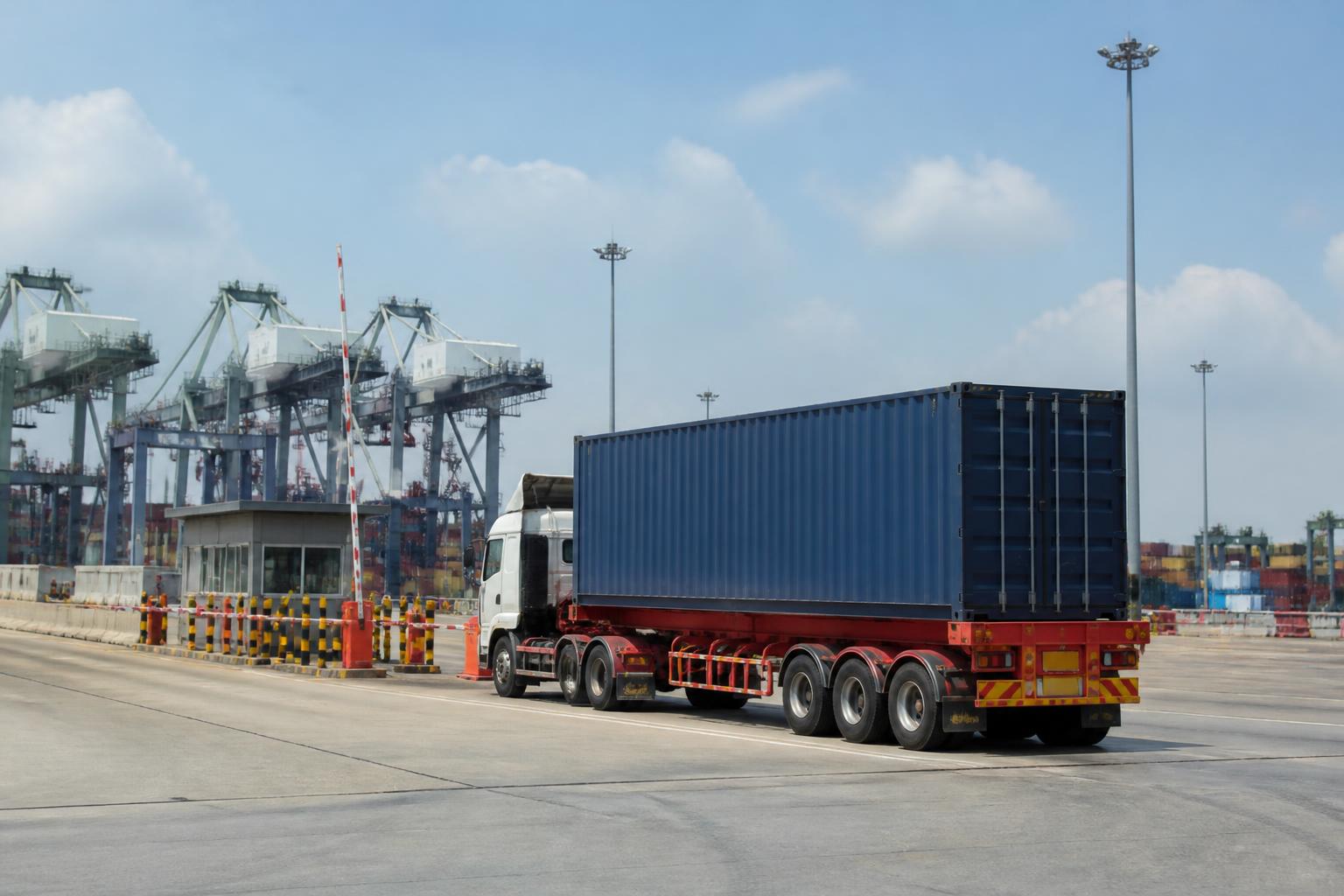
Booked access at London Gateway changes how we plan container haulage. When a collection or delivery depends on an LGW VBS slot, the job is no longer just about whether the container is available and the driver has hours. It becomes a timed port movement with very little value in guessing. If the slot is wrong, the truck is wrong, or the release is not in place, the whole day can start to unravel.
For shippers, forwarders and transport teams, that means planning has to happen earlier and with better job data. For hauliers, it means vehicle use, driver allocation, quay timing, customer delivery windows and work at other ports all have to line up properly. We see this every day across UK haulage, especially where operators are balancing London Gateway with Felixstowe, Southampton, Tilbury, Liverpool, Teesport and Immingham.
What LGW VBS is and why it matters
LGW VBS is the vehicle booking system used for road access at London Gateway. In practical terms, it means a haulier cannot simply turn up when it suits the traffic office or the customer. A booked time slot is needed for the vehicle movement, and that slot becomes one of the main controls on the job.
That matters because container haulage is built around linked events. The import container has to be discharged and available. Any shipping line release has to be in place. Customs status has to be clear. The right container number has to be matched to the right movement. The haulier then needs a vehicle, a driver, and a route plan that gets the unit to the gate inside the booked window.
If any one of those pieces is uncertain, the slot can become a liability rather than an advantage. A booking made too early may be missed because the box is not actually cleared. A booking made too late may leave no useful slot availability for the delivery window the customer wants. That is why LGW VBS affects far more than gate entry. It affects cut-off decisions in the traffic office, subcontracting decisions, depot positioning, and whether a job can be combined sensibly with another move.
For UK operators, there is also a wider planning issue. Port work is rarely handled in isolation. A truck doing London Gateway in the morning may be planned for a full-load, a part-load, a return container, or a domestic movement later the same day. If the booked port access slips, the whole sequence can fail. That is why VBS discipline is now part of normal transport planning, not just a port admin task.
How the booking process usually works
The exact sequence varies by operator, shipping line and customer setup, but the normal process is broadly consistent.
First, the transport team receives the job details. For an import collection, that usually includes the container number, size and type, collection point, delivery point, shipping line, any reference needed for release, cargo readiness, and the required delivery timing. For an export, it may include the booking reference, terminal details, container status, packing location, VGM arrangements where relevant, and the latest acceptable return time.
Second, the team checks whether the movement is actually ready to plan. For imports, that means checking container availability and whether customs formalities are clear. Since Brexit, that check has become more important on many flows. The position differs depending on cargo origin, customs procedure and whether the move is domestic UK traffic or linked to international trade, but the point is the same, no one wants a truck arriving for a box that cannot lawfully leave the port. If there are line charges, holds, or missing release data, those need sorting before the slot becomes useful.
Third, the planner looks at the delivery requirement and works backwards. If the customer needs a warehouse delivery at a certain time, the planner assesses road time, likely queue time, driver hours, break requirements, and whether the vehicle can get from its previous job to London Gateway in time. The slot is then chosen to fit the operational reality, not just the first free space on the screen.
Fourth, once the slot is booked, the vehicle plan is fixed around it. The driver receives the job details, reference numbers, and any site instructions. If the movement is subcontracted, the same information needs to be passed on cleanly and in one place. This is where organised request handling matters. If key documents sit in three inboxes and two spreadsheets, errors become much more likely.
Fifth, the vehicle attends the gate within the booked access window. At that point, success depends on the earlier checks having been done properly. The right container, right release, right unit details, right driver instructions, and right timing all have to be in place.
Finally, after collection or delivery, the status needs updating quickly. The customer wants a live ETA or confirmation of completion. The haulier wants to know whether the truck can move straight onto the next job. The paperwork trail also matters, including any POD or interchange evidence needed for invoicing or dispute handling. We cover this kind of operational coordination regularly in our practical UK haulage planning articles.
Where delays and extra costs usually come from
Most failures around LGW VBS are not caused by the booking screen itself. They usually come from weak job preparation or unrealistic planning.
A common problem is booking before the container is genuinely available. The transport team may have a rough expectation that the box will clear in time, but if customs status, line release or terminal availability is still uncertain, the booked slot is exposed from the start. When that slot is missed, the cost is not only the rebooking effort. It is also wasted driver time, poor vehicle utilisation, and often a knock-on failure on the next job.
Another frequent issue is incomplete job information. Missing container numbers, wrong size details, unclear delivery instructions, or no confirmation of whether the customer can tip at the planned time all create avoidable risk. A traffic planner cannot build a reliable day around assumptions.
Vehicle mismatch is another source of cost. If the move needs a specific trailer type, a certain weight capability, or a driver with the right route and port experience, that needs deciding before the booking is made. Otherwise the slot can exist on paper while the actual resource is still wrong.
Roadside delay also matters. London Gateway jobs are exposed to congestion in the wider South East road network, and that affects whether a truck can make its gate window. A plan that ignores realistic travel time is not a plan. It is a hope.
Then there is rework caused by communication gaps. The shipper updates the delivery time. The haulier changes the driver. The warehouse asks for a later arrival. The planner needs to move the slot. If those updates are passed around manually by phone and email, someone eventually works from an old version of the job.
Extra cost also appears after the port movement, not only before it. If a delivery point is not ready, if tipping takes too long, or if the return leg has not been thought through, the truck can lose the rest of its day. That is one reason we treat container haulage as a sequence, not a single collection point.
What shippers and transport teams need ready before booking
Before anyone books an LGW VBS slot, the basic job file needs to be complete enough to support a real plan.
At minimum, we need:
- Container number
- Container size and type
- Import or export status
- Shipping line or operator reference
- Collection or return terminal details at London Gateway
- Delivery or packing address
- Required delivery date and time, or acceptable window
- Cargo status, including whether the box is available to move
- Customs and release position
- Any site restrictions for the delivery point
- Weight, where relevant to vehicle planning and route choice
- Contact details for the receiving or loading site
- Any special instructions for tipping, waiting, or equipment
For imports, teams should also be clear on whether the delivery point can actually receive the container when the truck arrives. There is no value in securing a good slot at London Gateway if the warehouse cannot unload until much later. That only converts port timing into waiting time elsewhere.
For exports, the loading point needs to be ready in operational terms, not just commercially ready. Is the cargo packed and available? Is the empty or laden container in the right place? Are there any booking references or cut-off timings that affect when the loaded unit must return? If VGM or sealing arrangements apply, who is handling them and when?
Since Brexit, some movements also require more careful checking of customs instructions and supporting data than teams were used to before. The exact process depends on the movement, but in the UK context the practical point is simple, the haulier should not be left discovering customs uncertainty at the gate or halfway through the day.
Commercial details matter too. If there are expected waiting conditions, timed delivery penalties, or special handling charges, those need surfacing before the booking decision. The same applies to VAT treatment on the invoicing side. The tax position depends on the service and the parties involved, and it should be set correctly in the admin process rather than argued after the move.
Where customers need regular support on these flows, our London Gateway container haulage support is built around getting the request into a usable shape early, so operators can quote and plan on real information rather than fragments.
How hauliers manage LGW VBS alongside other port work
Few operators have the luxury of planning London Gateway in isolation. A normal traffic desk may be balancing jobs across London Gateway, Felixstowe, Southampton, Tilbury, Liverpool, Teesport and Immingham at the same time, plus domestic pallet, part-load and full-load work.
That creates a constant trade-off between fixed-time port activity and more flexible road work. A VBS-controlled job tends to anchor the day because the gate window is non-negotiable. Domestic work may be easier to move around, but it still has customer commitments. The planner therefore has to decide which jobs need dedicated resource and which can be combined.
A truck based in the South East might be ideal for London Gateway one day and Tilbury the next. A unit finishing in the Midlands may be better used on Felixstowe or Southampton depending on where the next loaded move sits. Northern operators may be balancing Liverpool, Teesport and Immingham with occasional southern subcontract work. The best decision is rarely about a single job rate in isolation. It is about network fit, empty running, driver hours, and whether the vehicle can still earn properly on the next movement.
This is where subcontracting becomes normal rather than exceptional. If an operator has strong coverage around one port but a gap around another, passing work to a trusted haulier can protect service and preserve fleet efficiency. The key is that the subcontracted job still needs clean operational data. Port bookings, release details, delivery times and contact points must transfer accurately.
It also means planners need a realistic view of each port’s operating rhythm. London Gateway and Felixstowe may both involve container work, but they do not create the same day plan in every case. Southampton timing may suit one fleet pattern, while Immingham or Teesport suits another. That is why we support operators not only on London Gateway jobs, but also on flows through Felixstowe and other major UK container ports, where the planning logic is similar even when the local detail differs.
Where AI-assisted, human-backed support helps
The useful role for AI-assisted support in this area is not replacing the traffic planner. It is removing avoidable admin friction so the planner can make better decisions faster.
When an LGW VBS movement comes in, the first challenge is often not transport capacity. It is getting the request into a consistent, actionable format. Container numbers, addresses, dates, release notes, customer constraints and contact details may arrive across several messages. Organising that quickly matters because slot-led planning loses value when the basics are still unclear.
That is where we help. At Haulier.AI, we run an AI-assisted, human-backed transport desk that organises request handling and quote flow without taking commercial control away from the haulier. We are not trying to turn container haulage into a blind auction. Operators still decide what they want to price, what they can cover, and what margin and service terms make sense for them.
In practice, that support helps in a few specific ways.
First, it improves job clarity before the work is circulated or quoted. That reduces the number of cases where a slot is booked around incomplete information.
Second, it makes handover cleaner between the customer, the transport desk and the operating haulier. For VBS-led work, that matters because one missed reference or one outdated instruction can waste a whole movement.
Third, it helps with exception handling. If a release is delayed, the delivery point changes, or the planned ETA slips, there is value in having organised communication rather than a chain of missed calls and forwarded emails.
Fourth, it supports mixed work patterns. Many operators do not want only port work and many customers do not need only containers. They may need container haulage on one lane, a full-load on another, and occasional part-load cover elsewhere. A joined-up request process makes that easier to manage.
Finally, it preserves the one thing good operators care about most, judgement. No system should force a haulier to accept the wrong rate, the wrong timing, or the wrong operational risk. Human-backed support is useful precisely because real transport decisions still need human review.
LGW VBS affects container planning because it turns access timing into a hard operational constraint. The businesses that handle it well are usually not the ones doing anything flashy. They are the ones with the cleanest job data, the clearest communication, and the most realistic view of how a booked port slot fits into the rest of the day. That is the standard we work to across UK haulage, whether the move is through London Gateway or any other major container port.
What does LGW VBS stand for?
In UK container haulage, LGW VBS usually refers to the London Gateway vehicle booking system used to manage booked access for collections and deliveries.
Do all London Gateway container moves need a booking?
Many port container movements are controlled through booked access, but the exact requirement depends on the move, terminal rules and current operating conditions.
Why do missed slots cause so many problems?
A missed slot can disrupt the whole day's plan. It may mean rebooking, extra waiting, lower vehicle utilisation, and knock-on delays for other full-load or part-load work.
What information is needed before a slot is booked?
Usually the operator needs container details, availability status, collection or delivery reference data, site constraints, and a realistic ETA for the vehicle.
Is LGW VBS only relevant to large importers?
No. Any business moving containers through London Gateway can be affected, including firms with irregular volumes, urgent jobs or awkward one-off requirements.