
Container haulage article
How lorry haulage works when the day will not sit still
A practical guide to UK haulage lorry work, from booking and pricing to POD, ETA, ports and subcontract cover when plans change.
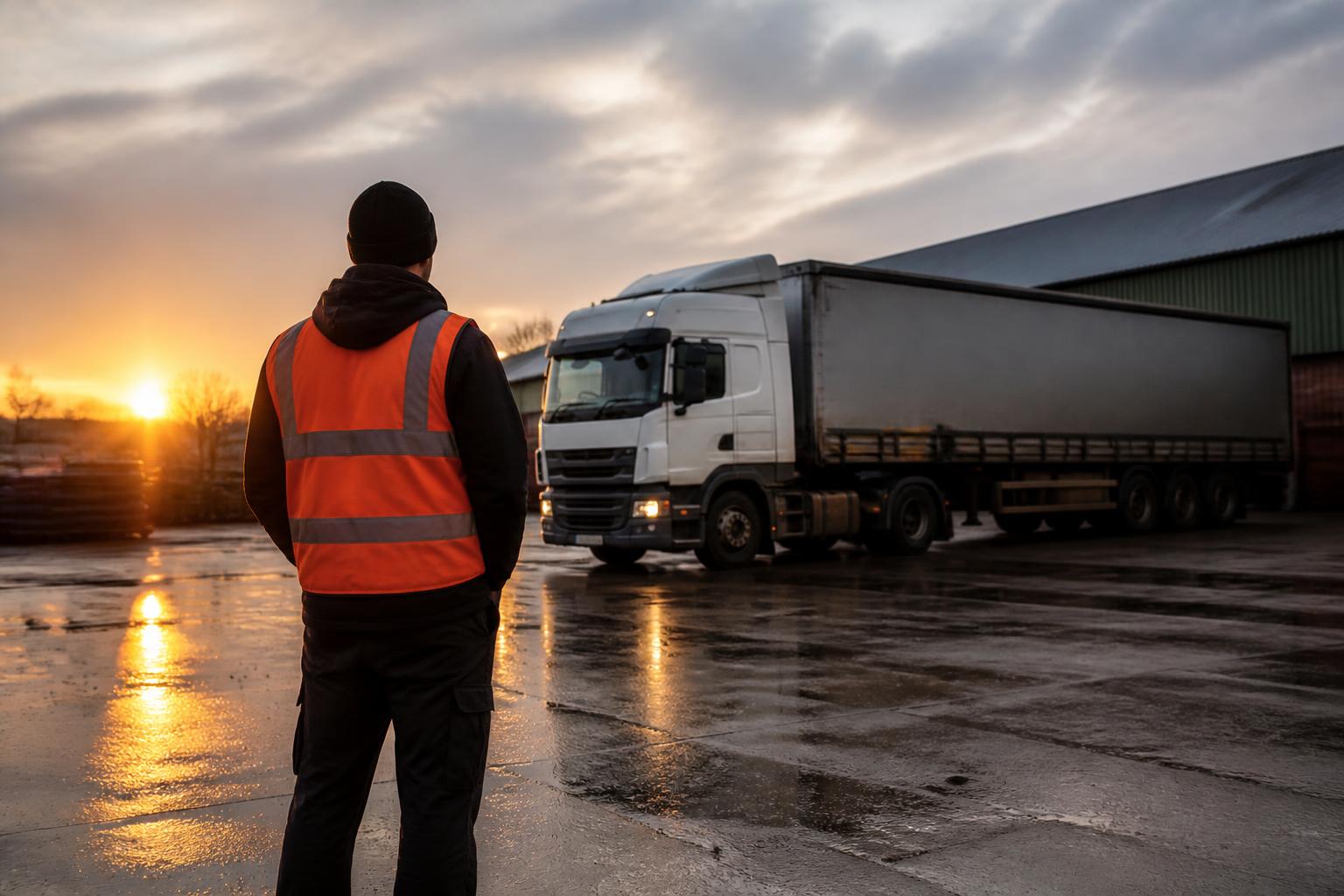
When the day will not sit still, lorry haulage works best when the job is stripped back to operational facts quickly, then managed actively from booking through to delivery. The difference between a smooth movement and a long afternoon of chasing usually comes down to whether the right details were captured early, whether the vehicle really matches the load and site, and whether someone is watching the job once it is live.
At Haulier.AI, we use an AI-assisted, human-backed transport desk to organise that process without taking commercial control away from hauliers or turning every movement into a lowest-price auction. For customers needing UK haulage, and for operators looking for workable subcontract jobs, the point is simple. Good haulage is not only about finding a lorry. It is about matching load, timing, access, paperwork and communication well enough that the job can actually be done.
What a haulage lorry job actually includes
When people ask for a haulage lorry, they usually mean a road movement of goods from one point to another within the UK, with a vehicle and operator suitable for the load, the collection site and the delivery point. In practice, that request can cover anything from a single pallet on a part-load movement to a dedicated full-load, a same-day urgent run, or container haulage in and out of port.
Before any job can be priced properly or covered properly, we need the operational basics. That starts with collection and delivery postcodes, site names, contact details, opening hours, booking reference requirements, and whether the load is ready now or on a timed slot. A movement for "tomorrow morning" is not the same as a movement for 08:00 sharp, and neither is the same as a job that can load any time before 16:00.
The load itself matters just as much. We need the commodity, number of items, pallet count if relevant, weight, dimensions, whether the freight is stackable, and whether it is loose, palletised, crated, stillaged or machinery. If a single piece is over standard pallet footprint, over-height, or awkward to secure, that changes vehicle choice immediately. If the goods are fragile, high-value, or need specific handling, that also needs to be known up front.
Then there are the site conditions. Can the collection point take an artic, or only a rigid? Is there a forklift on site? Is loading side-on, rear-only, or by crane? Is a tail lift required? Are there access limits such as narrow lanes, weight-restricted roads, low bridges, timed gate access, or mandatory PPE and induction? A job can look straightforward on mileage and still fail on access if these points are missed.
Commercially, a quote also depends on whether the movement is dedicated or can move as part of a shared route. A part-load can be efficient when timing is flexible and the freight fits around other work. A full-load is usually the right answer when the consignment fills the vehicle, needs direct running, or has timing and security requirements that make sharing impractical.
That is why a proper request is more than "need a lorry from A to B". For UK haulage to work day to day, the detail has to be usable by an operator, not just readable by a buyer.
How loads are matched to the right vehicle and operator
Matching a load to the right vehicle starts with physical fit, then moves to timing, geography and site practicality. The first decision is often whether the movement should be handled as part-load or full-load. If the goods are compact, flexible on timing and suitable to run alongside other freight, a part-load arrangement can make sense. If the load needs a dedicated vehicle, fills most of the deck, or has a strict delivery requirement, full-load is normally the better fit.
Vehicle type follows from that. A van, 7.5 tonne, rigid, curtainsider, box vehicle or artic all serve different jobs. Some loads need a tail lift because there is no forklift at one end. Others need a curtainsider because side loading is required. A container movement needs the right skeletal trailer and an operator set up for container haulage rather than general pallet work.
Weight and dimensions are the next filter. A light but bulky load may cube out before it weighs out. A dense load may hit payload limits quickly. Overlength or overheight freight can rule out standard equipment. If the site has poor access, the technically correct vehicle may still be operationally wrong. There is no value booking an artic into a farm entrance, a city-centre service yard or an industrial estate with reversing limits if the driver cannot get in or out safely.
Timing changes the matching again. A next-day movement with a broad collection window can often be planned into an existing route. A same-day collection with a fixed delivery slot may require a nearer vehicle, a dedicated run, or a subcontractor already finishing close by. Commercial availability matters here. The best vehicle on paper is irrelevant if no operator can legally and realistically cover the job in time.
This is also where subcontract allocation needs judgement. We do not treat every operator as interchangeable. Some are better placed for palletised general haulage, some for awkward freight, some for port work, and some for regional backloads or one-way jobs. A movement into London with tight access is different from a straight trunk between Midlands depots. Matching work well protects service levels for customers and protects margins for hauliers.
For hauliers, preserving commercial control matters. We focus on relevant opportunities, not a race to the bottom. That means an operator can assess whether a job suits their equipment, route and day, rather than being pushed into uneconomic pricing for work that never fitted in the first place.
What changes the price of UK haulage
The price of UK haulage is driven by practical operating factors, not just mileage. Distance is the obvious starting point, but it is only one part of the quote. A short job with difficult access, long waiting time and fixed booking slots can cost more to run than a longer straightforward movement.
Vehicle type affects cost immediately. A dedicated artic is not priced like a small rigid, and a specialist trailer is not priced like a standard curtainsider. Whether the movement is part-load or full-load also matters, because shared planning and direct planning use capacity differently.
Timing is another major factor. Standard next-day work is one thing. Same-day, timed deliveries, out-of-hours collections, weekend coverage and bank holiday work all reduce planning flexibility and may require repositioning a vehicle. Urgency often means paying for availability, not only for distance.
Waiting time is one of the most common reasons the actual cost of a job diverges from the simple collection-to-delivery picture. If a driver loses an hour at collection because the goods are not ready, or sits at delivery because the booking has not been honoured, that time affects vehicle utilisation for the rest of the day. Some sites are consistently efficient. Others regularly create delay. That history matters when pricing.
Empty running is another real cost driver. If a lorry has to travel a long way empty to reach the collection point, or will struggle to find a sensible return leg after delivery, that affects the rate. Buyers sometimes compare quotes without seeing this part of the equation, but operators have to price the whole movement, not only the loaded miles.
Access limits also change cost. Restricted sites may require a smaller vehicle, a two-stage movement, longer routeing, or more driver time. If there are strict booking systems, security procedures or unloading constraints, those all affect the working day.
Availability in the market matters too. On some days there is plenty of capacity in a lane. On others there is not. End of month pressure, seasonal peaks, port disruption, weather, road incidents and local demand all influence what is commercially realistic. A quote is not only about what a job should cost in theory. It is about what it takes to secure reliable cover when the movement needs to happen.
Where the movement involves international paperwork or port-linked cargo, Brexit has added administrative friction even when the road leg itself is domestic. Depending on the movement, there may also be specific treatment around VAT that differs from other services, so the commercial paperwork needs to be correct from the outset.
How booking, ETA and POD should work day to day
Day to day, the process should be simple enough for the customer to use quickly, but structured enough that the operator gets a workable instruction. That starts with the request. We take the operational details once, in a form that can actually be priced and allocated, rather than forcing repeated calls and email chains to fill in missing basics.
Once the movement is assessed, the quote needs to be clear about what is included. That means the collection and delivery points, the service level, the vehicle basis where relevant, and any assumptions such as loading method, waiting allowance or booking requirements. If the job depends on a specific slot or a tail lift, that should not be left implied.
When the quote is accepted, the booking should move to confirmation quickly. At that stage, the operator needs the final references, site contacts, goods details and any mandatory instructions. If there is a collection reference, delivery booking number, customs-related note, or port pin release in the case of containers, it needs to be attached to the job before the driver is expected to move.
From there, live communication matters. An ETA is useful only if it reflects the real position of the vehicle and the actual state of the job. It should be updated when there is a meaningful change, not guessed once and left untouched. If loading overruns, if the driver is delayed in traffic, or if the delivery point changes instructions, the customer should not have to start a chase from scratch.
This is where an organised transport desk makes a visible difference. We use AI-assisted workflows to reduce manual chasing and to keep requests, quotes, confirmations and updates in one operational thread, but the decisions are still human-backed. If a driver is held, if a site suddenly refuses an artic, or if a booking slot is missed because the goods were not ready, someone still has to judge the next best move.
After delivery, POD collection should not be treated as an afterthought. Some jobs can close on a signed digital record, some need a stamped paper POD, and some customers also require delivery notes, seal checks or container interchange details. If the proof is needed for invoicing or customer release, it should be chased and filed properly. Good POD handling for completed deliveries is not glamorous, but it is one of the reasons transport admin either stays under control or turns into a backlog.
Why port and container work needs extra planning
Port work looks simple from a distance. In reality, container haulage has extra layers that need to be right before the vehicle ever arrives at the terminal. The operator needs the correct container number, booking or release details, haulage order information, and the relevant port and line references. If any of those are wrong or missing, the vehicle can lose the slot or fail to collect.
Each port has its own practical rhythm. Work through Felixstowe, London Gateway, Southampton, Tilbury, Liverpool, Teesport and Immingham all needs planning around terminal booking systems, cut-off times, traffic conditions, driver turn times and the likelihood of delay. A movement that looks routine on paper can become expensive very quickly if the container is not available, the release has not cleared, or the slot timing is unrealistic.
Container status matters as well. Is it import or export? Laden or empty? Standard, reefer, high cube or otherwise non-standard? Does the delivery point have the equipment and space to accept it? Is the container staying live for unloading, or does it need a drop and swap arrangement? If the consignee expects a quick devanning but has no way to turn the vehicle promptly, detention risk becomes a real issue.
Weight is especially important in container haulage. A container can be legal on paper and still operationally awkward if the gross weight leaves little flexibility on routeing or vehicle choice. Delivery sites that are comfortable with pallet work are not always comfortable with a loaded box on a skeletal trailer. Access, ground conditions and unloading method all need checking.
Port-linked jobs also bring more exposure to delay outside the haulier's direct control. Terminal congestion, VBS slot pressures, release issues, customs holds and line instructions can all affect the movement. Since Brexit, documentation and border-related processes have added complexity around some flows even where the inland leg is straightforward. That is why we treat port work as a distinct planning exercise, not just general haulage with a dock address attached.
For businesses moving boxes regularly, we support container movements through major UK ports, and where the lane is port-specific we can organise jobs with the right local context, such as Felixstowe container collections and deliveries or London Gateway container coverage.
Where AI-assisted support helps and where people still matter
AI-assisted support is useful when it removes repetitive admin, keeps job information structured, and reduces the amount of manual calling, forwarding and spreadsheet checking needed to keep transport moving. It helps when a customer has changing volumes, when a haulier has quiet days to fill, or when awkward jobs are getting lost between inboxes because nobody has time to sort them properly.
That does not mean software replaces transport judgement. It does not. A system can organise requests, highlight missing information, keep quote handling tidy, and support faster updates around ETA and POD status. It can help surface suitable subcontract opportunities without forcing operators into an auction model that strips out margin and context.
But real transport still depends on people making decisions. Someone has to spot that the delivery site cannot take the proposed vehicle. Someone has to challenge a booking that leaves no legal driving time. Someone has to decide whether a delayed collection should still run direct, be re-timed, or be covered differently. Someone has to speak plainly to the customer when the issue is not transport capacity at all, but goods not ready, wrong paperwork, or unrealistic booking assumptions.
That is the reason our model is human-backed as well as AI-assisted. We use the technology to make the desk more organised and more responsive, not to pretend haulage can be run on autopilot. For customers, that means fewer blind chases and a clearer process from request to delivery. For hauliers, it means relevant work presented with enough substance to assess properly, while keeping their commercial choices in their own hands.
When the day keeps changing, that combination matters. Good UK haulage is not static. Plans move, sites delay, loads change and availability tightens. The job is to keep the movement workable anyway, with the right information, the right operator and the right level of oversight from start to finish.
What is the difference between part-load and full-load?
part-load means your freight shares vehicle space with other work. full-load means the vehicle is dedicated to one customer’s movement. The right option depends on urgency, handling risk, delivery windows and cost.
What information is needed to quote a haulage lorry job?
Usually collection and delivery points, dates, load type, weight, dimensions, pallet or loose format, site restrictions, special equipment needs and whether timed delivery or waiting is likely.
Why do ETA times change on road movements?
ETA can move because of traffic, loading delays, port queues, driver hours, site congestion, weather or earlier jobs overrunning. A realistic update process matters more than pretending timings never change.
Is container haulage the same as general pallet work?
No. container haulage often involves port procedures, slot timing, equipment suitability, demurrage or detention risk, and tighter document control than standard general haulage work.
Does Haulier.AI replace the haulier or transport operator?
No. Haulier.AI is positioned as AI-assisted and human-backed support for request and quote handling. It does not replace transport operators or remove operational judgement from live work.
Can a transport desk guarantee work to hauliers?
No sensible operator should promise that. Work depends on customer demand, lane fit, timing, rates, equipment and service performance. Good systems can improve access to relevant enquiries, not guarantee loads.