
Container haulage article
Export container haulage: a UK operational guide
Streamline your export container haulage with expert tips on securing capacity, managing paperwork, and choosing the right haulier.
Export container haulage moves your full container from premises or depot to the departure port, and the fastest way to secure it is a port-aware haulier or a managed platform such as Haulier.AI. Booking capacity is only half the job. You also need your paperwork straight before the truck ever moves.
Before you contact anyone, get these sorted:
- A valid GB EORI number, without which you cannot make an export declaration at all
- Clarity on export declaration timing — most containerised cargo needs a declaration submitted at least 24 hours before loading, tracked via MRN and LRN references
- Container size (20ft or 40ft) and any special handling needs — refrigerated, hazardous, overweight
Once those three are confirmed, contact a haulier with proven experience at your departure port, or request a quote through Haulier.AI, which matches your job to available capacity and keeps the paperwork trail visible from booking to delivery.
Key Takeaways
Export container haulage succeeds when a GB EORI number, accurate export declaration timing, and a vetted, port-experienced haulier are all confirmed before the container moves.
| Point | Details |
|---|---|
| Sort documentation first | Register your GB EORI and confirm commodity codes before contacting any haulier. |
| Respect declaration timing | Submit export declarations at least 24 hours before loading for containerised cargo. |
| Match haulier to port | Choose a provider with proven experience at your specific departure port, not general coverage. |
| Plan for congestion | Keep an alternative port and flexible slot option ready given ongoing pressure on UK port capacity. |
| Consider a managed platform | Haulier.AI matches jobs to available UK haulier capacity while tracking paperwork automatically. |
Table of Contents
- What does export container haulage actually involve?
- Which UK ports suit your export route?
- Handling reefers, hazardous goods and oversized loads
- The compliance checklist every exporter needs
- What drives the cost of export container haulage?
- How do you vet a haulier or booking platform?
- Daily checks that prevent export delays
- Why book through an AI-assisted, human-backed platform?
- Why the standard export haulage advice misses the point
- Book export container haulage without the admin chase
- Sources
- FAQ
What does export container haulage actually involve?
Most UK exporters need one of four service types: straight container collection from a supplier or warehouse, depot-to-port delivery, full port-to-door movements, or tail-lift and skeletal trailer combinations for awkward loading sites. Which one you need depends on where the container currently sits and how much handling it needs before it reaches the quay.
Scheduling is where things get tight. Ports set slot cut-offs, usually a fixed window before vessel departure, and missing one means your container waits for the next sailing. Same-day and next-day promises only hold if the haulier has a slot booked before that cut-off, not after.
- Confirm the container’s current location and required drop-off window
- Match the job to a haulier running the right trailer type for your load
- Book the port slot early enough to absorb any yard delays
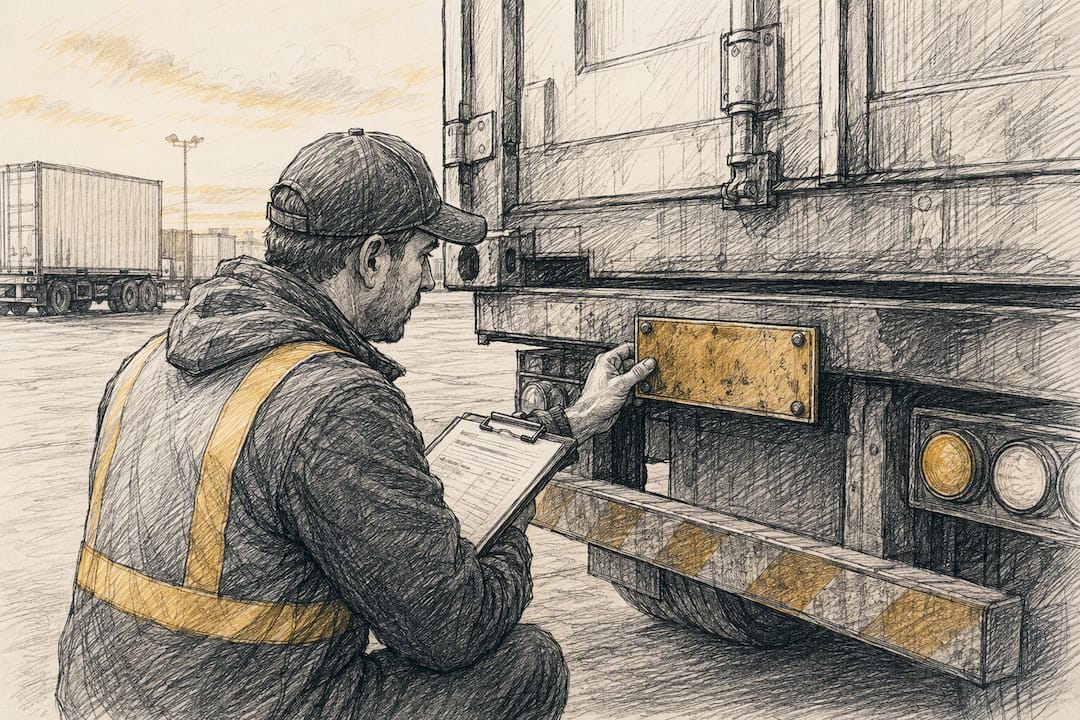
Fleet capability matters as much as scheduling. You need confirmation the haulier runs 20ft and 40ft skeletal trailers, has reefer units with working power connections, holds ADR approval if you’re moving hazardous goods, and can source overweight-rated combinations when your cargo exceeds standard limits.
Pro Tip: Ask for the registration number of the actual trailer assigned to your job, not just a generic fleet list. It tells you whether the haulier has genuinely allocated capacity or is still sourcing it.
Which UK ports suit your export route?
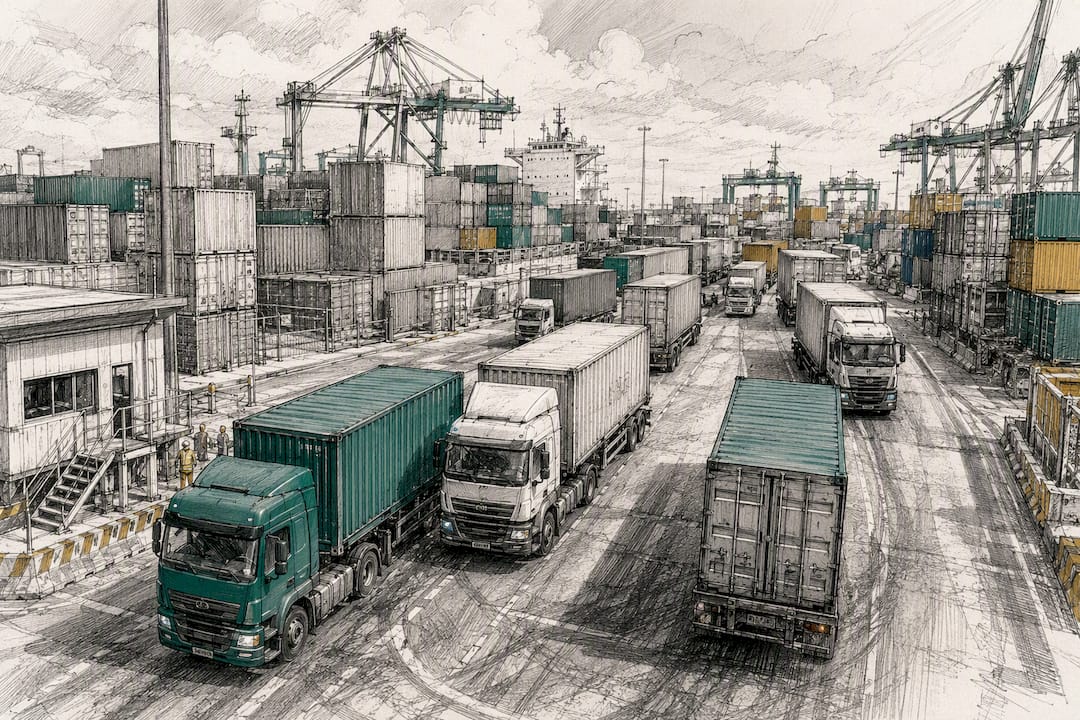
Port choice shapes both cost and lead time, and the busiest UK ports for containerised export sit specifically where deep-sea, short-sea and short-transit traffic converge, as detailed in this UK freight shipping guide: what you need to know.
- Felixstowe — the UK’s largest container port, best suited to deep-sea services to Asia and the Americas
- Southampton — strong short-transit options and useful when balancing deep-sea capacity against turnaround speed
- Dover and Holyhead — short-sea ferry routes ideal for time-sensitive European movements
- Teesport — a practical choice for exporters based in the north-east, avoiding the drive south
Around 85% of the UK’s international freight by weight moves by sea, which means port throughput has an outsized effect on how quickly your container actually sails. GVMS and GMR references also change what “on time” means: at some ports the export declaration must exist before the goods leave your site, while others allow an “arrived” declaration closer to loading. Get this wrong and you’re stuck at the border, not the quay.
Congestion and vessel schedule changes ripple straight through to haulage pricing and lead time, particularly during seasonal peaks when everyone is chasing the same slots.
Handling reefers, hazardous goods and oversized loads

Specialist cargo adds steps most standard bookings skip entirely. Reefers need confirmed power availability at the port, a clear plug-in window during the road leg, and someone actually monitoring temperature rather than assuming the unit is holding.
Hazardous goods carry their own layer of compliance:
- ADR classification confirmed before the job is booked, not after the truck arrives
- Driver and vehicle ADR approvals checked, along with correct placarding
- Full documentation matching the declared classification, ready for inspection
Overweight or oversized containers need route permits arranged in advance, the right vehicle combination sourced early, and port or route confirmation locked down before departure, since not every terminal handles abnormal loads the same way.
The compliance checklist every exporter needs
Get the documentation wrong and the container sits, regardless of how good your haulier is. Work through this in order:
- Register for a GB EORI number before anything else — it’s a prerequisite for every export declaration you’ll make
- Confirm the correct commodity code for your goods, since this drives duties, licences and declaration accuracy
- Check your port’s declaration timing. Containerised cargo typically needs 24 hours’ notice before loading, though some ports accept declarations closer to departure for non-containerised freight, sometimes as little as two hours
- Match your GMR to the correct MRN and LRN references so GVMS doesn’t flag the movement at the border
- Hold the right transport documents for the road leg — a CMR note, valid operator licence, driver CPC, and customs seal approval where the load requires it
GOV.UK’s step-by-step guide to international road haulage covers operator licences, vehicle approvals and GVMS use in detail. If your commodity codes or licensing requirements are genuinely unclear, appoint a customs representative rather than guessing. A rejected declaration costs far more in delay than the representative’s fee.
What drives the cost of export container haulage?
Price rarely comes from one factor alone. It’s usually a stack of several:
- Distance between your site and the departure port
- Port choice, since some terminals carry higher congestion surcharges than others
- Container size and any specialised handling (reefer power, ADR, overweight permits)
- Waiting time at the depot or port, plus demurrage and detention exposure if the container overstays
- Seasonal peaks, when demand for the same slots pushes rates up across the board
Short-haul movements to a nearby port typically run same-day to next-day. Longer cross-country moves, or bookings during peak congestion, often need three to five days of lead time to guarantee a slot rather than hope for one. Buying flexible slots costs slightly more but absorbs the kind of yard delay that turns a cheap booking into an expensive one. Poor paperwork is the quiet cost driver here: a rejected declaration or missing MRN doesn’t just delay the container, it often triggers detention charges that dwarf the original haulage rate. Full pricing examples for different container sizes and routes are worth reviewing separately, particularly if you’re benchmarking current UK haulage rates against your existing contracts.
How do you vet a haulier or booking platform?
Run every prospective haulier or platform through the same short list of criteria before you commit a job to them.
- Port experience — ask specifically about your departure port, not general coverage claims
- Specialist capability — confirm ADR and reefer competence with evidence, not assurance
- Paperwork handling — find out who actually chases the CMR note and customs seal approval
- Track and trace — ask how you’ll know where the container is without phoning someone
- Insurance and financial standing — request a current certificate, not a promise to send one
Ask for the operator licence number directly, and check whether the haulier can demonstrate DVSA Earned Recognition or an equivalent compliance record. Operators with a strong compliance history tend to face fewer roadside inspections and move more predictably through ports, which matters when your slot is tight.
Pro Tip: A haulier who can’t produce a sample insurance certificate within the hour is telling you something about how their admin runs generally, not just for this job.
Red flags worth walking away from: no fixed escalation contact, reluctance to confirm trailer type in writing, or vague answers about which ports they actually cover.
Daily checks that prevent export delays
Most delays trace back to something small that nobody checked. Build these into a standing routine rather than a one-off review.
- Before movement: confirm container condition, seal numbers, accurate paperwork, and correct exporter contact details on file
- On the day: verify the driver holds the right documents, the port slot is still confirmed, and the chassis is ready to go
- For contingency: keep an alternative port in mind, hold flexible slots where budget allows, and know exactly who to call at the haulier if something slips
Port congestion tends to hit hardest when you’ve made no contingency plan at all, so having a fallback route ready before you need it is cheaper than scrambling once a vessel is delayed.
Why book through an AI-assisted, human-backed platform?
Haulier.AI connects freight forwarders, importers and logistics teams directly with vetted UK hauliers through a transport desk that keeps quoting, updates and paperwork tracking visible in one place. Hauliers stay in control of their own rates and can reject jobs that don’t suit their fleet or route, which keeps pricing genuinely competitive rather than forced.
The platform’s core advantage isn’t speed alone. It’s that missed updates and paperwork delays, the two things that quietly wreck export timelines, get tracked automatically instead of chased by phone.
Practical benefits for exporters:
- Faster access to available capacity at the ports you actually use
- Fewer missed updates because status changes are visible, not buried in email threads
- Paperwork tracked against the booking, reducing the scramble when a declaration deadline approaches
You can see how the matching and quoting process works in more detail before requesting your first job.
Why the standard export haulage advice misses the point
Most guides to export container haulage treat compliance and booking as separate problems: get your EORI sorted, then separately go and find a truck. That split is where delays actually happen. A haulier who’s brilliant at moving containers but disconnected from your paperwork status is just as risky as one who’s compliant but can’t get you a slot at Felixstowe during a congestion spike.
The conventional advice also underrates how much port-side timing rules vary. Treating every UK port as though it follows the same declaration window is a common and costly assumption, one that catches out experienced logistics managers, not just newcomers.
What the evidence in this guide actually supports is combining the two: pick a haulier or platform that handles paperwork visibility and port matching as one process, not two. That’s the operational gap Haulier’s model is built to close, and it’s worth prioritising over chasing the cheapest quoted rate. A container that sits in detention because of a missed MRN reference costs more than the saving ever will.
— Vytautas
Book export container haulage without the admin chase
Haulier is the alternative to juggling multiple haulier contacts and spreadsheet-tracked paperwork for export container haulage across the UK. Instead of phoning around for capacity and chasing status updates by email, you get one transport desk that matches your job to available hauliers at your departure port and keeps every update, seal number and declaration status visible in one thread.
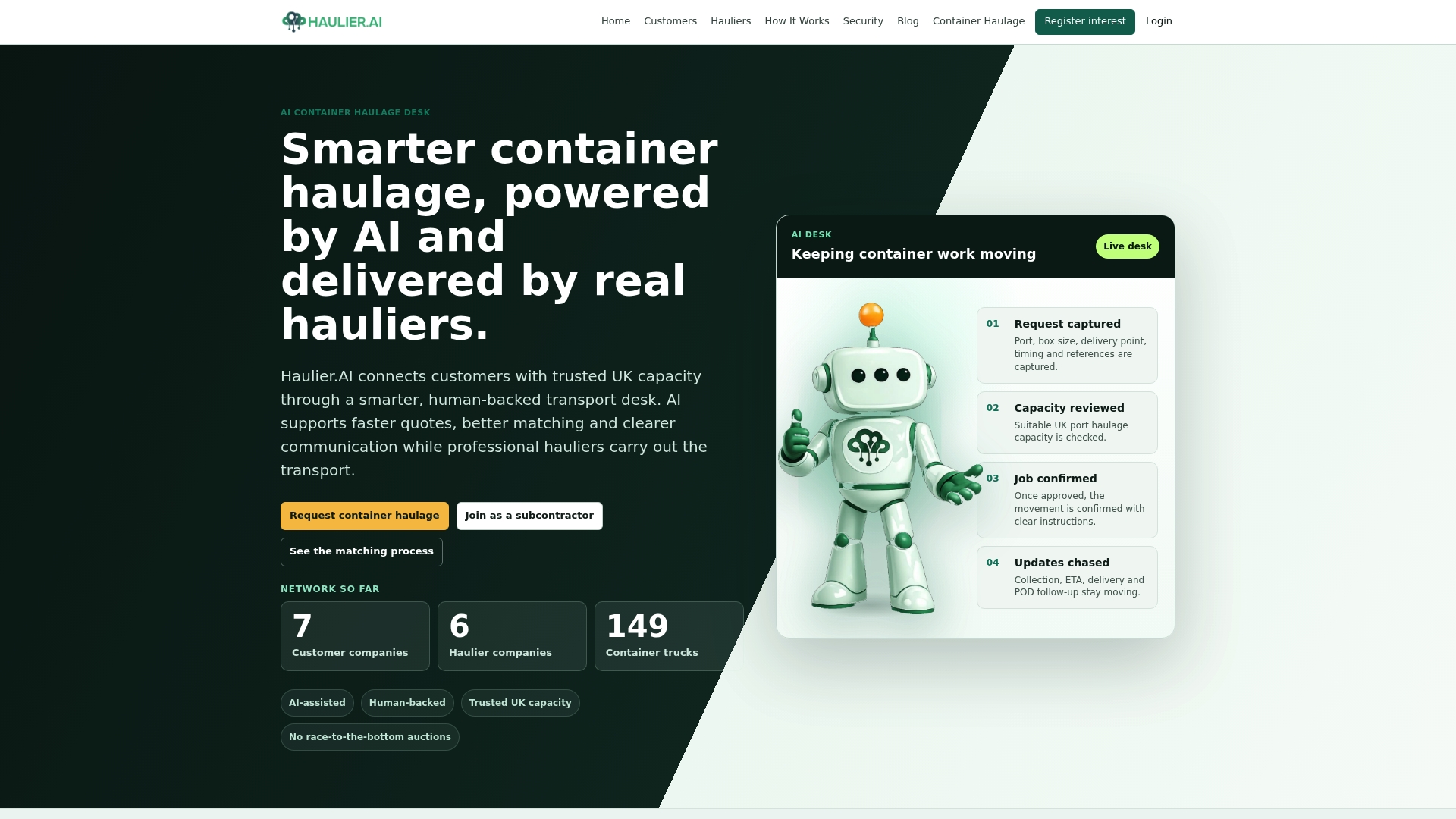
Hauliers on the platform set their own rates and choose which jobs suit their fleet, so pricing stays competitive rather than inflated by middlemen. Whether you’re moving a routine 40ft box through Southampton or need reefer capacity at short notice, the matching process works the same way: submit the job, review available capacity, confirm the booking. If you’re based near the north-east, Haulier.AI also covers Teesport container haulage directly.
Request a container haulage quote now and see what capacity is available for your next export move.
Sources
FAQ
How much does it cost to transport a container within the UK?
Cost depends on distance, container size, port choice and any specialised handling, with short-haul moves generally cheaper than long cross-country runs; a full pricing breakdown by route gives a clearer benchmark than a single average figure.
How much does it cost to transport a 40ft container?
A 40ft container typically costs more to move than a 20ft box due to trailer requirements and weight limits, but the exact rate still depends heavily on origin distance, port and any reefer or ADR handling needed.
Who is the biggest haulage firm in the UK?
The UK haulage sector includes several large national operators, but no single firm dominates export container haulage specifically. Platforms such as Haulier.AI instead connect exporters with a network of vetted regional and national hauliers matched to the job.
What are the top container shipping companies in the UK?
Major UK ports including Felixstowe, Southampton, Dover and Teesport handle the bulk of containerised export traffic, with shipping lines and hauliers operating alongside them rather than a single dominant company controlling export container haulage.
When must I submit an export declaration for a container?
Containerised cargo generally requires a declaration at least 24 hours before loading, though some ports have different timing rules depending on whether they use arrived or departed declaration processes.