
Container haulage article
Choosing cross-border transport without more admin
A practical guide to choosing cross-border transport companies for UK freight, customs handovers, port work, pricing, ETA updates and POD control.
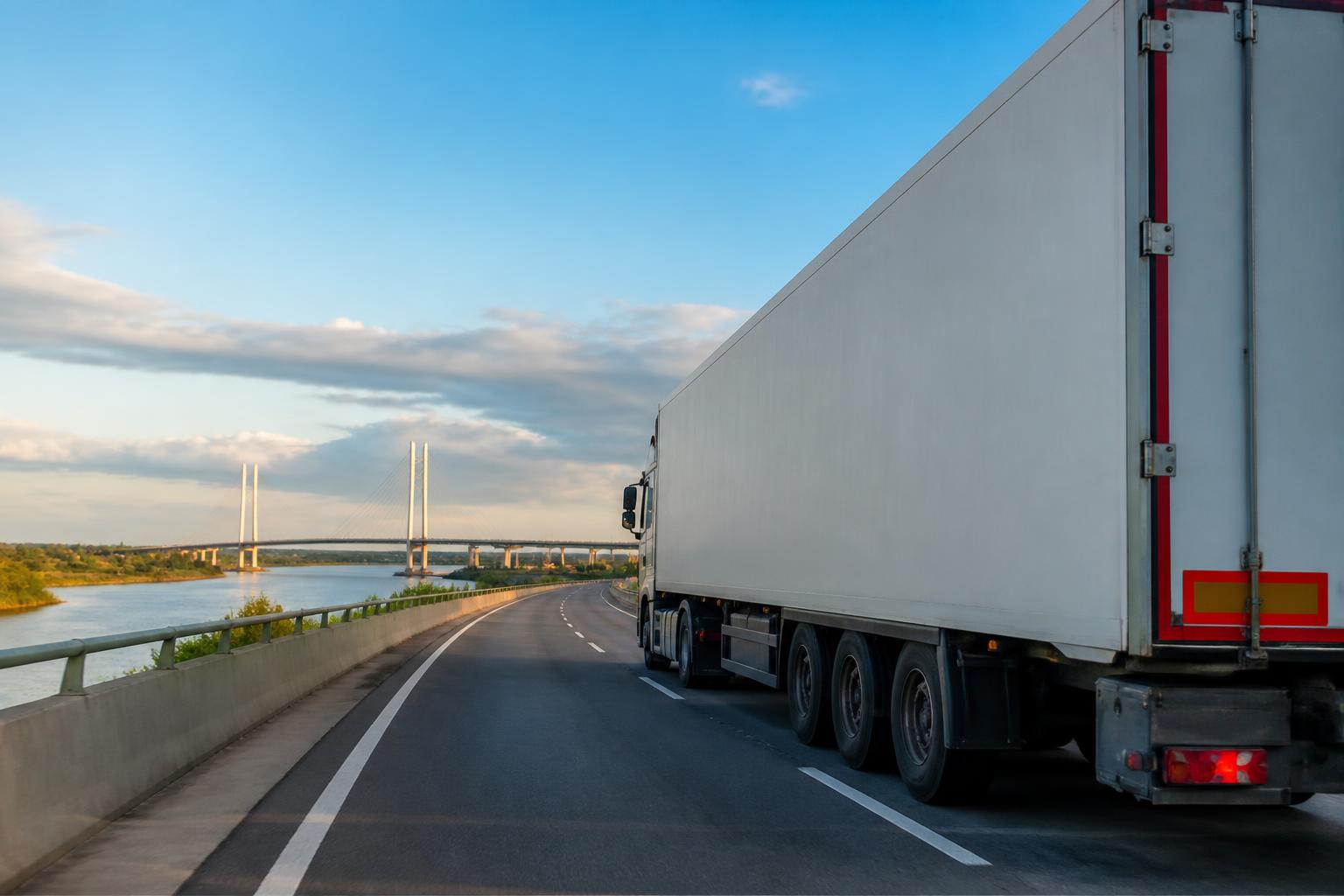
Choosing the right partner for international road freight is less about who can physically move a trailer from A to B, and more about who can keep the whole movement under control without creating extra office work at your end. For UK shippers, that means booking capacity, lining up collections, checking customs responsibility, managing timing around ports and ferries, and making sure the right documents are in the right hands at the right time.
That is why businesses often start looking at cross border transport companies when the real problem is not only transport, but admin. If your team is spending too much time calling around, chasing updates, matching quotes, and sorting exceptions, you need a process that handles the movement and the handovers around it. That is exactly where a structured transport desk helps.
What cross-border transport companies actually do
A haulier can move a load internationally. A proper cross-border operation manages the points where things usually go wrong.
For a UK business, that normally includes:
- matching the job to the right vehicle type and lane
- confirming whether the work is part-load or full-load
- checking collection and delivery constraints
- making sure customs responsibility is clear
- coordinating timings with depots, ports, warehouses or shipping lines
- handling status updates and exception reporting
- returning POD promptly after delivery
That sounds straightforward until a shipment crosses several operational boundaries. A trailer may be collected in the Midlands, taken to a port, linked to a sailing or onward movement, cleared through customs, then delivered inland in another country. At each stage, someone needs to know who is responsible, what the cut-off is, and which document is still outstanding.
This is the practical difference between simply booking international freight and managing a cross-border movement properly. The freight itself is only one part. The rest is handover control.
For UK shippers, this matters more than it once did. Before Brexit, many European road movements were operationally simpler because customs formalities within the EU single market were not part of the normal transport flow. Now, even routine traffic can involve extra checks, document dependencies and timing risk. A missed declaration reference or wrong commodity detail can affect collection, port entry or delivery timing.
This is why experienced transport teams do not judge providers only on whether they “cover Europe”. They look at whether the operator or desk can manage the route in practice, with proper communication and realistic control of the paperwork chain.
When a UK business needs one
Most businesses do not start with a formal transport desk. They start with known hauliers, a spreadsheet, some shared inboxes and a lot of phone calls. That can work for a while. It usually stops working when volumes, urgency or complexity increase.
The most common trigger is urgent work. If a customer moves a booking forward, a supplier misses a slot, or a delivery becomes time critical, internal teams often end up ringing round for cover. That may be manageable once in a while. It becomes expensive in staff time when it happens every week.
Another common trigger is awkward lanes. Standard trunk routes are easier to place than unusual origins, remote deliveries, specialist site restrictions or jobs that combine domestic positioning with an international leg. The more awkward the lane, the less effective manual calling becomes.
Changing volume is another reason. Some businesses need regular support every day. Others have peaks around production, imports, seasonal stock or shipping schedules. If your volume swings between quiet periods and sudden spikes, fixed manual processes struggle. On busy days, the team is overloaded. On quieter days, you still need access to capacity without spending half the morning sourcing it.
Port-related work creates its own pressure. Jobs through Felixstowe, London Gateway, Southampton, Tilbury, Liverpool, Teesport or Immingham often involve timing sensitivity, container availability, VBS or terminal-related constraints, driver waiting risk, and close coordination between the road move and the port process. That is especially true with container haulage, where collection references, cut-offs and port access discipline matter as much as the road leg itself.
A lot of businesses also reach the point where the issue is not finding any haulier, but finding the right one quickly and consistently. If your team is comparing email replies, checking who covers which area, and trying to remember who can do port work, curtain-siders, box trailers or urgent same-day recovery, you are already spending too much admin time on allocation.
That is often the moment to put a proper process in place. We covered that in more detail in our guide to how transport desks cut haulage admin and missed cover.
How to assess coverage, equipment and lane fit
When reviewing cross border transport companies, start with lane fit, not marketing claims. “National and European coverage” tells you very little on its own. What matters is whether the provider can actually support your regular lanes, your awkward jobs, and your equipment needs.
Begin with the route itself. Ask:
- Which UK collection areas do they cover reliably?
- Which destination countries or regions do they handle regularly?
- Do they support direct road moves, port-linked work, or both?
- Can they manage recurring lanes and one-off jobs?
Then check equipment. The right provider for palletised groupage is not automatically the right one for heavier machinery, port containers or time-critical trailer work. Be specific about:
- curtain-sided trailers
- box trailers
- skeletal trailers for container haulage
- whether the work is part-load or full-load
- whether there are weight, height or site access issues
- whether timed bookings or waiting restrictions apply
For many shippers, the practical split is between standard road freight and port-connected container work. If your operation involves imports or exports through major UK ports, you need to know whether the provider understands terminal processes and the realities of UK port haulage. Coverage around Felixstowe is not the same as coverage around Southampton or Liverpool. The same applies to London Gateway, Tilbury, Teesport and Immingham. Operators may be strong in one port cluster and weaker in another.
That is why lane fit should include port fit. If your containers move through the east coast ports, ask who is used to working those terminals. If your work is more mixed, with domestic legs feeding into international movements, ask how that handover is managed.
For businesses moving containers, our container haulage support for port-linked road moves explains where this tends to matter most, and our page on container haulage around Felixstowe shows the kind of port-specific fit buyers should be checking.
Part-load versus full-load also needs a clear answer early on. A provider may be efficient on full-load work but less suitable for smaller consignments that need consolidation, shared capacity or tighter coordination on collection windows. If your weekly pattern includes both, do not assume one setup will suit everything.
Finally, check how jobs are actually allocated. A good process should not depend on one person remembering who might be free. It should organise requests, present suitable options, and keep commercial decisions clear. We set out that approach in our article on choosing a transport desk without losing rate control.
What changed after Brexit
Brexit changed the operational shape of UK cross-border freight. The trailer still moves, but more has to happen around it.
For goods moving between Great Britain and the EU, customs formalities now sit between collection and delivery in a way they did not before. That means transport planning has to account for customs entries, references, party responsibility and document readiness. If those are unclear, the vehicle can be delayed before departure, at the port, or before final delivery.
In practical terms, the main changes are these.
First, lead times need more discipline. A movement may still run quickly when everything is ready, but “everything is ready” now includes customs data, invoice accuracy, commodity coding from the shipper or customs agent, and any border references needed for the movement. Transport can no longer be planned in isolation from document readiness.
Second, responsibility needs to be explicit. Who is acting as exporter or importer. Who is appointing the customs agent. Who is providing commodity information. Who is responsible for transit, if used. Who is checking whether the goods can move under the agreed Incoterms. If those points are left vague, the transport booking may be in place but the load is still not truly ready.
Third, VAT-related paperwork matters more to the flow than many non-transport teams expect. The transport operator is not replacing the accountant or customs intermediary, but the movement depends on commercial documents being right. Invoice details, party details and supporting references affect whether declarations can be completed properly. In the UK, the treatment of import VAT and related accounting depends on the importer’s setup and the customs process being used. That is not identical to every EU member state, so where a rule differs between the UK and the EU generally, the UK importer’s own process must be checked rather than assumed.
Fourth, handover timing is tighter. Before Brexit, a missed commercial detail might still be inconvenient without stopping the movement. Now, a missing declaration reference or incorrect data can prevent the next stage from happening at all.
This does not mean every job is difficult. It means someone has to coordinate the transport around the customs reality. For UK businesses, that usually means making sure the transport desk, the shipper, the consignee and the customs party all know where responsibility starts and ends.
How pricing, ETA and POD should be handled
A good transport process should make pricing, ETA updates and POD return easier, not harder.
On pricing, buyers should expect a quote that reflects the actual lane, equipment, urgency and operational risk of the job. If a movement involves port waiting exposure, awkward collection timing, out of gauge access, or a last-minute requirement, the rate should reflect that. The cheapest number is often the least reliable number if the job has been priced without understanding the movement properly.
This is one reason race-to-the-bottom auction pricing causes problems. It can create a false market on paper while shifting the real risk into service failure, late rejection, poor communication or rate disputes later. Serious operators need room to price work according to the realities of the lane.
A proper quote process should therefore include:
- clear collection and delivery postcodes
- date and time requirements
- load type and weight
- trailer or container specification
- port details where relevant
- whether the job is part-load or full-load
- any customs or document dependency affecting release or delivery
On ETA, buyers should expect realistic visibility, not theatre. A useful ETA is one based on the actual stage of the movement, known cut-offs and live operational updates. “On time” is not enough if nobody can explain whether the vehicle has collected, cleared the port, reached the terminal, or been delayed by a missing reference.
Good ETA handling means reporting by exception. If the job is running as planned, the update should confirm that clearly. If something changes, the issue, impact and next step should be stated plainly. Operations teams do not need noise. They need actionable updates.
POD handling should be equally disciplined. Once delivery is complete, POD should be returned promptly and in a usable form. For some customers that means a signed delivery note. For others it may include a CMR, a container interchange confirmation, or site-specific receipt paperwork. Whatever the document set, the expectation should be agreed in advance and returned without repeated chasing.
Exception management is where providers really show their value. Delays happen. Collections fail. Ports get congested. Customers move slots. The difference between a manageable issue and a day lost in admin is whether someone takes ownership, communicates early, and keeps the next decision moving.
How Haulier.AI fits into the process
At Haulier.AI, we are not trying to replace transport operators or strip away their commercial control. We organise the front end of the process so buyers can get suitable options for UK haulage and container haulage without spending the day on calls, inbox chasing and spreadsheet matching.
Our model is AI-assisted and human-backed. That matters because transport is operational, not theoretical. Requests need to be captured properly, checked for missing detail, and directed toward suitable operators. But they also need human judgement, especially when the job is urgent, awkward, port-related or commercially sensitive.
In practice, we help structure the work that usually creates admin pressure:
- taking in transport requests clearly
- organising quote handling
- matching jobs to relevant operators
- supporting UK haulage coverage, including container-related work
- keeping communication orderly when timings or requirements change
For buyers, that means less time sourcing cover manually. For hauliers, it means access to relevant subcontract opportunities without being forced into a blind auction model that erodes margin and service quality. Operators keep commercial control over whether to quote and how to price the work.
That point is important. A transport desk should improve access and organisation, not turn every movement into a lowest-price contest. We are set up to help businesses find workable cover while respecting the realities of the transport market.
This is particularly useful where work does not arrive in a neat, predictable pattern. If you have last-minute jobs, changing weekly volume, awkward lanes, or port-linked movements that need careful handling, an organised desk reduces friction on both sides. The customer gets a cleaner request and quote process. The haulier gets clearer job detail and a fairer commercial setup.
Cross-border freight will never be admin-free. There are too many handovers, dependencies and timing points for that. But it can be far more controlled than the usual mix of phone calls, inbox searches and rushed quote comparisons. If the aim is to move freight internationally without creating more office work, the answer is not more chasing. It is a better process. That is where Haulier.AI fits.
What is the difference between a cross-border transport company and a freight forwarder?
A cross-border transport company focuses on the physical road movement and its handovers. A freight forwarder may manage a wider shipment scope, including booking, consolidation and multi-mode coordination.
Do cross-border transport companies handle customs paperwork?
Some do, some only work to the instructions provided. Always check who is responsible for customs entries, document checks, border references and any missing information before the vehicle is dispatched.
Can they cover both part-load and full-load work?
Yes, but not every operator is equally strong in both. Ask about regular lanes, trailer availability, cut-off times and whether the job is better suited to part-load or full-load planning.
Why are ETA updates so important on cross-border jobs?
Cross-border movements involve more handovers and more points of delay. Good ETA updates help warehouses, customers and planners react early instead of discovering problems after a missed delivery slot.
Is port work part of cross-border transport?
Often yes. Many UK movements connect with import or export flows through ports such as Felixstowe, Tilbury, Liverpool or Immingham, especially where container haulage is involved.
How can Haulier.AI help without replacing transport operators?
Haulier.AI helps organise requests, quotes and communication through an AI-assisted, human-backed desk. It supports matching and admin handling, while transport operators keep operational and commercial control.