
Container haulage article
How UK teams can handle awkward haulage requests better
A practical comparison of ways to handle specialist UK haulage requests, from manual sourcing to AI-assisted, human-backed transport desk support.
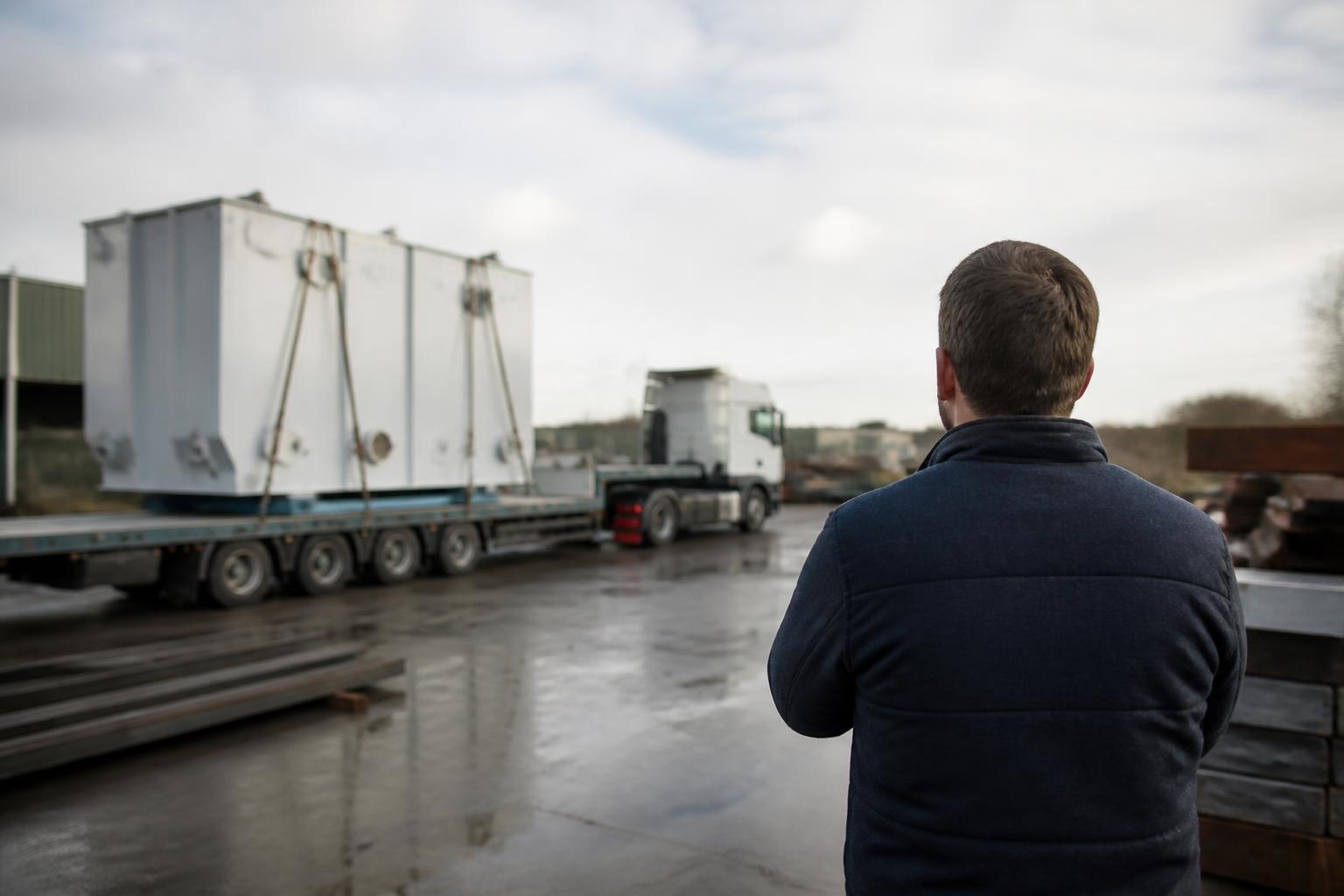
Most awkward haulage jobs do not fail because nobody wants the work. They fail because the request arrives incomplete, gets priced on assumptions, changes halfway through the day, or sits between too many inboxes. UK teams handle these jobs better when they treat them as an operational process, not just a buying exercise. That means capturing the right detail at the start, matching the load to the right operator type, keeping one communication thread, and making sure someone is accountable when the plan changes.
For many businesses, the pressure point is not standard traffic. It is the overflow load when core suppliers are full, the late container release, the odd collection point, the part-load with awkward dimensions, or the urgent full-load that appears after cut-off. In those moments, specialist haulage request handling in the UK needs structure, fast judgement, and human follow-through.
What makes a haulage request specialist in UK operations
A request becomes specialist when it falls outside normal traffic patterns or standard booking rules. In practice, that usually means one or more of the following.
First, the load itself is awkward. It may be over-length, unusually heavy for a general trailer plan, unstable, high value, difficult to secure, or mixed with handling constraints at either end. Even where the movement does not require an abnormal load permit, it can still need extra checks on equipment, access, site rules, or delivery timing.
Second, the collection or delivery environment is awkward. Ports are the obvious example. Container haulage through Felixstowe, London Gateway, Southampton, Tilbury, Liverpool, Teesport, or Immingham often brings variables that do not exist on a simple warehouse to warehouse run. Release references, VBS or slot timing, quay restrictions, waiting time exposure, demurrage and detention risk, customs status, and the practical question of whether the box can actually be collected that day all matter.
Third, the timing is awkward. Last-minute requests, same-day coverage gaps, late changes to loading windows, and urgent redeliveries all increase the handling effort. A haulier cannot sensibly commit if the booking says “ASAP” but the load is not actually ready, the contact is unreachable, or the site closes in two hours.
Fourth, the commercial setup is awkward. Some jobs are hard to compare because one quote includes waiting time assumptions, another excludes them, one is based on a round trip, another on one way mileage, and another expects surcharges if the job rolls. Without proper quote normalisation, buyers can think they are comparing rates when they are really comparing different service definitions.
That is why specialist work creates extra effort for both sides. Buyers spend time clarifying details, chasing responses, and checking whether the quote they received actually covers the real job. Hauliers spend time pricing uncertainty, asking for missing information, and protecting themselves against avoidable cost exposure. If the request is poorly formed, everybody works harder and nobody is fully confident in the outcome.
Manual sourcing versus digital platforms versus a managed desk
There are three common ways businesses deal with awkward transport requests in UK haulage. Each has a place, but each also has clear limits.
Manual sourcing is still common. The traffic team phones known hauliers, emails a request round, updates a spreadsheet, and waits for replies. This works reasonably well when the request is clear, the operator base is trusted, and the volume is low enough for experienced people to keep control in their heads. It also preserves direct relationships, which many buyers and hauliers value.
The weakness is speed and consistency. If five people are calling ten operators each, details drift. One supplier hears the load is forklift offload, another hears crane offload. One gets the post code, another gets only the town. Then the team has to compare quotes that are based on different assumptions. Manual sourcing also depends heavily on who is on shift and who knows whom. During peak periods or staff absence, it can break quickly.
Open digital platforms promise reach and speed. They can expose a request to a wide pool of operators, which helps when normal suppliers are full or when a lane is unusual. For simple work, that can be useful. The issue comes when the platform behaves like an auction board. If operators are pushed into a race to the bottom, buyers may get a low headline rate but weak commitment, poor fit, or avoidable subcontracting chains. The cheapest quote is often the quote based on the fewest real assumptions checked.
This is where a managed desk model can work better for specialist haulage request handling in the UK. An AI-assisted, human-backed desk sits between pure manual traffic management and a self-serve marketplace. The useful part is not just technology. It is the combination of organised request capture, structured quote handling, and human oversight when the request is incomplete or changing. That is especially relevant for jobs involving ports, awkward site conditions, late availability, or changing daily volume.
A managed desk should not remove commercial control from hauliers or buyers. In a good model, operators can decide what work fits their fleet, area, and day rate expectations. Buyers get a cleaner comparison and one operational thread. Haulier.AI is positioned around that middle ground. It is not trying to turn every movement into an auction. It is trying to make request handling more organised while keeping the judgement calls where they belong.
Where delays and missed details usually happen
Most service failures on awkward jobs are predictable. They happen at the same points, over and over.
The first failure point is request capture. If the original request misses key data, every later stage suffers. Common gaps include full collection and delivery addresses, site contact names and numbers, loading method, weight, dimensions, whether the load is stackable, whether it is a part-load or full-load requirement, and whether timed delivery is strict or preferred. For container haulage, add container number, size, whether the box is import or export, port, release status, cut-off or availability, and whether customs clearance is complete. Since Brexit, cross-border and port-related paperwork checks have become more operationally significant for UK teams, even where the physical movement is domestic and the issue is simply whether the container can lawfully or practically move.
The second failure point is quote comparison. Buyers often receive prices that look comparable but are not. One quote may include waiting time up to a stated threshold, another may charge from arrival, another may assume immediate tip and turn. One may price for a curtainsider, another for a skeletal trailer or box trailer. If the buyer does not line up the assumptions, the selected quote can become the most expensive once the real job unfolds.
The third failure point is ETA management. Many businesses still rely on ad hoc updates by phone, especially on subcontract moves. That is workable until the driver is delayed at a port, the delivery site asks for a revised slot, and three different people start calling for updates. If there is no single owner of the communication flow, the customer gets conflicting ETAs and the operator gets interrupted while trying to recover the job.
The fourth failure point is POD return. In UK haulage, the job does not end at wheels stopped. Finance, customer service, and claims teams often need POD quickly. Delays happen when nobody has agreed the format, who sends it, and by when. A blurred photo sent on WhatsApp may technically prove delivery, but it may not satisfy the customer’s process or support prompt invoicing.
The fifth failure point is exception handling. A box is not released. The site refuses the vehicle due to access. The load is larger than declared. The delivery point asks for a different booking window. A standard booking process usually has no room for these exceptions, so the job stalls while people argue over liability and extra cost. Good specialist handling means deciding fast who is informed, who approves the variation, and what happens next.
How to compare options without losing commercial control
Buyers should compare specialist haulage options on more than the rate. The first check is the pricing method. Ask what the price actually covers. Is it a fixed movement rate based on the details supplied, or an estimated rate subject to waiting time, redelivery, rebooking, congestion, or out-of-hours charges? For port work, clarify whether the quote assumes a live release and whether wasted trip exposure is included or excluded. If there is a likely extra, it is better to surface it before booking than to dispute it afterwards.
The second check is subcontract fit. Not every operator is right for every awkward movement. The right question is not only “can someone cover this?” but “who is actually suitable?” For a port box, that means relevant port familiarity, the right equipment, and confidence with the process at the specific location. For a difficult part-load, it means realistic consolidation capability and communication discipline. For urgent full-load work, it means actual vehicle availability, not hopeful availability.
The third check is communication flow. Decide whether there will be one desk handling all updates or whether the buyer will speak directly to multiple parties. Direct contact can be useful, but on specialist jobs it often creates crossed wires. One message path, with clear ownership of ETA updates, site issues, and proof of delivery, usually reduces noise and helps the operator stay focused on execution.
The fourth check is human oversight. Automation can help sort requests, match likely operators, and keep status moving. It cannot reliably resolve ambiguity on its own. If the request says “urgent container from port”, someone still needs to verify release status, collection constraints, and likely cut-off risk. If the buyer says “any trailer fine”, someone still needs to ask whether that is really true. This is where an AI-assisted process needs to remain human-backed.
Hauliers should make similar checks before accepting subcontract work. Confirm who the contracting party is, what the payment terms are, what documents are needed, and whether the booked rate reflects the real job. If there are customs, port, or site compliance steps, check who owns each step. If VAT treatment or invoicing detail matters because of the job structure, settle that before the vehicle moves, not after the POD arrives.
What good handling looks like for ports, awkward loads and last-minute gaps
Good handling starts with a disciplined intake. For container haulage, the desk should capture the port, container number, size, collection reference, availability status, customs or release status where relevant, delivery address, booking constraints, and whether the move is import, export, empty return, or repositioning. It should also capture practical realities such as whether the delivery site can accept the container type and whether unloading equipment is available. If the movement is through container movements via Felixstowe, port collections and deliveries around London Gateway, or UK container haulage support across major ports, local process familiarity matters because the operational rhythm is not identical from port to port.
For awkward non-container work, good handling means writing the brief as if the operator has never seen the job before. State weight, dimensions, load type, packaging, securing considerations, loading method, site restrictions, and realistic time windows. If the load is a part-load, say whether it can share deck space with other freight and what handling risks prevent that. If it is a full-load, say whether the trailer type is fixed or flexible.
For last-minute gaps, speed matters, but disciplined speed matters more. The team should avoid sending a half-formed request to twenty operators. It is usually faster overall to spend a few minutes fixing the brief, then source against a clean requirement. That reduces the number of wasted calls, improves quote quality, and lowers the risk of a booked vehicle arriving to the wrong conditions.
Good handling also means honest status management. If a port box is not yet released, say so. If the site routinely causes waiting time, say so. If the delivery slot is likely to move, say so. Operators can plan around known risk far better than unknown risk. The same applies to buyers. If volume is changing week by week, the desk should know whether the business needs overflow cover, regular subcontract support, or just a way to handle exceptions without rebuilding the whole transport plan.
For UK teams around the main ports, practical discipline matters. Felixstowe, London Gateway, Southampton, Tilbury, Liverpool, Teesport, and Immingham each create their own patterns of congestion, booking pressure, and local operator availability. A generic transport buying process often misses those local realities. A specialist process recognises that container haulage is not just another collection and delivery job with a box in the middle.
The best result is not perfect automation or endless manual control. It is a process that captures the real job, finds a suitable operator, keeps communication in one place, and escalates exceptions early. That is what businesses usually need when volumes change, core suppliers are stretched, or a load falls outside the ordinary. For buyers, that protects service and cost control. For hauliers, it protects margin, fit, and working day quality. And for both sides, it is what better specialist haulage request handling in the UK actually looks like.
What counts as a specialist haulage request?
Usually work that is urgent, awkward, outside normal lanes, port-related, timing-sensitive or hard to match quickly. It may involve container haulage, part-load, full-load or unusual collection and delivery constraints.
Is manual phone-and-email sourcing still workable?
Yes, for stable volumes and known lanes. It becomes harder when teams face last-minute gaps, multiple quote requests, changing ETA information or too many operator checks across spreadsheets and inboxes.
How is Haulier.AI different from an auction platform?
Haulier.AI presents an AI-assisted, human-backed transport desk approach focused on organised request and quote handling. The stated model avoids race-to-the-bottom auction pricing and keeps hauliers' commercial control in view.
Can this help with UK port work?
It is relevant where requests involve container haulage through ports such as Felixstowe, London Gateway, Southampton, Tilbury, Liverpool, Teesport and Immingham, where timing, access and document flow matter.
Does AI remove the need for transport judgement?
No. AI-assisted handling can help organise requests, quotes and updates, but operational judgement still matters for suitability, timing, exceptions, Brexit paperwork points and customer communication.