
Container haulage article
Container haulage that keeps port moves under control
A practical guide to UK shipping container haulage, from port collection and timing to costs, documents, delays and choosing the right operator.
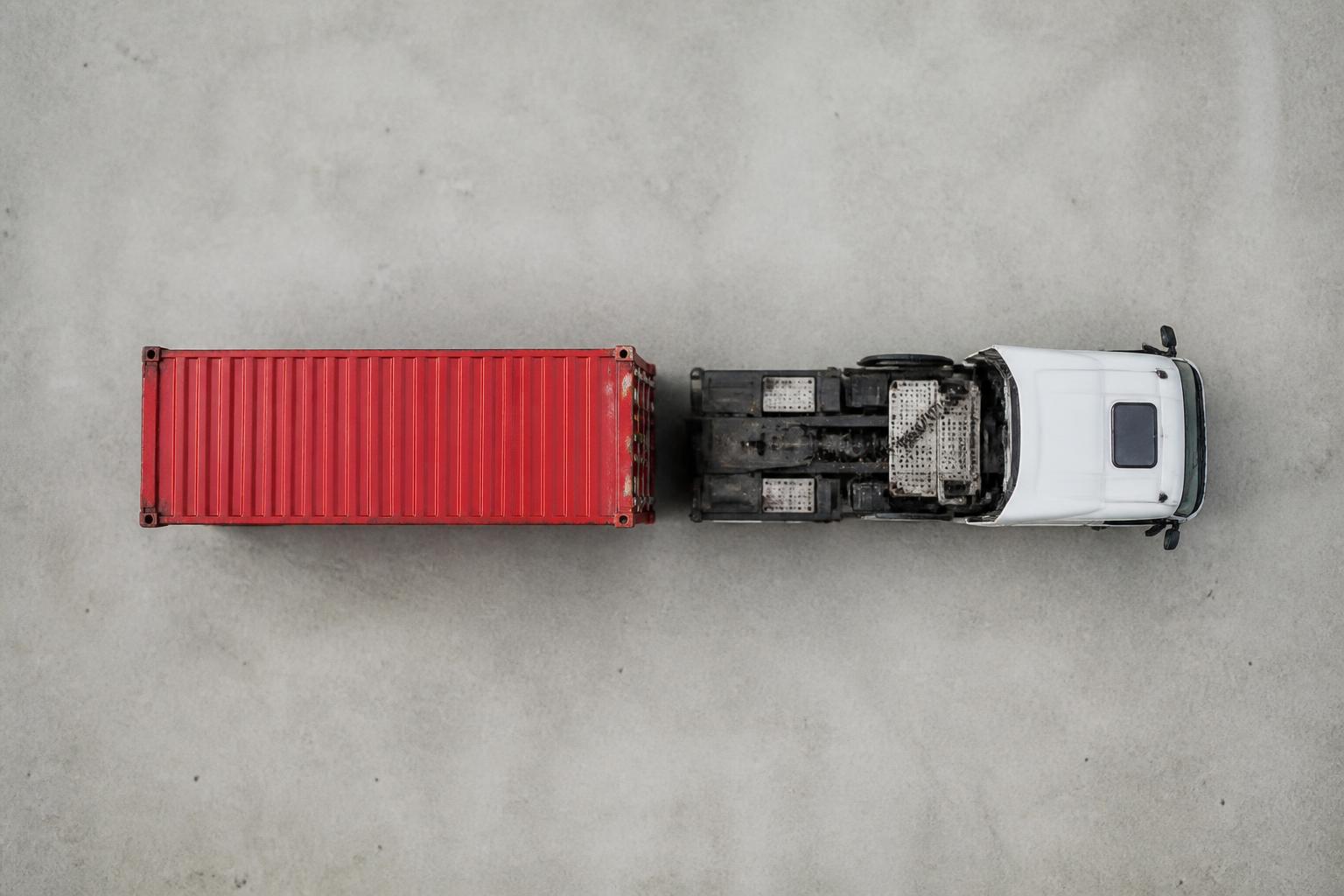
Port work becomes difficult when the movement looks simple on paper but depends on the right references, the right timing and the right vehicle at each step. A container can be available at the quay, but still not be collectable. A delivery slot can be booked, but still fail if the site cannot take the box, the weight is wrong, or the empty return is not clear. That is why shipping container haulage needs tighter control than ordinary road freight.
We handle this by keeping the request, quote and movement process organised from the start. In UK haulage, the difference between a smooth port move and an expensive problem is usually not one dramatic issue. It is the build-up of small operational misses, missing release details, unclear customs status, poor ETA communication, or no plan for the empty return. Good container haulage is about controlling those points before they become delay, storage or wasted mileage.
What shipping container haulage covers in UK haulage
In practical UK terms, shipping container haulage means moving import or export containers by road between a port or inland terminal and the next point in the chain. That usually includes port collections, factory or warehouse deliveries, export drops, empty returns and repositioning moves.
This is different from standard full-load or part-load work. With a normal full-load job, we are usually collecting freight that is ready to load onto a trailer and delivering it to a consignee. With a part-load job, we are fitting smaller consignments into a wider route plan. Container haulage starts with a steel box that belongs to a shipping line, sits inside port and line rules, and carries extra conditions around release, detention, terminal systems, VBS bookings, weight and return location.
A typical import move might start at Felixstowe, London Gateway, Southampton, Tilbury, Liverpool, Teesport or Immingham. The container is collected under a release or collection reference, moved to the delivery point, tipped or live-unloaded, and then either returned empty to the nominated depot or held temporarily if the line allows it. An export move works the other way round. We collect an empty, position it for loading, then return the laden box to the port before the shipping line cut-off.
That is why container work sits in its own operational category inside UK haulage. It is still road transport, but it carries port-specific planning, line compliance and timing pressure that do not apply in the same way to ordinary pallet, full-load or part-load traffic.
If you are moving boxes regularly through the main UK ports, our container haulage support across major UK ports is built around that process rather than treating it as general haulage with a different trailer.
How a container move works from booking to POD
A container move usually starts with the job data, not with the truck. Before we can plan anything properly, we need the container number if available, size, gross weight, collection point, delivery point, shipping line, and the references needed for release or booking. For imports, that often includes the port collection reference and confirmation that customs status allows the box to move. For exports, it includes the export booking details, the port of return and the latest acceptance timing.
Once we have the job, we check whether the movement is operationally possible within the requested window. That means looking at the port, distance, driver hours, vehicle type, site restrictions and whether the empty return can be completed the same day. If the job is urgent, the question is not only whether a vehicle exists, but whether the whole move can be completed without creating avoidable waiting time, missed slots or a failed return.
After planning, the collection stage begins. On an import, the driver attends the port or terminal with the correct details. If the box is grounded, customs-held, not released, or subject to a terminal issue, collection may not happen even if the truck is present. On an export, the driver may first collect an empty container from a depot, position it for loading, and then return the loaded unit to port.
During the move, ETA updates matter because delivery sites often have limited unloading capacity, narrow booking windows or queue-sensitive operations. A realistic ETA is more useful than an optimistic one. If port congestion, traffic or terminal delays affect the run, that needs to be passed on early enough for the receiving site to react.
Delivery is only one stage of the job. For many import moves, the operation is not complete until the empty is returned to the right location. If the line nominates a different depot after delivery, or if the empty return booking changes, that affects time, mileage and equipment planning. The same applies where a tipped import cannot be stripped quickly and the container has to remain on site longer than planned.
POD closes the movement commercially and operationally. In container work, POD may include signed delivery paperwork, site stamps, time records and notes of any exception such as damage, waiting time or refusal. A clear POD matters because disputes often arise over arrival time, unloading delay, container condition or whether the empty was returned within the expected period.
What information operators need before they can quote
Accurate quoting depends on complete job information. If key details are missing, the rate can only be provisional because the real cost drivers are still unknown.
The minimum data usually starts with the basics. We need collection and delivery locations, the date required, the container size, and whether the move is import, export, empty positioning or empty return. A 20ft and a 40ft do not always create the same planning options. A 45ft can introduce further equipment or route constraints.
Weight matters early, not late. Gross container weight affects legal road compliance, route planning and whether a standard skeletal setup is suitable. If the box is heavy, we need that declared before quoting, not when the driver reaches the port. Overweight issues are one of the most common reasons a seemingly straightforward move turns into a failed collection or a replanning exercise.
Port and terminal details are also essential. There is a difference between saying a box is at Southampton and providing the actual terminal, release reference and status. The same applies at Felixstowe, London Gateway, Tilbury, Liverpool, Teesport and Immingham. Port systems, queue patterns and booking arrangements vary, so the quote needs to reflect the real collection point, not just the town name.
We also need timing information. Is this a same-day requirement, a booked slot, a next-day delivery, or a movement with a hard shipping cut-off? For export work, cut-off discipline is critical. Missing the port acceptance window can mean storage, rebooking or a rolled sailing.
Site limits often decide whether the quoted plan is even possible. We need to know opening hours, forklift availability, whether the site can tip a container on the trailer, whether there are weight or height restrictions, whether there is room to manoeuvre, and whether driver PPE or induction is required. A site that takes curtainsiders easily may still be poor for container access.
Customs-related status must be clear. Since Brexit, UK import and export movements can involve different documentary and customs checks from EU general freight. A haulier is not replacing the customs broker, but we still need to know whether the box is customs-cleared, under hold, moving under transit, or waiting on release. If the movement involves ports in Great Britain and cargo subject to border processes, uncertainty here can stop collection entirely.
Commercially, it also helps to know whether waiting time, storage risk, demurrage exposure or timed delivery penalties are likely to arise. Those are not always part of the base haulage rate, but they absolutely affect how the job should be priced and planned.
What affects cost, timing and service reliability
Distance is only one part of the rate. In container haulage, cost and reliability are shaped just as much by time risk as by mileage.
Port congestion is an obvious factor. If terminal access is slow, if booking slots are tight, or if release problems are common on a given movement, the operator has to allow for that risk. A short run from port to consignee can still be harder to service than a longer inland move if the port leg is unstable.
Waiting time is another major factor. Time can be lost at the port, at the delivery site, or at the empty return depot. If a driver spends hours waiting to collect, unload or return, that affects not only that movement but the rest of the day’s plan. In UK haulage, driver hours rules are a hard limit, not a target to argue with after the event. A job that appears simple can become non-compliant if delays push the shift too far.
Equipment affects both cost and availability. Container work generally requires the right skeletal trailer setup, but weight, box size and site conditions may narrow the options. Heavy containers may require specific planning around axle weights and legal payload. Not every available vehicle is suitable just because it can physically pull a box.
Empty return rules often decide whether a rate stays sensible. If the line nominates a nearby depot, the movement may be straightforward. If the empty has to go to a distant location, or if the return instruction changes after delivery, mileage and time increase quickly. For that reason, the cheapest-looking line haul is not always the cheapest completed job.
Timing reliability also depends on cut-offs and booking discipline. Export containers are especially sensitive to missed acceptance windows. Import deliveries can be equally exposed where warehouse booking slots are narrow. If one stage slips, the rest of the chain may need to be rebuilt.
Administrative accuracy matters too. A wrong container number, missing release, or unclear customs status can waste a vehicle movement completely. The road leg then carries cost without producing a completed job.
Where container haulage goes wrong and how to reduce risk
Most failures are preventable if the job is built properly at the start.
Missing references are one of the biggest causes of failed collections. If the collection PIN, release reference or booking details are wrong or incomplete, the driver may reach the port and still be unable to collect. The simple fix is to verify references before dispatch, not while the vehicle is queuing.
Cut-off issues regularly affect export work. A loaded box may be ready, but if the port booking is wrong or the latest acceptance time is missed, the container can miss the intended sailing. Reducing that risk means checking the real cut-off, not relying on an assumed one, and allowing enough margin for traffic, loading delay and terminal hold-ups.
Site access problems are another common failure point. We see jobs where the delivery point is technically correct but operationally unsuitable, low bridges, narrow approaches, no turning space, soft ground or no ability to unload from a skeletal trailer. Asking the right site questions before quoting is far cheaper than recovering a failed delivery later.
Overweight containers create both legal and practical problems. If the declared weight is missing or inaccurate, the vehicle may be unable to move the box legally on UK roads. In some cases the issue only appears at collection, which then leaves everyone trying to rework equipment, route or loading arrangements under pressure. The best control is simple, get the gross weight early and treat it as essential job data.
Communication gaps cause avoidable escalation. A consignee not told the ETA may miss the unloading window. A customer not told about port delay may assume the haulier has gone quiet. An operator not told that the empty must return to a different depot may plan the wrong route. Good container work depends on timely updates between the customer, the haulier and the receiving site.
Customs and document status also need discipline. Since Brexit, some movements that look like ordinary domestic follow-on transport still depend on border process completion before the box can be released. VAT treatment and customs entries are not haulage pricing details in themselves, but they can affect whether the movement is actually ready to happen. Where the UK rule differs from wider EU practice, the operational point is that Great Britain port release and customs readiness must be checked against current UK requirements, not assumed from pre-Brexit habits.
How Haulier.AI supports container haulage without removing human judgement
We built Haulier.AI to make this process more organised, not less accountable. Container work does not benefit from a race-to-the-bottom auction where operators guess at missing detail and then discover the real job after accepting it. It benefits from clear requests, usable information and controlled quote flow.
Our AI-assisted, human-backed transport desk helps structure the request before it reaches the market. That means gathering the operational data that actually affects service, port, box size, weight, timings, site limits and movement type, so hauliers are not pricing blind. It also means customers spend less time chasing by phone and email to explain the same move repeatedly.
For buyers, that gives a cleaner route into UK haulage when volumes change, regular suppliers are full, or awkward jobs appear at short notice. For hauliers, it means access to relevant subcontract opportunities without giving up commercial control. We do not ask operators to compete in a format that strips out judgement. The haulier still decides whether the move fits, what it costs and how it should be serviced.
Human oversight remains important because container jobs often contain exceptions. A request may look complete but still need a sense check on weight, return logic or site practicality. A port collection may be technically available but commercially poor if the waiting risk is obvious. Those are not decisions that should be handed over blindly.
We also support port-specific flows where that matters. If your work centres on container collections and deliveries through Felixstowe, or you need planned port coverage around London Gateway, we keep the request and quote process grounded in the realities of those moves rather than treating every job as generic road freight.
That is the point of Haulier.AI. We organise the information, support the flow, and keep people involved where judgement matters. In container haulage, that balance is what keeps port moves under control, from first request through ETA updates to final POD.
What is the difference between container haulage and normal pallet transport?
container haulage is built around port process, container references, timed collections, empty returns and box-specific equipment. Standard pallet work is usually simpler to schedule and does not depend on terminal release in the same way.
Which UK ports are most commonly involved in container haulage?
Common ports include Felixstowe, London Gateway, Southampton, Tilbury, Liverpool, Teesport and Immingham. The right operator often depends on port access, local coverage, equipment and onward delivery area.
Why can a container collection fail even when a lorry is booked?
Typical reasons include missing or incorrect release details, customs status not cleared, port system issues, cut-off times, overweight containers or a mismatch between the job and the vehicle sent.
What documents or references are usually needed?
Operators usually need the container number, collection or release reference, port, delivery point, weight, commodity details where relevant, timing requirements and any site restrictions. POD is normally required after delivery.
Does Brexit still affect container haulage planning?
Yes. Brexit changed customs handling, data requirements and the risk of delays when information is incomplete. Even for routine UK haulage, operators need the job status to be clear before planning collection.