
Container haulage article
Can someone handle haulage quotes and POD updates for you?
A practical comparison of options for collecting UK haulage quotes and POD updates, with the trade-offs in speed, control and workload.
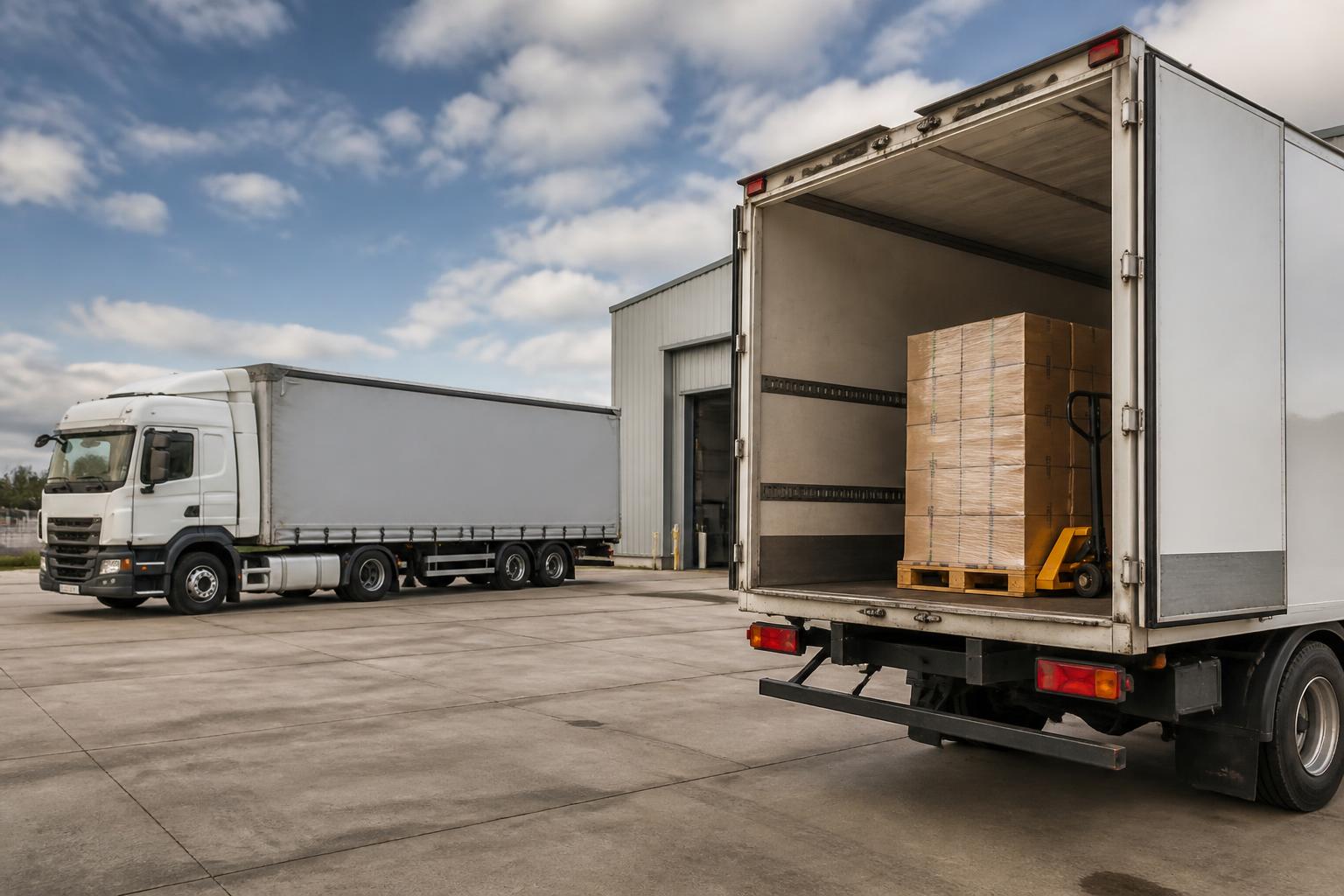
Yes. Someone can handle haulage quotes and POD updates for you, provided they are doing more than forwarding emails. In practical UK haulage terms, that means taking a movement brief, collecting workable prices from suitable operators, chasing responses, checking availability, tracking ETA changes, collecting POD, and escalating exceptions before they turn into missed deliveries or billing disputes.
The real question is not whether this can be outsourced, but how. If the work is passed to a single person with a mobile phone and an overloaded inbox, you often just move the bottleneck. If it is handled through an organised, AI-assisted, human-backed transport desk, you can reduce admin without losing commercial control. That is the model we run at Haulier.AI, especially for businesses dealing with mixed UK haulage, urgent cover, and container haulage through ports such as Felixstowe, London Gateway, Southampton, Tilbury, Liverpool, Teesport and Immingham.
What does it mean to have someone collect quotes and POD updates?
In day-to-day transport, quote collection and update chasing are not separate admin tasks. They sit inside the same operational flow.
At the quote stage, someone needs to take a proper brief. That usually includes collection postcode, delivery postcode, date, goods type, weight, pallet count or loading metres, whether the load is part-load or full-load, whether it is a standard curtain movement or something more awkward, and any site restrictions. For container haulage, the brief is wider. It may include port, container size, whether the box is import or export, VBS or booking references where relevant, cut-off times, customs status, and whether the movement is live, grounded, tipped, or to and from a warehouse.
Collecting quotes properly then means sending that brief to suitable operators, not blasting it out to everyone. The job is to get back prices that are actually usable, with availability, not just a number in isolation. A workable quote should reflect the movement type, likely waiting time, distance, time-critical elements, and any known constraints. It should also be clear whether the operator is pricing on the basis of standard terms, whether extra charges may apply for waiting, redelivery, failed collection, quay rent exposure, or out-of-hours work.
Once the load is booked, the same desk often ends up handling ETA chasing. That means asking for collection confirmation, checking whether the vehicle is on time, picking up delays early, and passing on realistic updates. This matters because customers do not usually complain about a late lorry first. They complain about not knowing it is late.
POD collection is the final part of that chain. In UK haulage, POD might be a signed delivery note, a stamped CMR where international paperwork is involved, a warehouse receipt, a pallet network scan, or a digital image sent from the driver or operator. For container haulage, the equivalent proof may also need to show the relevant handover point, return status, or paperwork trail connected to the box movement. If the proof is unclear, unsigned, missing pages, or delayed, it creates avoidable friction for invoice approval and customer queries.
Exception handling is what ties all of this together. A good desk does not just pass messages on. It spots when an operator has not replied, when an ETA has slipped, when a port collection is at risk because of release or booking issues, or when POD has not come back in the expected window. That is the difference between admin support and operational support.
What are the main ways businesses handle this today?
Most businesses use one of four models.
The first is an in-house traffic or operations team. This works well when volumes are steady, lanes are familiar, and the business already has transport knowledge internally. An in-house team can keep close control over approved hauliers, rate history, customer priorities and site-specific quirks. The downside is workload concentration. When volumes jump, people go on holiday, or awkward jobs come in late, quote chasing and POD chasing are often the first things to slip.
The second is relying on individual transport operators directly. Many businesses have strong relationships with a few trusted hauliers and place work with them by phone or email. For repeat lanes and known requirements, this can be efficient. The limitation is coverage. If your usual operator is full, does not cover a region, or cannot handle a specific movement, your team is back to ringing around. That is manageable for occasional gaps, but hard to sustain when the market is busy or requirements vary day by day.
The third is using a traditional broker. A broker can widen access to capacity and reduce some of the calling around. The issue is that not all brokerage models are organised in the same way. Some are excellent. Others are built around speed first, with weaker update handling after the booking is made. Some rely on broad quote requests that encourage a race to the bottom, which can damage service quality and leave operators protecting themselves through add-ons and caveats later.
The fourth is an outsourced transport desk that is AI-assisted and human-backed. This is where we sit. The point is not to replace transport judgement with software. The point is to organise the request flow, identify suitable operators faster, keep communication in one place, and make sure a person is still responsible for checking, chasing, and escalating. For customers, that means less time spent trying to collect haulage quotes and POD updates internally. For operators, it means access to relevant subcontract work without surrendering commercial control to an auction board.
How do the options compare on speed, control and workload?
On speed, in-house teams are often quickest for known lanes with known suppliers. If the traffic desk already knows who to call and the requirement is straightforward, they can move fast. But speed drops when the load is unusual, time-sensitive, or outside normal supplier coverage. A single operator can be fast to answer for work they want, but they cannot solve capacity gaps across the market on their own.
Traditional brokers can be quick on first response, especially for standard road movements. The variation tends to come later. A fast quote is useful only if follow-up is equally strong when ETA changes or POD goes missing.
An outsourced desk like ours is designed to be fast at the front end without losing control in the back end. We use structured request handling to cut out avoidable back-and-forth, and we keep human oversight in the loop so someone is accountable for whether the update actually happened.
On control, in-house teams obviously retain the most direct oversight. They can choose who receives each job, compare rates against internal benchmarks, and apply their own escalation rules. Direct operator management also gives strong control, but only within a limited supplier base.
Traditional brokerage sometimes reduces control if the process is opaque. If the customer cannot see how operators are being approached, what assumptions sit behind the price, or how updates will be managed, the convenience comes at a cost.
We take a different approach. Our model is organised around preserving commercial control, especially for hauliers. We do not run a race-to-the-bottom auction process. For customers, that means quotes are gathered in a more disciplined way. For operators, it means they are not being pushed into blind undercutting simply to stay visible.
On workload, the biggest difference is admin burden. In-house teams carry all of it. Every quote request, every reminder, every ETA chase, every POD follow-up sits with your own staff. That is fine when volumes are stable and the team is sized for it. It becomes expensive when skilled transport people spend their day copying details between inboxes, spreadsheets and phone calls.
Direct operator management is lighter only if your core suppliers can cover most jobs. Once the exceptions start piling up, the workload returns quickly. Traditional brokers reduce some workload, but often not the customer-facing follow-up burden if updates are inconsistent.
A structured outsourced desk reduces workload most when your issue is not just buying haulage, but managing communication around it. If that is your pain point, our article on getting haulage quotes without a day of chasing goes into that part in more detail.
Where do quote collection and POD updates usually break down?
The most common failure point is fragmented communication. A quote request starts in one inbox, a revised collection time arrives by phone, a price confirmation is buried in a reply-all chain, and the POD lands two days later in someone else’s mailbox. Nothing is missing in theory, but nobody has a clean operational picture.
Another common problem is poor briefing at the start. If the original request does not clearly state whether the job is part-load or full-load, whether there are booking times, whether the consignee needs advance notice, or whether a container movement needs port-specific details, the first round of quotes is often unusable. Time is then lost clarifying basic facts.
ETA handling breaks down when updates are treated as optional. In reality, ETA is part of service delivery. If a collection misses its slot, a delivery booking is at risk, or a driver is held up at a port, that information needs to move quickly. This is especially true around major port work. Felixstowe, London Gateway and Southampton each bring their own operational patterns. Liverpool, Immingham and other gateways can present similar issues depending on release timing, booking systems, congestion, and onward site requirements. After Brexit, paperwork and border-related process changes also made some movements less forgiving of casual update handling, even where the physical road leg remains domestic.
POD return often fails for more ordinary reasons. The driver forgets to send it. The image is unreadable. The delivery note is unsigned because the receiving site uses a name-only process. The warehouse stamps one page but not the page your accounts team needs. Nobody chases it until the invoice is queried. By then, the operator has to go back through old paperwork and the customer has already formed the view that the service was disorganised.
Container haulage adds another layer. Port references, release status, booking windows, demurrage and detention exposure, and customer handoff points all make proof and update handling more sensitive. If you need wider support around these jobs, we cover that in our container haulage services across major UK ports and in location-specific pages such as container haulage through Felixstowe.
When is an outsourced desk the better fit?
An outsourced desk is usually the better fit when the problem is variability.
That might be volume swings. Your team can cope with normal weekly traffic, but not with month-end peaks, seasonal surges, or one customer suddenly doubling outbound requirements.
It might be awkward work. Standard palletised jobs are easy enough to place, but unusual routes, late collections, short notice cover, and mixed requirements across UK haulage and container haulage absorb far more time than their volume suggests.
It might be supplier fatigue. Your regular hauliers are good, but they are full, selective, or stretched in the areas you need most. Your team then spends half the day trying to fill last-minute gaps instead of managing customer commitments.
It might be update pressure. Some businesses do not struggle to find a lorry. They struggle to keep internal stakeholders, customers, warehouses and accounts teams informed. In that situation, the value is not only in quote collection. It is in having one desk responsible for the operational thread from request through ETA and POD.
It can also be the right fit for operators. Many hauliers want relevant subcontract work, but not endless dead-end quote requests or platforms that strip out margin. A structured desk can help match work more cleanly while leaving the operator free to decide whether the job suits their fleet, area and day.
In our experience, the trigger is often simple. If your transport team is spending too much time chasing and too little time deciding, external support becomes worthwhile.
What should you ask before handing this work to someone else?
Start with process. Ask how quote requests are captured, checked and sent out. If the answer is vague, expect vague results. You want to know what information is required up front, how missing details are handled, and how suitable operators are selected.
Ask about escalation. What happens if no quote comes back in time, if the booked vehicle misses collection, if the ETA changes, or if POD is not returned promptly? A proper answer should include named responsibility and timescales, not just “we will chase it”.
Ask about human oversight. AI-assisted should mean organised support, not unattended automation. In transport, edge cases are normal. Someone needs to spot when a quote is unrealistic, when a port move has hidden complications, or when an exception needs a phone call rather than another email.
Ask about pricing approach. Are operators being pushed into a blind lowest-price contest, or is the process designed to gather commercially real quotes? This matters because poor buying discipline often reappears later as service failure, extras, or disengaged suppliers.
Ask about data handling. Quote requests and POD documents can contain customer names, addresses, shipment details and commercially sensitive rates. You should know who can see that information, how it is stored, and how long it is retained. If VAT treatment, customs references, or post-Brexit documentation details appear in the paperwork, the standard should be even tighter.
Ask about coverage. “Nationwide” means little unless the desk can genuinely support the work you do. Check whether they handle standard road movements, part-load, full-load, and container haulage, and whether they understand the practical demands around ports such as Felixstowe, London Gateway, Southampton, Tilbury, Liverpool, Teesport and Immingham.
Finally, ask how communication will look from your side. Will you have one point of contact? Will updates be consolidated? Will POD be returned in a usable format for your accounts process? The right answer should make your day simpler, not just move the same confusion somewhere else.
If you are asking whether someone can collect haulage quotes and POD updates on your behalf, the answer is yes. The useful follow-up is whether they can do it in a way that improves speed, preserves control, and removes admin rather than hiding it. That is exactly what we built Haulier.AI to do, with an AI-assisted, human-backed desk that keeps UK haulage organised for both customers and operators.
Can a broker collect haulage quotes and POD updates?
Yes. Many brokers do both, but the standard varies. Some are strong on communication and follow-up, while others focus mainly on placing the load and leave update chasing to the customer.
Is it better to keep quote collection in-house?
It depends on volume, urgency and team capacity. In-house control can work well, but it often becomes hard to sustain when requests, ETA checks and POD chasing all rise at once.
Can someone manage container haulage updates as well?
Yes, if they understand container haulage and UK port work. That matters for jobs involving Felixstowe, London Gateway, Southampton, Tilbury, Liverpool, Teesport or Immingham.
Does outsourcing this mean losing control of pricing?
Not necessarily. A well-run service should organise requests and responses while preserving the haulier's commercial control, rather than forcing race-to-the-bottom auction pricing.
What is the hardest part to outsource well?
Exception handling. Collecting a basic quote is one thing; dealing with delays, changed collection slots, missing POD, revised ETA or awkward access instructions is where process quality really shows.