
Container haulage article
How to find container haulage capacity fast
Learn how to quickly find container haulage capacity using managed transport desks and haulier networks to streamline your logistics.
To find available container haulage capacity fast, use a managed transport desk or your contracted haulier network and have a standard booking template ready before you make contact. If you’ve got regular volume, your existing haulier partners should be your first call. For overflow or anything urgent, spot brokers and two-sided digital platforms fill the gap.
Two things speed everything up: knowing which channel suits your timeframe, and having your booking details ready to go the moment someone answers.
- Contracted hauliers for predictable, planned demand
- Spot brokers or a managed desk for anything under 48 hours
- A booking template with origin, destination, container type, weight and cargo ready date filled in before you dial
Key Takeaways
Finding container haulage capacity quickly depends on matching the right channel to your timeframe and arriving with a complete booking request.
| Point | Details |
|---|---|
| Match channel to urgency | Use contracted hauliers for planned volume, spot brokers or a managed desk for anything under 48 hours. |
| Prepare a complete request | Origin, destination, container type, VGM weight and cargo ready date must all be ready before you make contact. |
| Confirm before you dispatch | Cross-check SI, VGM and gate cut-offs, and never load a truck without a confirmed appointment number. |
| Compare all-in quotes | Fuel surcharges, chassis availability and detention terms often matter more than the headline rate. |
| Use a managed desk for tight windows | Haulier.AI centralises quoting and communication, cutting admin when speed and visibility matter most. |
Table of Contents
- What information do you need before requesting capacity?
- Where do you find available haulier capacity?
- How do you turn a request into a confirmed booking?
- What drives pricing and how far ahead should you book?
- What operational red flags should you watch for?
- How does a managed, AI-assisted transport desk speed things up?
- What actually prevents capacity failures
- Get container haulage sorted through Haulier.AI
- Sources
- FAQ
What information do you need before requesting capacity?
Half the delays in container haulage come from incomplete requests, not a lack of trucks. Hauliers and brokers can’t quote or confirm a slot without the basics, and chasing missing details is what turns a same-day booking into a two-day one.
Before you contact anyone, gather:
- Origin and destination — the port or depot, the delivery postcode, and any specific terminal details.
- Container type and size — 20ft, 40ft, 40ft HC, reefer or flat-rack, plus the container number if it’s already been allocated.
- Gross weight (VGM), commodity or HS code, and any special handling needs — dangerous goods, reefer setpoints, or out-of-gauge cargo.
- Cargo ready date and pickup window, along with contact details for both the shipper and consignee.
- Supporting documents — Shipping Instructions, VGM confirmation, customs release where it applies, driver ID requirements and any port credentials the terminal insists on.
A booking is only as good as the data behind it. A correct submission needs origin, destination, HS code, container type and gross weight before a haulier can even price the job, let alone confirm it.
Pro Tip: Keep a saved template with these fields pre-formatted. When capacity is tight, the forwarder who sends a complete request in ninety seconds gets the slot before the one still typing out weights and postcodes.
Where do you find available haulier capacity?
Not every channel suits every situation, and picking the wrong one wastes time you don’t have.
Direct contracted hauliers work best when you’ve got lead time and predictable volume. Rates are agreed in advance, service levels are known, and you’re not competing against other shippers for the same truck. The trade-off is flexibility. Contracted capacity doesn’t flex well for sudden spikes, and if your allocation goes unused, you’re paying for dead freight without moving anything. Tracking utilisation against your committed volumes protects both your budget and your standing with the haulier.
Spot brokers and freight exchanges exist for overflow and urgent gaps. You’ll pay a premium and reliability varies more than with a contracted partner, but when you need a truck tomorrow and your regular haulier is full, this is where you look.
Managed transport desks and digital marketplaces sit between the two. They combine speed with visibility, giving you a single point of coordination instead of five phone calls to five different yards. For tight windows or high-value cargo, this is usually the safer bet.
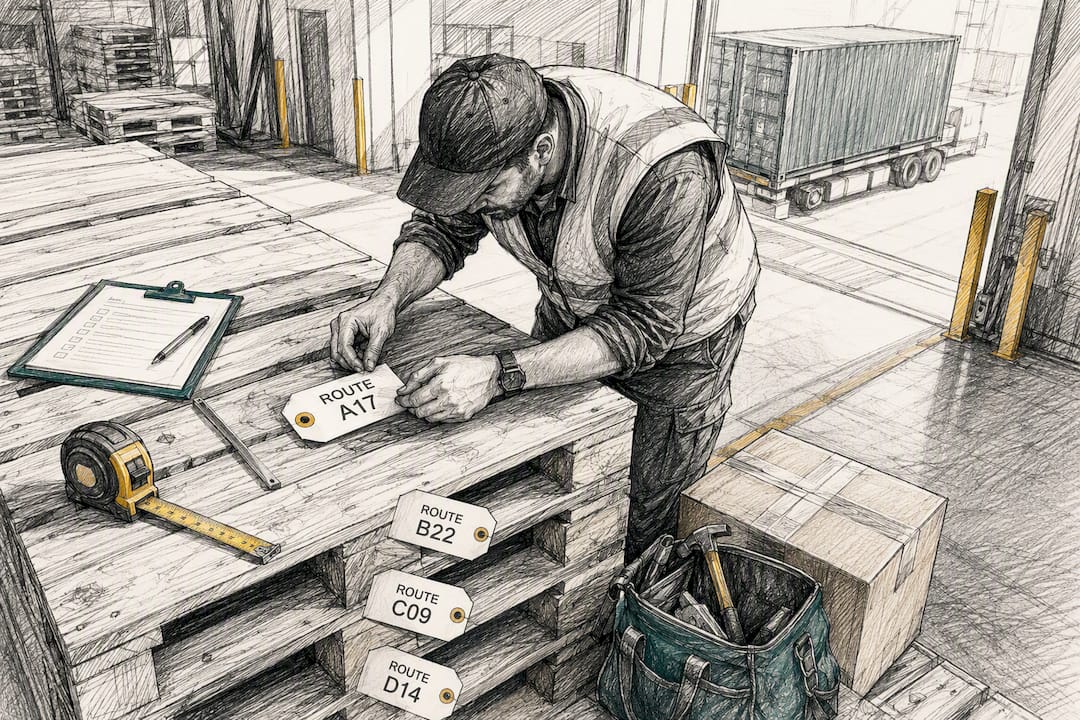
Inland depots deserve a mention too. Using off-dock storage to create buffer space reduces exposure to quay-side congestion and the demurrage that comes with it, particularly at ports running near capacity.
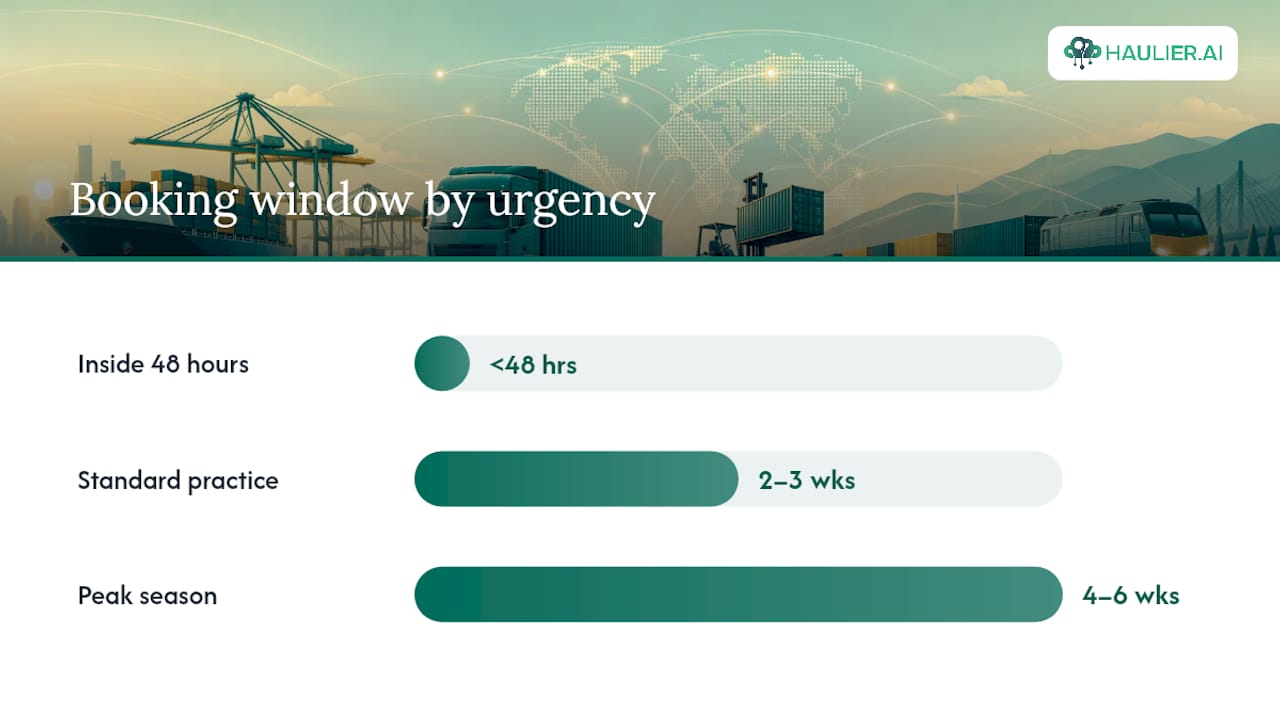
As a rough triage: anything inside 48 hours goes to a managed desk or spot broker. Between three and 21 days out, a contracted haulier or platform booking gives you better pricing and more certainty.
How do you turn a request into a confirmed booking?
Getting a truck booked isn’t one step, it’s a sequence, and skipping any part of it is how bookings unravel at the gate.
- Send a complete request using your standard template, with every mandatory field filled before you contact the channel.
- Set an internal confirmation SLA — say, two hours for standard bookings, thirty minutes for urgent ones — and log the booking number and appointment time the moment you get them.
- Cross-check cut-offs. SI submission deadlines, VGM cut-offs and terminal gate times all need reconciling against your pickup window before you dispatch anyone.
- Issue the drayage order once the appointment is locked in, and verify the driver’s credentials and slot details match what the terminal expects.
- Close the loop after gate-in. Confirm the collection went through and record any exceptions immediately, while the paper trail is still fresh.
The interval between confirming a booking and issuing the drayage order is worth watching closely. It’s often where coordination time leaks away, and tracking that gap as an internal metric tells you exactly where your process is slow.
What drives pricing and how far ahead should you book?
Booking windows vary by urgency, and each one comes with a different price tag. Standard practice runs two to three weeks ahead of departure, rising to four to six weeks or more during peak season. Anything inside 48 hours means limited choice and paying whatever the market asks that day.
Reefer and other specialised equipment need extra runway too, since pre-trip inspections and temperature calibration add time before the unit is even ready to move.
When you’re comparing quotes, watch for:
- Fuel surcharges, which shift with wholesale diesel prices
- Congestion and ULEZ charges on urban delivery routes
- Chassis availability, particularly during equipment shortages
- Waiting time allowances and detention exposure if the truck sits at the gate
Always ask for an all-in quote that lists these separately rather than a single headline rate. A cheap base rate with uncapped waiting time can cost more than a slightly higher quote with generous free time built in.
Pro Tip: If the alternative is racking up demurrage while you shop around for a cheaper truck, pay the premium. A few hundred pounds on haulage is almost always less than a day’s demurrage on the container.
What operational red flags should you watch for?
Most failed bookings trace back to the same handful of mistakes, and they’re all avoidable if you check for them before the truck leaves the yard.
- Gate turn-backs usually come down to mismatched credentials, an unconfirmed appointment, or the wrong equipment type turning up. Check all three before dispatch, not after.
- Incorrect or missing VGM is one of the most common reasons for refusal at the gate. Verify weights early, not on the morning of collection.
- No booking number or vague terminal instructions are a sign to pause, not push forward. Sourcing capacity without a confirmed appointment is the fastest route to a gate turn-back and the demurrage that follows.
- Undocumented confirmations leave you exposed if a dispute arises later. Keep written records of every appointment and rate agreement, and know your escalation path before you need it.
How does a managed, AI-assisted transport desk speed things up?
A platform like Haulier gives you visibility across quoting and transport in one place, cutting the admin and missed updates that come with chasing five different hauliers by phone. Because hauliers keep control over their own rates and only accept jobs they can actually service, the matches tend to hold up better than a broad broadcast to anyone with a truck.
- Use a managed desk when your window is short or demurrage risk is high
- It centralises communication instead of scattering it across calls and emails
- Fewer manual follow-ups mean fewer things fall through the gaps
What actually prevents capacity failures
The teams that consistently avoid last-minute scrambles aren’t the ones with the cheapest rates. They’re the ones with the tightest process. Standardise your booking template, set an SLA for confirmations, and use depot buffers proactively when a terminal is showing signs of congestion rather than reacting once it’s already gridlocked.
Visibility beats the lowest quote almost every time. A haulier who confirms fast and communicates clearly is worth more than one who’s £20 cheaper but goes quiet for six hours. And give every booking a single point of contact for escalation. The moment a job passes between three people with no clear owner is the moment something gets missed.
— Vytautas
Get container haulage sorted through Haulier.AI
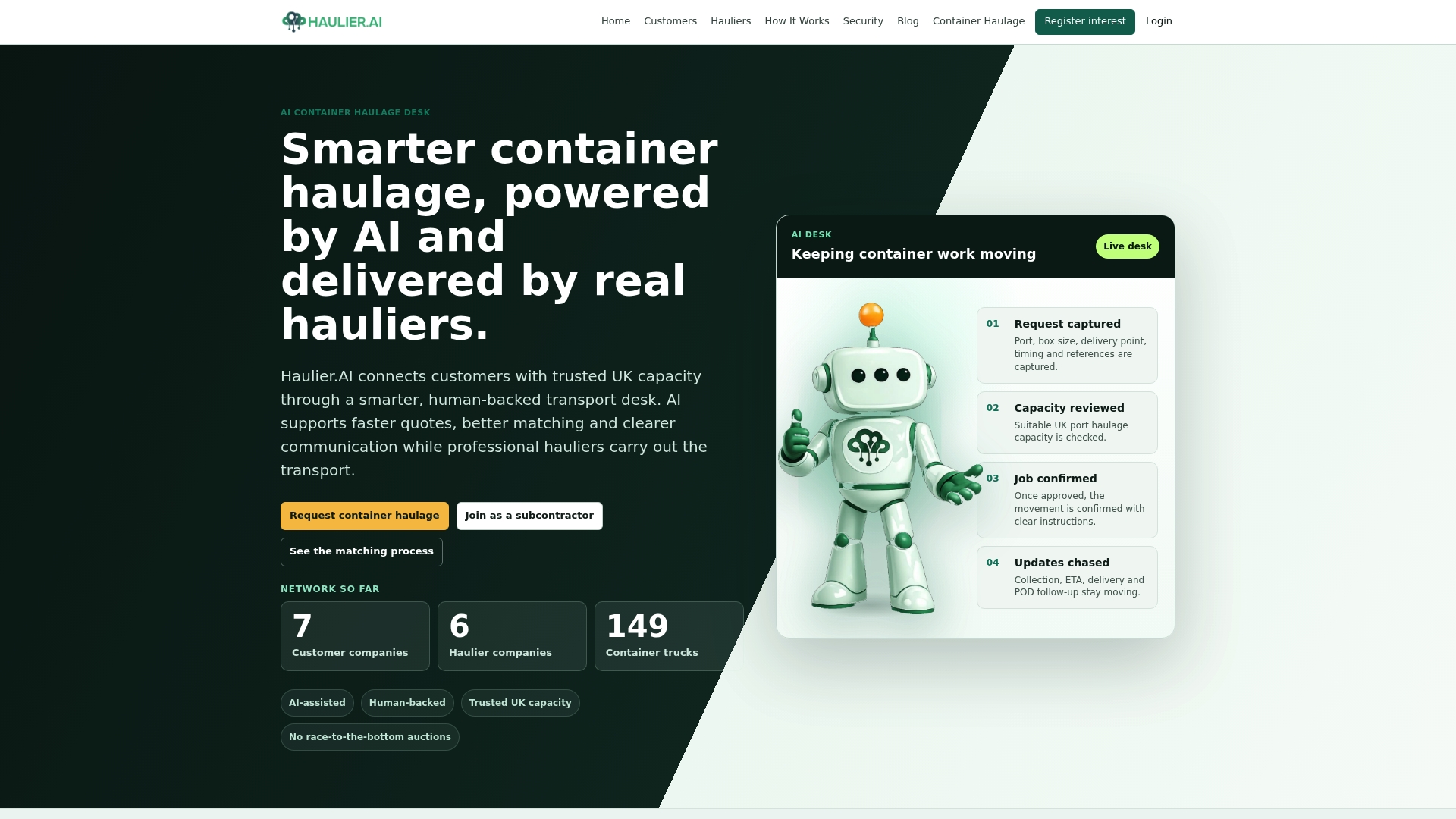
Haulier.AI is the fastest route to a confirmed truck when you don’t have time to chase five different yards for a quote. The managed desk gives you visibility from first enquiry to gate-in, hauliers pick jobs they can genuinely deliver on, and you spend less time on admin and more time moving cargo.
Before you request a quote, have your booking template ready: origin and destination, container type and weight, cargo ready date, and any terminal credentials the job needs. That alone cuts most of the back-and-forth that slows other channels down.
If you’re sourcing capacity for a shipment right now, Haulier and get matched with a haulier who can actually take the job.
Sources
- Container Booking Process — Step-by-Step for Forwarders - Hansatic
- Container Booking Workflow Supply Chain Guide | ContainerHub
- Booking in Logistics: Definition & Guide for 2026 | DocShipper
FAQ
How Quickly Can You Book Container Haulage?
Standard bookings need two to three weeks’ notice, but a managed desk or spot broker can often confirm capacity within hours for urgent jobs under 48 hours.
What Details Does a Haulier Need to Quote?
Origin and destination, container type and size, gross weight (VGM), commodity or HS code, and your cargo ready date are the minimum fields any haulier or broker needs to price the job.
What Should You Do if a Booking Gets Cancelled Last Minute?
Go straight to a spot broker or a managed platform like Haulier.AI, since both are built to fill urgent gaps faster than renegotiating with a single contracted haulier.
Why Does a Container Get Turned Back at the Gate?
The most common causes are mismatched credentials, missing or incorrect VGM figures, and dispatching before the appointment is actually confirmed.