
Container haulage article
What road haulage covers in day-to-day UK transport
A practical guide to what road haulage means in the UK, how jobs are priced and run, and where container haulage, part-load and full-load fit.
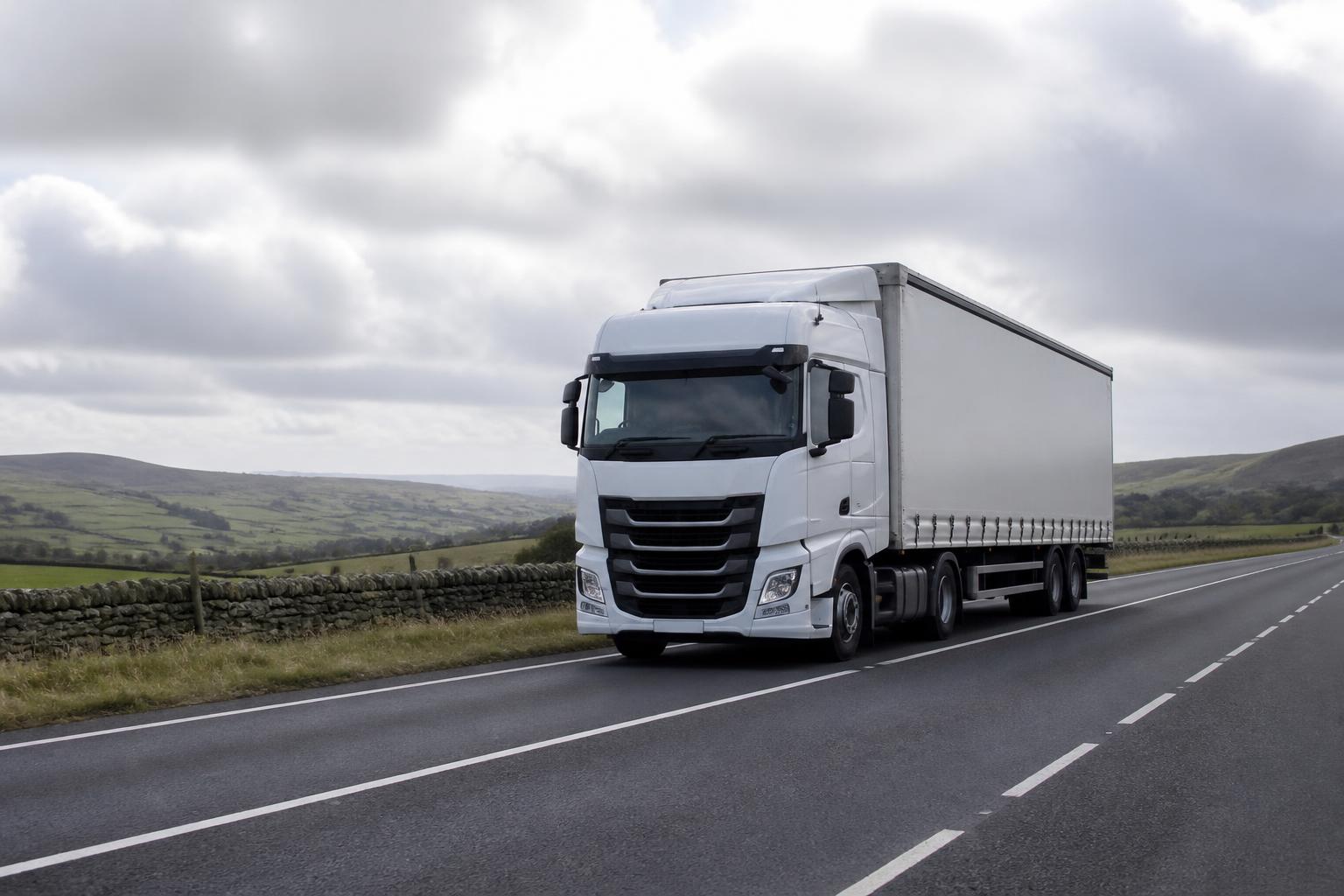
When people ask about the road haulage meaning in the UK, they usually want a practical answer, not a dictionary one. In day-to-day terms, road haulage is the commercial movement of goods by road using vans, rigid vehicles and articulated lorries. It covers the job from collection to delivery, including planning, vehicle allocation, communication, paperwork and proof that the goods arrived as booked.
In UK operations, that can mean anything from a single pallet moving on a network vehicle to a dedicated artic carrying a full trailer load, or a container collected from a port such as Felixstowe or Southampton and delivered inland. At Haulier.AI, we see road haulage as the working link between warehouses, factories, ports, distribution centres, retail sites and end customers. It is not just driving. It is the whole transport process around the movement.
What road haulage means in practical terms
In practical UK use, road haulage means paid transport of goods on public roads by a transport operator. The goods may be raw materials, finished products, machinery, packaging, retail stock, temperature-sensitive freight, or import and export cargo. The traffic may be local, regional or nationwide.
What sits inside that definition on a normal working day includes:
- taking a booking and checking the load details
- confirming collection and delivery points
- assigning the right vehicle and trailer type
- checking access, weight and loading restrictions
- planning the route and timing around driver hours and site slots
- collecting the goods
- moving them safely and legally
- providing ETA updates where required
- obtaining a signed or electronic POD
- managing exceptions such as delays, rejections or failed collections
In the UK, road haulage can be carried out by operators using their own fleet, by subcontractors, or through a managed transport desk like ours, where requests are organised, matched and overseen. That matters because many buyers do not need a single long-term carrier for every movement. They need reliable access to suitable operators for changing volumes, awkward lanes, urgent jobs and port work.
Road haulage also includes work that people outside transport often separate in their minds. A port collection is still road haulage once the container leaves the terminal by road. A pallet network movement is still road haulage even though several depots may handle it. A dedicated same-day van is road haulage too, even if it feels more like courier work operationally.
What types of work sit under road haulage?
The term covers several distinct job types, each with different operating methods and commercial logic.
A common split is between full-load and part-load. A full-load job uses most or all of a vehicle’s carrying capacity for one customer’s consignment. That may be because of weight, volume, product type, security, timing or the need for a direct run. A dedicated trailer of packaged goods from a Midlands warehouse to a Scottish DC is a straightforward example.
Part-load means a consignment shares vehicle space with other freight. This works where the shipment does not justify a dedicated vehicle and can move within a planned multi-drop or consolidated route. It is often the right answer for cost control, but it usually brings less flexibility on exact collection and delivery times because the vehicle is serving more than one job.
Pallet work sits alongside this. Many UK businesses move freight as palletised consignments through pallet networks or through direct haulage arrangements. The key operational questions are not just pallet count, but pallet dimensions, stackability, actual weight, and whether the goods are standard, oversized or hazardous. A “10 pallet job” can price and plan very differently depending on whether those pallets are light and stackable or tall, fragile and non-stackable.
Container haulage is another major category, especially for importers, exporters and operators working around ports. Here the road movement connects with shipping lines, terminals, release procedures and timed collections. The vehicle may be collecting a laden import container from a port such as Felixstowe port container collections, London Gateway container deliveries or Southampton, taking it to a warehouse for devanning, and then returning the empty within the allowed time. It may also be export work, where the container is loaded inland and delivered back to terminal within the booked window. For a broader view, our page on UK container haulage services sets out how these moves differ from standard trailer work.
Other work under the road haulage umbrella includes:
- same-day and urgent dedicated transport
- multi-drop retail and distribution work
- machinery and awkward freight movements
- port to warehouse shunts
- backloads and return loads
- subcontract linehaul and overflow work between hauliers
The vehicle type can vary just as much as the job type. Depending on the load, the work may need a van, 7.5 tonne vehicle, rigid, curtainsider, box trailer, flatbed, skeletal trailer or specialist equipment. So when we talk about UK haulage, we are talking about a broad operating category, not one standard service.
How a road haulage job actually runs
A road haulage job usually starts with an enquiry that needs enough detail to quote and plan properly. The basics are collection postcode, delivery postcode, date, load description, weight, dimensions and whether the movement needs a dedicated vehicle or can move as part of a shared run.
Once the job is accepted, the operational flow is usually:
First, the movement is checked for fit. Is the freight palletised or loose? Forklift on site or handball only? Any booking-in requirement? Any site restrictions such as tail-lift needed, vehicle height limit, narrow access or timed delivery slot? For port work, is the container released and is the reference valid?
Second, the vehicle is allocated. That sounds simple, but it is often where service level is won or lost. The right truck in the wrong place is no use. The planner needs a workable combination of vehicle type, driver availability, legal hours, route position and collection window.
Third, collection is scheduled and confirmed. On the day, the driver arrives, the goods are loaded, and the paperwork is checked. Depending on the movement, that may include delivery notes, CMR for some international-related work, container numbers, booking references or port release details.
Fourth, the load is moved and monitored. During transit, the customer may want ETA updates, especially for site labour planning, customer service or onward production. In practice, ETA quality depends on the type of movement. A dedicated direct vehicle gives tighter visibility than a shared multi-drop route or a port collection waiting on terminal conditions.
Fifth, delivery is completed and a POD is obtained. POD may be signed paper, electronic capture, gate confirmation, or another accepted delivery record. If there is an issue, for example damage noted, shortage, refusal or site closure, that exception needs to be reported quickly so the next step can be agreed.
That is the clean version. Real life often adds complications. A collection can fail because the goods are not ready. A site may insist on a booking slot that was not mentioned at enquiry stage. A port collection may miss the planned window because of queueing, customs status or release problems. Good operators and good transport desks manage those exceptions early, not after the delivery has already gone wrong.
This is where an AI-assisted, human-backed process is useful. The admin side of transport can be organised faster, but road haulage still needs human judgement. Someone has to spot that the “standard pallet” is actually oversized, that the warehouse closes at 15:30, or that a skeletal trailer is needed rather than a curtainsider.
What affects cost, timing and service levels?
Price and reliability in road haulage are shaped by operational facts, not just mileage.
Distance matters, but it is only one factor. A short run into a difficult city centre site with waiting time and restricted access can cost more to serve than a longer straightforward trunk route. Likewise, a same-day dedicated movement will not price like a flexible next-day part-load.
The main factors are usually:
- vehicle type required
- weight and dimensions
- pallet count and whether freight is stackable
- urgency and delivery deadline
- dedicated versus shared movement
- collection and delivery postcodes
- port or non-port origin
- waiting time risk
- booking-in requirements
- loading method and site equipment
- likelihood of delays or redelivery
- seasonal pressure and available capacity
For timing, the biggest issue is often not road speed but handover points. Warehouses miss cut-offs. Delivery sites enforce narrow booking windows. Ports can create queueing and variable turn times. If a movement touches a container terminal, timing depends on more than the haulier’s own planning.
Service levels also differ by job type. A full-load direct run can usually offer tighter timing control than a part-load movement. Pallet network traffic can be efficient and cost-effective, but it runs to network processes rather than bespoke site-by-site handling. Container haulage has its own service pressures, especially around free time, terminal slots and empty returns.
Commercially, buyers also need to understand that the cheapest quote is not always the cheapest outcome. A failed collection, missed slot, storage charge, wasted warehouse labour or quay rent exposure can outweigh a lower linehaul rate very quickly. Hauliers need enough margin in the job to resource it properly. That is one reason we do not run a race-to-the-bottom auction model. We focus on organised quoting, relevant matching and human oversight, while preserving hauliers' commercial control.
Where road haulage fits after ports, customs and Brexit
Since Brexit, many UK businesses have had to think more clearly about where the road movement starts and what has to be in place before it can happen. The truck may be ready, but the load may not be legally or practically collectable yet.
For imports through ports such as Felixstowe, London Gateway, Southampton, Tilbury, Liverpool, Teesport or Immingham, the road haulage leg usually sits after shipping line release and terminal availability, and alongside customs status. If customs formalities are incomplete, the container may not be cleared for onward movement. If the release reference is wrong or missing, the haulier can arrive and still not be able to collect.
That does not mean road haulage has become customs brokerage. It means the road movement now depends more visibly on customs readiness than some buyers were used to before Brexit. In the UK, that can involve checking that the relevant entry has been accepted, that any holds are cleared, and that the collection references match what the terminal and line require. The exact process depends on the port, the line and the type of movement.
For export work, the same principle applies in reverse. The inland road leg may be simple enough, but the container still has to arrive within the booked window, with the right documentation status, and often against a specific vessel cut-off. Miss that sequence and the truck movement itself may be fine while the shipment still fails commercially.
This is one of the clearest areas where UK rules now diverge from the simpler assumption many people still make from EU domestic transport. A road movement within Great Britain is one thing. A movement tied to an import or export container can involve customs timing, terminal systems and document status that directly affect whether the job can run as planned.
VAT can also matter commercially, especially where imported goods, customs representation and onward billing structures are involved, although the transport movement itself is only one part of that picture. The key point is that after Brexit, road haulage connected to international cargo is more document-sensitive than many non-transport teams expect.
What buyers and hauliers need to get right at enquiry stage
Most avoidable transport problems start with missing or vague information at quote stage. If the enquiry is incomplete, the quote is either delayed or based on assumptions that may fail on the day.
For buyers, the minimum useful brief should include:
- collection and delivery postcodes
- company names and site contact details
- required collection date and delivery deadline
- whether the job is full-load, part-load or pallet work
- exact goods description
- weight, dimensions and pallet count
- whether pallets are stackable
- any ADR or hazardous classification
- loading and unloading method
- whether a tail-lift is required
- any booking-in reference or site restrictions
- whether the job is port related
If it is a container movement, add:
- port name, such as Felixstowe, London Gateway, Southampton, Tilbury, Liverpool, Teesport or Immingham
- container size and type
- laden or empty status
- container number if available
- release or collection reference
- shipping line details if relevant
- delivery address and whether devanning is timed
- empty return location and deadline if known
For hauliers looking at subcontract opportunities, the same discipline matters. Before accepting, it is worth checking whether the quoted weight is realistic, whether the site can take the proposed vehicle, whether waiting time exposure is likely, and whether the references supplied are complete. A job that looks simple on lane and mileage can become unprofitable if the information is weak.
This is exactly the gap we are built to reduce. At Haulier.AI, we use an AI-assisted, human-backed transport desk to organise requests clearly, get the right operational facts in front of the right people, and connect customers with suitable operators for UK haulage without turning the process into a blind price scramble. Buyers get a cleaner route from enquiry to movement. Hauliers get relevant opportunities with the commercial context needed to decide properly.
If you strip the industry language away, the road haulage meaning is straightforward. It is the managed movement of goods by road. But in everyday UK transport, the difference between a smooth job and a messy one comes down to detail, timing and communication. Get those right early, and the vehicle movement is usually the easy part.
Is road haulage the same as logistics?
No. Road haulage is the physical movement of goods by road. Logistics is broader and can include storage, planning, stock control, customs activity and transport management.
What is the difference between part-load and full-load?
A full-load usually uses most or all of a vehicle for one job. A part-load uses only part of the space, so the vehicle may carry other compatible freight as well.
Does road haulage include container movements from ports?
Yes. container haulage is part of road haulage when a lorry collects or delivers a container by road, including work linked to Felixstowe, London Gateway, Southampton, Tilbury, Liverpool, Teesport and Immingham.
What information is needed to quote a road haulage job?
Usually collection and delivery points, dates, freight type, weight, dimensions, pallet count, loading method, any time restrictions, and whether special access or port details apply.
Why do ETA and POD matter so much?
ETA helps sites plan labour, bays and onward work. POD confirms delivery happened, which supports customer service, dispute handling and invoicing.