
Container haulage article
How to run group transport without endless chasing
A practical guide to group transport management in the UK, covering planning, quotes, carrier control, exceptions and port-related road movements.
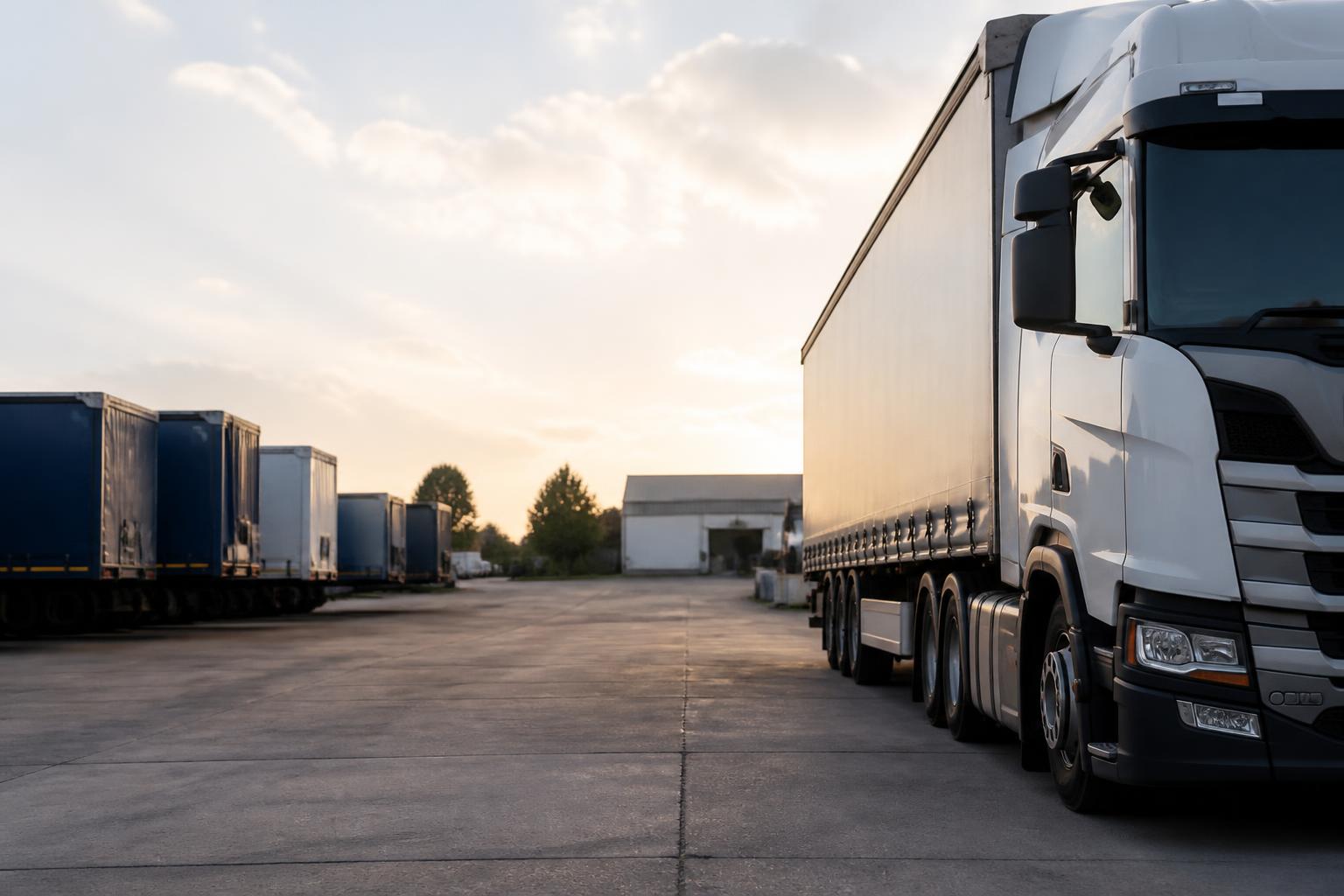
Running group transport well comes down to one thing, keeping every movement in one controlled process so your team is not constantly chasing quotes, availability, updates and paperwork across calls, inboxes and spreadsheets. When that process is missing, the work does not just feel busy. It creates real risk, loads get placed late, the wrong vehicle turns up, ETA updates are missed, and POD collection drifts for days after delivery.
For most businesses, the breaking point is not total volume on its own. It is variable volume. A few urgent jobs, some awkward collections, a supplier that is full, a port box that needs attention, and suddenly one planner or operations person is spending the day trying to stitch together cover. That is where organised Group transport management in the UK matters, and where we use Haulier.AI to give businesses and hauliers a practical, AI-assisted, human-backed desk rather than another inbox to monitor.
What group transport management means in practice
In practice, group transport management means handling multiple road movements through one organised operating method, instead of treating each job as a separate scramble. In UK road transport, that usually covers a mix of part-load, full-load, palletised freight, awkward freight, timed deliveries, site-restricted work and, for many businesses, container haulage linked to ports such as Felixstowe, London Gateway, Southampton, Tilbury, Liverpool, Teesport and Immingham.
The need usually shows up in a few familiar situations. A manufacturer has regular outbound work but uneven daily demand. A freight team has steady lanes but then gets hit by urgent same-day collections. A retailer has seasonal peaks. A forwarder needs overflow cover because core suppliers are full. A haulier has quiet days on some routes and wants relevant subcontract work without sitting on load boards all day. None of these businesses necessarily need a full in-house transport desk at every site. They do need a structured way to request, review, place and monitor work.
For UK haulage, the detail matters because road movements are shaped by practical constraints. Vehicle type, access restrictions, booking windows, driver hours, port cut-offs, waiting time exposure, and the difference between a clean dock delivery and a handball collection all affect which operator is suitable. If containers are involved, you also have VBS slots, quay releases, empty return conditions, demurrage and detention risk, and the realities of moving through busy UK ports. If a movement is cross-border, Brexit changed the paperwork and the timing assumptions, so UK processes are not simply the same as EU domestic practice.
Good group transport management is therefore not just a list of jobs. It is a controlled method for collecting the right job data, routing it to suitable operators, comparing responses properly, confirming the booking clearly, and keeping one operational record from request through to POD.
Where the admin load builds up
The admin load builds up fastest where transport demand is inconsistent. A stable lane with repeat collections and fixed booking rules can be planned quite cleanly. Problems start when volume moves around by day, location or product type. One afternoon of urgent requests can undo a whole week of orderly planning.
The first pressure point is fragmented communication. One job comes in by email, another by phone, a third through a customer portal, and a fourth in a spreadsheet attachment with half the fields missing. Someone then has to normalise all of that into something usable. If that person also has to call round for rates and availability, the work multiplies quickly.
The second pressure point is awkward work. That might mean a late collection, a delivery to a restricted site, freight that needs side-loading, a container with a tight free-time position, or a movement where the collection instructions are not clear. These are exactly the jobs that cannot be thrown into a generic auction. They need proper review and they need operators who actually fit the requirement.
The third is urgent cover. When an existing supplier cannot cover, the replacement process often starts from scratch. Teams forward the same details repeatedly, ask for availability in different formats, and then try to compare responses that are not like-for-like. One quote includes waiting time assumptions, another does not. One operator has the right kit but cannot meet the booking window. Another can collect but has not confirmed delivery constraints. Time gets lost in clarification.
The fourth is updates after the job is placed. Many teams can eventually find a vehicle. The harder part is controlling what happens next. Has the driver arrived? Is there a delay at site? Has the port release been accepted? Has the container actually grounded? Is the ETA still valid? Has the POD been returned? If every answer sits in a different message thread, nobody has a reliable live picture.
This is why we focus on organised handling rather than just sourcing. We have set out the wider operational issue in how transport desks cut haulage admin and missed cover, because the real cost is usually not one missed quote. It is the cumulative time lost to chasing, clarifying and reconstructing the job history.
What information needs to be captured at the start
A transport request does not need to be overcomplicated, but it does need enough detail to place the work properly. When key fields are missing at the start, the same job gets touched again and again by different people. That is where avoidable failures begin.
At minimum, we need the collection point, delivery point, date, required time windows, contact details at both ends, the commodity or a usable freight description, and the likely load type. For road freight, that means being clear whether the movement is part-load or full-load, and whether it is pallet network style freight, loose freight, machinery, building products, retail stock or something else that changes handling needs.
Vehicle requirement is the next essential field. If the job needs a curtain sider, box, flat, skeletal trailer, tail-lift, Moffett, or a specific trailer length, that should be stated up front. If the site has access limits, forklift restrictions, height limits, booking rules or PPE requirements, those are not minor notes. They affect whether the operator can do the job at all.
For timed work, we also need to know whether the time is fixed, preferred or best endeavours. Many problems come from treating all times as equal when they are not. A factory booking with a strict slot is one thing. A warehouse asking for an afternoon delivery is another. The operator needs to know the commercial priority and the service expectation.
For container haulage, the starting data set is wider. We need port, container size, whether the box is import or export, collection reference or release details, VBS position where relevant, shipping line, empty return location if known, cargo weight, and any cut-off or last free day exposure. Port-related jobs fail when teams assume that a container reference alone is enough. It rarely is. We covered that in more detail in container transport control without the spreadsheet chase, because container work is where weak admin becomes expensive very quickly.
Cross-border jobs need additional care. Since Brexit, UK movements involving the EU can require customs references and a clearer handover of responsibility than many teams were used to before. The exact documents depend on the movement, but the point is simple, if customs status, references or border readiness are unclear, the transport booking is not truly ready. Where VAT treatment matters for the commercial side, that also needs to be understood internally before the job is committed.
A good request at the start is not bureaucracy for its own sake. It is what allows us to compare operators on the same basis and avoid preventable back-and-forth later.
How quote handling and carrier selection should work
Quote handling should be structured enough to give control, but not so rigid that it slows urgent work. In practice, that means one clean request, sent to suitable operators, with responses gathered in a comparable format and reviewed by a person who understands the movement.
We do not believe in a race-to-the-bottom auction model. Cheapest is not the same as suitable, and a low rate that ignores waiting time, access difficulty or port exposure is not a saving. It is a problem deferred. Our approach with Haulier.AI is to organise the request and quote flow, while keeping human oversight and preserving hauliers' commercial control.
That starts with matching. The job should go to operators who fit the geography, equipment, service type and likely timing. A container from Southampton does not need the same shortlist as a full-load factory movement in the Midlands. A same-day part-load into central London needs a different filter again. Good matching reduces noise for buyers and for hauliers.
Responses then need to be normalised. If one operator replies with a linehaul rate only, another includes waiting time assumptions, and a third adds notes about booking restrictions, somebody has to compare those properly. We do that as an operational task, not as a passive inbox. The buyer should be able to see what is actually being offered, what assumptions sit behind the quote, and where any risk sits.
Selection should then consider more than price. Relevant factors include equipment fit, ability to meet the time window, past performance on similar work, confidence in communication, and any site or port-specific experience. For buyers who want a clearer view of that process, we have explained it in how transport companies are chosen for UK haulage.
Human oversight matters here. AI-assisted handling is useful for structuring requests, tracking responses and keeping records consistent. It is not a substitute for transport judgement. Someone still needs to spot when a quote looks incomplete, when an operator is right for the lane but wrong for the access conditions, or when the commercially sensible decision is not the cheapest response on the screen.
For hauliers, this matters as well. Relevant subcontract opportunities are more useful than mass invitations to quote on work that does not fit your fleet, area or day. A better request and selection process saves time on both sides.
How to manage exceptions, updates and proof
Most transport admin is not in the booking. It is in the exceptions. If everything runs exactly to plan, the process is simple. Real operations do not work like that.
Once a job is live, there should be one organised operational record that holds the booking details, the selected operator, agreed rate, key milestones, update history and final proof. Without that, every delay becomes a search exercise.
ETA handling is one of the first tests. An ETA should not be a one-off guess sent early in the day and then forgotten. It should be updated when there is a material change, especially where timed deliveries, customer bookings or onward production depend on it. If a vehicle is delayed at collection, held at port, or stuck in site queues, that needs to be visible in one place.
Port-related issues need especially careful control. At Felixstowe, London Gateway, Southampton, Tilbury, Liverpool, Teesport and Immingham, small changes can have knock-on effects. Slot timing, release issues, congestion, empty return changes and cut-off pressure all alter the job picture. Container movements often fail operationally not because nobody tried, but because the update chain became fragmented and no single record showed the latest position.
POD handling is another common weak spot. Delivery may be complete, but if the POD is late, unclear or sitting in somebody's cab photo roll, the admin remains open. Finance cannot close the file cleanly, customer service may still be answering delivery queries, and disputes become harder to resolve. The right process is straightforward, capture POD promptly, link it to the correct movement, check that it is legible and complete, and keep it in the same operational trail as the job itself.
Exceptions should also include commercial notes where relevant. Waiting time disputes, failed collection reasons, site refusal, redelivery instructions and additional charges need to sit against the movement record, not in a separate mailbox. That protects both the buyer and the operator, because the decision trail is visible.
When an AI-assisted, human-backed desk is useful
An AI-assisted, human-backed desk is useful when the problem is not just finding a haulier, but controlling the whole request-to-proof process without adding another layer of admin. That is exactly where we fit.
For buyers, we help when transport demand is variable, urgent or awkward enough that manual chasing is taking over the day. We organise incoming requests, make sure the right starting information is captured, route work to suitable operators, normalise quote handling, and keep one operational record through updates, ETA changes and POD return. That applies across UK haulage generally and it is especially valuable in container haulage where port data, timing and exceptions need tighter control.
For hauliers, we provide access to relevant subcontract work without asking you to give up commercial judgement. We are not replacing operator knowledge with automation. We are using AI-assisted workflow to reduce the noise around requests and quotes, while keeping people involved where transport decisions actually need experience.
The distinction matters. Good transport control is not about pretending every movement can be solved by software alone. It is about using systems where they help, and using human review where the work is commercially or operationally sensitive. That is why our desk is human-backed. If a job is awkward, urgent, port-linked or simply unclear, it should be reviewed properly, not pushed through on assumptions.
If your team is spending too much time calling round for cover, reconciling different quote formats, chasing ETA updates and hunting for POD after delivery, the issue is usually not effort. It is process. Group transport management in the UK works better when requests, operator responses and live updates sit in one disciplined flow. That gives buyers better control, gives hauliers better-fit opportunities, and cuts the endless chasing that turns routine road movements into a daily drain.
What is group transport management?
It is the coordination of multiple transport movements through one organised process for requests, quotes, allocation, updates and proof, rather than handling each job through separate calls and email chains.
Who usually needs it?
Operations teams, shippers, importers, exporters and warehouses often need it when volumes change, suppliers are full, urgent jobs appear or manual traffic management starts taking too much time.
Does it only apply to large fleets?
No. It is useful whenever several jobs need coordinating across different operators, even if the business does not run its own fleet or only has periodic spikes in transport demand.
Can it cover port work as well as general road transport?
Yes. It can include container haulage linked to Felixstowe, London Gateway, Southampton, Tilbury, Liverpool, Teesport and Immingham, alongside general UK haulage movements.
What information should be ready before requesting quotes?
At minimum: collection and delivery points, dates, times, load type, weight, dimensions, equipment needs, reference numbers, site restrictions and any customs or port-related requirements.
Does Haulier.AI replace the transport operator?
No. Haulier.AI is AI-assisted and human-backed. It helps organise requests and quote handling, but it does not replace transport operators or automate operational judgement.