
Container haulage article
Best way to book awkward one-off UK haulage
Compare the main ways to book awkward one-off UK haulage, including direct sourcing, brokers and AI-assisted, human-backed handling.
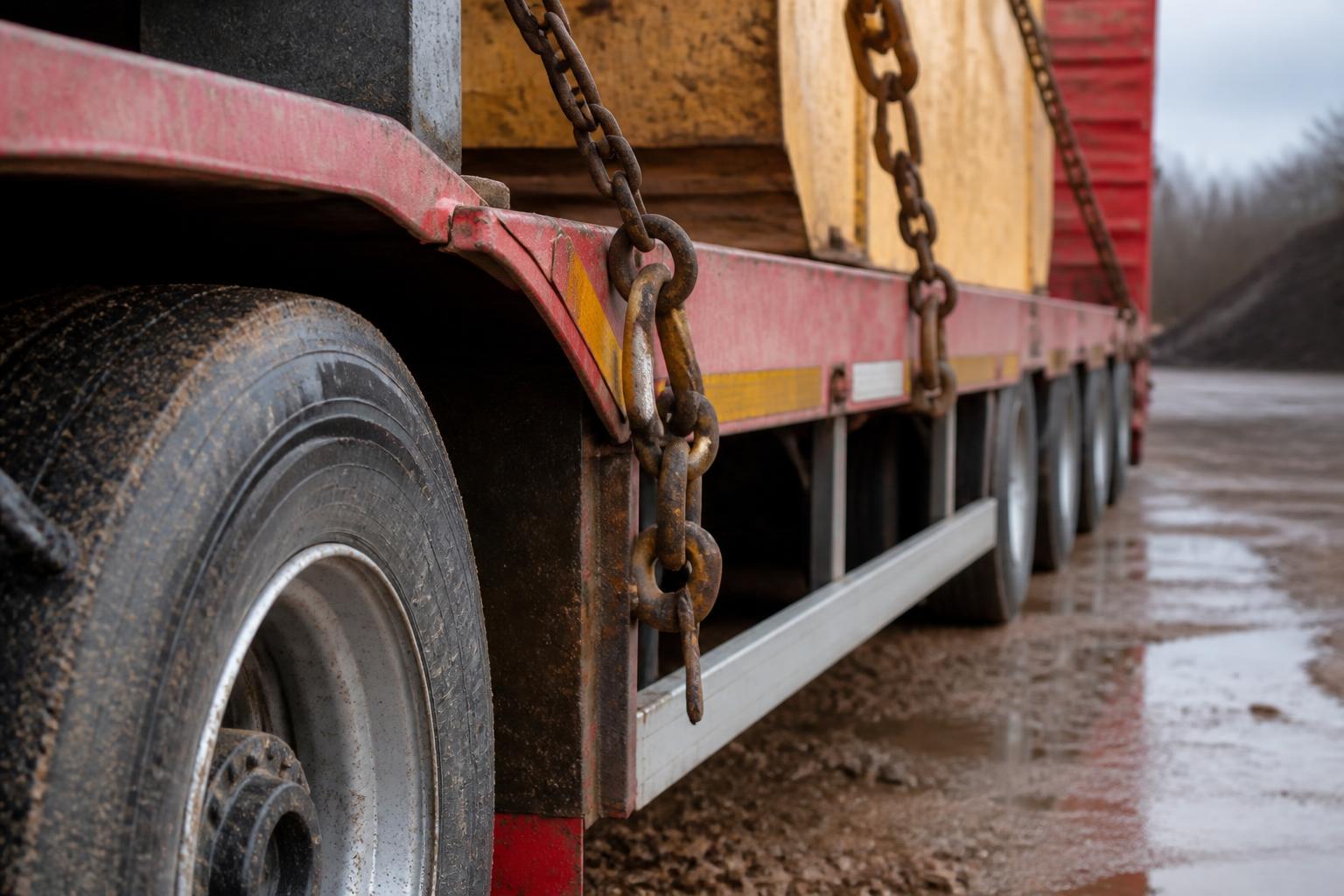
If you need to book an awkward one-off movement in UK haulage, the best route is usually not to blast out a vague request and hope a truck appears. The best results come from defining the job properly, sending it to operators that can actually do it, and keeping one desk responsible for quote handling, follow-up and escalation. On unusual work, the quality of the brief matters almost as much as the availability of the vehicle.
That is exactly where we see jobs succeed or fail. A one-off movement can be urgent, oversized, restricted, access-sensitive, port-related, time-critical, hard to price, or simply outside a supplier’s normal traffic. In those cases, a structured, AI-assisted, human-backed desk usually gives you a better chance of getting a realistic quote and a committed operator than a chain of rushed calls and half-complete emails.
What makes a one-off movement awkward in UK haulage
A movement becomes awkward when it stops behaving like standard repeat traffic. That can happen for several practical reasons.
The first is poor fit with normal fleet patterns. A standard palletised run, a routine full-load between regular sites, or a familiar part-load into a known delivery point is easy to place because operators already understand the lane, the loading method and the likely timings. A one-off awkward job tends to sit outside those patterns. It may need a vehicle type that is less available, a driver with the right experience, or a route that does not fit an operator’s planned day.
The second is uncertainty. Hauliers price risk as much as mileage. If the collection point is not confirmed, if the load dimensions are approximate, if the site cannot say whether unloading is by forklift or by handball, or if the booking depends on a same-day release, acceptance becomes harder. A transport office can absorb only so much unknown detail before it declines the job or prices defensively.
The third is access and handling. Typical examples include:
- long or abnormal items that overhang or need specific restraint
- machinery with uncertain lift points or loading method
- non-standard pallets
- limited access sites with tight turns, soft ground, low bridges or booking-in restrictions
- timed deliveries into city centres
- crane, Moffett, tail-lift or pump truck requirements
- loads that are safe to move, but awkward to secure on a standard trailer
Then there is urgency. A same-day or next-morning requirement is not awkward just because it is fast. It becomes awkward when the job also has one or more operational constraints. For example, a late collection from a supplier with a strict loading slot, followed by a delivery to a site that closes early, is much harder than a simple urgent trunk.
Port traffic adds another layer. In container haulage, awkward one-off work may involve late customs clearance, uncertain release references, quay or terminal timing, VBS issues, demurrage or detention exposure, and port-specific process differences at Felixstowe, London Gateway, Southampton, Tilbury, Liverpool, Teesport or Immingham. Since Brexit, some movements also involve more document checking and more attention to who is responsible for customs status, release and handover. That does not make every port job difficult, but it does mean one missing reference can stop a vehicle moving.
A final point is that one-off does not mean small. We regularly see awkward jobs that are commercially important because production is waiting, a customer delivery has slipped, or a full supplier has no capacity. In those cases, the transport task may be one movement, but the business impact is much larger.
Direct to a known haulier versus using a wider desk
If you already know a reliable operator, going direct can be the fastest option. They know your sites, they may already have your account details, and they do not need a long explanation of how your team books transport. On familiar lanes and known requirements, that relationship has real value.
Direct booking works best when the haulier already has the right equipment, local coverage, and confidence in the job type. If they regularly handle your full-load traffic, they may also be able to absorb a one-off movement if it is broadly similar. The same applies in container haulage if they already work the relevant port and understand the release process.
The limits appear when the awkward part of the job sits outside their normal operation. A trusted general haulier may not have a tail-lift vehicle in the right area. A good pallet operator may not want an uncertain handball delivery with waiting time risk. A container specialist at Southampton may not be the right fit for a job out of Liverpool. Even when they want to help, they may still need to subcontract, and that can add another layer between your team and the vehicle.
Using a wider desk changes the coverage model. Instead of relying on one known operator to solve every exception, you send the job through a process designed to identify suitable capacity across a broader network. That matters when the movement is outside your usual traffic, when timing is tight, or when acceptance depends on matching several details at once.
The strength of a wider desk is reach, but reach only helps if the request is organised. Flooding the market with incomplete information wastes time and weakens confidence. A proper desk should qualify the requirement, route it to relevant operators, compare responses properly, and keep communication consistent. That is especially useful where the buyer needs UK haulage for a one-off awkward movement and does not want to spend the day repeating the same explanation to ten different transport offices.
The trade-off is that a wider desk is not magic. If the job is fundamentally under-specified, commercially unrealistic, or impossible within the time window, broader coverage will not fix that. What it does do is improve your chance of finding the right fit quickly, without relying on one operator’s network or one planner’s spare time.
Broker, marketplace or AI-assisted, human-backed support
The sourcing model affects more than price. It changes how your request is handled, how communication flows, and who remains in control of the commercial decision.
A traditional broker can be effective when the broker understands the traffic and actively manages the job. The good version of broking is selective. The broker checks the details, speaks to operators who are likely to accept, and stays involved through collection, delivery and POD. The weak version is little more than message passing. In awkward work, that weak version causes delay because every missing detail has to be chased back through the chain.
A marketplace model usually gives broad visibility, but it can push speed ahead of judgement. If the process behaves like an auction, operators may be encouraged to react first and sort out the practicalities later. That is risky on unusual jobs. You may get a quick number, but not a firm operational commitment. If the load turns out to need extra kit, if the site restrictions are worse than described, or if the collection slot moves, the original quote may no longer stand.
An AI-assisted, human-backed desk should sit between those extremes. Used properly, AI-assisted handling helps structure requests, identify missing fields, route opportunities to relevant operators, and keep quote handling organised. The human-backed part matters just as much. Awkward haulage still needs judgement, phone calls, challenge on unclear instructions, and someone to decide whether the quote is genuinely comparable.
That is how we run Haulier.AI. We do not use a race-to-the-bottom auction model. We organise the request, direct it toward suitable operators, and keep human oversight on the movements that need real operational handling. Hauliers keep commercial control over whether they quote and on what basis. Buyers get a clearer process, fewer crossed wires, and a better chance of booking a movement that actually runs as agreed.
For businesses moving port traffic, that combination is particularly useful. If your one-off requirement touches a terminal release, a port collection window or a delivery constraint inland, organised handling matters more than simply collecting the fastest headline rate. Our container haulage support across major UK ports is built around that reality, and for port-specific requirements we also handle work such as container collections and deliveries via Felixstowe.
What information changes the quote and the chance of acceptance
The fastest way to improve both price quality and acceptance rate is to give operators the information they actually need. Not every detail changes the quote, but the missing ones often change whether the job is accepted at all.
Start with the load itself:
- collection and delivery postcodes
- exact collection and delivery dates
- required time windows, not just “ASAP”
- whether it is part-load or full-load
- number of pallets, cases, stillages, lengths or loose items
- weight
- dimensions, especially length, width and height of the largest item
- stackable or non-stackable status
- whether the load is top-loaded, side-loaded or rear-loaded
- any special securing requirement
Then give the site details:
- forklift on site or vehicle-mounted offload needed
- tail-lift required or not
- handball involved or not
- booking-in process
- site contact names and numbers
- access limits such as narrow roads, height restrictions, residential delivery points, schools, construction sites or timed gate access
- whether waiting time is likely
If the movement is urgent, say what is truly fixed and what is flexible. There is a major difference between “must collect today by 15:00” and “ready from 15:00, delivery can be tonight or early tomorrow”. The second gives planners room to fit the job into real vehicle movements.
For container haulage, more documents and references matter. Depending on the move, operators may need:
- port and terminal
- container number
- size and type
- weight and VGM status where relevant
- release or collection reference
- shipping line
- customs status
- whether the movement is merchant haulage or carrier-related in some other way
- delivery point restrictions
- whether the container is to be tipped, live-unloaded or grounded
- return location if known
Where UK rules differ from the EU generally, buyers should not assume a process is identical. Since Brexit, customs handling and documentary responsibility can differ materially between UK and EU-linked movements, even where the road leg itself looks straightforward. If there is any cross-border element, be clear about who is handling customs formalities, whether any transit process applies, and where liability for delay sits. The same applies to invoicing points such as VAT treatment, which should be confirmed on the actual movement rather than assumed from older trade patterns.
Commercially, the details that most often change a quote are vehicle type, wasted mileage, waiting risk, failed collection risk, specialist handling, and the likelihood of rework. A vague request may attract a low opening number, but that does not mean the job is genuinely covered. A complete brief usually produces fewer surprises and more reliable acceptance.
If your team regularly struggles with this stage, our guide on handling awkward haulage requests with clearer operational detail goes deeper into what to gather before you send the job out.
How to judge service risk on urgent or unusual jobs
On urgent or unusual work, the wrong question is often “who is cheapest?” The better question is “what is the risk of this not running cleanly, and who is actually managing that risk?”
Start with ETA confidence. Ask whether the ETA is based on a named vehicle plan, a likely subcontract option, or a best guess pending driver confirmation. Those are not the same thing. A realistic ETA with caveats is better than a confident promise built on unconfirmed availability.
Next, ask how updates will be handled. On a standard job, a simple status trail may be enough. On an awkward one-off, you need to know:
- who is monitoring collection status
- who chases if the vehicle is delayed
- whether you will get proactive updates or only replies when you ask
- how exceptions are escalated outside normal office hours
- when POD will be issued and in what form
POD flow matters more than many teams expect. If the delivery is urgent because it protects revenue, stock or production, proof of completion often matters on the same day. Ask whether POD is expected immediately on delivery, whether it is electronic or image-based first, and who chases missing paperwork. A good process for POD is often a sign of a good process generally.
Then look at operational oversight. If the movement is being subcontracted, that is not automatically a problem. Much of UK haulage depends on subcontracting. The important point is whether somebody remains accountable for the movement after the quote is accepted. On awkward jobs, there should be a clear owner of the booking, not just a price and a phone number.
Watch for these warning signs:
- quote returned without clear assumptions
- no challenge on obviously missing details
- vague answers on vehicle type
- no named escalation route
- no mention of access risk or loading method
- no process for POD or exception reporting
- acceptance that feels instant on a job that plainly needs checking
By contrast, good risk handling usually sounds more operational. You will hear questions about dimensions, loading sequence, site equipment, release references, cut-off times and realistic delivery windows. That may feel slower in the first ten minutes, but it is usually faster by the end of the day because the job is less likely to collapse at the collection point.
For port traffic, risk checks should also include terminal familiarity and inland delivery planning. A booking that works from London Gateway may not translate neatly to Southampton or Teesport if the operator does not regularly cover the port, the local process or the destination profile. That is why we also support port-specific work such as container haulage through London Gateway, where local handling details can make the difference between a smooth move and a missed slot.
The best way to book awkward one-off work in UK haulage is to treat it as an operational exercise, not just a buying exercise. Define the movement properly, choose a sourcing model that can handle exceptions, and make sure someone is accountable for quote quality, ETA realism, escalation and POD flow. When the job is unusual, clarity beats speed for its own sake, and organised handling beats a long list of hurried calls.
What counts as awkward one-off UK haulage?
Usually a movement with unusual dimensions, difficult access, short notice, limited loading windows, special kit needs, or poor backload fit. One-off jobs are harder because there is no repeat pattern to plan around.
Is the cheapest quote usually the best option?
Not always. For awkward work, a low quote can miss waiting time, access limits, port constraints or the right equipment. A realistic quote with clear assumptions is often safer than the lowest number.
Can this approach help with container haulage from ports?
Yes, especially where timing, port process and inland delivery details matter. Clear handling is useful for container haulage linked to Felixstowe, London Gateway, Southampton, Tilbury, Liverpool, Teesport and Immingham.
What should I send when asking for a quote?
Send collection and delivery postcodes, dimensions, weight, goods type, loading method, site restrictions, target date, time windows, and any reference needed for POD or booking-in.
Does AI-assisted mean no human checks?
No. In this model, AI-assisted supports organisation and matching, while human-backed handling checks the movement details, communication and practical fit before work is progressed.