
Container haulage article
Project44 alternatives for UK container logistics in 2026
Discover top Project44 alternatives for UK container logistics in 2026. Explore AI-driven solutions and enhance your freight management today!
For UK freight forwarders and importers, the most practical Project44 alternatives in 2026 are platforms that go beyond passive tracking to deliver AI-assisted orchestration, local port terminal integration, and genuine exception management. Project44 is built primarily for large-scale, North American enterprise visibility. UK operators need something different.
The strongest options for UK container logistics include:
- Haulier — a UK-native, AI-assisted transport desk connecting freight forwarders and importers directly with hauliers, with managed quoting, real-time communication updates, and port coverage matching across major UK terminals
- AI-native orchestration platforms — tools that automate exception-driven decisions such as re-bookings and inland storage triggers, rather than simply surfacing tracking data
- UK-focused freight management systems — platforms with native integration into UK customs workflows, Freeport regulations, and terminal slot management at ports like Felixstowe and Liverpool
- Document automation tools — systems using OCR and automated data extraction to cut invoice delays and reduce detention risk in container haulage
The core problem with Project44 for UK operators is structural. Large-scale international platforms often lack deep native integration with UK terminal and customs ecosystems, which creates daily operational friction that generic visibility dashboards cannot resolve.
Table of Contents
- How do Project44 alternatives compare for UK container logistics?
- How to choose the right Project44 alternative for your UK operation
- Visibility vs exception management: what UK operators actually need
- What UK container logistics operators say about their platforms
- Haulier covers what most visibility platforms miss
- FAQ
- Key takeaways
How do Project44 alternatives compare for UK container logistics?
The differences between Project44 and UK-centric alternatives become clear when you look at what actually matters for container haulage operations day to day.

| Evaluation area | Project44 | UK-focused alternatives |
|---|---|---|
| Focus area | Real-time transportation visibility | AI-native orchestration and exception management |
| Regional integration | North America-centric; thinner UK coverage | Native UK customs, Freeport rules, and terminal slot management |
| Automation capabilities | Carrier tracking and ETA prediction | OCR document extraction, automated quoting, job creation workflows |
| Pricing model | Enterprise custom; not publicly listed | Varies; some offer transaction-based or commission models |
| Ease of transition | 6–12 week implementation typical | UK-focused platforms often deploy faster with local data pre-loaded |
| Customer support | Enterprise-grade; US-timezone primary | UK-based support with local operational knowledge |
| Data privacy and security | International frameworks | UK-specific compliance standards, including HMRC audit trail requirements |
Project44 holds a 4.7/5 rating from 691 reviews, which reflects genuine strength in logistics visibility. The gap shows up in context: those reviews skew heavily toward North American shipper-side teams, not UK container haulage operators managing Freeport customs or port slot conflicts at Tilbury.
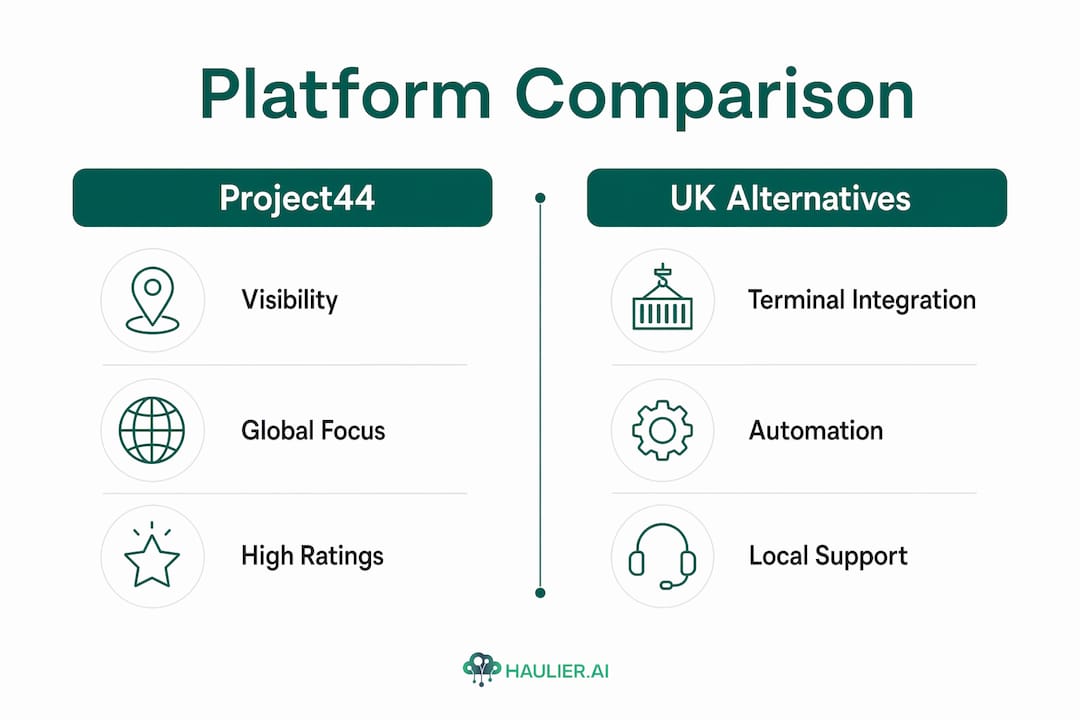
UK haulage operators face intensifying pressures in 2026, including driver shortages, fuel cost volatility, and margins typically below three per cent. A platform that delivers visibility without reducing admin burden or automating exception responses does not move the needle enough.
Platforms with real-time port and terminal integration reduce manual tasks meaningfully by pulling live container and handling status directly into operational workflows, removing the need to switch between systems. That kind of integration with Portbase, Destin8, or PSA is what separates genuinely useful tools from dashboards that look impressive but require constant manual intervention.
How to choose the right Project44 alternative for your UK operation
Picking the wrong platform costs more than the subscription fee. A failed implementation in UK container logistics means live shipments disrupted, customs delays compounded, and haulier relationships strained.
Start with these evaluation criteria:
- Feature fit: Does the platform handle your actual workflow? Quoting, job allocation, document management, and exception alerts matter more than headline tracking features you will rarely use.
- UK terminal integration: Check whether the platform connects natively with the terminals you use most. Integration with UK port slot management at Felixstowe and Liverpool is not a nice extra; it determines whether trip planning is actually useful.
- Automation depth: Look for OCR-based document extraction, automated data population, and quoting workflows. These cut the admin hours that eat into already thin margins.
- Pricing transparency: Enterprise custom pricing means you cannot compare costs without a sales call. Platforms with transaction-based or commission models give you clearer cost-per-movement visibility.
- Transition risk: Switching freight management platforms requires careful planning around UK port operations, Freeport customs, and local regulations. Ask vendors specifically how they handle live shipment migration.
- Security and compliance: UK-specific platforms often adhere to regional standards beyond generic international frameworks, including HMRC-compliant audit trails for document retention.
Pro Tip: When evaluating AI-assisted platforms, ask whether hauliers retain control over their own rates and can decline unsuitable jobs. Platforms where hauliers set their own pricing tend to produce more accurate quotes and fewer last-minute cancellations, because the rates reflect real capacity rather than algorithmic estimates.
The two-sided model Haulier uses is worth understanding here. Hauliers control their rates and can reject jobs that do not fit their capacity or route. That structure keeps pricing honest and reduces the communication breakdowns that plague traditional freight booking.
Visibility vs exception management: what UK operators actually need
Most logistics platforms sell on visibility. Fewer deliver on exception management, and that distinction matters most in UK container haulage.
Visibility means knowing where a container is. Exception management means the platform does something useful when that container is about to miss a port slot, trigger storage fees, or create a customs delay. UK container logistics in 2026 increasingly demands the latter: autonomous AI-assisted re-bookings, inland storage trigger management, and proactive alerts before problems become costs.
The practical gap is significant. A platform that shows you a container is delayed gives you information. A platform that flags the delay, calculates the detention risk, and surfaces alternative haulier capacity gives you a decision. For operators managing multiple movements across ports like London Gateway, Teesport, or Tilbury, that difference compounds across every working day.
Forward-thinking logistics managers are already moving containers to inland storage depots to create buffer zones and avoid quayside gridlock. Platforms that support this operationally, by integrating with off-dock storage workflows and flagging when a container should move before port fees accumulate, are the ones earning adoption in 2026.
What UK container logistics operators say about their platforms
User feedback on UK-focused platforms consistently highlights the same themes: faster implementation, more responsive support, and better fit for the specific complexity of UK port operations.
UK-centric platforms tend to score higher for user-friendliness, support quality, and successful implementation in container logistics compared to broader international tools. The reason is straightforward: a platform built around North American TL and LTL networks requires significant configuration before it handles UK customs intricacies, Freeport rules, or terminal-specific workflows.
Operators who have moved from large international platforms to UK-native alternatives frequently cite quoting efficiency as the most immediate improvement. When hauliers set their own rates and freight forwarders receive matched quotes without manual back-and-forth, the time from enquiry to confirmed booking drops sharply. Paperwork tracking and real-time communication updates address the other persistent complaint: missed updates that leave importers chasing status by phone.
The implementation experience also differs. UK-focused platforms with local data and pre-built terminal integrations typically get teams operational faster than enterprise platforms requiring corridor pilots and extended configuration periods.
Haulier covers what most visibility platforms miss
If you have been evaluating Project44 and similar platforms for UK container haulage, Haulier addresses the gap those tools leave: the actual booking, quoting, and communication layer between freight forwarders and hauliers.
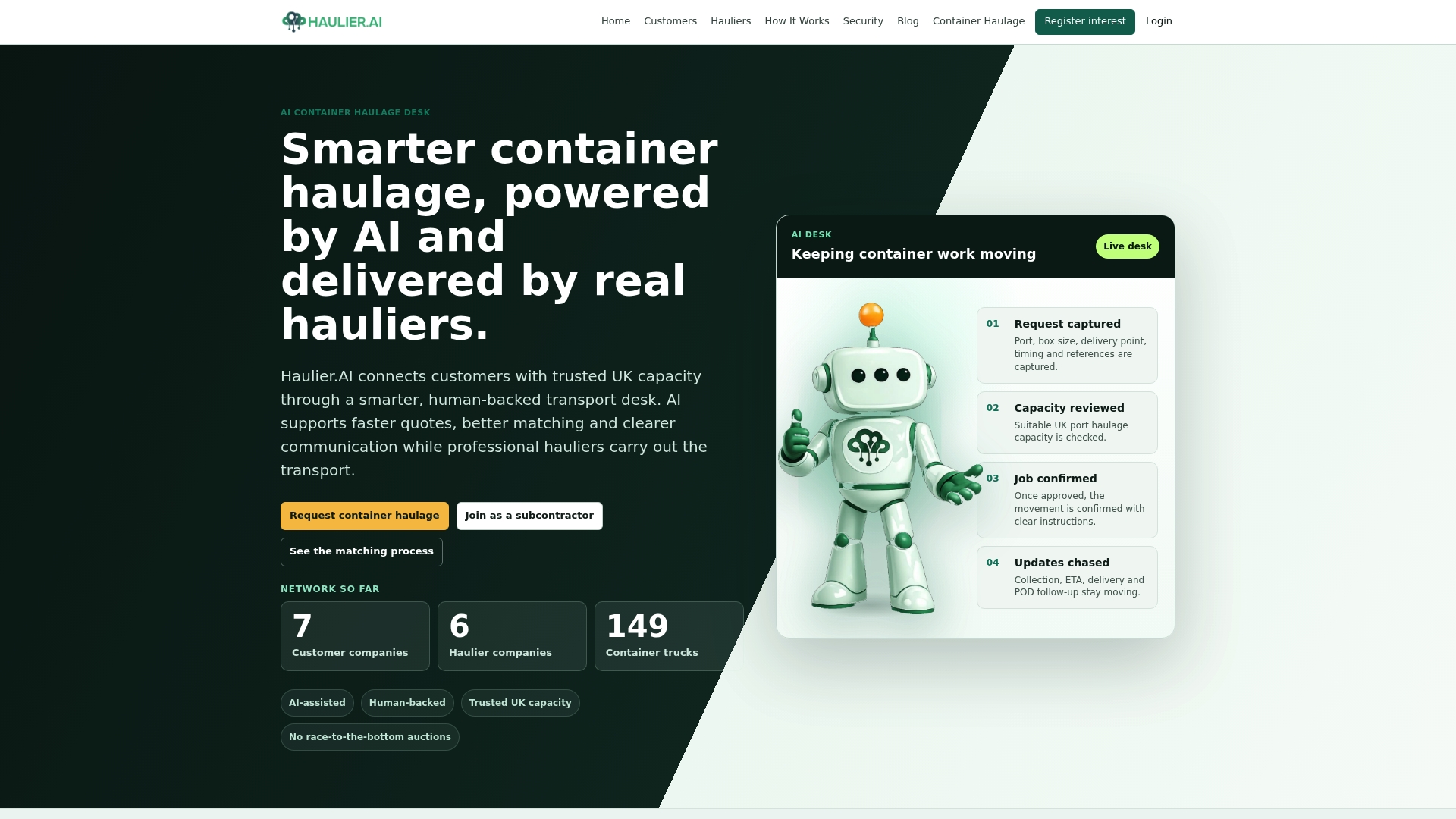
Haulier is not a tracking dashboard. It is an AI-assisted, human-backed transport desk that connects UK freight forwarders and importers with available hauliers, manages the quoting process transparently, and keeps all parties updated throughout the movement. Hauliers control their own rates and can decline jobs that do not suit their capacity, which keeps pricing accurate and reduces last-minute failures. There are no long implementation projects and no enterprise contracts to negotiate before you can move a container.
For freight forwarders managing UK port collections and deliveries, request container haulage through Haulier to see matched capacity and transparent quotes without the admin overhead.
FAQ
What are the main limitations of Project44 for UK container logistics?
Project44 is primarily built for North American shipper-side visibility, with comparatively thinner integration into UK terminal slot management, Freeport customs workflows, and local haulier networks. UK operators often find it requires significant configuration before it handles daily port operations effectively.
How long does it take to switch from Project44 to a UK alternative?
Implementation timelines vary considerably. Enterprise platforms typically require 6–12 weeks for a corridor pilot, while UK-focused platforms with pre-built local integrations can get teams operational within days to a week for standard container haulage workflows.
Does Haulier replace a TMS or work alongside one?
Haulier operates as an AI-assisted transport desk focused on the quoting, booking, and communication layer for UK container haulage. It connects freight forwarders with hauliers directly, rather than replacing a full TMS, making it a practical complement to existing freight management systems.
What should I prioritise when evaluating Project44 alternatives?
Prioritise UK terminal integration, automation of document and quoting workflows, pricing transparency, and the platform’s approach to exception management. Platforms that actively flag and respond to delays, rather than simply reporting them, deliver the most operational value for UK container haulage.
Key takeaways
For UK container logistics operators, the best Project44 alternatives combine AI-assisted orchestration with native UK port and customs integration, delivering exception management and quoting efficiency that broad international platforms cannot match.
| Point | Details |
|---|---|
| Project44’s UK limitations | Built for North American enterprise visibility; lacks native UK terminal and customs integration for daily container haulage. |
| Exception management over visibility | UK operators need platforms that act on delays, not just report them, including re-booking and storage trigger management. |
| Transition risk is real | Switching platforms requires careful planning around UK port operations and Freeport customs to avoid disrupting live shipments. |
| Haulier’s two-sided model | Haulier connects freight forwarders with hauliers via AI-assisted quoting, with hauliers controlling rates for accurate, reliable pricing. |