
Container haulage article
Moving containers through Tilbury without the usual delays
A practical guide to container haulage through Tilbury, covering bookings, timings, documents, costs, delays and how to organise UK haulage properly.
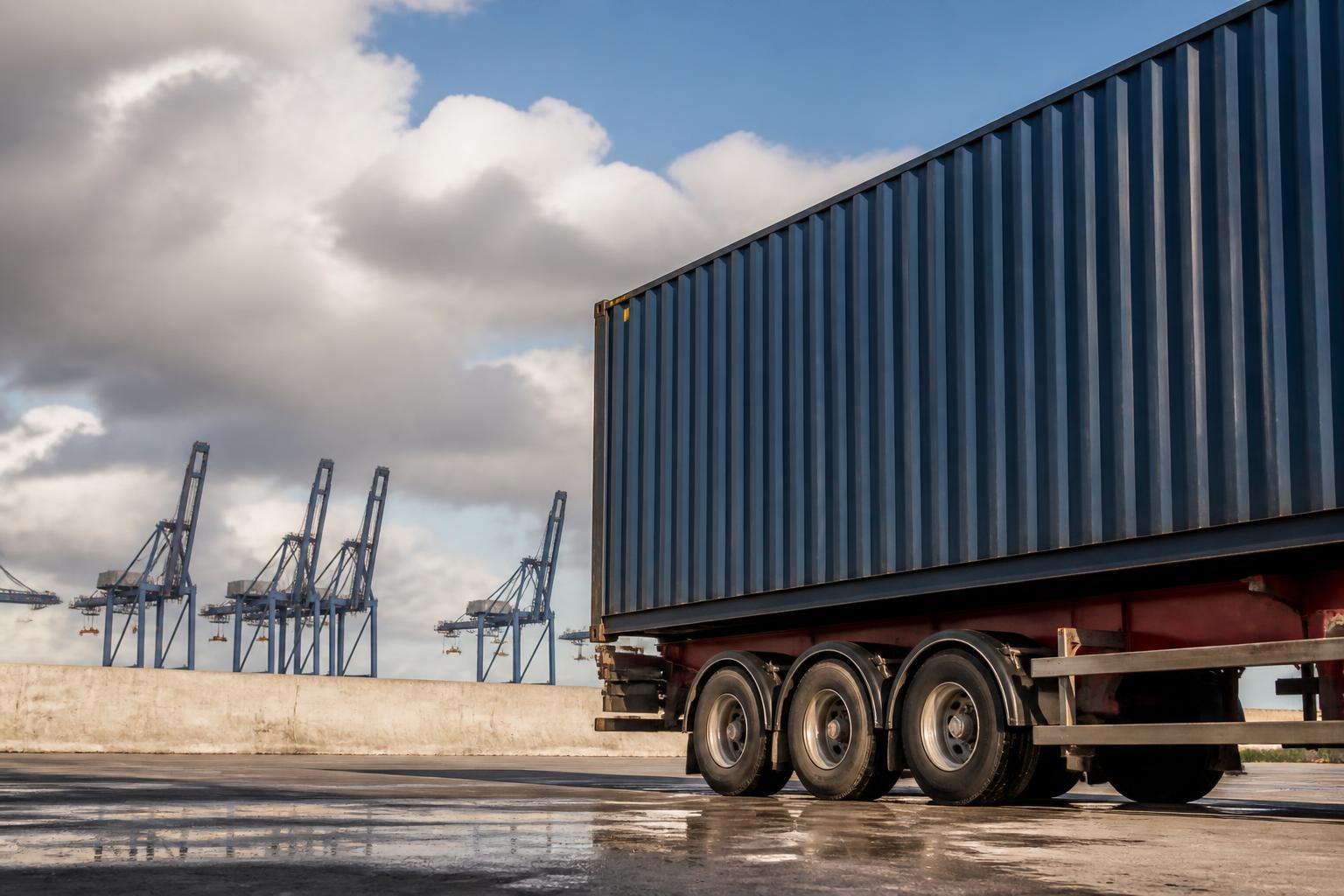
Tilbury work runs smoothly when the basic transport details are right before the box is released. Most avoidable delays come from missing references, unclear collection status, weight surprises, booking windows that do not match the driver plan, and delivery sites that cannot actually take the vehicle sent. In practice, good container haulage through Tilbury is less about chasing trucks and more about getting the movement set up properly from the start.
At Haulier.AI, we handle this by combining an AI-assisted, human-backed transport desk with real operator oversight. That matters when volumes change, when a booking has to move today rather than tomorrow, or when a standard port collect turns into a timed delivery, an empty return, and a POD chase across several parties.
How container haulage through Tilbury actually works
A standard Tilbury movement starts before the vehicle is anywhere near the port. First, the container has to be available for collection. That usually means the shipping line, port system, customs position, and any release conditions all need to be in order. If the box is not actually released, the best traffic plan in the world will still end in a failed collection.
For us to place a job properly, we need the core collection details early. That means the port, terminal details if relevant, container number, size and type, release or booking reference, and the earliest point the container can be collected. We also need the delivery postcode, site contact, and any timing restrictions. If there is a VBS slot or a terminal booking requirement, that needs to be clear at the quoting stage, not after the vehicle has been planned.
Once availability is confirmed, the collection is booked with a suitable operator. Suitability is not just about who has a truck free. It is about the right equipment, the right route, the right driver hours position, and the right commercial fit for the work. A 20ft heavy box into a tight urban site is a different job from a 40ft high cube going to a warehouse with open access and forklift offload.
After collection, the driver heads to the delivery point. On arrival, the site may need to check booking references, seal numbers, paperwork, or unloading instructions. If the customer is live unloading, waiting time can start to build quickly if the bay is not free. If it is a drop and swap arrangement, that needs to have been agreed in advance and the site needs the space and equipment to handle it.
Once the laden container is emptied, the next step is the empty return. This is where many people underestimate the planning involved. The empty return location is not always the same as the collection port. Depending on line instructions, the empty may need to go back into Tilbury or be directed elsewhere. Across UK haulage generally, and especially in port work, that return instruction can change late. We need the return location, latest return date, and any booking requirements to avoid storage or detention exposure.
Finally, the movement closes with the POD. In container haulage, POD is not always just a signed delivery note. It may include arrival and departure times, site sign-off, seal check confirmation, or evidence of empty return. Operations teams often need that quickly for customer updates, billing, and dispute handling. We therefore treat POD collection and status updates as part of the movement, not an afterthought.
If you are moving boxes through other ports as well, the same broad process applies at our container haulage desk for major UK ports, including Tilbury container movements and port collections and work through London Gateway container operations.
What information operators need before they can quote properly
A proper quote for Tilbury work depends on operational facts, not just a pickup and delivery postcode. The more accurate the brief, the more accurate the rate and the plan.
The first essentials are the container details. We need to know whether it is 20ft, 40ft, or 45ft, and whether it is a standard dry box, high cube, reefer, open top, flat rack, or another specialist type. Reefer work may involve power requirements and different handling assumptions. Non-standard equipment changes availability and routing options.
Weight is critical. Gross weight affects vehicle selection, route planning, axle considerations, and whether the movement is commercially and legally straightforward. A heavy 20ft container can be more restrictive than a lighter 40ft. If the declared weight changes after booking, the original quote may no longer reflect the actual job.
We also need timings in plain operational terms. That means the collection date, delivery date, earliest collection time, latest acceptable delivery time, and whether the movement is same day, next day, or flexible. A job that can deliver any time before close of business is not the same as a job that must hit a one-hour booking slot. If there is a target ETA, tell us that up front.
Site constraints matter just as much as port details. We need to know if the delivery point has tight access, low bridges nearby, restricted turning space, weight limits, booking-in procedures, PPE rules, or unloading limitations. We also need to know whether the site can accept an articulated vehicle, whether it has a bay suitable for container unloading, and how long unloading usually takes.
References are another common gap. For a Tilbury collect, operators may need booking references, release references, container numbers, line information, and sometimes customs-related details depending on the movement. Since Brexit, documentary accuracy and timing still matter across border-related flows in ways that many customers now treat as routine until something is missing. Where the load involves customs status, inland clearance arrangements, or linked documentation, we need that identified early. UK rules can differ from the wider EU position, so assumptions based on EU road practice do not always transfer neatly.
Commercial details also affect planning. We need to know whether the quoted rate should include waiting time assumptions, whether there is expected demurrage or detention risk, whether the customer needs a separate line for empty return, and how POD should be issued. If the delivery is to a site that routinely causes delays, it is better to say so in advance and build the job on realistic terms.
For invoicing and compliance, we also need the correct customer entity, purchase order if required, and the right treatment for VAT. In UK domestic haulage, VAT treatment follows UK rules, and that needs to be reflected correctly on the paperwork. If there are self-billing arrangements or customer-specific invoice references, we need those before the work is completed, not after.
Where delays and extra costs usually come from
Most port delays are not mysterious. They tend to come from a short list of repeat causes.
The first is collection being attempted before the container is actually available. A line may have issued one reference while another release condition is still outstanding. Customs may not be cleared. A booking may exist, but the box may still not be ready to leave. That can turn into wasted driver time, missed slots, and a vehicle that cannot be reused elsewhere that day.
The second is incorrect or incomplete data. A wrong container number, missing booking reference, wrong delivery postcode, or a site contact who does not answer can all stop a movement. In container haulage, small admin errors have very physical consequences. The truck still turns up, the time still passes, and somebody still pays for the failed leg.
Waiting time is another major source of added cost. This can happen at the port, but just as often it happens at the delivery point. Warehouses that are busy, sites that insist on strict booking windows but do not unload on time, and customers who are not ready for the box all create the same outcome. The driver waits, the next job slips, and the day becomes harder to recover.
Weight problems are especially expensive. If the actual gross weight is higher than declared, the planned vehicle may not be suitable. That can mean rework, reallocation, or a failed collection. The same applies where the route to the delivery site is not practical for the loaded unit.
Empty return issues also create avoidable charges. If the container is emptied but the return location is not confirmed, or if the return booking cannot be made in time, storage, detention, or additional handling costs can start to build. These are often treated as line issues, but in operational terms they are planning issues.
Then there are site access failures. If the delivery point cannot take a full artic, if there is no space to manoeuvre, or if unloading equipment is not available, the problem usually emerges only when the driver is already there. That is why site limits need to be discussed before the quote is accepted.
Urgent changes are another source of cost. A same-day request, a revised delivery slot, a late change of empty return point, or a request to hold the box overnight all reduce the pool of available operators and compress planning time. That does not make the work impossible, but it does change the operational and commercial reality.
These patterns are not unique to Tilbury. We see the same across Felixstowe, Southampton, Liverpool, Teesport, Immingham, and London Gateway. The details vary by port, but the root causes are usually the same, incomplete information and late changes.
How to plan Tilbury work when volumes change or jobs are urgent
The companies that cope best with fluctuating volume do not rely on heroic last-minute calling. They standardise the job brief and keep the transport desk fed with the right information early.
When volume rises, the first practical step is to separate fixed work from variable work. If you know a certain number of containers will move each week from Tilbury to regular delivery points, those can be planned as a steady flow. The awkward work, late releases, overweight units, timed deliveries, and out-of-pattern jobs can then be handled as exceptions instead of overwhelming the whole desk.
For urgent jobs, speed comes from structure. A short, complete movement brief is far more useful than a long email thread. We need the container details, release status, collection point, delivery point, required timing, weight, and any site restrictions in one place. That lets us assess whether the movement is genuinely same-day viable, whether the ETA is realistic, and which operators are a fit.
This is where an organised desk helps both the customer and the haulier. Customers avoid sending the same request to multiple firms and then chasing each one separately. Hauliers avoid digging through partial job details only to discover the container is not released or the delivery site cannot take the trailer.
When you have peaks, it also helps to be honest about flexibility. If five boxes all say they must deliver at 09:00, but three could actually deliver by midday, we can plan more sensibly and preserve capacity for the truly critical jobs. The same applies to empty returns. If the line allows return the following day, that may create a much cleaner plan than forcing an unnecessary late same-day return.
For operators looking for subcontract work, changing volumes create both risk and opportunity. Quiet days can be filled with relevant port work if the job details are complete and the commercial basis is clear. Busy days can still work if the desk filters out unsuitable requests rather than pushing every movement to every haulier.
That is one of the reasons we do not run a race-to-the-bottom auction model. In real UK haulage, especially port work, the cheapest first response is often not the operator who can actually complete the movement cleanly. Suitability, timing, and control matter more than noise.
When a transport desk helps and when it does not
An AI-assisted, human-backed desk adds value when the problem is volume, repetition, speed of handling, and consistency of information. It is useful when customers need to place multiple requests without endless calls and emails, and when hauliers want relevant subcontract opportunities without wading through poor briefs.
We use AI-assisted handling to structure requests, surface missing information, route suitable work, and keep communication organised. That is useful for standard container haulage flows, for part-load and full-load road movements alongside port work, and for keeping request and quote handling tidy when operations teams are under pressure.
It also helps with status management. If a customer wants to know whether the container is collected, delivered, awaiting empty return, or closed with POD, a structured desk can keep those stages visible without ten separate chaser emails. That is not glamorous, but operationally it matters.
Where a desk does not replace people is judgement. Human oversight still matters when the release position is unclear, when a delivery site sounds wrong for the vehicle type, when a quoted weight does not fit the described commodity, or when the plan is technically possible but commercially poor. It also matters when there is disruption on the day and someone needs to decide whether to wait, rebook, divert, or stand the job down.
The same applies to pricing edge cases. A system can help organise inputs, but an experienced operator still needs to judge whether a movement is realistic at a given rate once waiting risk, empty return exposure, and timing pressure are understood. Port haulage is full of jobs that look simple on a spreadsheet and are not simple at all by 14:00.
So the right model is not automation by itself, and it is not pure manual chasing either. It is organised intake, clear request handling, fast filtering, and human operational control where it counts. That is how we approach Tilbury work, and it is why we can support both customers looking for dependable coverage and hauliers looking for workable subcontract moves.
If your Tilbury movements are being slowed down by fragmented requests, unclear references, or too much manual chasing, we can help put the process back into order. The aim is straightforward, cleaner planning, fewer avoidable failures, and container haulage through Tilbury that moves on the basis of good information rather than last-minute guesswork.
What is included in container haulage from Tilbury?
Usually collection from Tilbury, road movement to the delivery point, and where required, empty return to the nominated depot. The exact scope depends on booking terms, container status and site requirements.
Why can Tilbury container haulage quotes vary so much?
Price changes with distance, container size, weight, waiting risk, delivery access, time windows, empty return location and whether the job is straightforward or likely to need extra coordination.
What documents are usually needed before collection?
Operators normally need the key booking references, collection details, delivery address, container information, weight and any site instructions. Missing or wrong data can stop collection or create delay charges.
Can urgent Tilbury jobs still be covered?
Sometimes, yes, but it depends on slot availability, driver and vehicle position, container readiness and delivery constraints. Urgent work is easier to place when the job data is complete from the start.
Does Haulier.AI replace the haulier on the job?
No. Haulier.AI is an AI-assisted, human-backed transport desk that helps organise requests and quotes. The transport operator still carries out the movement and keeps commercial control.