
Container haulage article
How to get a London Gateway container quote faster
Learn what affects a London Gateway container haulage quote, what details to send, and how to avoid delays, missed slots and pricing surprises.
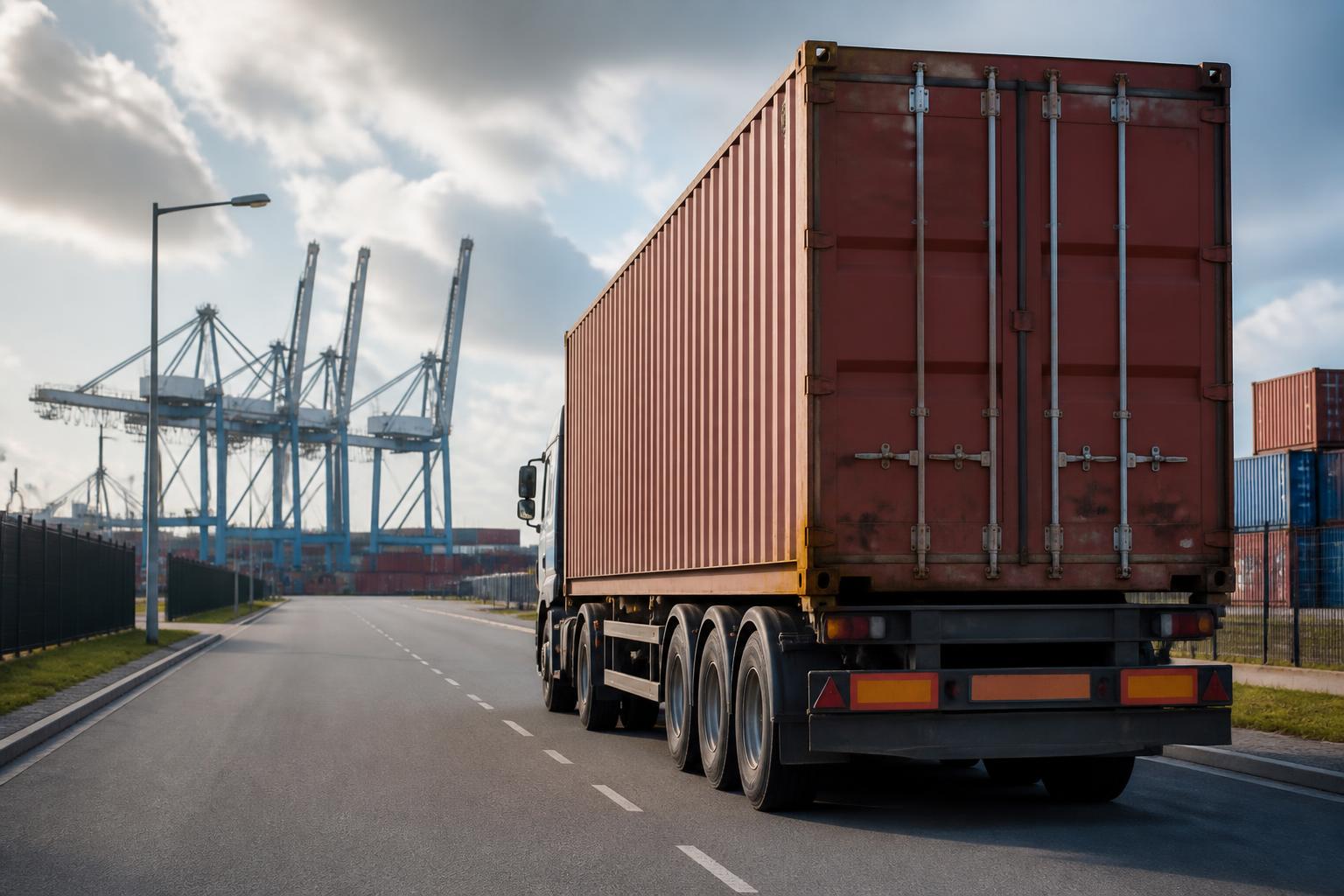
If you want a London Gateway quote quickly, the fastest route is not sending the shortest email. It is sending the right operational facts first time. For a realistic price on container haulage from London Gateway, we need enough detail to match the job to the right operator, check the port and inland legs properly, and avoid quoting against assumptions that later turn into rework.
In practice, that means giving us the container size and weight, the collection and delivery points, the port status, the timing, and any site or equipment constraints. When those basics are clear, we can turn a request around far faster and with fewer revisions. If you want to see how we handle these movements day to day, our London Gateway container haulage service sets out the scope.
What a London Gateway quote needs before anyone can price it
A realistic quote starts with the minimum job data. Without it, any number is only provisional.
For container haulage from London Gateway, we normally need the following before we can price properly:
1. Container details
We need to know:
- container size, usually 20ft, 40ft, or 45ft
- whether it is standard, high cube, reefer, open top, flat rack, or another specialist type
- gross weight, or at least the expected laden weight
- whether the move is import, export, empty repositioning, or a quay to quay or local transfer
Weight matters for both legal compliance and routing. A 20ft box at a high gross weight is a different planning exercise from a light 40ft. The right vehicle spec, axle configuration, and route checks depend on it.
2. Collection and delivery points
A quote cannot be built on "London area" or "Midlands site". We need:
- full collection address if not collecting directly from the port
- full delivery address with postcode
- confirmation of whether the delivery point is a warehouse, factory, RDC, farm, construction site, or another type of site
- contact details for the booking point if available
Postcode level detail matters because mileage is only part of the picture. Access restrictions, urban delivery conditions, waiting expectations, and local traffic patterns all affect the job.
3. Port status and release position
For imports through London Gateway, we need to know whether the container is:
- already discharged
- available for collection
- still subject to shipping line release
- awaiting customs clearance
- held for exam or another intervention
If customs or line release is not in place, that does not always stop us quoting, but it does change the assumptions around timing and storage risk. Since Brexit, buyers moving goods into the UK are used to customs processes, but quote delays still happen when the transport request is raised before the cargo is actually clear to move.
4. Timing
We need:
- required collection date
- required delivery date
- whether the job is same day, next day, or booked further ahead
- delivery booking requirements
- site opening hours
- the latest acceptable ETA
A movement that can deliver over a two day window is easier to place than one that must hit a one hour booking slot. If the delivery site only accepts between 08:00 and 11:00, that needs to be known before pricing, not after the vehicle is sourced.
5. Equipment and handling requirements
Not every container movement is a standard port to warehouse run. We need to know if the load needs:
- a skeletal trailer only
- a genset for reefer support
- a tipping chassis
- side loader or other specialist handling
- driver assisted procedures at site
- additional security requirements
If the delivery point cannot offload in a standard way, or if the container must remain on wheels for a period, that changes both the haulier pool and the commercial basis.
6. Commercial basis
To avoid confusion, we also need to know:
- whether you want a one way move, round trip, or ongoing rate
- whether waiting time should be included or shown separately
- whether storage, demurrage, detention, or quay rent exposure is already in play
- whether the quote is for a single shipment or expected volume
A one off urgent movement is priced differently from repeat traffic with predictable lanes. The more stable the work, the more accurately we can align the request with suitable operators.
What usually changes the price on a London Gateway movement
Two jobs can both be described as "collect a container from London Gateway and deliver inland", yet price very differently. The variation usually comes from operational constraints rather than simple miles.
Distance and traffic exposure
Mileage still matters, but not in isolation. A short movement into a congested urban area can be harder to execute than a longer trunk route to a well run distribution site. London and South East traffic conditions, port access timing, and delivery booking windows all affect vehicle utilisation.
Container weight and type
Heavy 20ft containers often trigger tighter planning than light 40ft units. Reefer equipment, non standard boxes, and specialist handling requirements reduce the available haulier base and can increase cost.
Timing pressure
Urgent jobs usually cost more because they limit routing flexibility and available capacity. If the request arrives after cut off for same day planning, or late in the day for next morning collection, fewer operators can realistically cover it without disrupting existing work.
Delivery site restrictions
Some delivery points have:
- narrow access
- strict vehicle booking systems
- mandatory PPE or induction
- long queue times
- limited offload resource
- no acceptance outside a fixed slot
These factors affect waiting risk and the number of loads a vehicle can complete in a day. That feeds directly into rate levels.
Port related exposure
At London Gateway, as with Felixstowe, Southampton, Tilbury, Liverpool, Teesport, and Immingham, the inland move is only part of the commercial picture. The quote may need to account for:
- port waiting
- failed collection due to release issues
- storage pressure if collection slips
- detention risk if the empty return window is tight
- extra communication and rebooking time where the booking position changes
If you move containers through multiple UK ports, it helps to compare like with like. Our pages on container haulage across UK ports, Felixstowe container movements, and Southampton container deliveries show how port context changes the job.
Volume and regularity
Regular lanes with repeatable operating conditions are easier to support. If we know a movement will recur, we can align it with operators who want that pattern of work. One off irregular jobs, especially awkward ones, often need a broader search and more manual checking.
Market capacity on the day
Container haulage is still a live operating market. Capacity can tighten because of seasonal surges, driver availability, regional imbalances, or a cluster of urgent work through the same port. A quote requested well in advance usually gives more room to secure the right fit than one needed immediately.
How to avoid delays when requesting container haulage
Most quote delays are not caused by a lack of willingness to price. They are caused by missing details, unclear assumptions, or timing that forces everyone to work around gaps.
Send the release and movement facts together
A common issue is receiving only the container number and a delivery postcode, then finding out later that customs entry is not complete or the shipping line release has not been issued. If the box is not yet actually collectible, tell us that. We can still prepare, but we will quote on the correct basis.
Include booking constraints upfront
If the delivery point needs a pre-booked slot, an induction, or a specific vehicle notice period, include that in the first request. Re-pricing often happens because a straightforward delivery later turns out to require a timed booking and extended waiting exposure.
Confirm gross weight properly
"Standard weight" is not enough. If the actual gross weight later comes in much higher, the equipment and route assumptions may no longer hold. That can mean a revised rate or, worse, a failed collection plan.
State whether the job is urgent, flexible, or repeat
If you need a fast container haulage from London Gateway quote, say what kind of speed you mean. Is it:
- a price in the next 30 minutes for internal approval
- a same day collection requirement
- a quote for tomorrow's planning meeting
- a rate for a weekly lane starting next month
Those are different workflows. The clearer the purpose, the faster we can direct the request.
Share site access notes
Simple facts save time:
- can an artic access the site
- is there room to turn
- is the offload self tipped, forklifted, or crane handled
- are there security check in procedures
- is there a hard booking cut off
- are there penalties for missed slots
Without these, the first price may be based on a standard assumption that later has to be revised.
Avoid late document drip-feeding
When documents arrive one by one, quote handling slows down. If available, send the key references together:
- container number
- booking or release reference
- delivery address
- commodity description where relevant
- gross weight
- customs status
- target collection and delivery times
For exports, include the port booking position and cut off requirements. Missing export timings are a common reason for failed planning.
When a quick quote is not the same as a good quote
A fast response is useful, but speed on its own is not quality. The first number back is only meaningful if the assumptions are right.
Check what is included
Before comparing quotes, check whether they include:
- waiting time
- timed delivery exposure
- fuel assumptions where relevant
- empty return expectations
- specialist equipment
- booking administration
- out of hours collection or delivery
A lower figure may simply exclude items another haulier has already allowed for.
Check what could trigger re-pricing
A good quote makes the limits visible. For example:
- actual gross weight differs from advised weight
- delivery point turns out to be restricted
- collection cannot happen because release is not in place
- the box is not available as expected
- the customer changes the delivery slot after booking
- the movement becomes urgent after an originally flexible brief
That is not bad faith. It is normal transport control. The problem comes when these assumptions are hidden.
Check service fit, not just rate
For some jobs, the best option is not the cheapest. If the delivery slot is fixed, or the site is awkward, or the container type is specialist, the right operator is the one most likely to execute cleanly. One failed collection or missed booking can cost more than the apparent saving on the linehaul rate.
Check communication and proof flow
For operations teams, the job does not end at wheels turning. You also need clear ETA updates and clean POD handling. If the quote process is vague on communication, the execution often is too.
Check whether the haulier actually wants the work
This matters more than many buyers think. Forced auction behaviour can produce unrealistically low opening numbers, followed by slow acceptance, re-pricing, or poor service once the hard parts of the job become clear. A quote should come from a haulier who has reviewed the movement properly and wants it on sensible terms.
How Haulier.AI handles quote requests without turning them into an auction
We built Haulier.AI around a simple operational point. Buyers need organised access to capacity. Hauliers need relevant opportunities without losing commercial control. Those two things are compatible if the request handling is structured properly.
We capture the job properly first
Our process starts with the movement facts, not a race for the lowest number. We use an AI-assisted workflow to structure incoming requests, identify missing fields, and group the operational details that matter for pricing. That helps us move quickly, but it does not remove human judgement.
For container haulage, that means checking the practical basics such as container type, weight, location, timing, and service constraints before the request is pushed onward.
We keep human oversight where it matters
Haulier.AI is human-backed. That matters because UK haulage is full of edge cases. A postcode may look straightforward but hide a poor access site. A "simple" port collection may actually depend on release timing, customs position, or booking constraints. A human transport desk can spot those issues before they create bad quotes or failed jobs.
We match requests to suitable operators
We do not run a public race to the bottom. Instead, we handle requests in a way that gives suitable hauliers a fair chance to review relevant work. That matters for buyers because serious operators are more willing to engage when they are not being pushed into blind undercutting. It matters for hauliers because they keep control over what they quote, when they quote it, and on what assumptions.
We reduce noise for both sides
Operations teams often come to us when the old method has become too manual, too fragmented, or too reliant on calling around. Hauliers come to us when they want subcontract opportunities that fit their network, whether that is container work, part-load, or full-load.
An organised request flow means fewer duplicate conversations, fewer missing facts, and fewer quote revisions caused by preventable misunderstandings.
We support practical execution, not just price collection
A transport desk is only useful if it helps the job move. That means clear handling of timing, assumptions, ETA communication, and POD expectations. In UK haulage, those basics are what make the difference between a quote that looked fine in an inbox and a movement that actually runs properly on the day.
Why that matters for UK buyers and hauliers
For buyers, the benefit is speed with structure. You can get a London Gateway quote faster when the request is captured once, checked properly, and directed to the right operators. For hauliers, the benefit is relevant work without being dragged into an auction format that damages margin and service quality.
If you need support with container haulage through London Gateway or other major UK ports including Tilbury, Felixstowe, Southampton, Liverpool, Teesport, and Immingham, we handle requests in a way that respects the commercial realities on both sides. That includes the unglamorous but important details such as timing, customs status, site restrictions, VAT treatment on the invoice where applicable, and the document trail needed to keep the movement clean.
The quickest way to get a usable quote is simple. Send the full job facts first time, make the timing clear, and state any restrictions upfront. We will do the rest in a process that is AI-assisted, human-backed, and built for real UK haulage rather than spreadsheet chasing.
What details should I send for a London Gateway container quote?
Send container size, collection point, delivery postcode, cargo status, weight, booking or release references, target date, and any site restrictions. Missing details usually mean delays or a quote based on assumptions.
Can I get a quote if I do not yet have the container number?
Yes, often you can if the movement basics are known. But the quote may stay provisional until key port and booking details are confirmed.
Why does the same London Gateway job get different prices?
Rates can vary with timing, waiting risk, delivery restrictions, container type, weight, distance, and whether the move fits available operator capacity on that day.
Is container haulage pricing only about mileage?
No. Mileage matters, but port processes, time windows, driver waiting, equipment needs and the chance of failed collection or delivery can matter just as much.
Can Haulier.AI help with awkward or last-minute container work?
That is one of the situations it is designed for. Haulier.AI helps organise requests and match them with suitable operators, with human oversight rather than fully automated judgement.