
Container haulage article
ADR container transport: what to check when you book
Ensure safe ADR container transport by checking essential haulier certifications and security plans before booking. Stay compliant and secure.
ADR applies to most containerised dangerous goods moved by road in the UK. Unless your load qualifies under a specific limited-quantity or exemption clause, treat every such movement as ADR from the moment you place the booking. The practical rule: before you confirm any haulier, request written confirmation of the driver’s ADR certificate (including class entitlements and vehicle type), the transport document, and the instructions in writing. If the goods are high-consequence dangerous goods (HCDG), also ask for evidence of the haulier’s security plan.
Table of Contents
- What to request from a haulier when booking ADR container haulage
- Does ADR apply to container movements by road in the UK?
- What does an ADR driver certificate actually cover?
- What vehicle and equipment checks matter at roadside?
- ADR transport documents and instructions in writing
- Who is liable when you subcontract an ADR movement?
- Lead times and cost drivers for ADR container bookings
- Haulier makes ADR container bookings faster and more reliable
- Key takeaways
- Why platform-assisted booking reduces ADR risk
- Primary references
- FAQ
What to request from a haulier when booking ADR container haulage
Run through this checklist before you confirm any ADR container booking. It is designed to be pasted directly into a booking email or procurement form.
- Confirm ADR applicability in writing. Ask the haulier to state the class, UN number, quantity, and whether full ADR, limited quantities, or an exemption applies.
- Request the ADR driver training certificate details. Ask for the certificate number, expiry date, and the specific classes and vehicle types covered. Confirm the driver will carry the physical certificate throughout the journey.
- Verify vehicle and unit compliance. Ask for written confirmation that the transport unit meets ADR chapter 8.1 and any chapter 8.5 requirements: correct placards and orange plates, secured container, segregation of incompatible classes, and specified spill or containment equipment on board.
- Demand the full documentation package. The transport document and the complete four-page instructions in writing must be available in the cab. If electronic copies are used, confirm a paper fallback method and that devices will be charged for the entire journey.
- Check for HCDG. If the goods fall under the high-consequence category, request the haulier’s security plan or written evidence that one exists.
Pro Tip: Add a single clause to your booking confirmation requiring the haulier to notify you immediately of any driver or vehicle change, and to make paper copies of all ADR documents available on request by roadside inspectors or emergency services.
Does ADR apply to container movements by road in the UK?
Yes, and the legal basis is specific. ADR forms the international framework; in Great Britain it is applied through the Carriage of Dangerous Goods and Use of Transportable Pressure Equipment Regulations 2009 (CDG09, as amended). That means the full ADR regime, including driver training, vehicle equipment, documentation and security provisions, applies to road legs of containerised dangerous-goods movements unless a documented exemption applies.
ADR chapter 1.10 covers security provisions and applies across the entire journey from consignor to consignee. It sets thresholds above which HCDG rules engage, including the requirement for a security plan. Below those thresholds, or where limited-quantity rules apply, chapter 1.10 obligations may not apply, but the consignor must be able to demonstrate that position in writing.
Key statutory references for container ADR movements: CDG09 (as amended) — the primary GB instrument applying ADR to road transport. ADR chapter 1.10 — security provisions, HCDG thresholds and security plan requirements. ADR chapters 8.1 and 8.5 — transport unit equipment and operational requirements. Regulation 33 of CDG04 — ADR driver training certificate validity and issuing rules. The Secretary of State may issue written authorisations permitting deviations from ADR for specific movements within Great Britain.
What does an ADR driver certificate actually cover?
Only a driver holding the correct ADR Driver Training Certificate for the relevant goods classes and vehicle type may legally drive a dangerous-goods transport unit. That sounds obvious, but the scope mismatch is where bookings quietly go wrong.
Certificates are valid for five years from the date of issue, issued by the GB competent authority or its appointee. Renewal requires re-examination; an expired certificate is not a minor paperwork gap, it is a compliance failure.
Entitlements are restricted by dangerous-goods class and by vehicle type. A driver certified for packaged goods in a standard vehicle is not automatically entitled to move tank containers. The ADR driver training syllabus covers loading and unloading, segregation, securing containers, transport documents, instructions in writing, placarding, and vehicle equipment. Tank and tank-container specialisations require additional training modules.
When booking, request these specific certificate fields:
- Certificate number and expiry date
- Classes covered (e.g. Class 3, Class 8)
- Vehicle type entitlements (packages, tanks, tank containers)
- Written confirmation the driver will carry the certificate during the journey
Statistic callout: ADR driver training certificates are valid for five years from the date of issue under the Carriage of Dangerous Goods Regulations.
What vehicle and equipment checks matter at roadside?
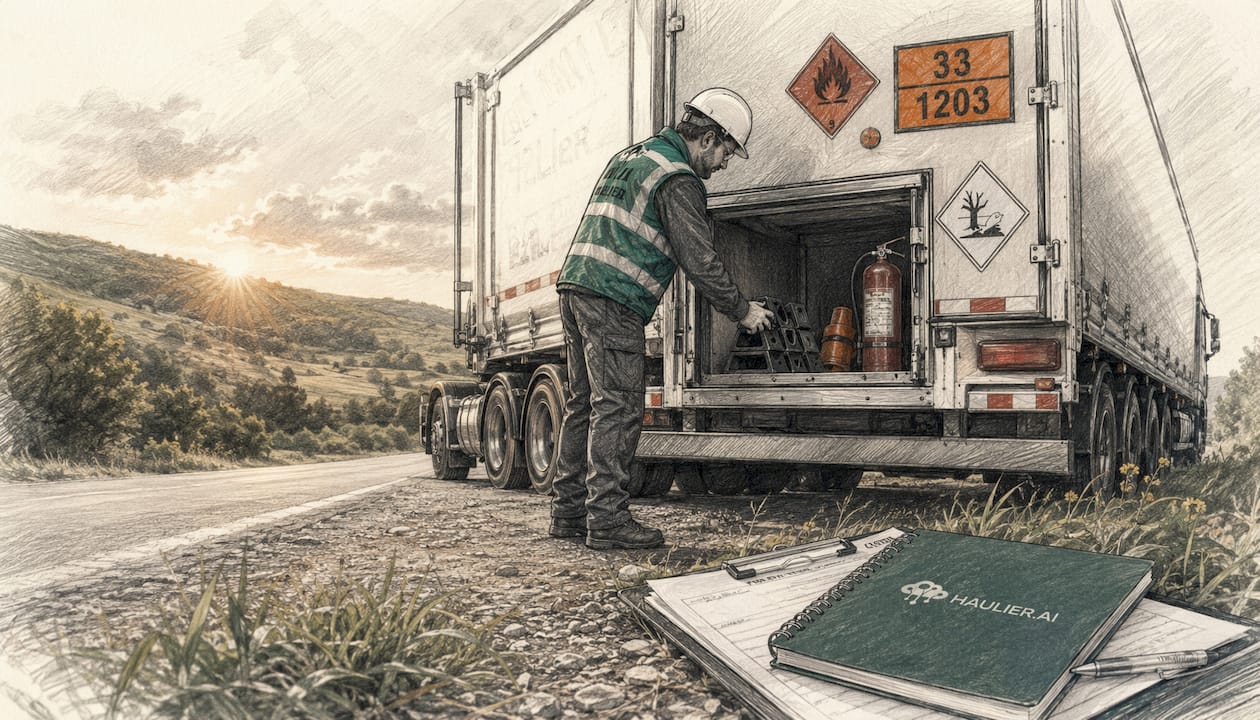
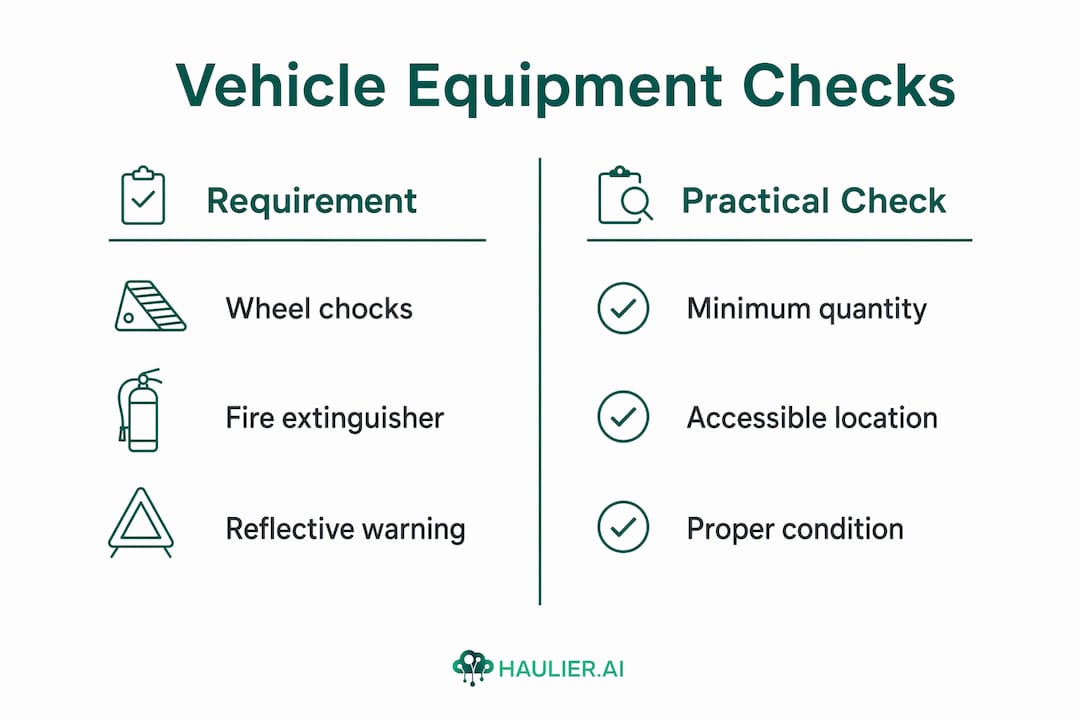
The transport unit must meet ADR chapter 8.1 requirements and any chapter 8.5 specials applicable to the goods. In practice, enforcement regularly flags two items above all others: missing wheel chocks and drivers not carrying their ADR certificates.
| Requirement | Practical check |
|---|---|
| Wheel chocks | At least one per vehicle; articulated or drawbar combinations typically require at least two. Confirm count and location with the haulier. |
| Orange plates and placards | Correct UN number plates and hazard placards displayed on the container and vehicle unit where required. |
| Container securing | Container properly fastened to the chassis; no movement under braking or cornering. |
| Firefighting equipment | Correct fire extinguisher type and capacity for the goods class, accessible and in date. |
| Spill/containment equipment | Drain seals, collecting containers and other specified items on board and accessible. |
| Driver certificate | Physical certificate carried by the driver throughout the journey. |
Pro Tip: Ask the haulier to state exactly where ADR equipment is stored on the vehicle. Inspectors check accessibility, not just presence.
ADR transport documents and instructions in writing
The four-page ADR instructions in writing must be available to the crew and to roadside inspectors or emergency services on request. This is not optional and it is not satisfied by a document sitting on a server somewhere.
Electronic documentation is permitted, but the consignor must be able to provide paper copies if required, and devices must be charged and reliable for the entire journey. Treat electronic copies as operationally fragile: a flat tablet at a roadside stop is a compliance failure.
Do:
- Confirm the method for providing paper copies on request before the vehicle departs.
- Ask for the transport document in the correct ADR sequence.
- Confirm how instructions in writing will be made available to the driver and kept accessible.
- Include a Safety Data Sheet where relevant.
Don’t accept vague assurances that documents are “on file.” Ask specifically: where, in what format, and how will they reach the driver or an inspector during the journey?
Who is liable when you subcontract an ADR movement?
Subcontracting does not transfer your compliance obligations. As the party offering carriage, you remain responsible for ensuring the subcontractor is compliant and can evidence training and security planning. Practical risk sits with the consignor and offeror regardless of who is driving.
What to require from any subcontracted ADR movement: Written evidence of the subcontractor’s ADR competence and driver certificates. Confirmation of a security plan where HCDG are involved. Transport-unit photos showing placarding and wheel chocks before departure. The subcontractor’s document-availability procedure for the journey. The right to request a documentary audit within a defined timeframe.
Verification steps for subcontractor HGV work should include requesting the prime haulier’s evidence of the subcontractor’s compliance, not just a verbal assurance. Build this into your standard booking process.
Pro Tip: Include a short contract clause requiring immediate notification of any driver or vehicle change and granting you the right to a documentary audit within 48 hours of request.
Lead times and cost drivers for ADR container bookings
ADR container haulage takes more planning than a standard dry-freight move. Allow additional lead time for driver allocation with the correct certificate entitlements, and more again if the movement involves HCDG, tank containers, or a security plan requirement.
- Book early for specialist drivers. Tank-container endorsements are less common than standard ADR certificates. For Class 1 (explosives) or Class 7 (radioactive) movements, capacity is genuinely limited.
- Factor in security plan checks. HCDG movements require a tested security plan. If the haulier needs to verify or update theirs, that takes time.
- Separate cost lines in your quote. Ask for ADR-specific costs broken out: specialist equipment, driver premium, security overhead, and any port or terminal waiting time.
- Plan for permit lead times. Certain movements require written authorisation from the Secretary of State. These carry conditions and time limits and cannot be arranged at short notice.
- Port turnaround buffers. ADR documentation checks at terminals such as Tilbury or London Gateway can add time if paperwork is incomplete on arrival.
Haulier makes ADR container bookings faster and more reliable
Booking ADR-compliant container haulage through fragmented phone calls and email chains is where paperwork gaps happen. Haulier connects freight forwarders and importers directly to vetted UK hauliers who confirm driver certificates, vehicle compliance, and document availability as part of the booking workflow, backed by a human transport desk that catches gaps before the vehicle moves.
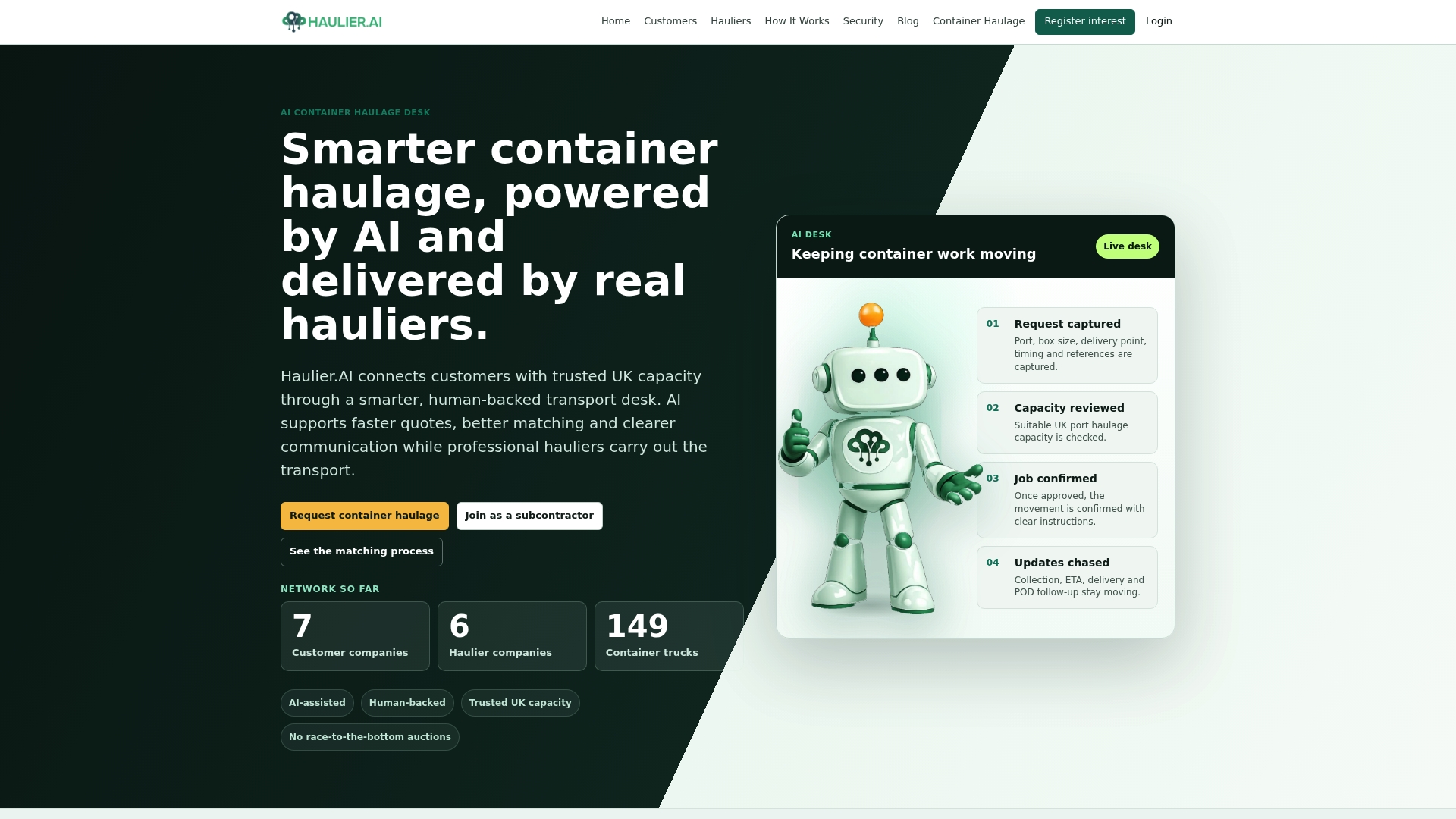
The platform captures certificate metadata, vehicle compliance confirmation, and paper-fallback status at the point of booking, creating an audit trail that covers subcontracting checks too. For ADR movements, that means you have written evidence of driver entitlements, placarding, and document availability before you confirm the job, not after a roadside stop.
Request ADR-capable container haulage through Haulier, or see how the platform works before you get in touch.
Key takeaways
ADR applies to most containerised dangerous-goods road movements in the UK under CDG09, and compliance rests with the consignor and offeror across the entire journey, including any subcontracted legs.
| Point | Details |
|---|---|
| ADR applies by default | Treat every containerised dangerous-goods movement as ADR unless you hold a documented exemption. |
| Certificate validity is five years | ADR driver certificates are valid for five years from issue; check expiry and class entitlements before booking. |
| Wheel chocks and placarding | The most common enforcement failures; confirm counts, locations, and correct markings with the haulier in writing. |
| Paper fallback is mandatory | Electronic documents are permitted but a paper copy must be available on request throughout the journey. |
| Haulier captures compliance evidence | Haulier’s booking workflow records certificate details, vehicle compliance, and document availability before the movement confirms. |
Why platform-assisted booking reduces ADR risk
The conventional wisdom in freight is that ADR compliance is the haulier’s problem. It isn’t. The consignor and the party offering carriage carry real exposure when a vehicle is stopped and the driver’s certificate doesn’t cover the goods class, or the instructions in writing are on a dead tablet. Most roadside failures are not exotic regulatory edge cases. They are small, tangible items: a missing chock, an expired certificate, a document format that can’t be produced on demand.
What platform workflows do well is make those small items visible before the vehicle moves. Automated certificate capture, vehicle photo confirmation, and a paper-fallback check built into the booking form are not glamorous features. But they are precisely the checks that prevent a compliant shipment from becoming a detained one. For ADR movements involving subcontractors, the audit trail matters even more, because your liability does not stop at the prime haulier’s cab door.
The argument for using a platform like Haulier for ADR container transport isn’t about replacing expertise. It’s about removing the gaps that appear when compliance depends entirely on memory, goodwill, and a phone call.
Primary references
| Question | Source to consult |
|---|---|
| Certificate validity and issuing rules | Regulation 33, CDG Regulations 2004 |
| Carrier and driver obligations | CDG Regulations 2004 |
| Instructions in writing and electronic documents | GOV.UK ADR instructions guidance |
| Security provisions and HCDG security plans | GOV.UK security requirements guidance |
| Driver training syllabus and class entitlements | GOV.UK ADR driver training syllabus |
| Wheel chocks and crew duties | HSE crew guidance |
| General dangerous goods transport guidance | GOV.UK transporting dangerous goods |
FAQ
Does ADR apply to all container movements by road in the UK?
ADR applies to most containerised dangerous-goods movements by road in Great Britain under CDG09. Exemptions exist for limited quantities and certain other conditions, but these must be documented; the default assumption should be that ADR applies.
How long is an ADR driver training certificate valid?
ADR driver training certificates are valid for five years from the date of issue. Drivers must carry the physical certificate throughout any dangerous-goods journey.
What documents must be in the cab for an ADR container movement?
The driver must have the ADR transport document, the four-page instructions in writing, and the ADR driver training certificate. Electronic versions of transport documents are permitted, but a paper copy must be available on request.
What happens if a subcontractor is non-compliant on an ADR movement?
The party offering carriage remains responsible for ensuring subcontractor compliance under CDG09. Liability does not transfer automatically; you must obtain written evidence of the subcontractor’s ADR competence and driver certificates before the movement departs.
How does Haulier help with ADR container bookings?
Haulier’s platform captures driver certificate details, vehicle compliance confirmation, and document availability at the point of booking, giving freight forwarders and importers a verified audit trail before the movement is confirmed.